




Antique Marble Inkstand
An antique marble inkstand brings solid weight and polished mineral colour to a desk, holding ink with architectural presence.
Antique Marble Inkstand
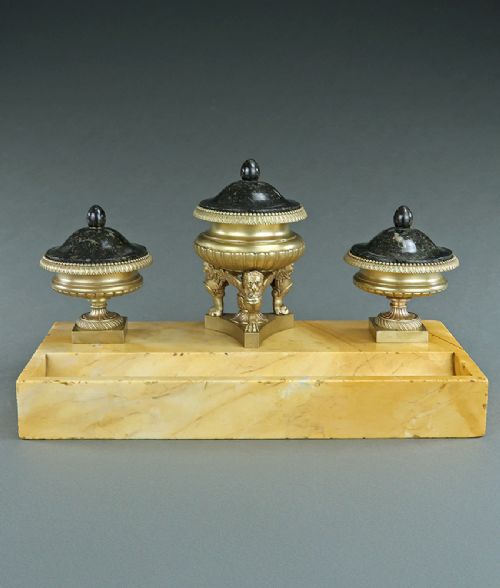
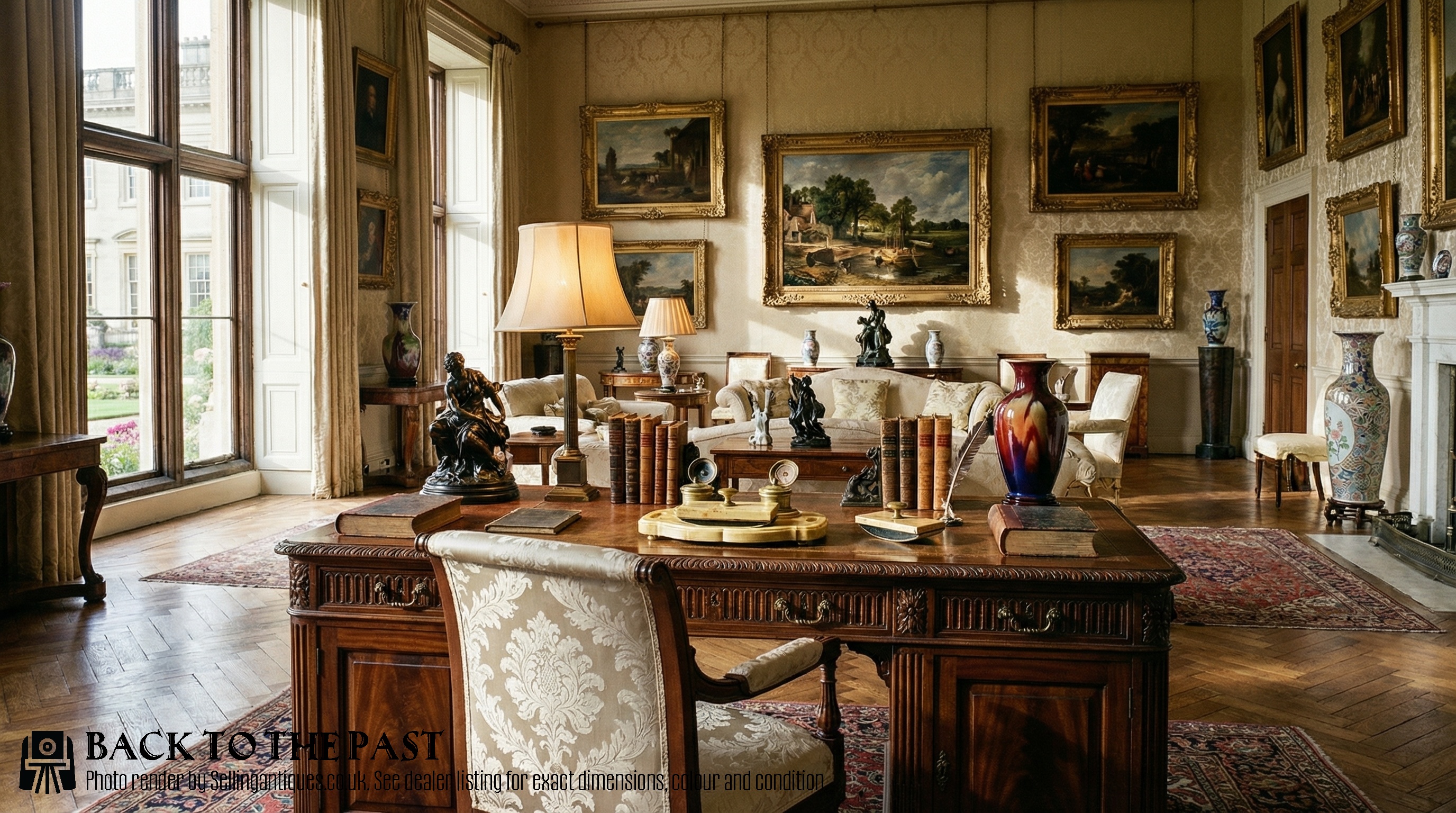
An antique marble inkstand is a substantial desk accessory combining a carved stone base with metal inkwells and pen trays, designed to organise a writing surface. These pieces serve as functional sculpture, anchoring a study with the heavy permanence of natural stone.
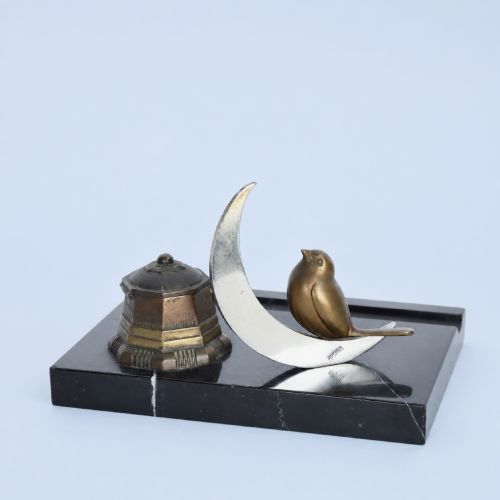
The versions most commonly found here originate from the nineteenth and early twentieth centuries, spanning French Empire, Neoclassical, and Art Deco designs. Buyers encounter everything from simple architectural slabs to elaborate French gilt bronze mounts fitted with twin glass or metal wells.
The form encompasses single inkwells, double encriers with hinged lids, and larger desk sets incorporating candleholders or stamp boxes. They reflect the formal writing habits of past eras, executed in materials intended to display taste and substance.
How they were made
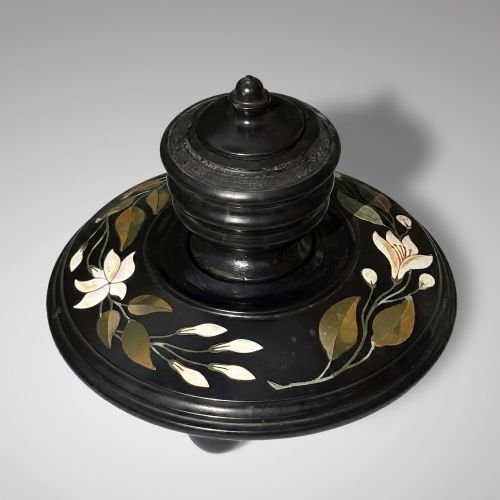
The construction rests on the pairing of dense stone bases with cast metal components. Masons cut and polished blocks of marble, onyx, or lapis lazuli into trays and plinths, sometimes inlaying contrasting minerals or carved cameo panels directly into the surface.
Foundry workers shaped the decorative mounts, feet, and inkwell lids using bronze, brass, or ormolu. Artisans then fire-gilded the metal or applied cold paint and patination before mounting the vessels securely onto the stone.
Antique Marble Inkstand Retail Price Guide 2026
Typical asking prices for marble inkstand among the pieces listed under this phrase on Sellingantiques today, from the lower quarter to the upper quarter. They describe what is for sale here now, not the wider market.
Listings feature nineteen-century pieces alongside 1930s Art Deco examples, uniting marble, bronze, ormolu, and onyx in desk accessories.
What varies in quality
Quality reveals itself in the choice and preparation of the stone, from plain black marble to richly figured Sienna, green onyx, or Ashford mosaic work. Finer examples feature crisply chased ormolu mounts with deep relief work rather than simple cast brass fittings.
The integration between the stone base and its metal elements dictates the overall success of the piece. Superior items show precise engineering where hinged lids close flush and heavy bronze figures are secured without visible pins or weak joins.
Franz Bergmann·Lefebvre of Belgium·Albert Marionnet·Jules Dalou·Zimmermann
The Antique Marble Inkstand Glossary
- Encrier
- A French term for an inkstand or inkwell. These pieces often feature fitted compartments for pens and powder boxes.
- Ormolu
- Finely ground high-carat gold applied to a bronze base using a mercury-gilding technique. This finish gives the metal mounts a warm, enduring lustre.
- Grand Tour
- A nineteenth-century travel tradition where wealthy tourists collected souvenirs like carved prato verde marble inkstands. These items frequently incorporated local stones and classical motifs.
- Ashford marble
- A Derbyshire limestone inlaid with local minerals to create floral or geometric patterns. It provides a distinct black surface decorated with colourful stone flowers.
- Standish
- An archaic English term for a portable writing stand that holds ink, pens, and sanders. It represents the larger, more complete ancestor of the desk inkstand.
Antique Marble Inkstand: Frequently Asked Questions
What is an antique marble inkstand?
An antique marble inkstand is a desk accessory that combines a heavy stone base with one or more inkwells, pens rests, and sometimes storage boxes. They served as permanent fixtures on nineteenth- and early twentieth-century desks.
These objects united practical writing utility with decorative sculpture, often styled in the Neoclassical, Empire, or Art Deco taste using bronze and marble.
How do I date a marble inkstand?
Dating relies on stylistic clues like the clean geometric lines of Art Deco pieces compared to the heavy classical mounts of French Empire designs. Material choices, such as green onyx or specific bronzes, also point to distinct periods.
Maker signatures or foundry marks stamped into the bronze components provide a more precise point of origin. Architecture and decorative motifs mirror the prevailing tastes of the nineteenth and early twentieth centuries.
Were these inkstands used for everyday writing?
These inkstands were standard equipment for correspondence in studies, offices, and drawing rooms before the widespread adoption of the fountain pen. They held the liquid ink required for dip pens and quill use.
Their substantial weight prevented tipping during frantic writing, while lidded glass or metal inserts kept the ink from drying out too quickly between uses.
How do I clean a marble inkstand?
Cleaning requires a soft, dry cloth to remove dust from the stone and metal surfaces without abrasive friction. Moisture should be kept away from exposed bronze mounts and inlaid sections to prevent tarnishing.
Harsh chemical cleaners will etch marble and strip patination from ormolu or bronze. Gentle upkeep preserves the original polish and finish of both the stone and metal components.