
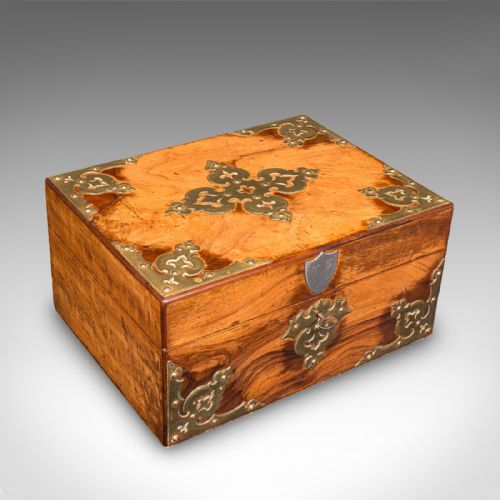


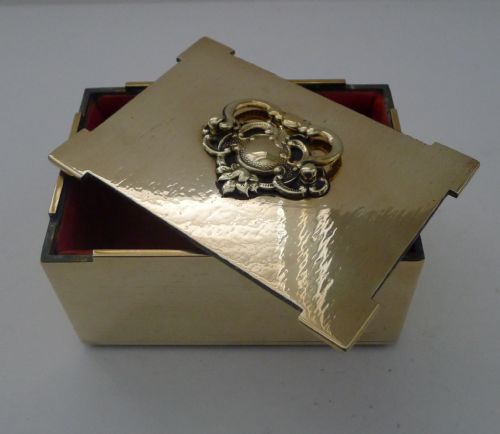


Ornate Brass Casket
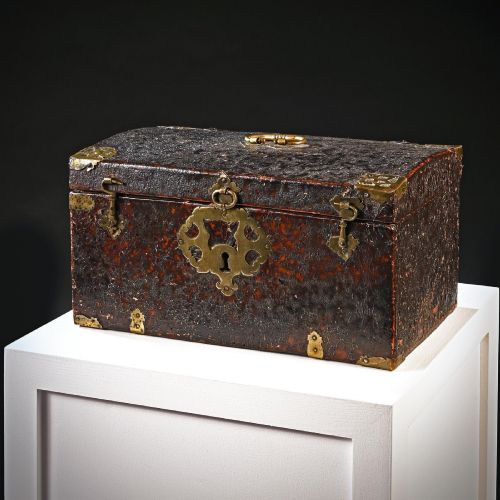
An ornate brass casket is a decorative box built to hold precious small items, combining heavy metalwork with rich woods or velvet linings to catch the eye.
Ornate Brass Casket
When you search for an ornate brass casket, you enter a field dominated by nineteenth-century work, alongside earlier seventeenth-century survivals and regency pieces. These objects take the form of jewellery boxes, stationery cases, tea caddies, and small trunks designed for domestic display or travel.
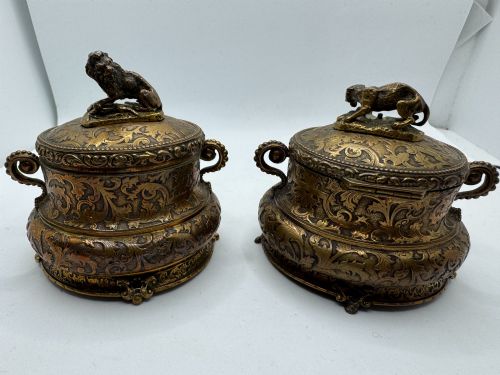
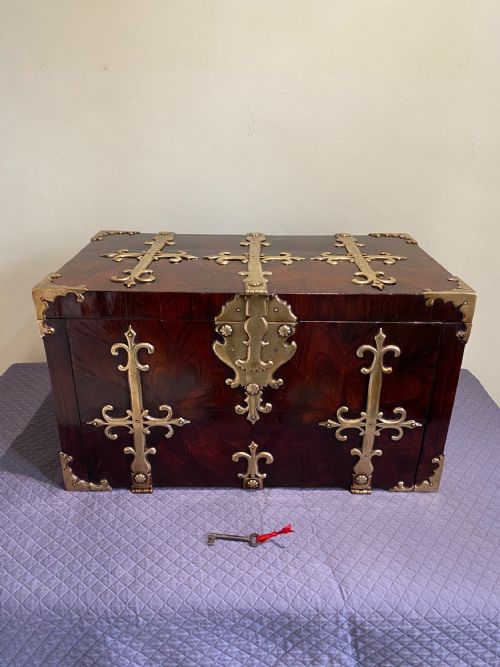
Victorian examples appear frequently, often pairing brass mounts with burr walnut, rosewood, or kingwood bodies. French makers contribute heavily to the selection, producing ormolu, gilt metal, and cast brass pieces that lean towards elaborate decorative schemes.
Forms range from small tabletop trinket boxes to larger strongboxes and sewing cases. Regional variations introduce Scottish Gothic revival pieces, Anglo-Indian sandalwood containers, and Iberian baroque influences into the mix.
Materials and construction methods
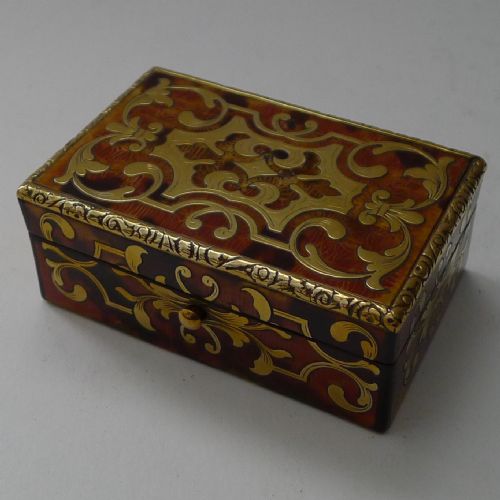
Makers built these containers using sturdy wooden carcasing of walnut, mahogany, or sandalwood, then overlaid them with heavy brass fittings, straps, and cast ornaments. Ormolu and gilt metal mounts appear regularly, fixed securely to the exterior to frame panels of tortoiseshell, leather, or marble.
Surface decoration relies on intricate brass inlay, engraving, and casting techniques. Interiors often feature fitted trays lined in silk or velvet, designed to cradle jewellery, letters, or tea canisters safely.
Listings feature pieces spanning from the seventeenth century through to nineteen-hundred, with a strong concentration of Victorian examples.
Distinctions in craftsmanship
Quality rests in the crispness of the brass casting and the precision of the inlay work. Finer pieces show deep, clean chiselling on mounts and seamless joining where metal meets wood or leather.
The weight of the metal and the richness of the secondary materials set superior examples apart from simpler containers. Thoughtful interior arrangements and original working locks with matching keys elevate a piece above standard production.
The Ornate Brass Casket Glossary
- Ormolu
- Gilded bronze or brass used for decorative mounts and furniture embellishments. The technique involves applying a mercury-gilding process to base metal.
- Boulle
- A form of marquetry using brass and tortoiseshell inlaid into wood, popular in French furniture and decorative boxes. It creates a striking contrast of dark shell and gleaming metal.
- Cofre forte
- A French term for a strongbox or secure chest, often reinforced with heavy metal straps and complex locking mechanisms. These provide robust storage for valuables.
- Tea caddy
- A box designed to store loose tea leaves, often featuring internal compartments and a lock. They reflect the high value once placed on imported tea.
- Finial
- A small decorative ornament placed on top of a lid or corner, frequently shaped as an animal or architectural detail. It provides a visual focal point for the piece.
Ornate Brass Casket: Frequently Asked Questions
What were ornate brass caskets used for?
These containers served to safeguard valuable personal possessions such as jewellery, letters, and coinage. Owners placed them on dressing tables, desks, and sideboards where their decorative metalwork added status to a room.
Larger versions accommodated sewing implements or dry tea leaves, keeping delicate items organised and secure from dust and handling.
How do I identify French pieces?
French boxes often utilise ormolu, cast brass, and boullework with distinctive floral or classical motifs. Makers frequently employed gilt-metal and marble combinations that reflect nineteenth-century Parisian taste.
Examining the construction of the interior lining and the style of the cast mounts usually reveals continental craftsmanship compared to English equivalents.
Are keys usually included?
Original working keys remain uncommon because locks were delicate and easily misplaced over generations of use. Many boxes retain their decorative escutcheons even if the mechanism no longer operates with a key.
When a matching key does survive, it adds significant interest for collectors who value complete and original desk accessories.
How do I care for brass mounts?
Maintenance requires gentle dusting with a soft, dry cloth to prevent dirt accumulation in engraved recesses. Avoid harsh chemical polishes that can strip gilding from ormolu or damage surrounding wood and leather panels.
Keeping the boxes away from direct sunlight and damp environments protects both the metal finishes and the wooden carcasing.