

Brown Wooden Casket
A brown wooden casket is a sturdy receptacle shaped by centuries of cabinet-making, offering both practical containment and rich tactile character.
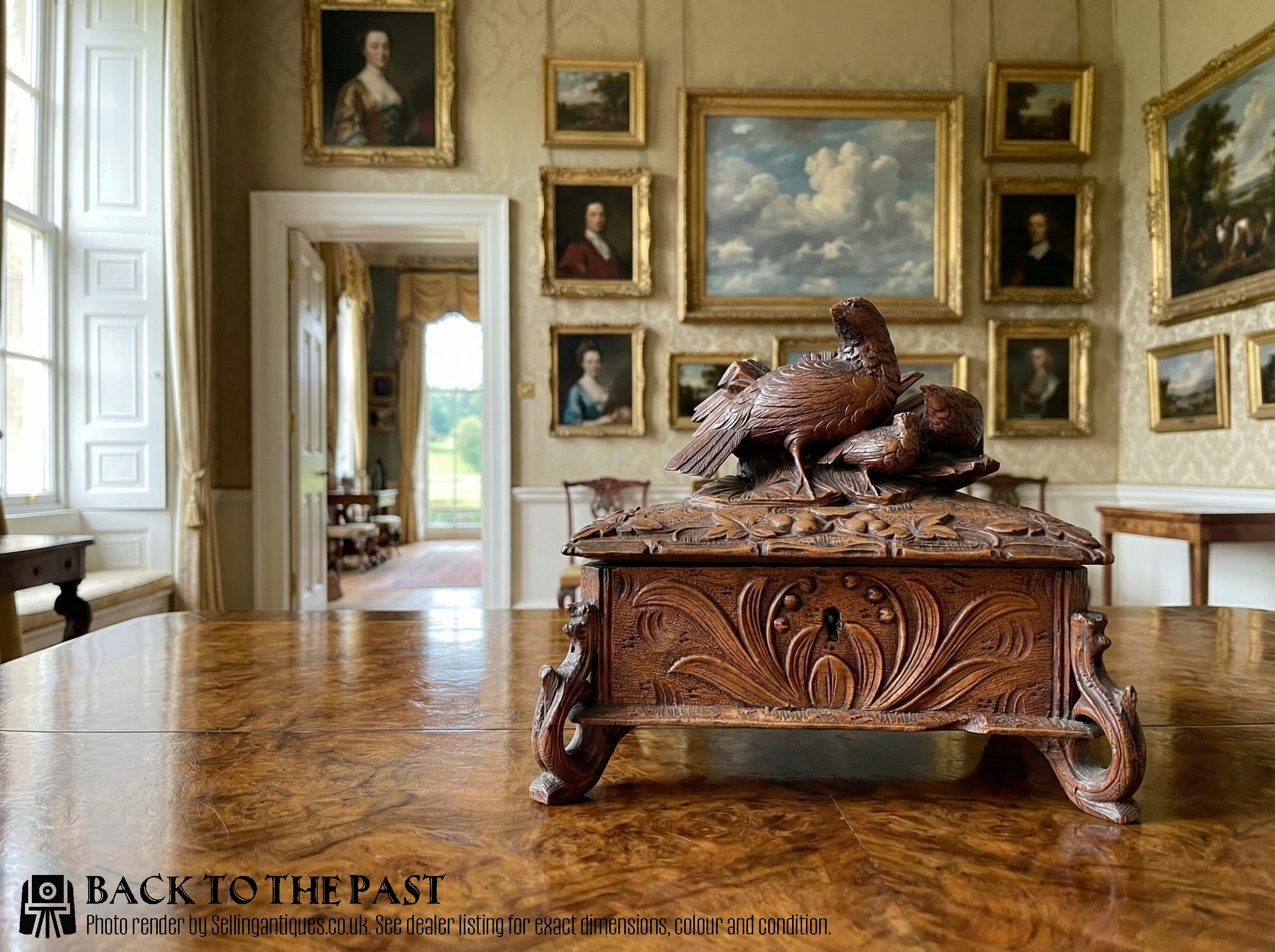
Brown Wooden Casket
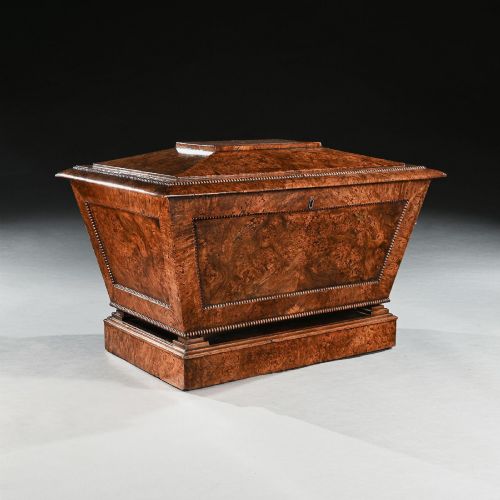
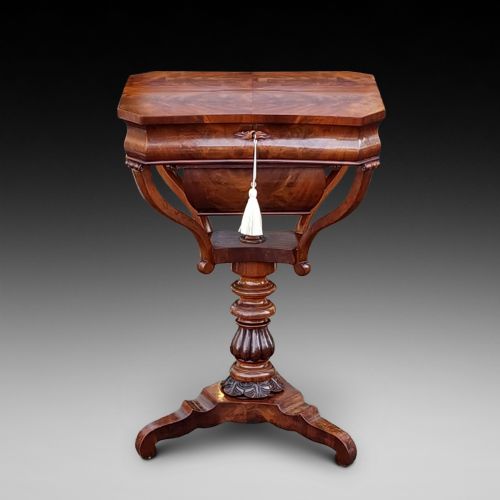
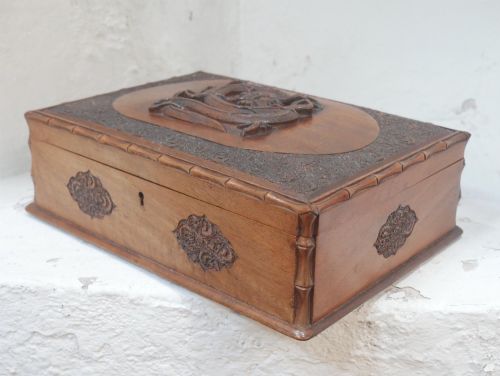
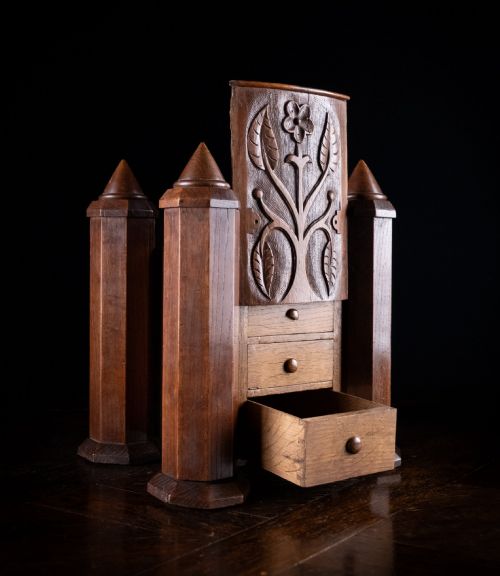
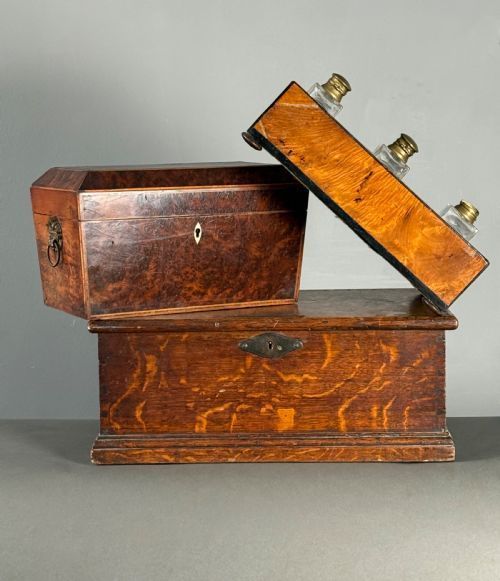
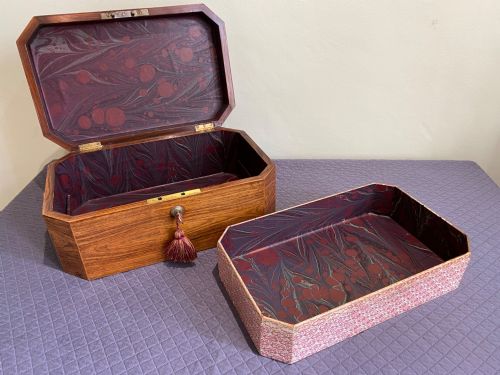
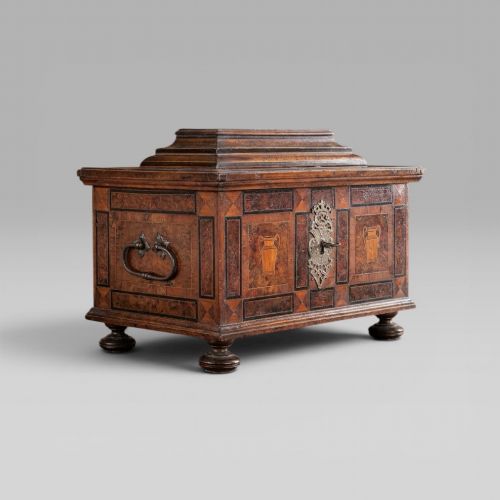
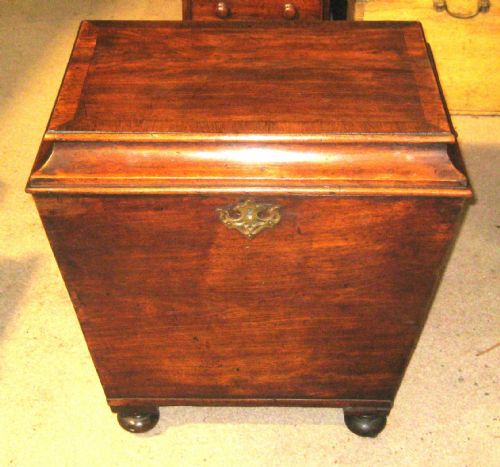
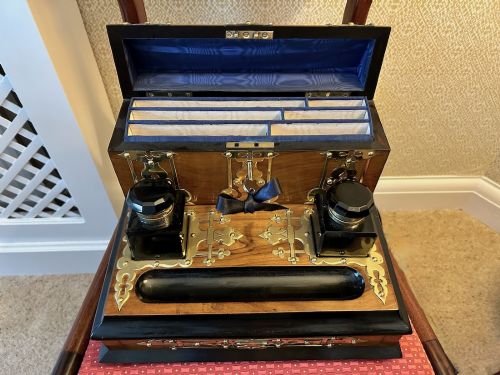
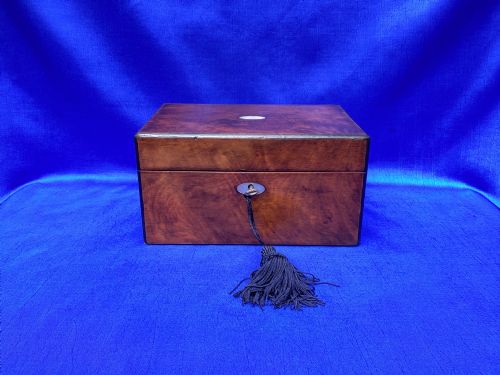
A brown wooden casket spans periods from the seventeenth century through the twentieth, taking forms such as stationery boxes, tea caddies, sewing cases, and sarcophagus-shaped jewellery caskets. The selection includes Georgian mahogany and flame mahogany pieces, alongside Victorian burr walnut, rosewood, and oak examples.
Buyers encounter regional and stylistic variations ranging from Black Forest carved wood and continental burr wood to Anglo-Indian sandalwood and Arts & Crafts designs. These pieces served various domestic and functional roles, from holding tea and letters to securing jewellery and documents.

Materials and construction methods
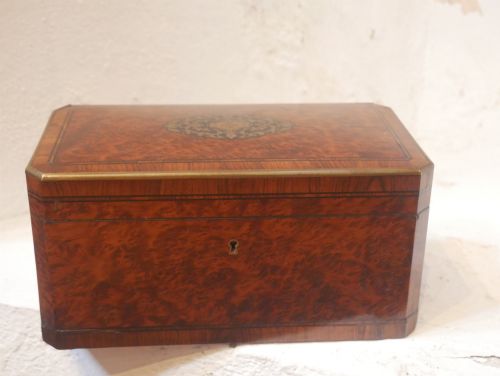
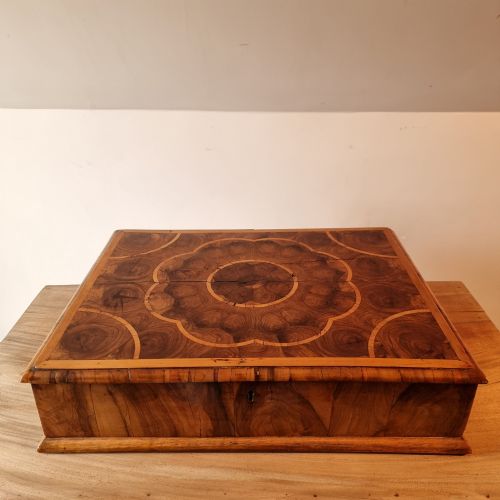
Construction relies on timbers such as mahogany, walnut, oak, and rosewood, frequently enhanced by decorative veneers like burr walnut, amboyna, and burr yew wood. Cabinet-makers utilised natural grain patterns to create visual depth across flat and curved surfaces.
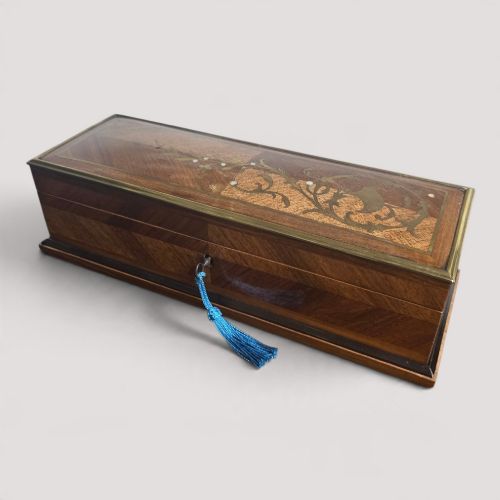
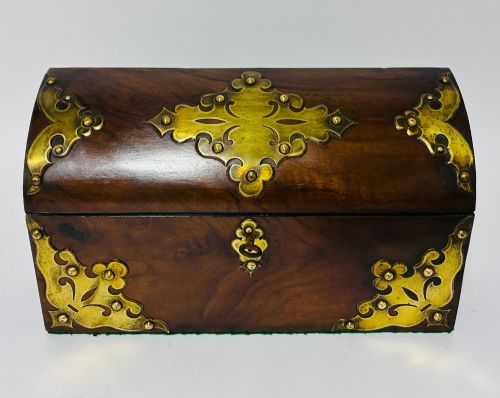
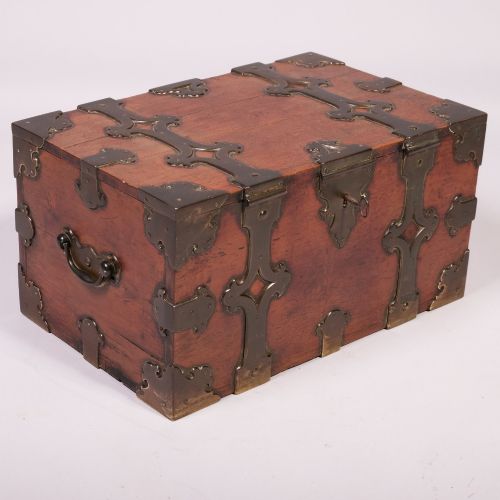
Metal mounts in brass, alongside inlays of mother of pearl, parquetry, and Tunbridge ware, strengthen corners and articulate lids. Carved details appear on Black Forest and Indian sandalwood pieces, showing intricate hand-tooling.
Brown Wooden Casket Retail Price Guide 2026
Typical asking prices for brown wooden casket among the pieces listed under this phrase on Sellingantiques today, from the lower quarter to the upper quarter. They describe what is for sale here now, not the wider market.
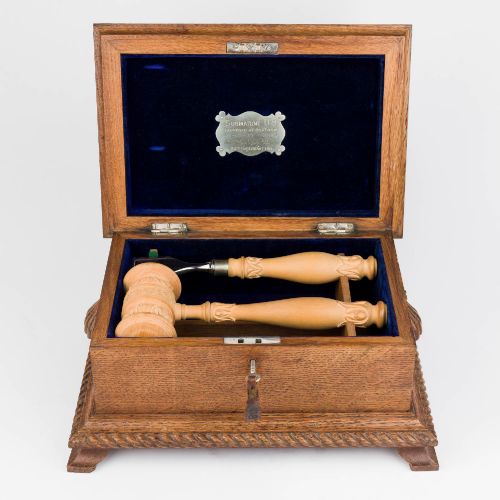
One listed piece served as a launching casket for the Royal Navy submarine HMS D.8.
Markers of distinction in wooden caskets
Quality rests in the selection of timber and the precision of the cabinet-work, where matched veneers and tight joints distinguish superior pieces from standard containers. Finer examples integrate complex internal fittings, such as secret compartments or dedicated trays for stationery and sewing.
The integration of decorative elements like heavy brass mounts, marquetry inlay, or specialised parquetry elevates an object. Well-preserved surfaces retain their original polish and grain movement without excessive restoration.
Tahan Paris
The Brown Wooden Casket Glossary
- Burr walnut
- A figured veneer taken from the excrescence on a walnut tree, prized for its swirling, knotted grain patterns. It provides a highly decorative surface on Victorian boxes.
- Tunbridge ware
- A form of woodworking originating in Kent that uses tiny mosaic wood tiles to create pictorial or geometric designs. These geometric patterns adorn many nineteenth-century trinket boxes.
- Sarcophagus
- A shape featuring a domed or sloping lid atop a tapering rectangular body, resembling a stone coffin. This profile is common in Georgian wine coolers and nineteenth-century jewellery caskets.
- Parquetry
- A geometric mosaic of wood pieces used for decorative floors and box lids. It creates contrasting patterns using various timber tones.
- Tea caddy
- A box originally designed to store loose tea leaves, often fitted with internal compartments and locks. Georgian examples frequently employ flame mahogany.
Brown Wooden Casket: Frequently Asked Questions
What were brown wooden caskets used for?
These receptacles held valuable personal items, correspondence, sewing implements, and consumables like tea. Their interiors often contained fitted trays, velvet linings, or compartments tailored to specific domestic tasks.
Larger versions functioned as desk stands, humidor cigar boxes, or cellarets for wine. They kept contents secure and orderly in the principal rooms of the house.
How do I date a wooden casket?
Dating relies on timber choices, construction techniques, and decorative styles characteristic of periods like the Georgian or Victorian eras. For instance, flame mahogany and stringing point to the eighteenth century, while burr walnut and Tunbridge ware suggest the mid-to-late nineteenth century.
Internal hardware, locks, and hinges also offer clues. Hand-cut dovetails and specific keyhole escutcheons help narrow down the decade of manufacture.
How should I care for an antique wooden box?
Keep the wood away from direct sunlight and steady heat sources to prevent the timber and veneers from drying out and splitting. Maintain a stable indoor humidity level.
Apply a microcrystalline wax periodically to nourish the polish and protect the surface. Avoid using liquid polishes or silicone sprays, which damage historic finishes.
Are these caskets usually fitted with keys?
Many retain their original working locks, though finding a functional key from the period is less common. Locks were standard for securing personal papers, tea, and jewellery.
When a key is present, it operates an internal mechanism engaging the lid or drawer front. Replacement keys can sometimes be fitted by a specialist restorer.