


Swiss Wood Carving Box
These swiss wood carving box examples bring intricate nineteenth and early twentieth century alpine craftsmanship straight into your home.
Swiss Wood Carving Box
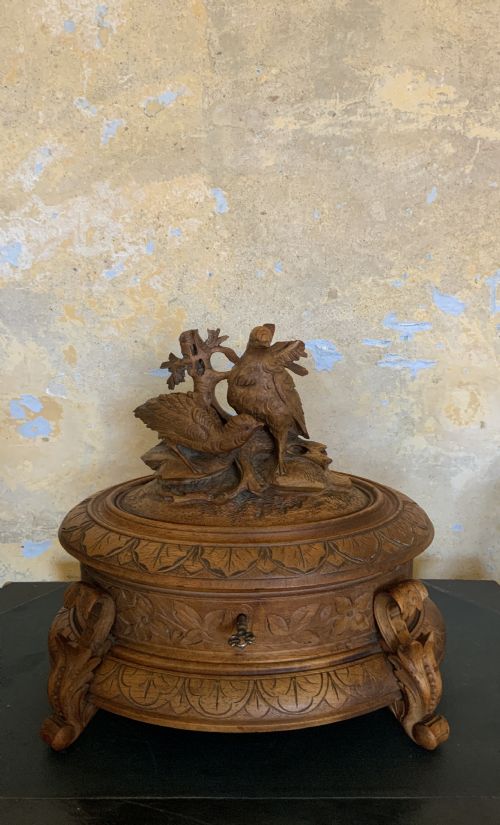
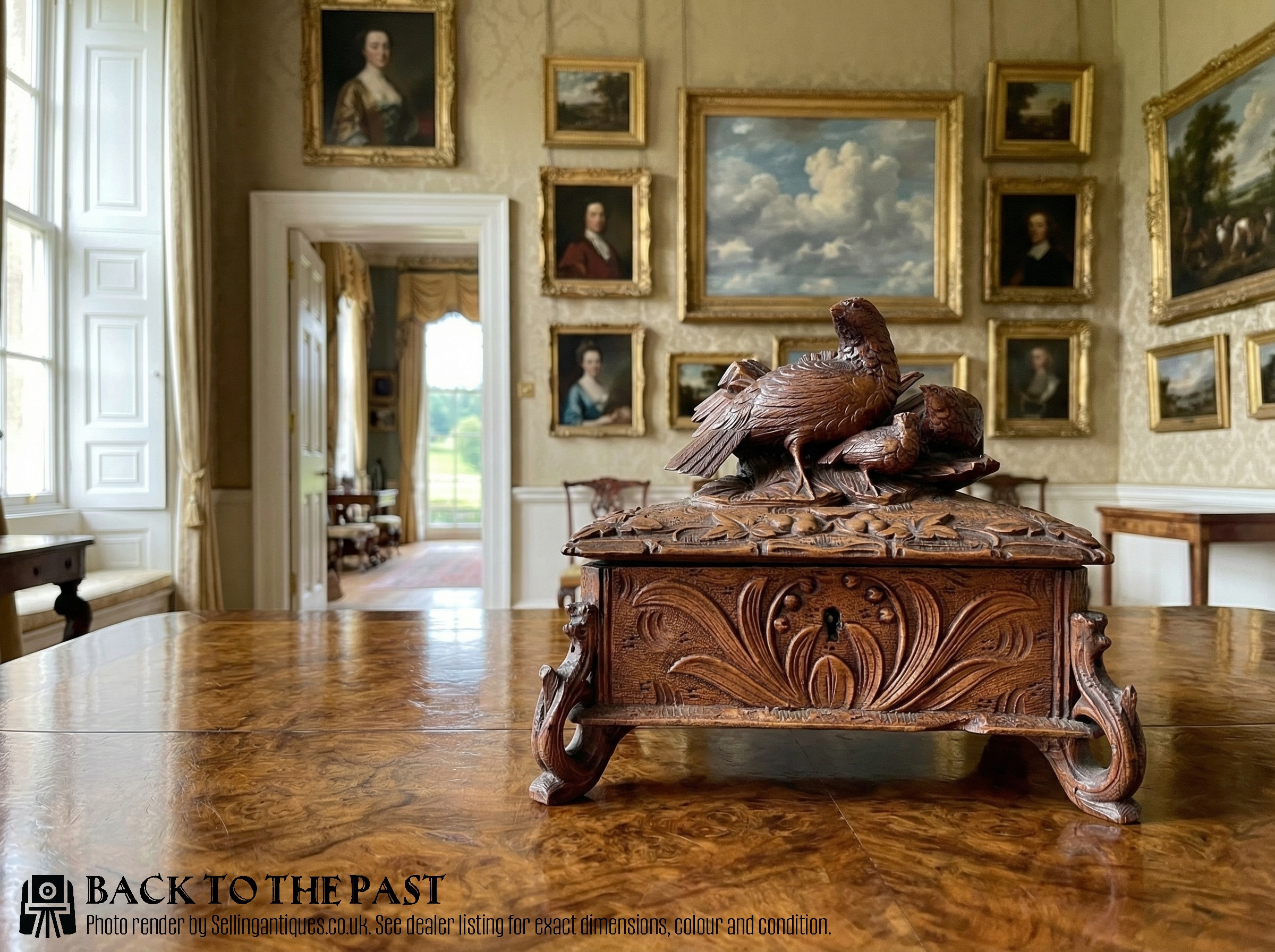
When you search for a swiss wood carving box, you are looking at intricate linden wood, walnut and dark stained wood containers shaped by hand into animal forms, caskets and musical vessels. These items belong predominantly to the nineteenth century, nineteen hundred, nineteen ten, nineteen twenty and eighteen sixty periods, originating from Black Forest and Swiss folk art traditions.
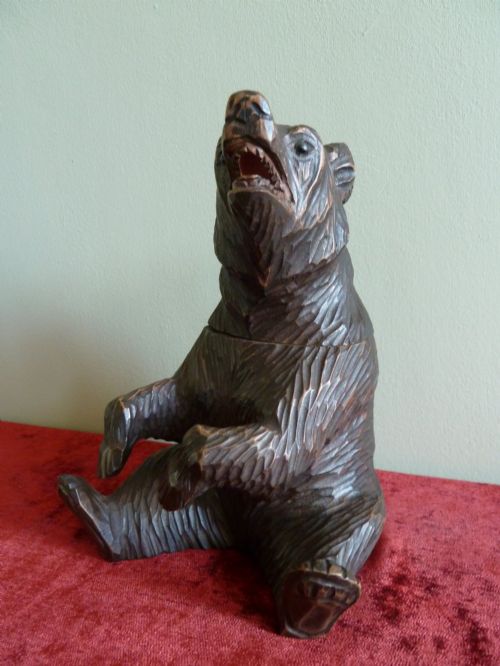
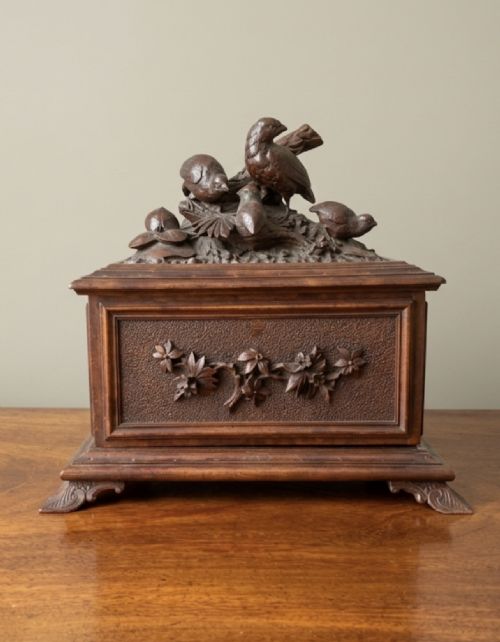
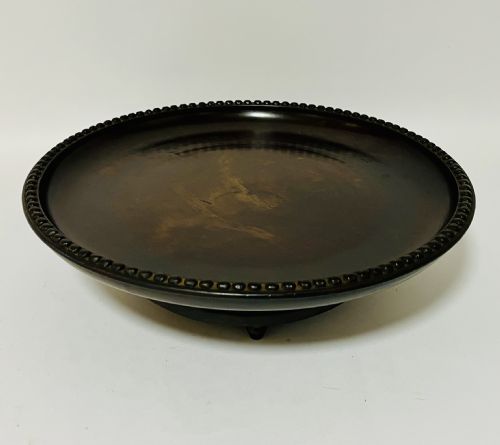
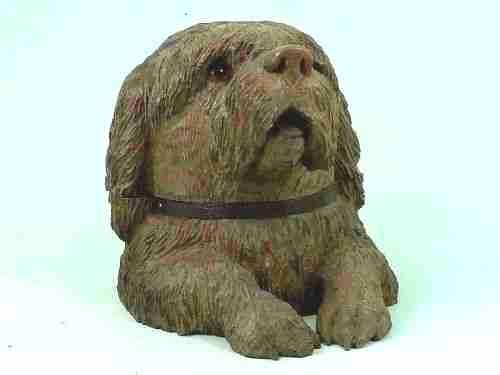
You are most likely to meet linden wood or walnut humidors, match holders, jewellery boxes and caskets featuring bears, dogs or floral marquetry. The forms range from functional desk tidy inkwell boxes and tobacco jars to decorative fruit bowls and musical containers.
The aesthetic bridges domestic utility with naturalistic sculpture, capturing alpine wildlife and foliate motifs with deep relief carving. Each piece demonstrates the regional specialisation of Swiss and Black Forest artisans working in native soft and hardwoods.
How they were made
Carvers shaped these objects primarily from linden wood and walnut, employing chisels and gouges to render fur, foliage and architectural details in deep relief. The selection of pale linden wood allowed for crisp linework and smooth animal contours, whilst walnut provided a rich, darker ground for marquetry inlay.
Makers occasionally integrated brass and glass components, particularly in functional items such as match holders, desk tidies and musical movements housed within bowls or chairs. Surfaces were frequently left with a natural wood finish or stained dark to accentuate the sculptural depth of the carving.
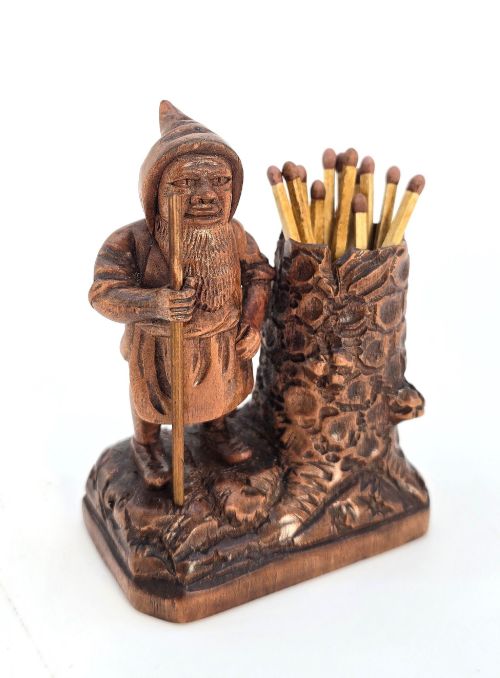
A gnome carved from limewood serves as a match striker.
What varies in quality
The distinction between ordinary and superior examples lies in the vitality of the carving and the depth of the anatomical modelling. Master carvers captured the musculature and expression of animals like bears and terriers with lifelike precision, whereas lesser pieces display stiff or generalised forms.
The Swiss Wood Carving Box Glossary
- Black Forest
- A style of wood carving originating from the mountain region on the border of France, Germany and Switzerland. It is best known for naturalistic animal figures, particularly bears and dogs.
- Humidor
- A moisture-controlled box used for storing cigars or tobacco. In these collections, they are typically carved from linden wood or walnut in the form of animals.
- Marquetry
- The art of applying small pieces of veneer to a structure to form decorative patterns. Walnut chairs and boxes in this group frequently employ this technique.
- Desk Tidy
- A compartmented container designed to hold writing instruments, inkwells and small stationery items. These often take the form of carved animal subjects with hinged lids.
Swiss Wood Carving Box: Frequently Asked Questions
What woods were used for a swiss wood carving box?
Makers utilised native alpine timbers, predominantly linden wood, limewood and walnut. These soft and hardwood varieties allowed for both delicate surface detailing and structural durability.
Dark stained wood also appears across various nineteenth century items to enhance contrast and simulate richer material tones.
Were these carved boxes meant for everyday use?
Many pieces served specific functional roles as tobacco jars, cigar humidors, match holders and desk tidy inkwell boxes. Owners kept them in studies, smoking rooms and parlours.
Others functioned purely as decorative caskets, jewellery storage or musical bowls intended for visual and auditory pleasure.
How do I date a carved wooden box?
Dating relies on stylistic markers, material combinations, and occasional signatures or date inscriptions left by the carver. Most recorded examples span the nineteenth century up to the nineteen twenties.
Musical components, brass hardware and specific folk art motifs help narrow down the period of production.