
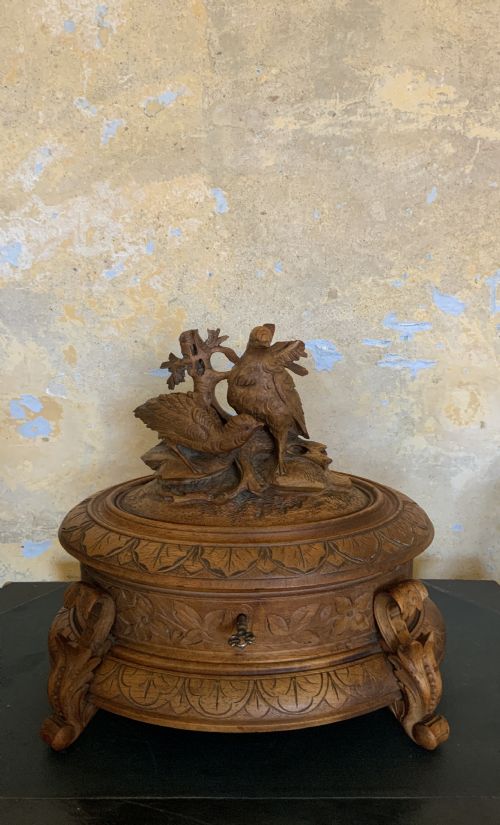


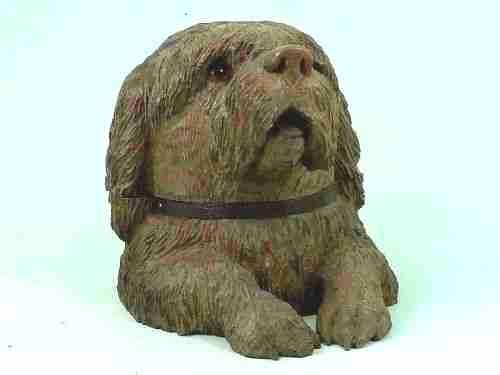
Black Forest Wood Box
These black forest wood box pieces bring Swiss and European carving traditions into the home with detailed animal figures and natural timber forms.
Black Forest Wood Box
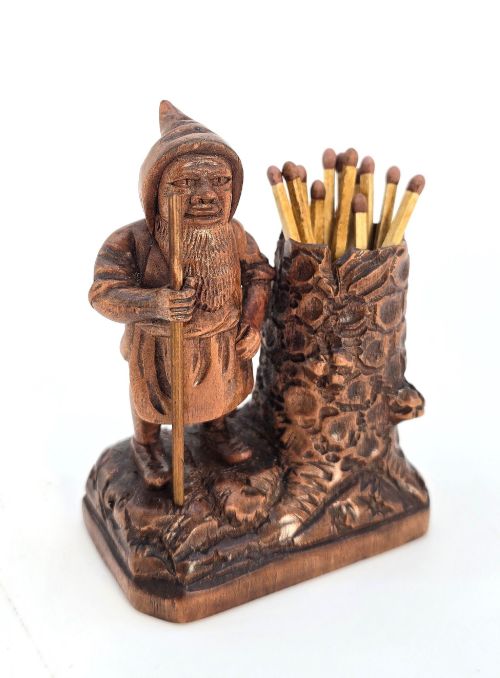
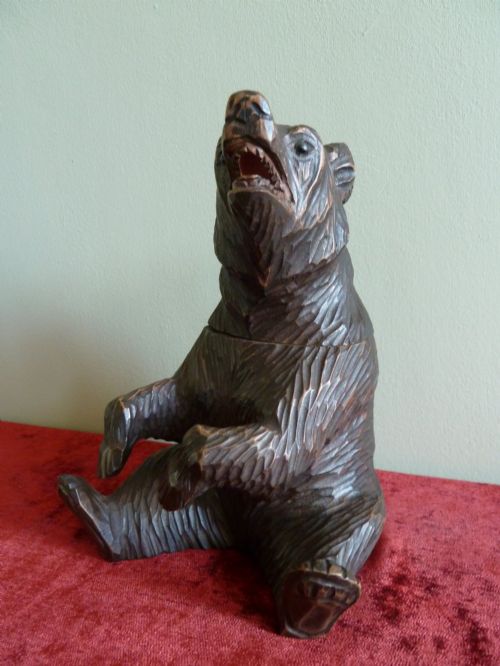
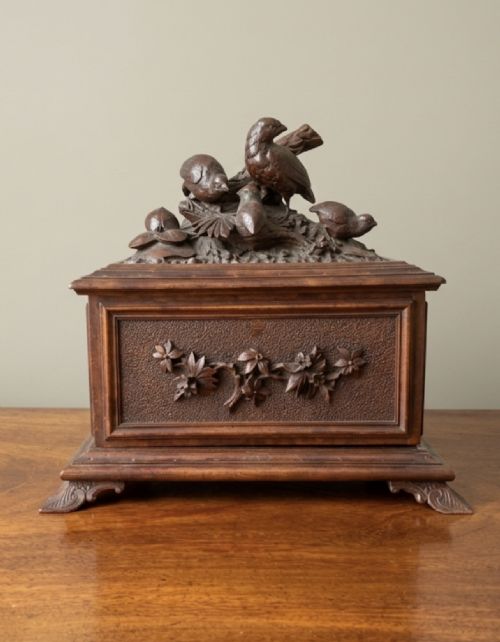
A black forest wood box encompasses carved wooden containers, humidors, jewellery caskets, and desk tidies originating from the nineteenth and early twentieth centuries. These functional items typically take sculptural forms, depicting bears, dogs, gnomes, or fruit.
Most examples found here date across the nineteenth century up to the nineteen twenties, embracing Swiss folk art and Black Forest styles. Common formats include linden or walnut tobacco boxes, musical fruit bowls, and hinged caskets.
Makers fashioned these pieces to serve domestic roles on desks, sideboards, and smoking tables while doubling as expressive animal sculptures. Buyers encounter everything from small match strikers to large game box sets and liqueur cellars.
Materials and construction
Carvers utilised linden wood, walnut, and limewood for their fine grain and suitability for deep, dimensional carving. Artisans shaped these timbers by hand, employing gouges and chisels to create fur textures, facial expressions, and hinged lids.
Hardware such as brass hinges, locks, and glass inserts appear on humidors, caskets, and cave de liqueur pieces. Some items also incorporate marquetry inlay work alongside sculptural animal elements.
Listings feature items dated from eighteen sixty through to nineteen twenty, utilising linden wood, walnut, and limewood.
Factors of quality
Depth and realism in the carving separate ordinary boxes from superior examples, particularly in the rendering of animal anatomy and facial detail. The crispness of fur work and the expression of carved bears or terriers dictate the tier of craftsmanship.
Condition of the timber and the integration of functional elements like lids, locks, and musical movements influence overall integrity. Well-preserved surfaces retain original patination without over-cleaning or timber splitting.
The Black Forest Wood Box Glossary
- Humidor
- A specialised box designed to store cigars or tobacco at a controlled humidity level. These often feature carved bear or dog motifs on the lid.
- Marquetry
- The art of applying pieces of veneer to a structure to form decorative patterns. Walnut pieces sometimes utilise this technique on flat surfaces.
- Match holder
- A small desk accessory incorporating a striking surface for matches. Gnomes and animal figures frequently form the base of these items.
Black Forest Wood Box: Frequently Asked Questions
What were these boxes used for?
These containers served practical everyday storage roles in Victorian and Edwardian homes, holding tobacco, cigars, matches, or jewellery.
Alongside their utility, they acted as decorative ornaments and sculptural conversation pieces on desks, sideboards, and smoking tables.
How do I date a piece?
Dating relies on stylistic clues, timber choice, and mechanical elements like hinges, locks, or musical movements found inside.
Pieces span the nineteenth and early twentieth centuries, with specific decades identified through the style of folk art carving and regional European workshops.
How should I clean the wood?
Dust timber surfaces gently with a dry, soft cloth to remove everyday particles without disturbing the carved details.
Avoid liquid cleaners, polishes, or moisture, which can damage antique patination and soak into unsealed carved areas.
Where were they made?
Production centred primarily in the mountainous regions of Switzerland and the Black Forest area of Germany.
Local woodcarvers drew inspiration from native wildlife, creating distinct regional styles that blended folk art with decorative Victorian taste.