




Carved Walnut Box
When you handle a carved walnut box, you hold a piece shaped by centuries of cabinet-making skill.
Carved Walnut Box
A carved walnut box encompasses a wide array of small domestic vessels designed to hold tea, tobacco, jewellery, and correspondence. The pieces seen here span from the sixteenth century to the Edwardian period, originating across Britain, Europe, and further afield.
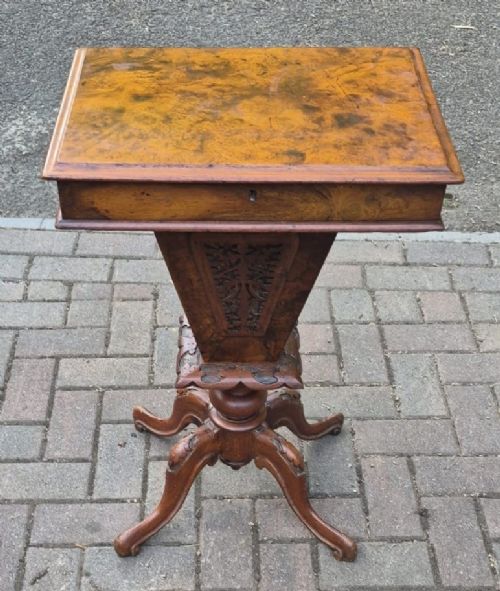
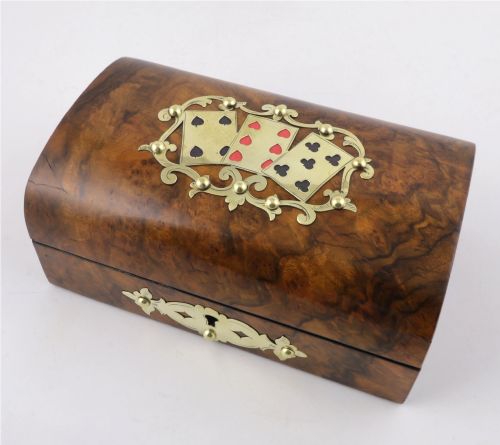
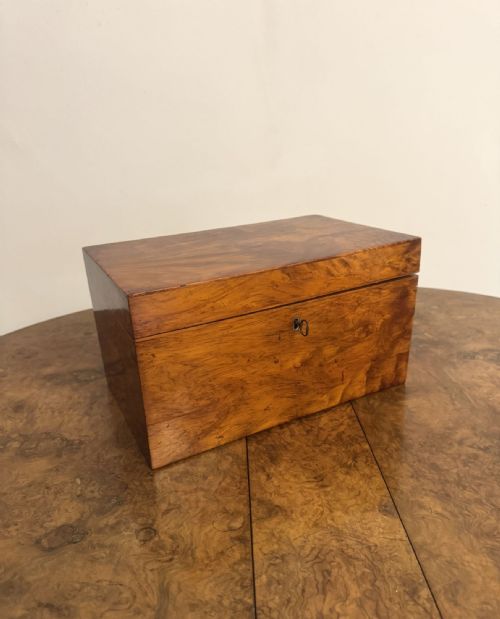
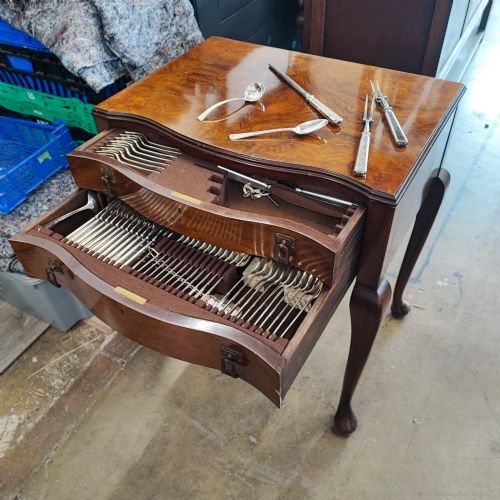
You are most likely to encounter Victorian examples on this page, particularly work tables, tea caddies, and smaller caskets fashioned from burr walnut. These functional items reflect the Victorians' taste for decorative yet purposeful household objects.
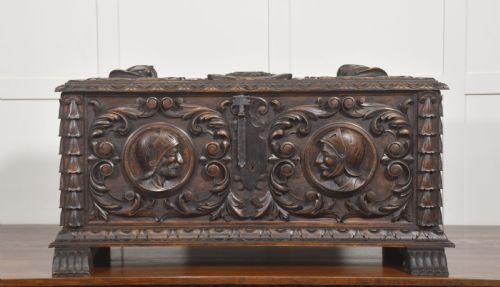
Larger items such as coffers, chests, and coal boxes also appear within the selection, alongside specialised novelties like snuff boxes and pipe cases. Each category demonstrates the versatility of walnut as a medium for both cabinet work and intricate carving.
How they were made
Makers utilised solid walnut and burr walnut veneers, prized for their rich grain patterns and warm hue. Wood was selected carefully to ensure the surface displayed striking figure and depth.
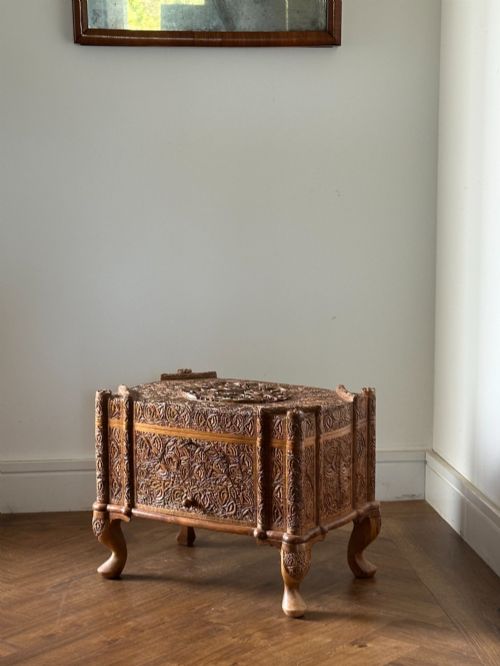
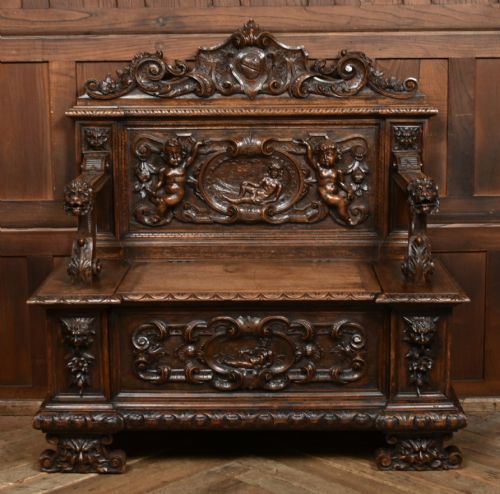
Hand carving formed the primary decorative technique, seen in deep relief motifs, figural medallions, and naturalistic foliage. Metal mounts in brass and iron frequently provided structural reinforcement and functional hinges or locks.
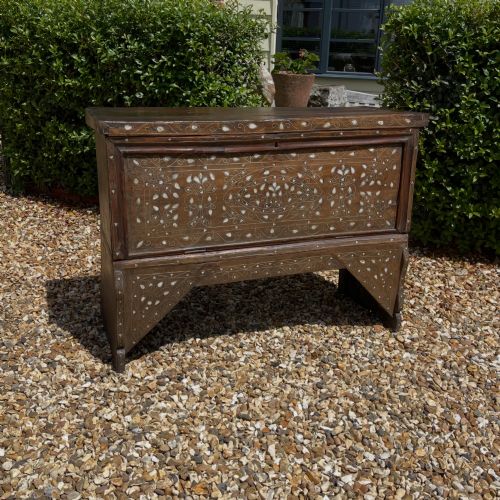
Marquetry inlay and contrasting woods occasionally supplemented the carved surfaces, creating geometric or floral patterns. Joinery relied on traditional techniques suited to the dense nature of the timber.
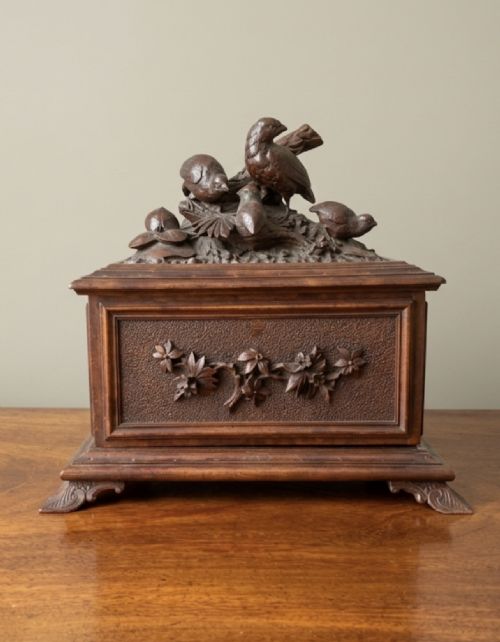
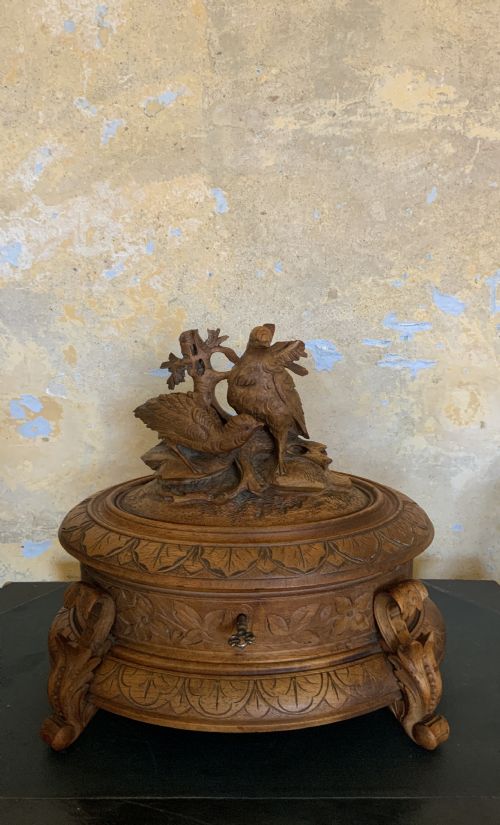
Regional styles represented here range from Black Forest animal carvings to Spanish chests and Anglo-Indian caskets.
What varies in quality
The choice of timber creates another clear division, with highly figured burr walnut commanding greater visual presence than plain grain. Selection of matching veneers across larger surfaces demonstrates superior workshop practice.
The integration of original hardware, such as engraved brass escutcheons and working locks with keys, preserves the integrity of the object. Internal fittings, including silk-lined compartments or segmented trays, further indicate the original tier of production.
The Carved Walnut Box Glossary
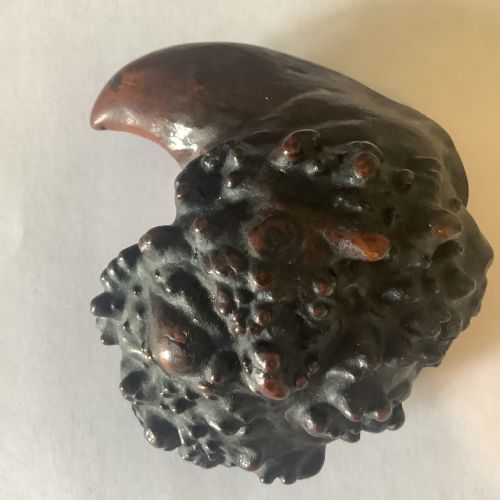
- Burr walnut
- A prized veneer taken from the gnarled growth of a walnut tree. It produces intricate, swirling grain patterns highly sought after by cabinet-makers.
- Tea caddy
- A container designed to store loose tea leaves securely. They often feature internal compartments and lockable lids.
- Cassone
- A large chest or coffer originating from Renaissance Italy. These pieces frequently display elaborate carved panels and figural decoration.
- Purdonium
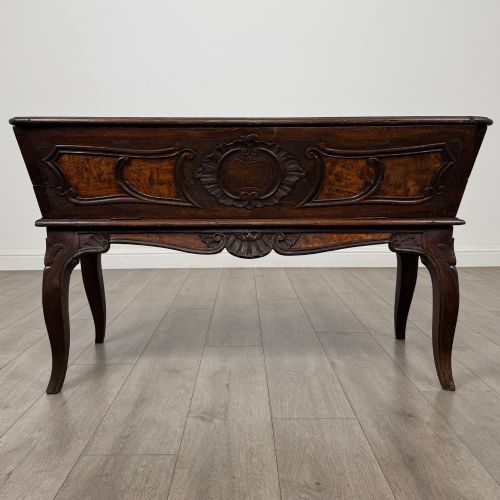
- A dedicated Victorian coal box or fireside fuel store. They typically include a sloping front and a metal liner.
- Teapoy
- A small stand or table supporting a caddy for holding tea. They often stand on a single pillar with tripod legs.
Carved Walnut Box: Frequently Asked Questions
What were tea caddies used for?
Tea caddies served to store expensive tea leaves securely under lock and key in the household. Servants or masters kept the precious leaves protected from dampness and theft.
Inside, many caddies featured distinct compartments for different varieties of tea, along with a central mixing bowl of glass or crystal.
How do I identify Black Forest carvings?
Black Forest pieces are characterised by deeply carved naturalistic motifs, frequently featuring animals such as dogs, bears, or foliage. The wood is typically limed or dark-stained walnut.
Originating from central Europe, these items range from large humidors to tiny novelty snuff boxes with glass eyes.
What is a coal purdonium?
A coal purdonium is a specialised Victorian fireside box designed to hold coal for the hearth. They often incorporated a shovel and an internal metal liner to catch ash and dirt.
Cabinet-makers clothed these utilitarian items in decorative carved walnut and brass fittings to match formal drawing room interiors.
How should I care for antique walnut?
Keep walnut furniture and boxes away from direct sunlight and sudden changes in central heating. Stable indoor conditions prevent the wood and veneers from drying out or splitting.
Apply a traditional beeswax polish sparingly to maintain the natural lustre of the timber without building up heavy residue.