



Antique Black Forest Box
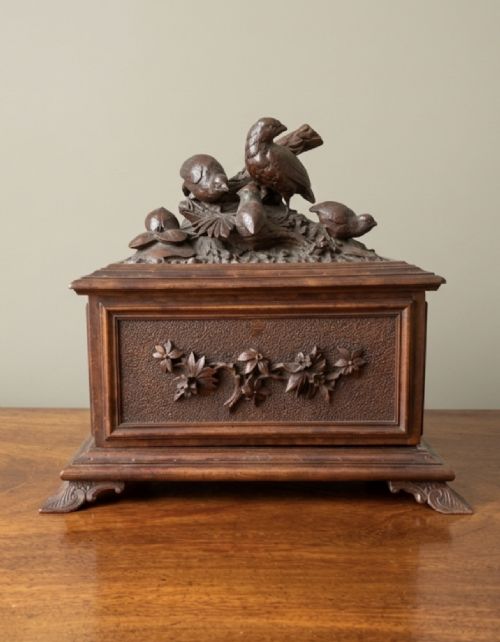
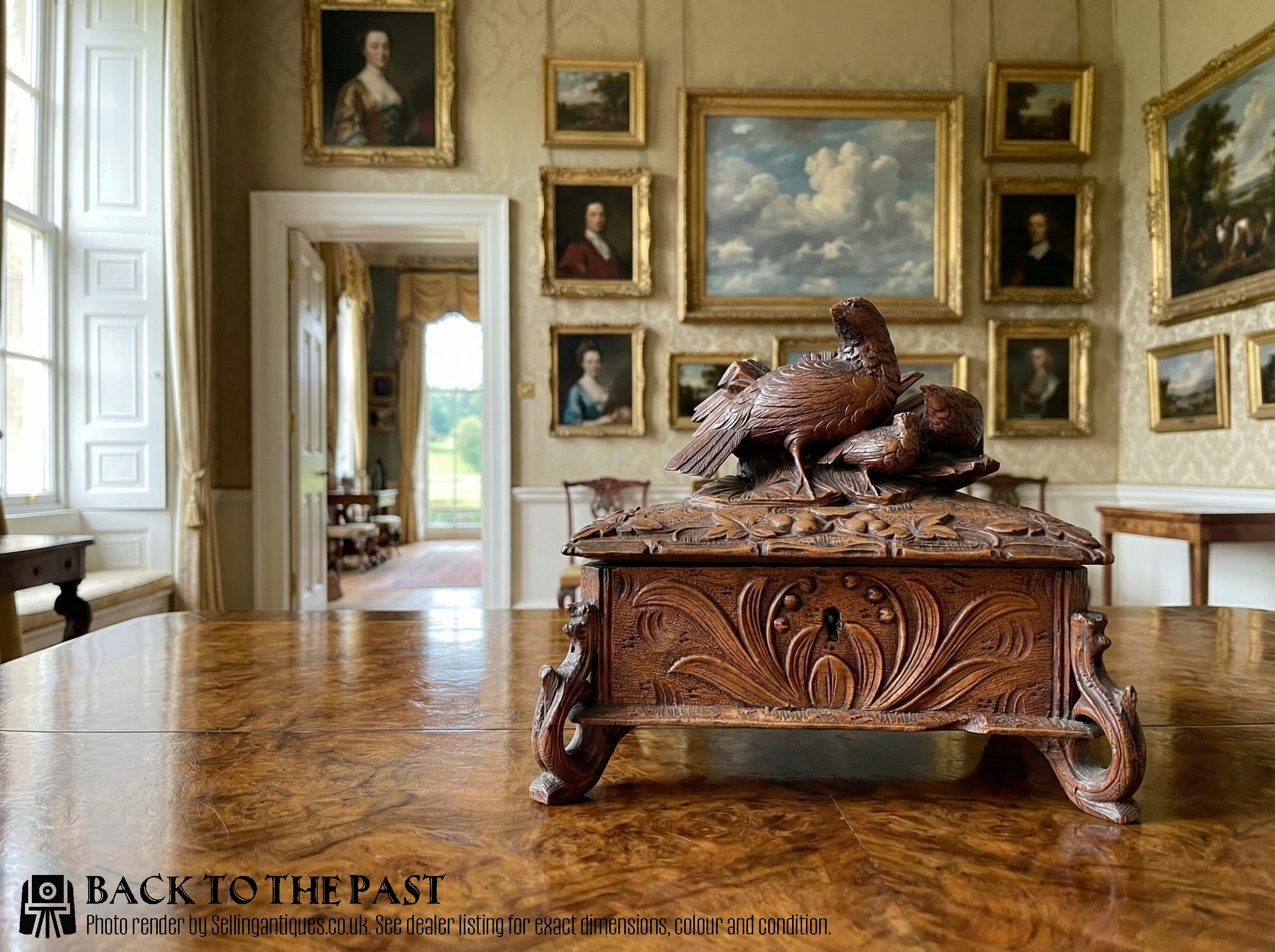
An antique black forest box brings hand-carved wildlife and rich natural timber directly into your study or parlour.
Antique Black Forest Box
When you search for an antique black forest box, you encounter deeply carved wooden containers shaped as bears, dogs, cats, and forest scenery. These pieces originate predominantly from the nineteenth century and the early twentieth century, reflecting Swiss and German folk art traditions.
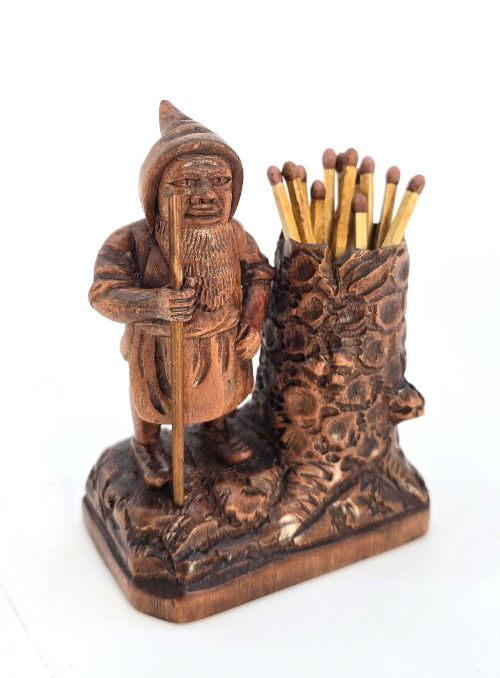
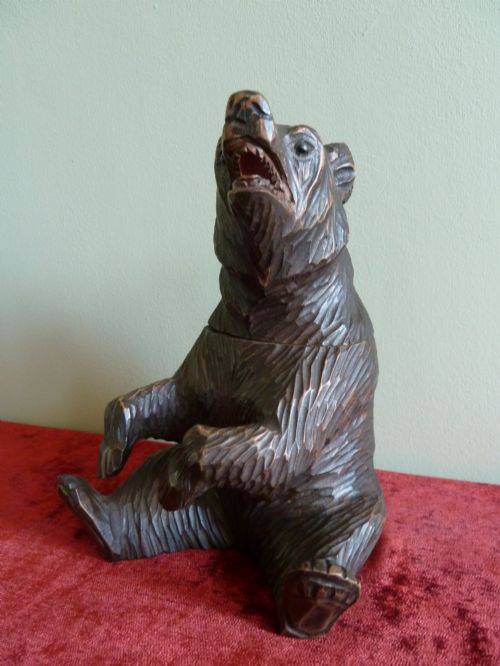
The selections range from utilitarian tobacco jars, humidors, and match holders to elaborate jewellery boxes, stamp boxes, and musical caskets. Many pieces incorporate figural motifs such as bears, owls, monkeys, and dogs, frequently rendered with inset glass eyes.
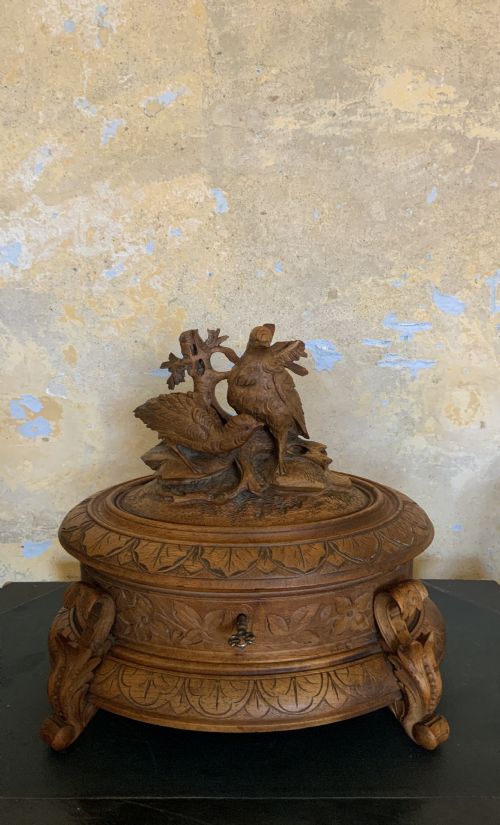
You will also find architectural caskets, game boxes, and desk tidies fashioned from walnut, linden wood, and limewood. These boxes served both ornamental and practical purposes in period homes, functioning as secure vessels for cigars, letters, and trinkets.
Materials and construction methods
Carvers utilised native European hardwoods, principally walnut, linden wood, limewood, and dark stained wood, to achieve deep relief and sculptural forms. These timbers permitted intricate detailing of fur, feathers, and foliage without splitting.
Secondary materials such as glass for eyes and brass for hinges, locks, and stamp box interiors appear frequently in the construction. Certain pieces combine carved wooden exteriors with marquetry inlay or musical movements housed within the wooden chassis.
Antique Black Forest Box Retail Price Guide 2026
Typical asking prices for black forest box among the pieces listed under this phrase on Sellingantiques today, from the lower quarter to the upper quarter. They describe what is for sale here now, not the wider market.
Bears remain the undisputed monarchs of the forest here, appearing as tobacco holders, coin banks, and brooding humidor guardians.
Distinguishing quality in carving and design
The distinction between ordinary and superior pieces rests entirely upon the depth and animation of the carving. Master carvers rendered musculature, facial expressions, and animal hair with lifelike precision rather than stiff repetition.
Proportion, scale, and the retention of original fittings also dictate the standing of a box. Pieces that preserve their original locks, keys, glass eyes, and working mechanisms command greater appreciation among collectors.
Karl Griesbaum
The Antique Black Forest Box Glossary
- Humidor
- A specialised box designed to store cigars at a controlled humidity. These often feature carved tobacco leaves or bears upon the lid.
- Marquetry
- The art of applying small pieces of veneer to a structure to form decorative patterns. Walnut boxes frequently utilise this technique on flat surfaces.
- Casket
- A decorative box used for storing valuables, jewellery, or letters. Black forest examples often feature hinged lids and elaborate relief carvings.
- Automaton
- A mechanical device that imitates human or animal action. Musical boxes and singing bird cages use these mechanisms within carved wooden housings.
Antique Black Forest Box: Frequently Asked Questions
What were antique black forest boxes used for?
These carved wooden containers served numerous domestic functions in the nineteenth century. Victorians kept them on desks, sideboards, and smoking tables to store tobacco, cigars, matches, stamps, and jewellery.
Beyond simple storage, many pieces doubled as novelty items or conversation pieces. Formats ranged from key safes and inkwells to musical boxes and desk tidies.
How do I identify a genuine period piece?
Examine the timber, construction methods, and tool marks visible on the interior surfaces. Nineteenth-century boxes typically display hand-cut joinery, aged patination on the wood, and traditional hardware such as brass hinges.
Figural carvings should show naturalistic depth rather than modern machine tooling. The presence of period materials like blown glass eyes or old lining fabrics also helps confirm age.
Are all black forest boxes made of walnut?
No, makers utilised several different timbers depending on the region and the style of carving required. Walnut appears frequently in caskets, game boxes, and marquetry inlaid pieces.
Linden wood and limewood were heavily favoured for figural animal carvings such as bears, dogs, and owls due to their soft grain. Dark stained wood also occurs across various nineteenth-century items.
How should I care for a carved wooden box?
Keep the box away from direct sunlight and extreme fluctuations in temperature or humidity. Excessive heat can cause the historic wood to dry out and split.
Dust the intricate carvings gently with a soft, dry brush to prevent dirt accumulation in the recesses. Avoid applying modern liquid polishes or oils to the antique surface.