


Carved Walnut Casket
These carved walnut casket examples bring together centuries of skilled timber work and practical storage, offering a tangible link to Victorian and earlier craftsmanship.
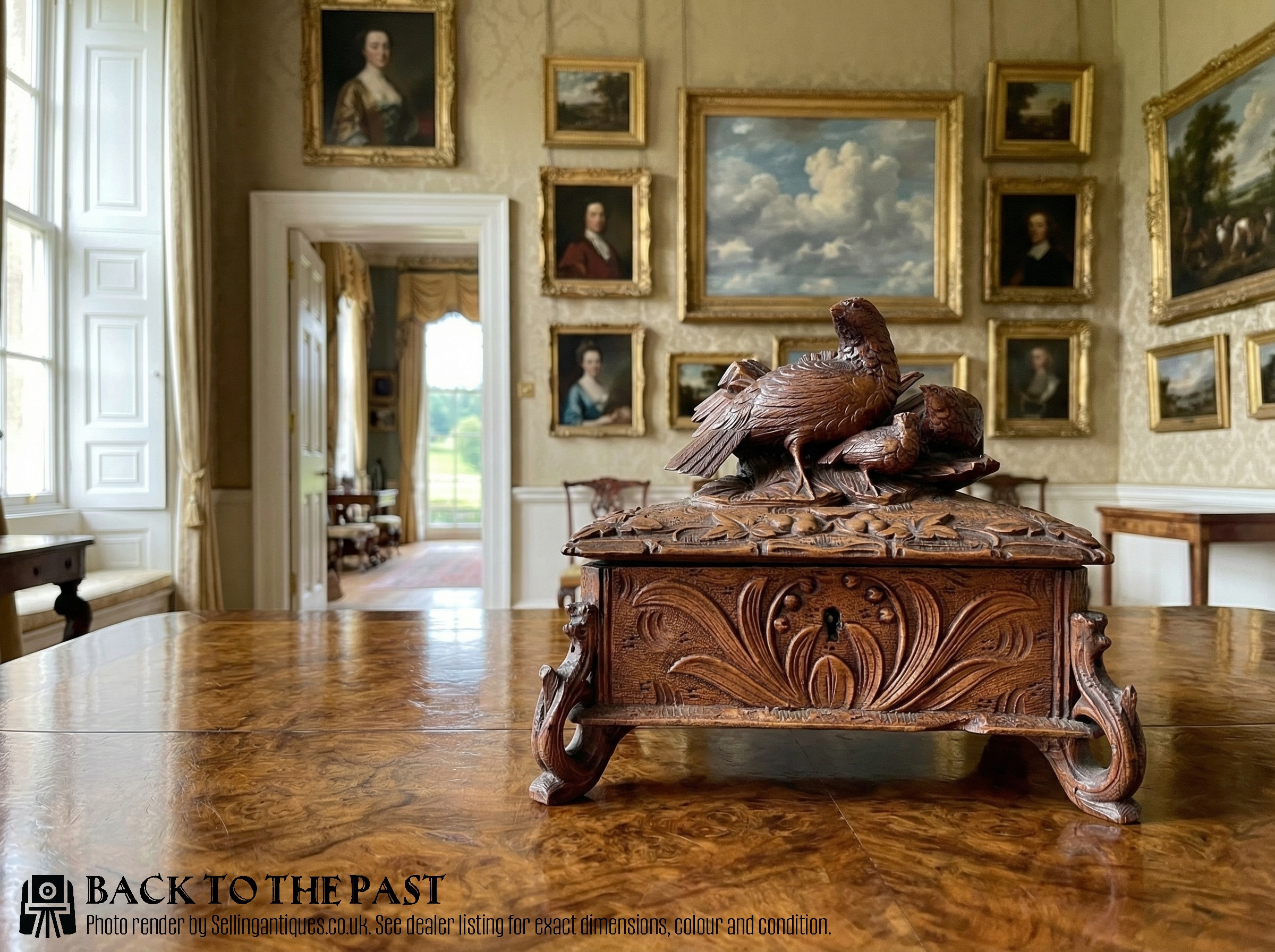
Carved Walnut Casket
A carved walnut casket is a solid timber container designed for domestic storage, often intended for jewellery, games, or correspondence. These pieces range from compact work boxes to larger sarcophagus-shaped receptacles.
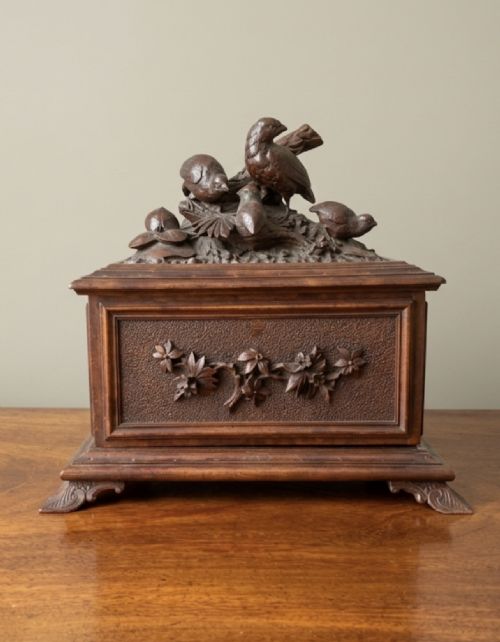
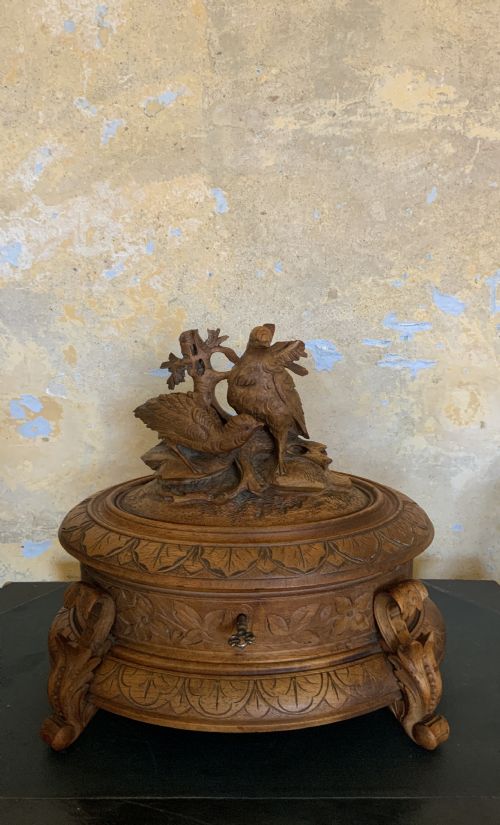
You are most likely to meet Victorian examples on this page, alongside Black Forest pieces and specimens utilising burr walnut. The selection spans the eighteenth, nineteenth, and early twentieth centuries.
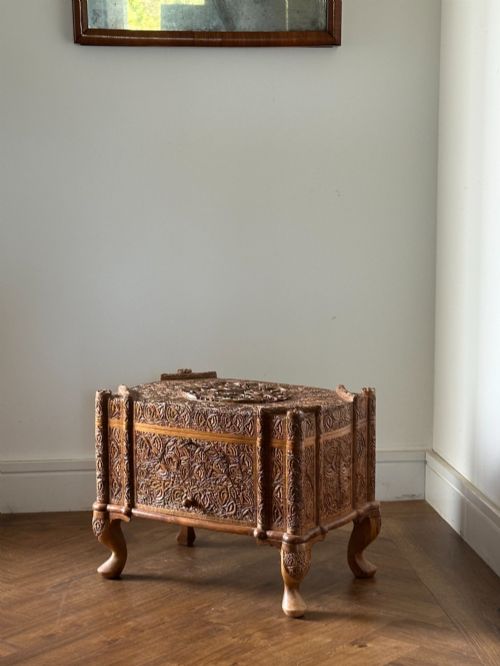
Origin styles vary widely, encompassing Spanish Baroque, Anglo-Indian, and French decorative traditions. Each variant brings distinct carving motifs and hardware choices to the form.
How they were made
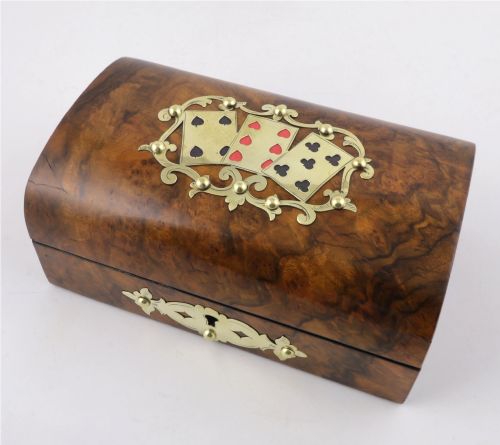
Makers utilised walnut, burr walnut, and linden wood as primary timbers, often paired with brass hinges, locks, and decorative mounts. Some iterations incorporate enamel details alongside the carved wood elements.
Carving techniques required steady hand chiselling to render relief scenes, floral marquetry, or geometric patterns across the lid and sides. Interiors frequently received fabric linings to protect delicate contents.
Card players of the Victorian era kept their poker dice safely locked away inside carved wooden caskets disguised as innocent books.
What varies in quality
The depth and definition of the timber carving set standards across different workshops, with sharper relief work indicating superior hand execution. Selection of timber figure, such as highly patterned burr walnut or figured grain, elevates the visual presence of the box.
Integration of original brass hardware and the precision of inlaid marquetry define the upper tier of production. Structural integrity of the lid closure and the neatness of internal linings distinguish standard utility pieces from exhibition examples.
The Carved Walnut Casket Glossary
- Burr walnut
- A timber cut from the abnormal growth of a walnut tree, yielding swirling grain patterns prized for decorative box lids.
- Black Forest
- A style of wood carving originating from the mountain region of Central Europe, typically featuring naturalistic animal and foliage motifs in deep relief.
- Marquetry
- The art of applying small pieces of veneer to a structure to form decorative patterns, frequently seen in floral designs on period boxes.
- Sarcophagus
- A box shape featuring a sloping lid profile reminiscent of ancient monumental stone coffins, adopted by nineteenth-century cabinet makers.
- Work box
- A compartmentalised container designed to hold sewing implements, threads, and small crafting tools.
Carved Walnut Casket: Frequently Asked Questions
How are these boxes dated?
Dating relies on timber preparation methods, lock mechanisms, and stylistic clues within the carving. Cabinet making conventions shifted noticeably between the eighteenth and late nineteenth centuries.
Hardware styles and interior lining fabrics also offer chronological markers for pieces lacking direct documentation.
What was a games box used for?
Games boxes housed playing cards, dice, and small counters for domestic leisure pastimes. The interiors typically featured dedicated partitions to keep pieces organised.
These containers sat openly in drawing rooms as both functional items and decorative conversation pieces.
Are all these pieces made of solid walnut?
Construction methods vary between solid timber and applied veneers over secondary woods. Burr walnut panels were frequently laid as decorative veneers onto a stable carcase.
Examining the grain continuity across edges helps determine whether a piece is solid or veneered.
How do I care for walnut wood?
Walnut benefits from stable room humidity and protection from direct sunlight to prevent timber shrinkage and fading. Occasional gentle dusting with a soft dry cloth maintains the surface sheen.
Harsh chemical polishes should be avoided to protect the original finish and carved details.