
Carved Timber Box
A carved timber box brings tangible texture to a room, offering practical storage disguised in rich regional craft.

What they are
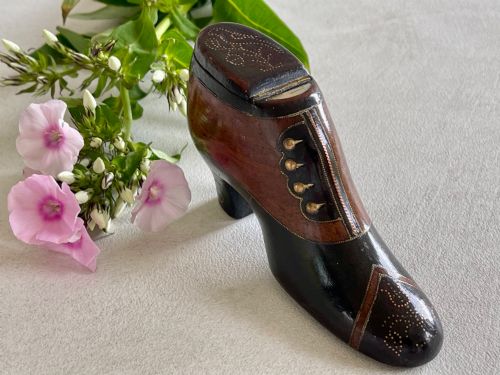
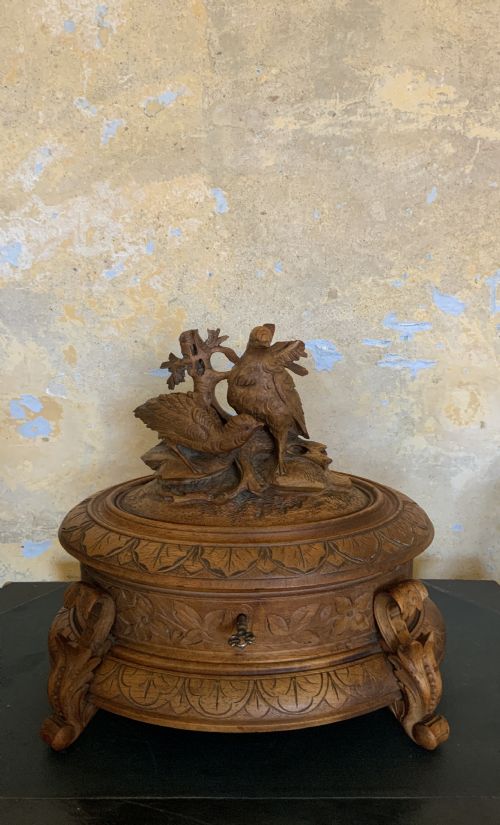
A carved timber box spans several distinct geographical traditions, from European Black Forest caskets to Anglo-Indian spice chests and Chinese bamboo containers. These pieces function as small storage caskets, jewellery holders, or larger dowry chests intended to secure precious household goods.
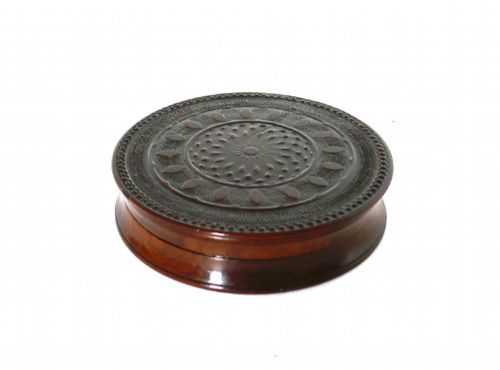
The specimens recorded on this page range across the eighteenth, nineteenth, and early twentieth centuries. Forms vary from small circular lidded vessels to substantial trunks forged with metal and wrought iron reinforcements.
Materials extend beyond standard European hardwoods to incorporate sandalwood, teak, and bamboo. Each regional workshop applies specific decorative vocabularies, connecting the object directly to its cultural origin.
How they were made
Makers utilised dense timbers such as teak and sandalwood, which respond well to deep hand-carving and retain intricate detail over centuries. Artisans employed traditional hand chisels and gouges to carve motifs directly into the solid wood grain.
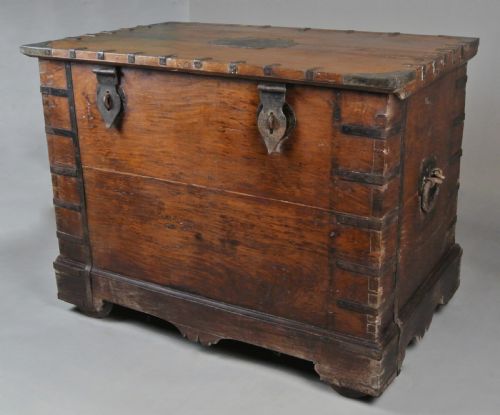
Metal elements including brass, iron, and wrought iron appear as functional hinges, locking mechanisms, and structural straps. These metal components were forged by hand and integrated directly into the timber construction.
Retail Price Guide 2026
Typical UK retail prices for carved timber box, calculated from the Sellingantiques database of over a million retail prices indexed since 2003. This retail price guide relies exclusively on Sellingantiques data; no external sources or auction records are used, so the figures do not describe the wider market.
Listings feature items from the eighteenth, nineteenth, and early twentieth centuries, constructed from teak, sandalwood, and bamboo.
What varies in quality
The depth and precision of the hand-carving separate standard containers from exceptional works. Profuse, multi-layered carving requires skilled execution that maintains structural integrity across the entire surface of the box.
Material selection dictates the refinement of the piece, with aromatic sandalwood and seasoned teak holding sharper relief than softer woods. The integration of original metal fittings, such as hand-wrought iron hinges, contributes to the overall integrity of the construction.
The Carved Timber Box Glossary
- Casket
- A small decorative box or chest typically used for holding valuables, jewellery, or documents. These objects often feature hinged lids and secure latches.
- Spice box
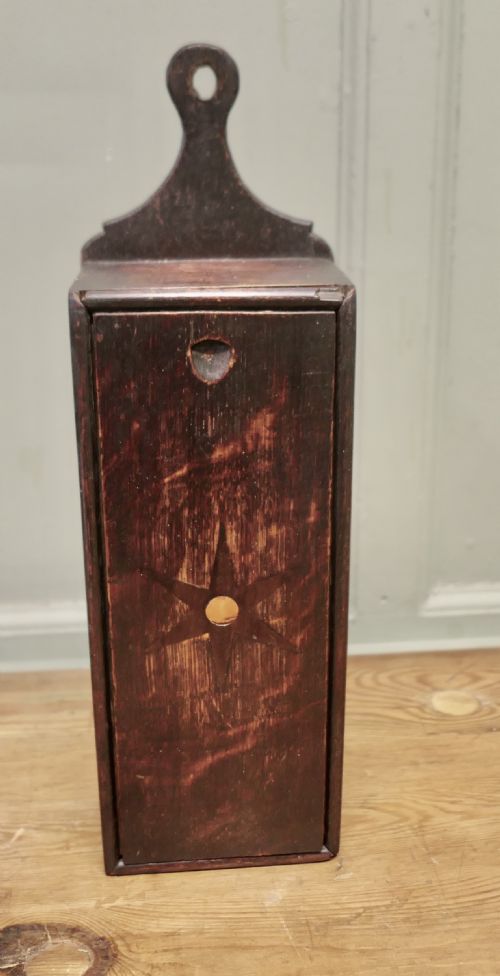
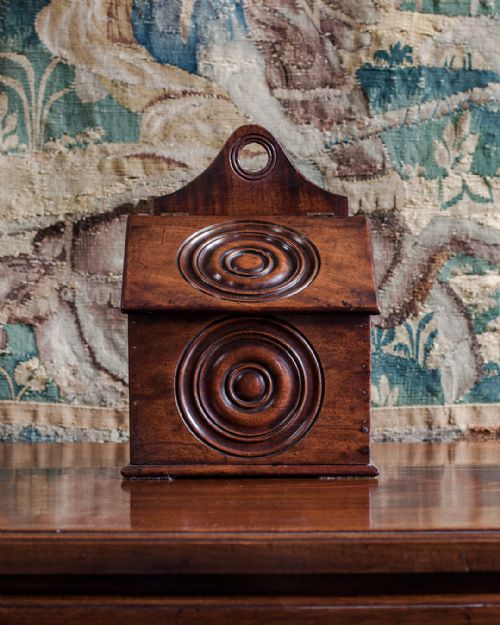
- A compartmentalised container designed to store culinary spices, frequently featuring internal fitted drawers or sections. Eighteenth-century examples often utilise dense teak.
- Dowry chest
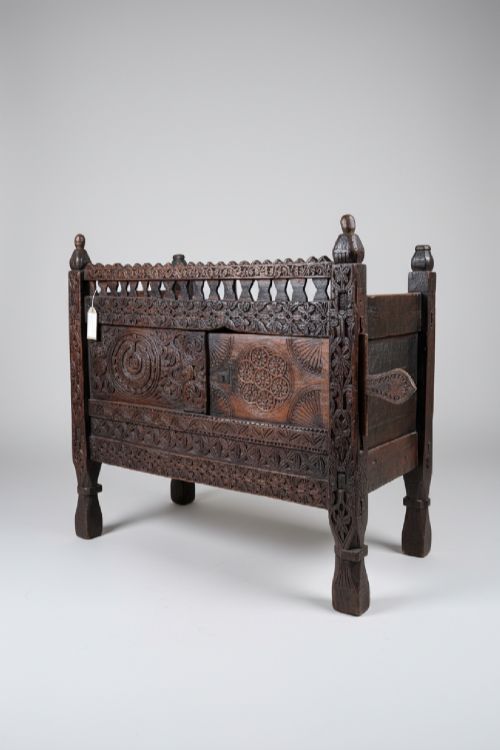
- A large storage trunk created for a bride's household linen and possessions, often featuring robust iron hardware. Jaisalmer examples demonstrate regional Indian construction methods.
- Black Forest
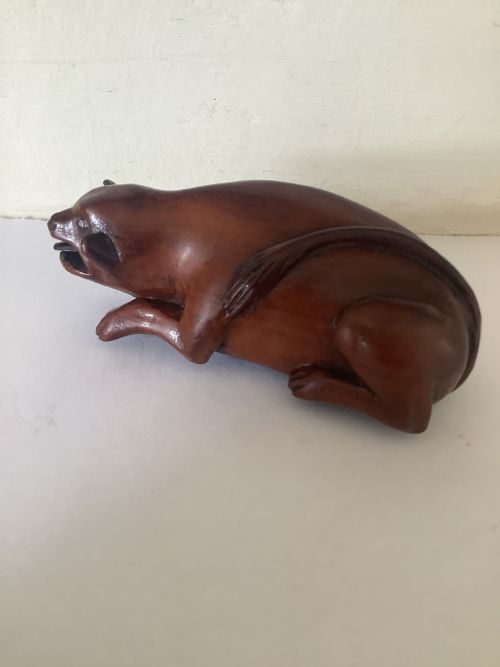
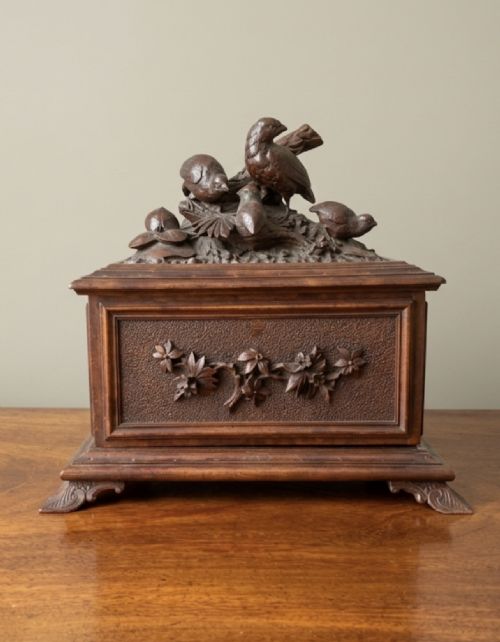
- A nineteenth-century European style originating in the mountainous region, known for naturalistic animal and foliage carving in wood. These caskets display high-relief sculptural detailing.
Frequently Asked Questions
How do I care for antique wood?
Keep wooden boxes away from direct sunlight and sudden changes in room temperature to prevent the timber from splitting.
Apply a light application of appropriate wax polish periodically to maintain the natural sheen of the carved surface.
How are different regional styles identified?
Identification relies on observing the specific carving motifs, timber species, and metal hardware characteristic of each distinct area of origin.
For instance, sandalwood and teak point towards Indian workshops, while deep pictorial relief often indicates European Black Forest production.
Are the metal fittings original?
Original metal fittings generally display hand-forged characteristics such as uneven wrought iron surfaces and period-appropriate fixing nails.
Comparing the oxidation of the metal with the wear on the surrounding timber helps determine if the hardware belongs to the period of manufacture.