


Victorian Desk Box
When you search for a victorian desk box, you enter a utilitarian world of correspondence cabinets, brass-bound writing slopes, and letter boxes designed for the nineteenth-century study.

Victorian Desk Box
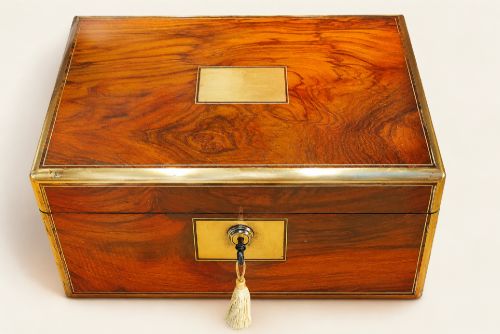
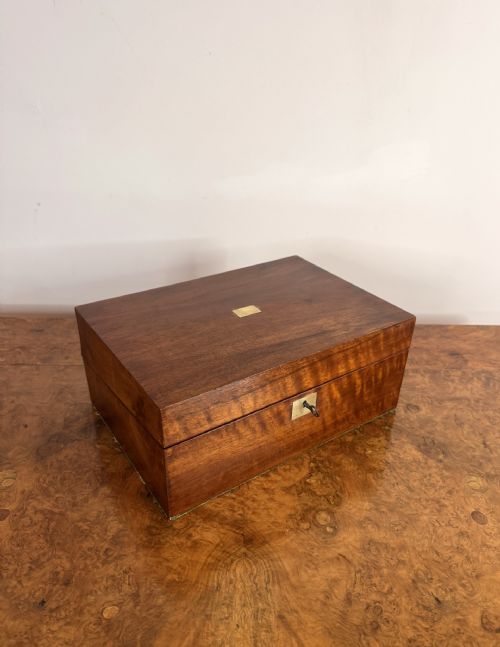
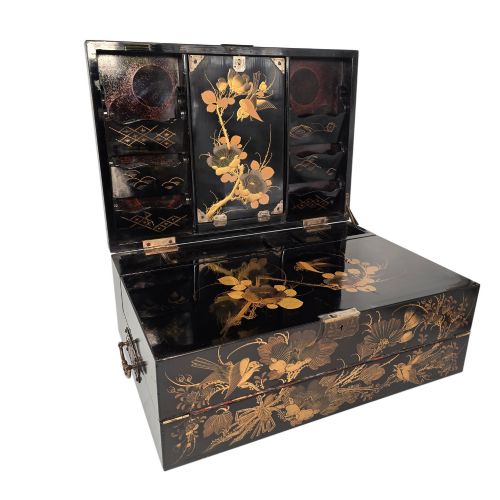
A victorian desk box encompasses writing slopes, correspondence letter boxes, stationery cabinets, and inkstands designed to keep private documents and writing materials ordered on a table or campaign desk.
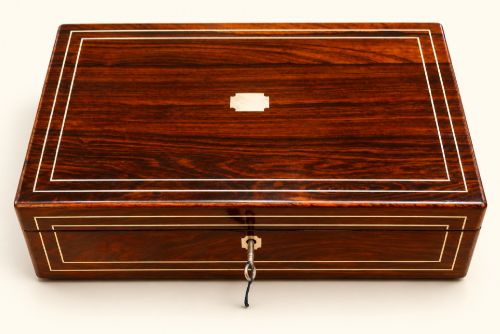
The selections span mid-Victorian mahogany and walnut pieces alongside rosewood, coromandel, and oak constructions, frequently appearing with brass binding, inlaid details, or fitted compartments for inkwells and pens.
Originating primarily from nineteenth-century British workshops, these desktop containers served country houses, clerks, and travellers who required portable writing facilities before the widespread adoption of modern office furniture.
Materials and Construction
Cabinetmakers utilised dense timbers like mahogany, walnut, rosewood, and coromandel as structural foundations, often applying burr walnut veneers or satinwood banding to exterior surfaces for decorative contrast.
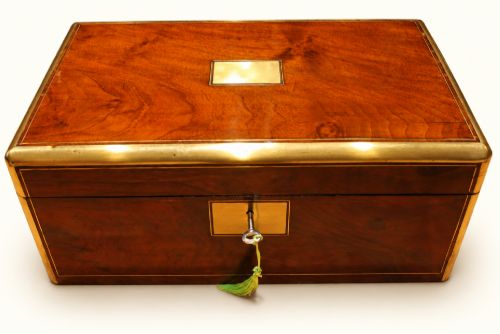
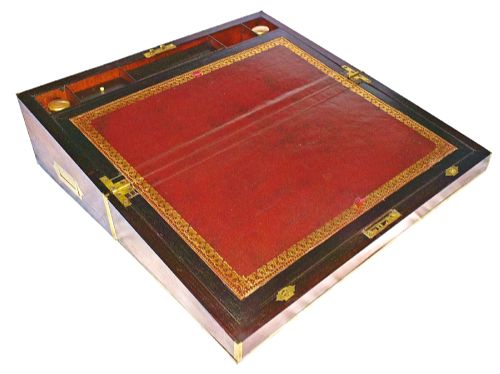
Metal reinforcement was essential for durability, resulting in heavy brass corner brackets, flush carrying handles, inlaid escutcheons, and locking mechanisms that secured folding writing slopes and stationery compartments.
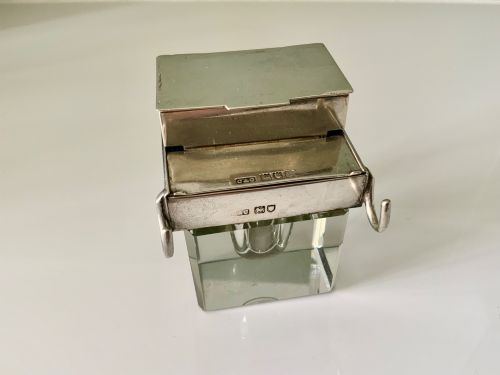
Interiors combined secondary softwoods with leather-lined writing surfaces, velvet-fitted slots for pens, and glass inkwells mounted with hinged brass or silver lids.
Victorian Desk Box Retail Price Guide 2026
Typical asking prices for victorian desk box among the pieces listed under this phrase on Sellingantiques today, from the lower quarter to the upper quarter. They describe what is for sale here now, not the wider market.
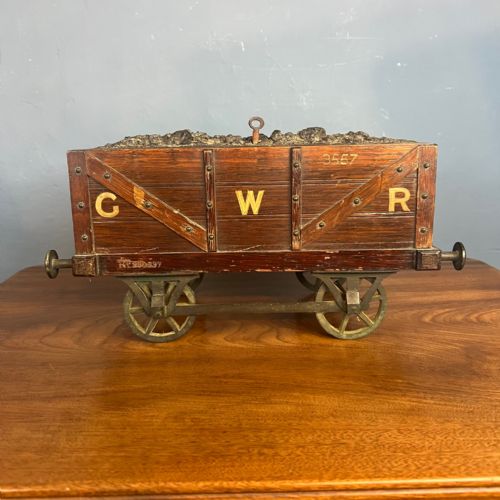
Surviving Victorian desk accessories occasionally include taxidermy, such as an elaborate horse hoof desk tidy.
Evaluating the Pieces
Quality rests on the selection of timber veneers, the precision of brass inlay, and the structural integrity of the carcase under shifting atmospheric conditions.
Superior examples feature fully fitted interiors with secret drawers, original working locks with matching keys, cut-glass inkwells, and harmonious secondary woods rather than utilitarian pine linings.
Decoration distinguishes standard boxes from exceptional commissions, where marquetry, Tunbridge ware mosaic, or tortoiseshell panels demonstrate the highest tier of nineteenth-century cabinet work.
The Victorian Desk Box Glossary
- Writing slope
- A portable box with a hinged sloping lid that opens to reveal a velvet or leather-covered writing surface and internal compartments for stationery. These pieces fold flat for travel and storage.
- Campaign box
- A sturdy wooden box reinforced with brass corners and flush carrying handles built for military officers on the move. They are constructed to withstand the rigours of transit.
- Stationery box
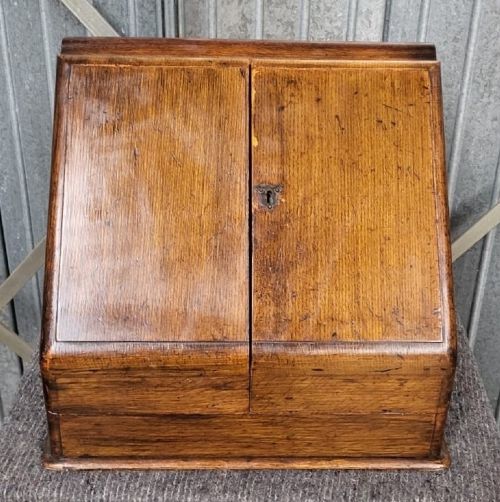
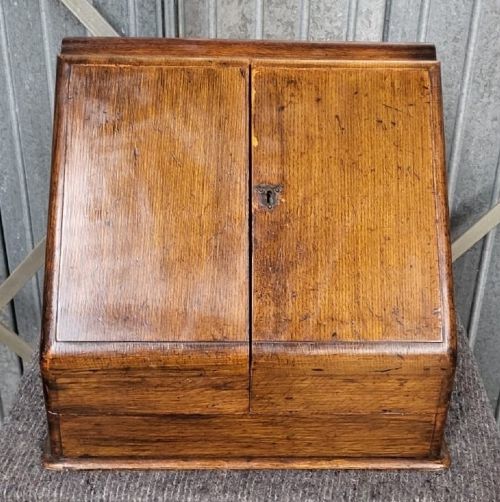
- An upright desktop cabinet designed to hold envelopes, paper, and correspondence upright in tiered slots. They often feature sloping or gabled lids with glass or wood panels.
- Escutcheon
- A decorative brass plate surrounding a keyhole that protects the surrounding wood from wear. They often double as functional locking catches.
- Tunbridge ware
- A meticulous form of woodwork featuring mosaic patterns assembled from thousands of tiny coloured wood blocks to depict geometric scenes or flora. It adorns luxury Victorian desk boxes.
Victorian Desk Box: Frequently Asked Questions
What is the difference between a writing slope and a stationery box?
A writing slope is a portable box that opens into an angled writing surface with internal storage for paper and ink. A stationery box sits upright on a desk to hold letters, envelopes, and blotting paper.
Writing slopes focus on the act of composition itself, while stationery boxes act as desktop filing cabinets for incoming and outgoing correspondence.
How were brass-bound boxes used?
Brass-bound boxes were constructed for travel, particularly by military officers, colonial officials, and affluent families on the move. The metal strips protected the corners and edges from heavy impacts during transport.
When locked, these boxes secured private letters, legal documents, and currency away from prying eyes while journeying across the British Empire.
Do these boxes still contain their original inkwells?
Many retain their original cut-glass inkwells fitted with brass or silver screw caps, though some have lost them over time. Replacements are common in older desk accessories.
Checking the interior collars helps determine if the inkwells match the age and proportions of the surrounding wooden partitions.
How do I care for a Victorian wood desk box?
Keep wooden desk boxes away from direct sunlight and radiators to prevent the timber and burr veneers from splitting or warping. Natural beeswax applied sparingly maintains the lustre of polished mahogany and walnut.
Ensure brass hardware is cleaned gently without abrasive agents that might damage the surrounding wood grain or inlay.