






Victorian Correspondence Box
A victorian correspondence box is a desk accessory for holding letters and writing paper, offering a practical workspace centrepiece.
Victorian Correspondence Box
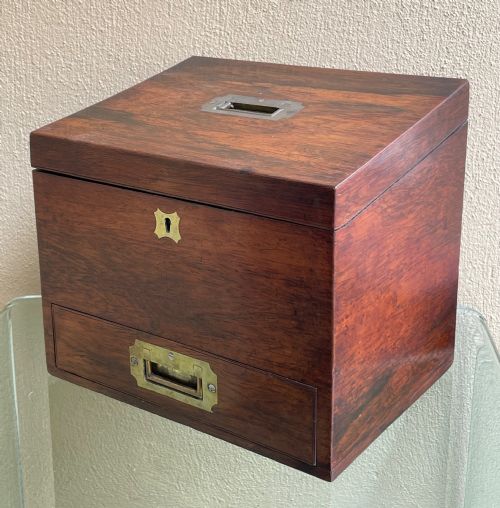
A victorian correspondence box provides a dedicated desktop receptacle for organising letters, stationery, and writing materials in period interiors. The pieces on this page appear primarily in nineteenth-century forms, ranging from country house stationery cabinets to compact travelling boxes.
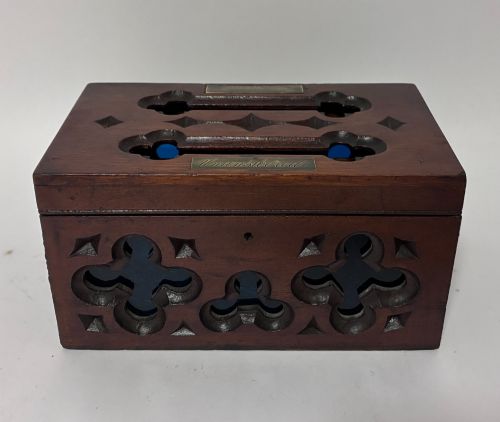
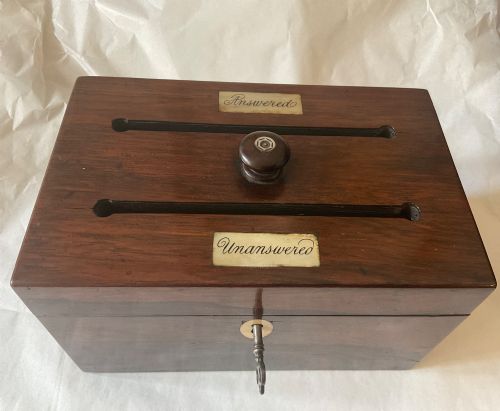
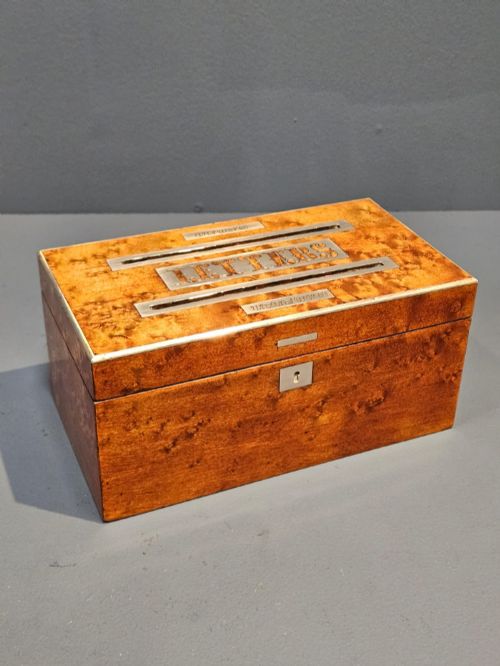
Makers designed these objects for domestic and office use, incorporating compartments for incoming and outgoing mail. Many examples combine letter slots with writing slopes, book rests, or integrated ink wells.
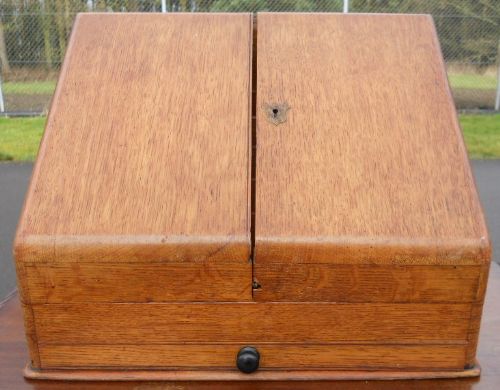
The selection encompasses standard walnut and oak deskside models alongside campaign styles and inlaid varieties. Buyers encounter everything from simple wooden letter boxes to elaborate brass-mounted cabinets.
How They Were Made
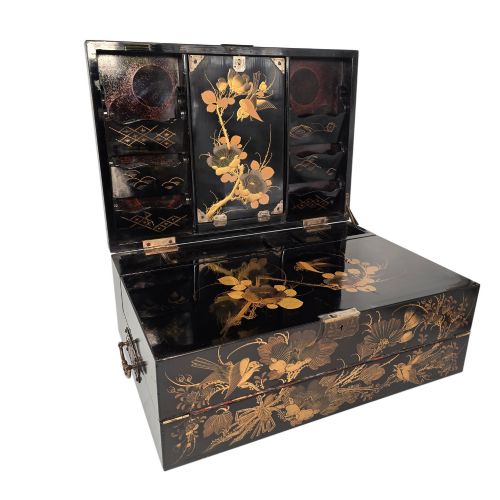
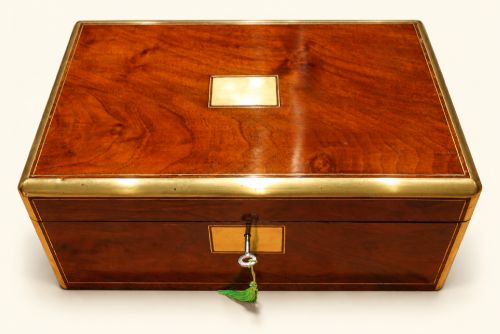
Cabinet makers utilised dense hardwoods such as mahogany, oak, walnut, and rosewood, often applying veneers of burr walnut or burr satinwood to visible surfaces. Exotic materials like coromandel, ebony, and Japanese lacquer appear on select high-end examples.
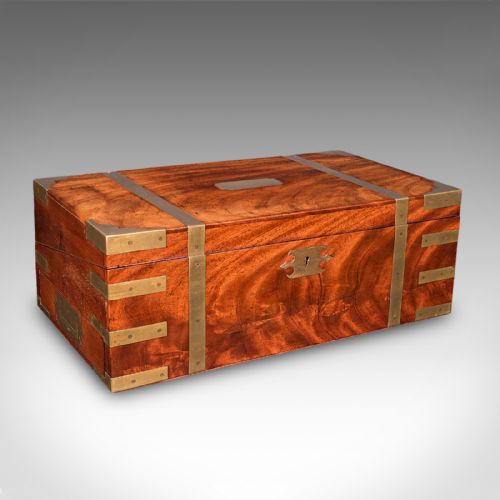
Structural reinforcement relied on heavy brass mounts, binding, and campaign-style hardware designed for durability during travel. Interiors frequently feature leather linings, bone details, and fitted compartments for pens and paper.
Victorian Correspondence Box Retail Price Guide 2026
Typical asking prices for victorian correspondence box among the pieces listed under this phrase on Sellingantiques today, from the lower quarter to the upper quarter. They describe what is for sale here now, not the wider market.
The listings feature woods including oak, mahogany, rosewood, walnut, and coromandel.
What Varies in Quality
Quality rests upon the selection of timber veneers and the precision of the cabinet work, particularly in the mitring of joints and the fit of internal partitions. Finer pieces demonstrate superior timber figure and sophisticated mechanical compartments.
Hardware execution separates standard workshop production from exceptional examples, seen in heavy brass mounts, functioning locks, and meticulous marquetry or inlay. The presence of specialised internal fittings like velvet or leather writing surfaces elevates the standard of the piece.
Edmund Nye·W and J Milne·Houghton and Gunn
The Victorian Correspondence Box Glossary
- Campaign box
- A portable desk or correspondence case constructed for military or travel use, typically featuring recessed brass handles and corner brackets.
- Stationery cabinet
- An upright desk accessory with doors or a falling front that opens to reveal pigeonholes and letter slots.
- Writing slope
- A hinged box that opens to form an inclined writing surface, often fitted with storage space for paper and ink.
- Coromandel
- A dense, dark brown timber with striking black figuring imported from Asia, utilised for luxury nineteenth-century boxes.
- Tunbridge ware
- Small wooden decorative items ornamented with mosaic patterns formed from tiny wood blocks of various natural colours.
Victorian Correspondence Box: Frequently Asked Questions
What is a victorian correspondence box used for?
These boxes were designed to hold writing paper, envelopes, and incoming or outgoing mail on a desk or table.
They kept correspondence organised and private in the study or drawing room of a nineteenth-century home.
How do I identify a campaign correspondence box?
Campaign versions feature robust brass corner pieces and recessed handles designed to withstand frequent travel and military deployment.
They often combine letter storage with folding writing slopes or portable ink wells.
What woods were commonly used?
Cabinet makers relied heavily on domestic woods like oak and mahogany, alongside rich decorative veneers such as walnut and rosewood.
More exotic boxes utilised coromandel, ebony, or burr satinwood for a striking appearance.
Are writing slopes the same as correspondence boxes?
While both serve writing needs, a traditional writing slope opens to provide an angled writing surface rather than focusing primarily on upright letter storage.
Many surviving pieces combine both functions into a single box with internal compartments for stationery.