5,095  PAGES BROWSED TODAY PAGES TODAY 23 ANTIQUES UPLOADED TODAYNEW ARRIVALS
23 ITEMS ADDED TODAY
Sort Order
Items Per Page
Browse Categories
Sort order
Relevant Links
Items per page
ID #SA1202458
FOR SALE
£1,296
Email
Save
Tunbridge Ware Correspondence Stationery Letters Box by Edmund Nye 19th Century
The Real Wood Furniture Company
for sale €1,516     $1,646
£1,296
The Real Wood Furniture Company

The Real Wood Furniture Company

Sellingantiques Verified Since Oct 2025
Browse dealers 92 items
  • About Us
    The real wood furniture company (chris baylis) sells windsor chairs, decorative furniture and objects from large showrooms in the cotswolds
Id #SA1202458
PDF SHARE
SAVE

Tunbridge Ware Correspondence Stationery Letters Box by Edmund Nye 19th Century

19th century
Description

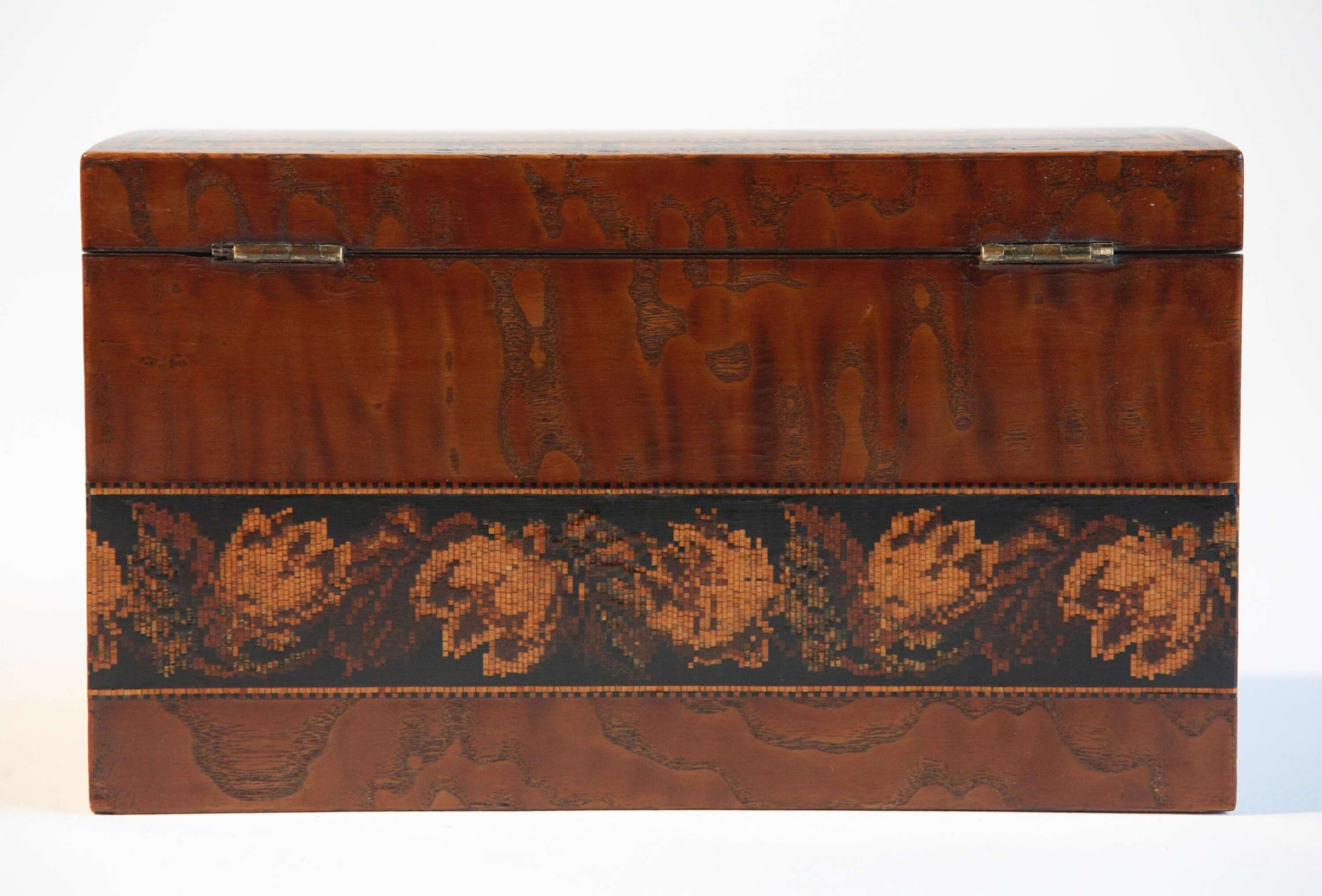
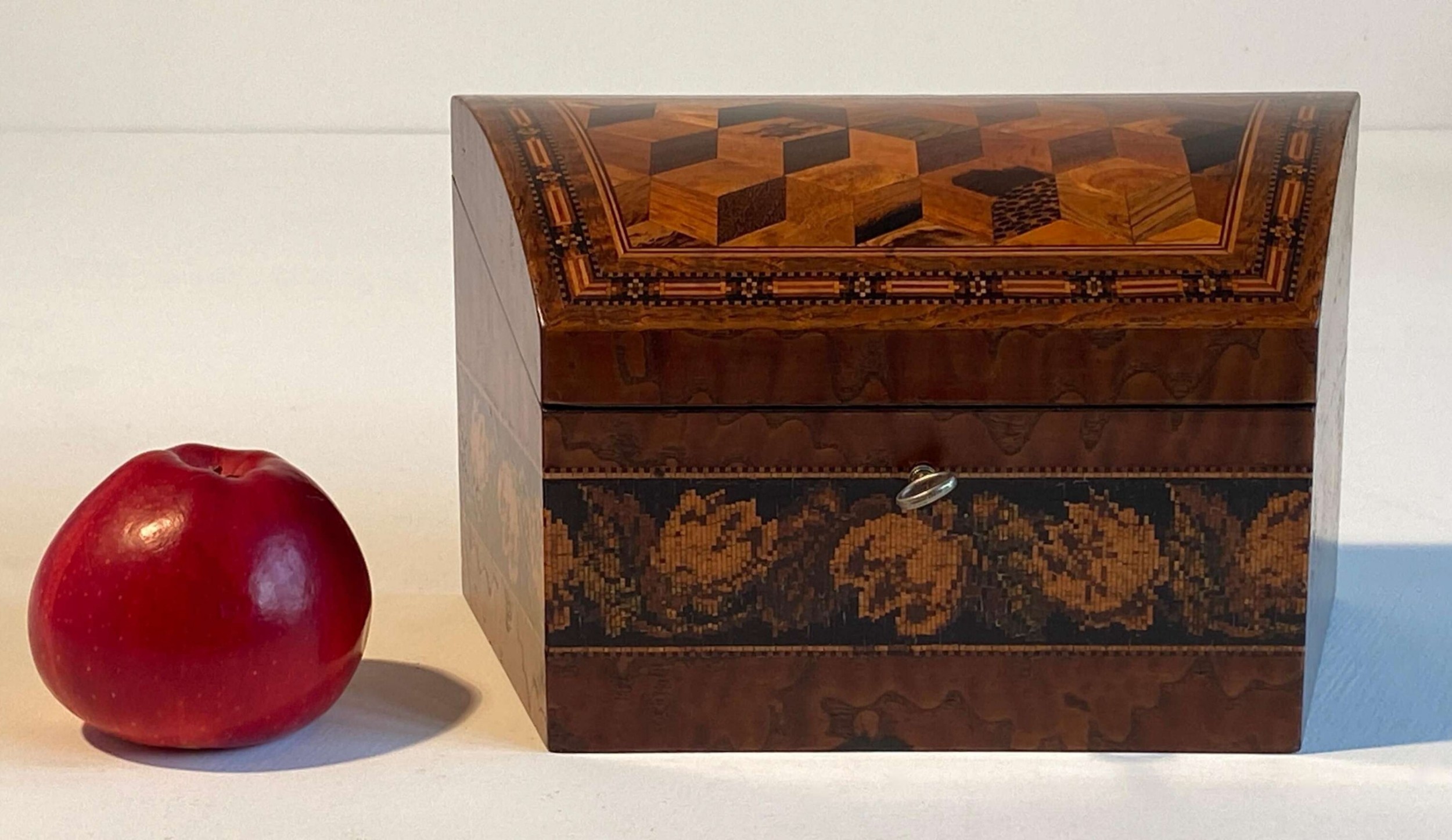
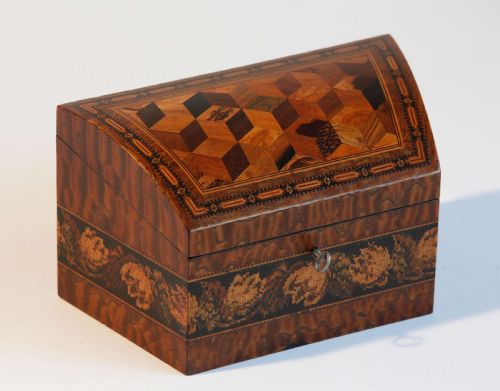
Mid 19th century Tunbridge ware stationery box by Edmund Nye, manufacturer.

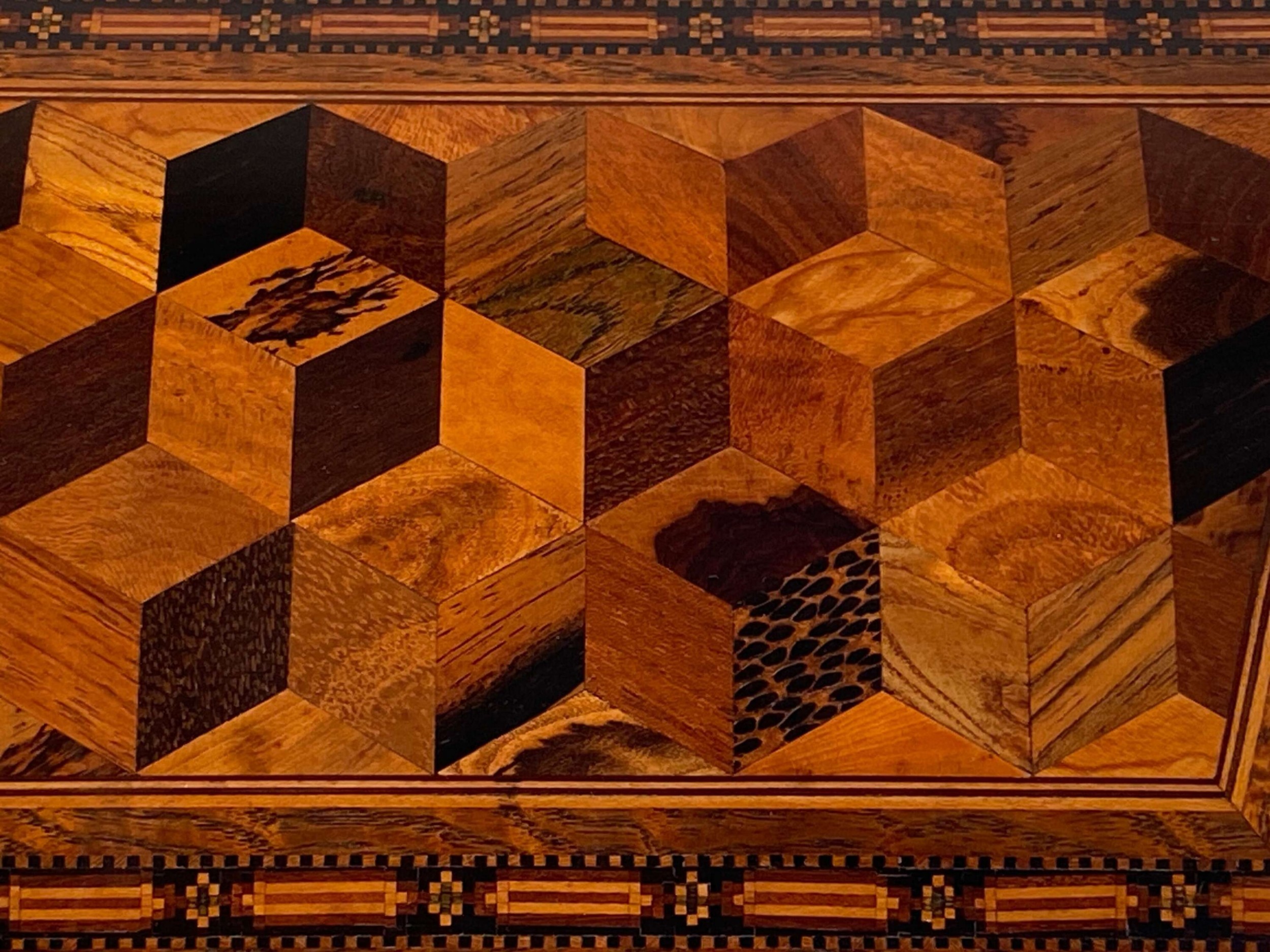
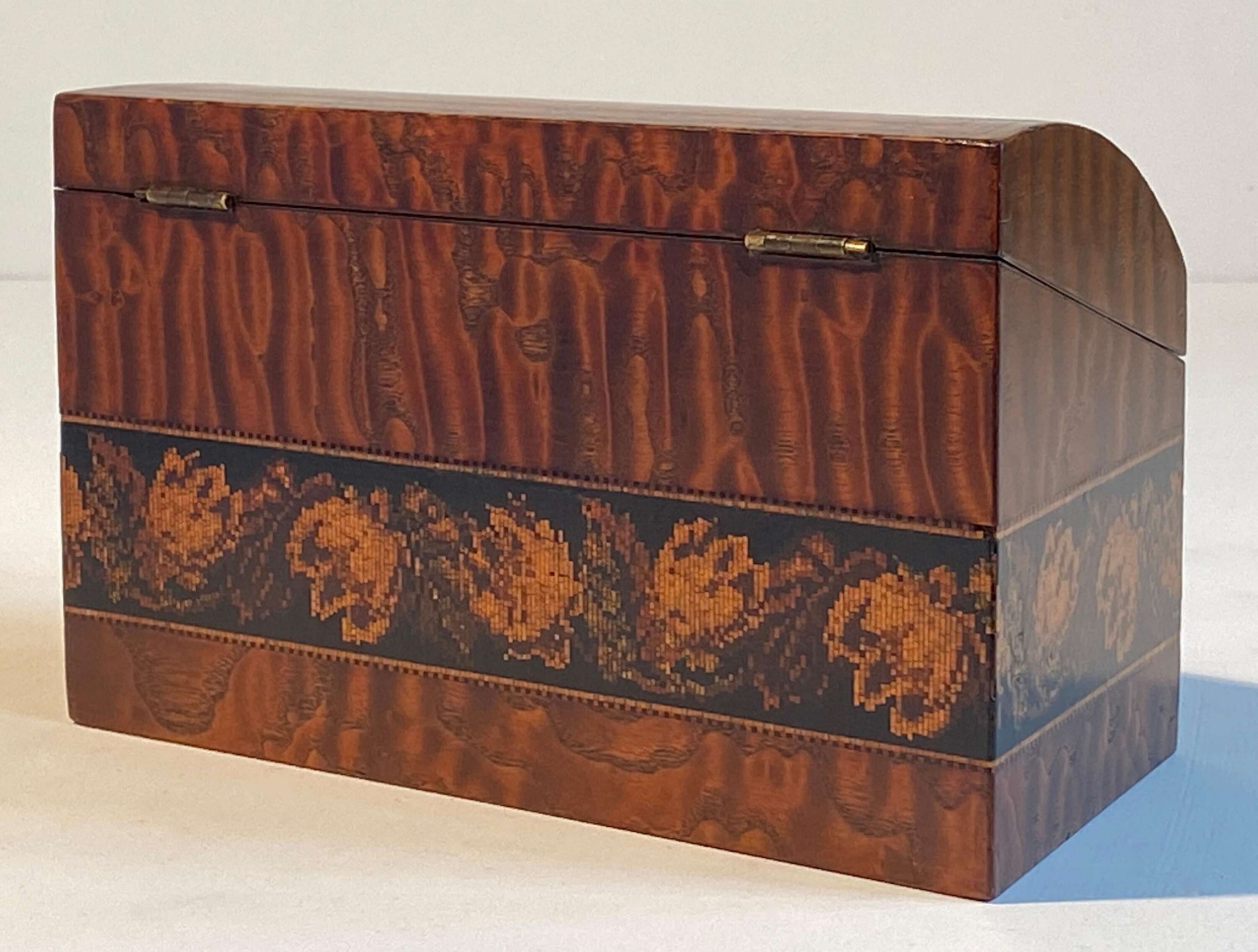
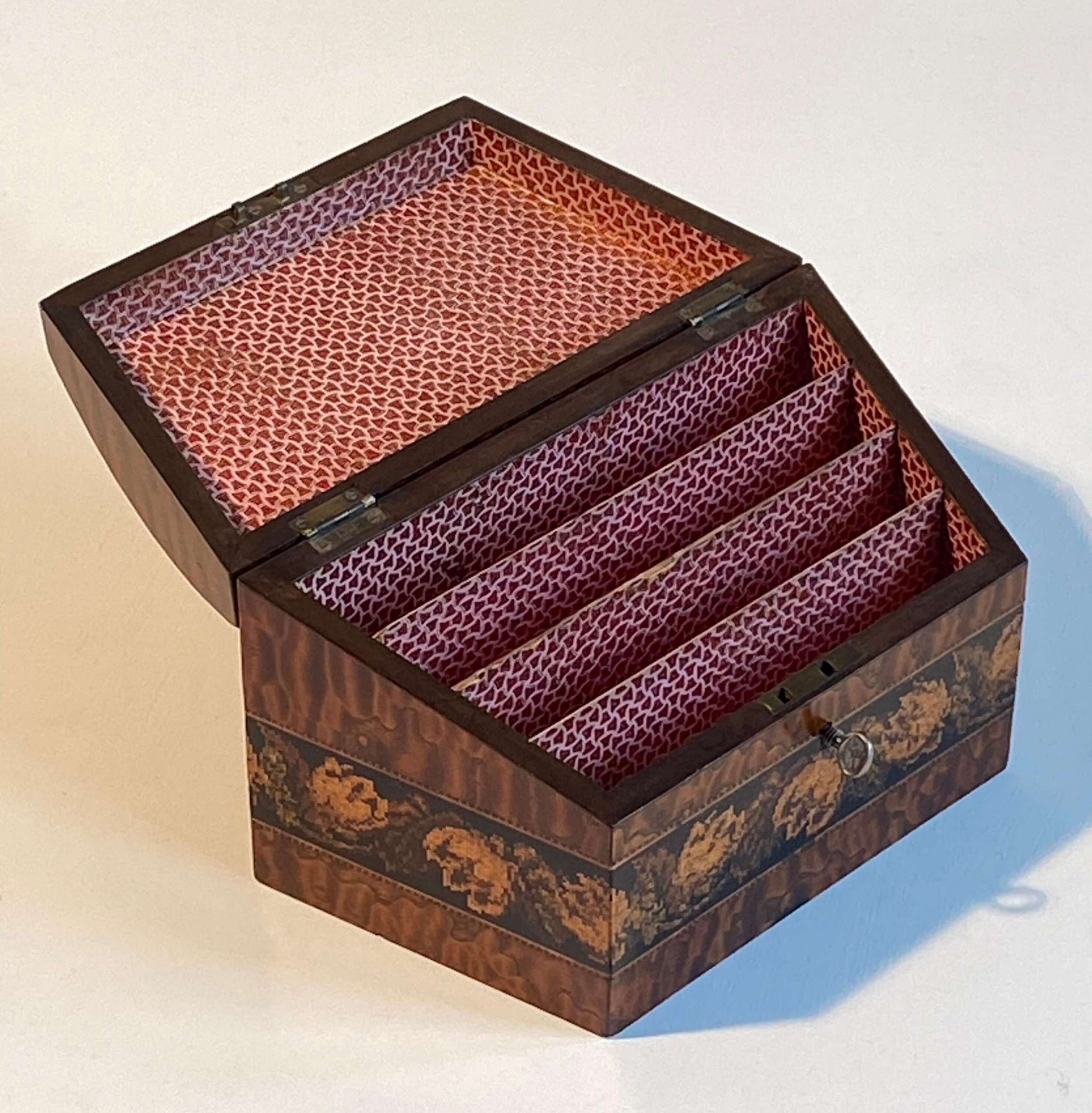
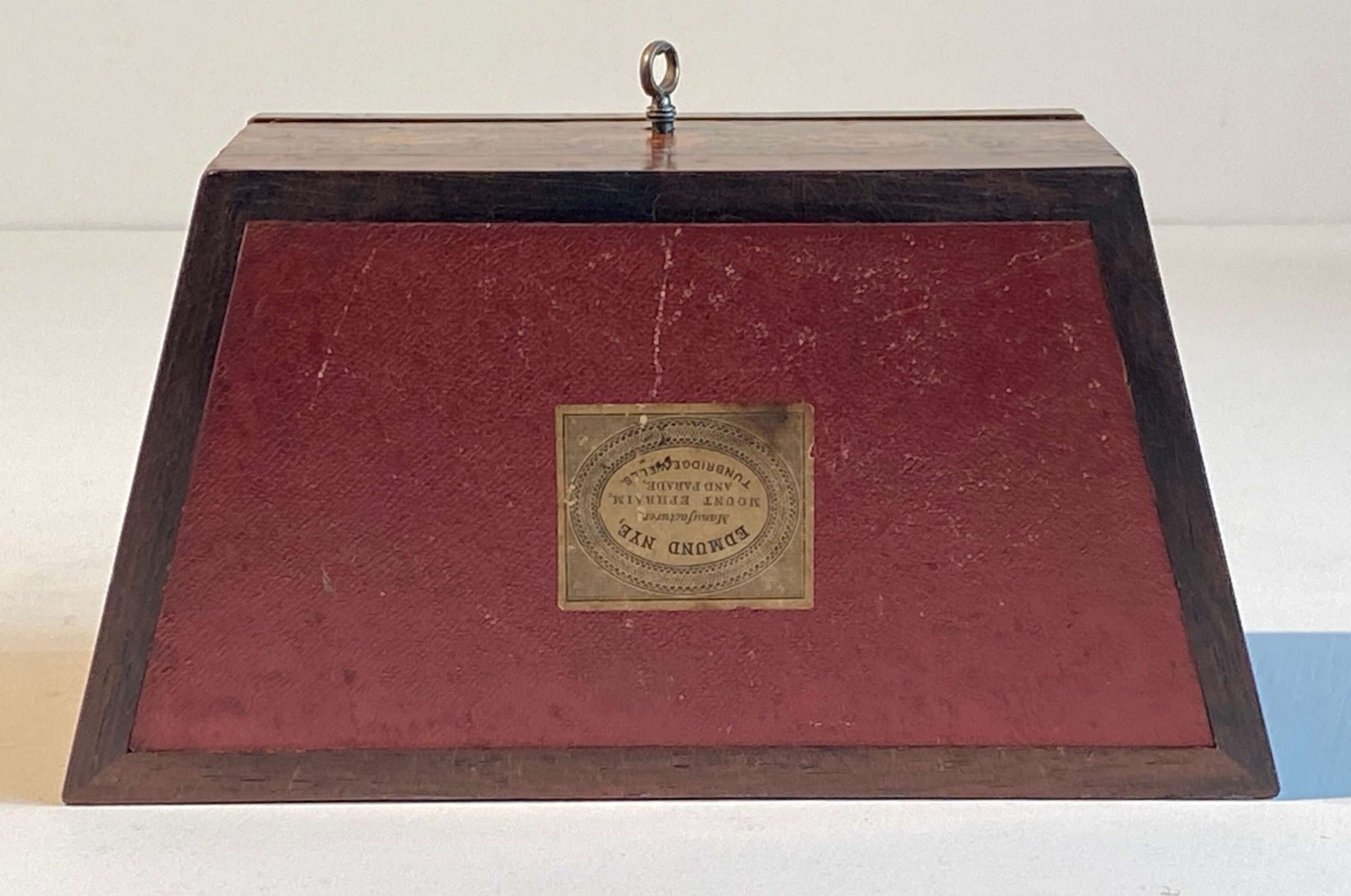
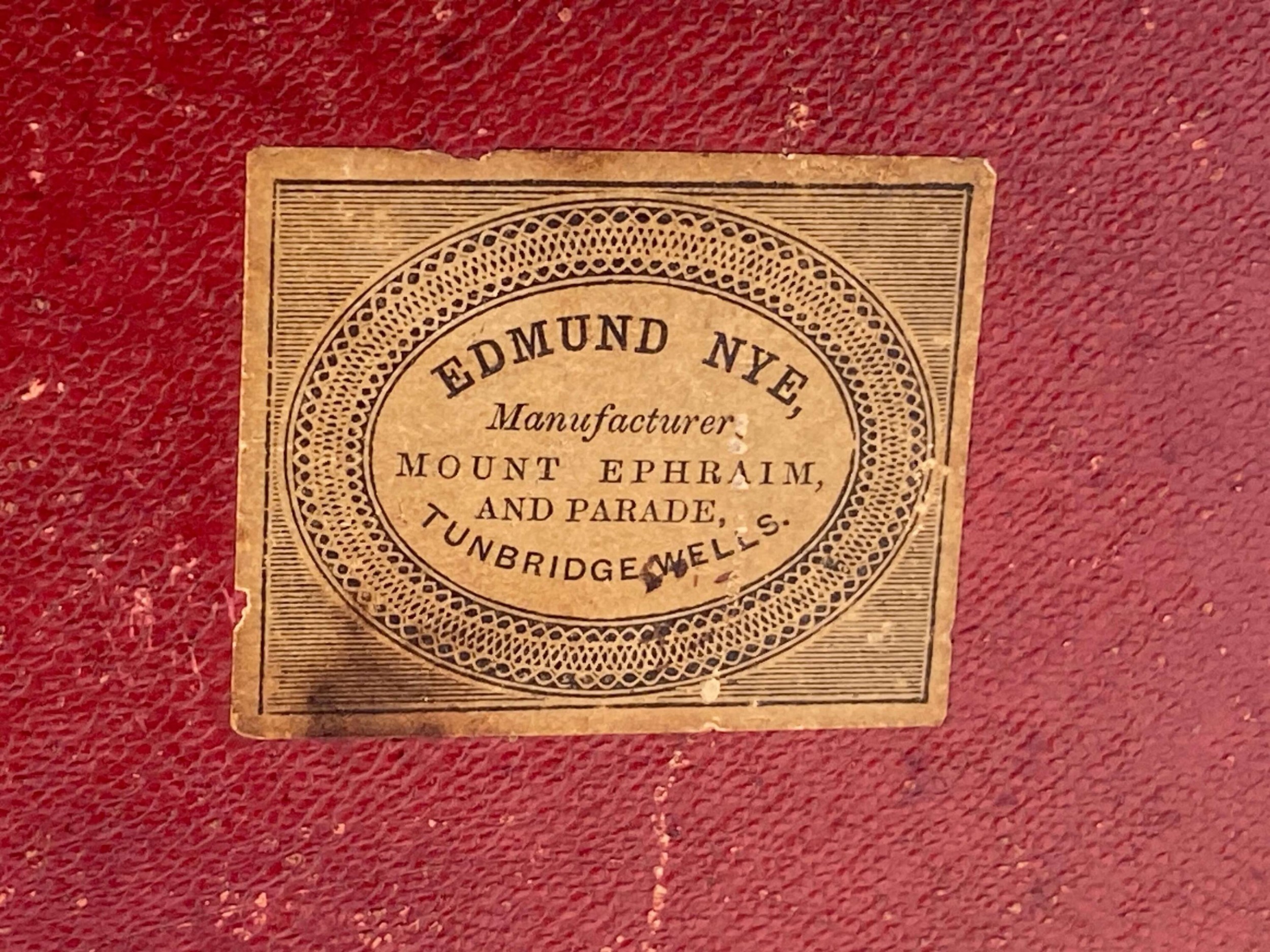
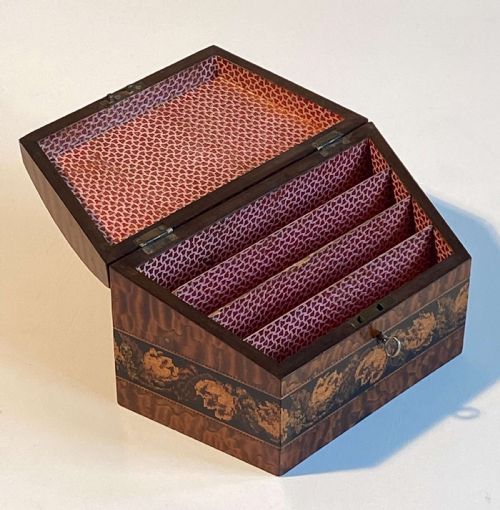
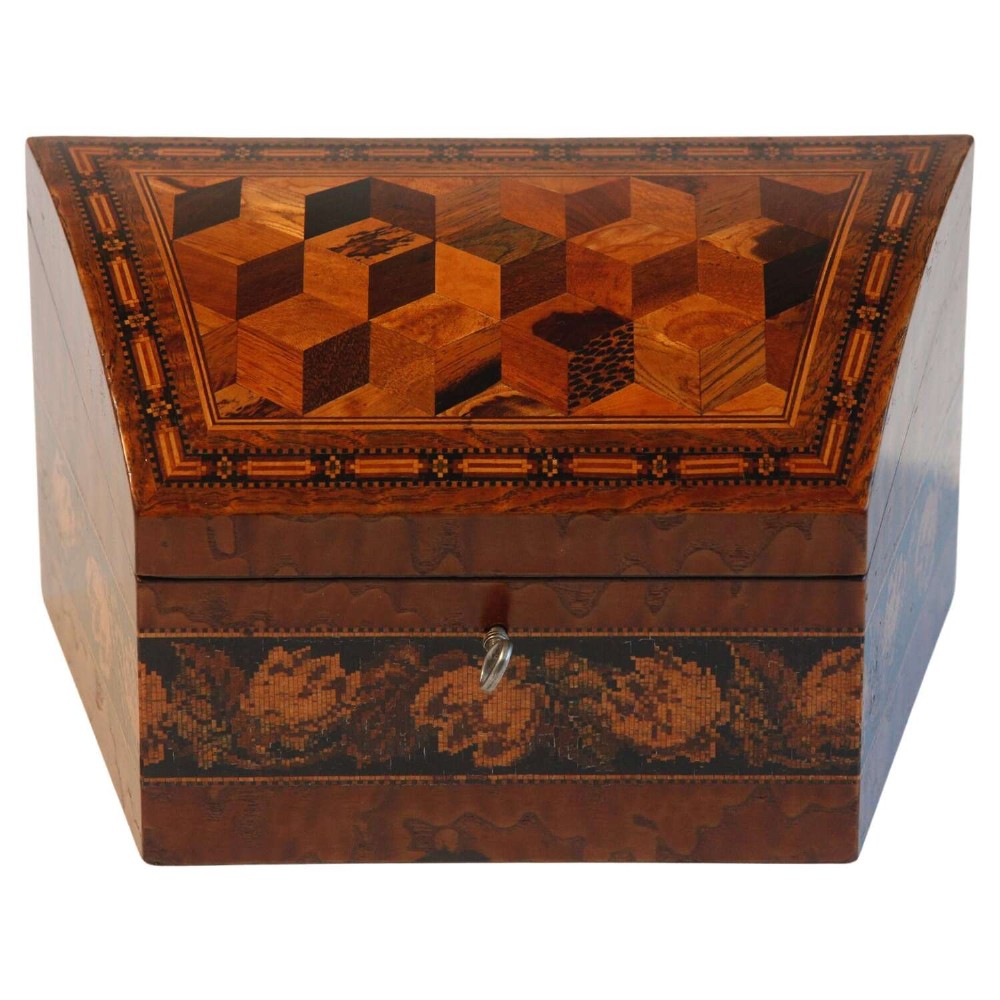
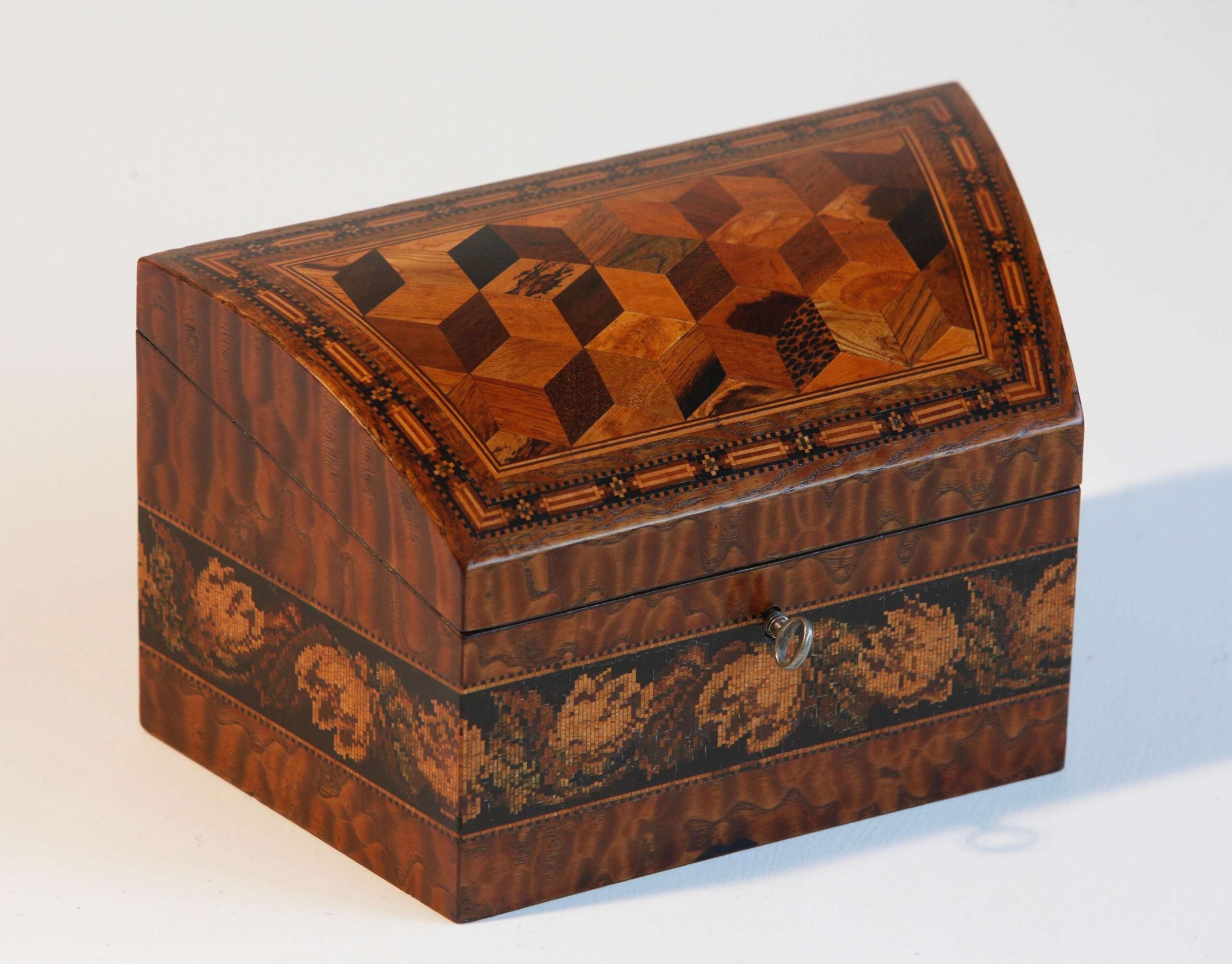
The dome-shaped top is inlaid with a specimen parquetry panel, crossbanded with boxwood and stringing and Tunbridge ware borders. The lid is hinged and lifts up to reveal four stationery dividers and retains the original embossed paper. The hinges are marked with the maker's impress: P. M & C patent. The hinges are made in such a way that they allow the lid to lay down completely. The entire box is veneered in a lively quilted walnut burr, satinwood, ash and crossbanded in a broad floral Tunbridge ware border. The underside retains the maker's label: 'Edmund Nye, Manufacturer, Mount Ephrain and Parade Tunbridge Wells.
Tunbridge ware items originate from the beautiful spa town of Royal Tunbridge Wells in Kent. Tunbridge became known in the 17th Century for its therapeutic waters and by the 18th century it had become a hugely popular spa resort. Shops and stalls were set up to sell local work of distinction to visitors as souvenirs.
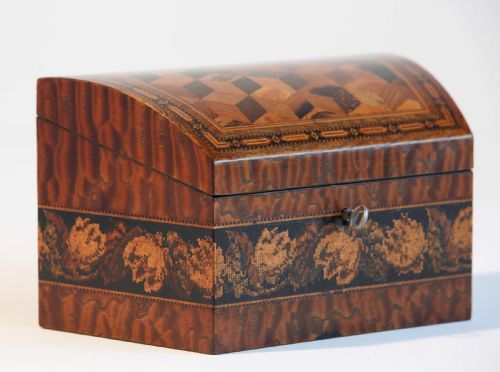
The original Tunbridge ware boxes were decorated with all sorts of different kinds of designs. Many had a central image with views of castles, churches, pavilions, animals, country scenes and sometimes people, such as the Young Prince of Wales. These were surrounded by a variety of bandings and panels of floral and geometric designs. The famous makers of Tunbridge ware produced their most notable work from about 1830 to 1900.
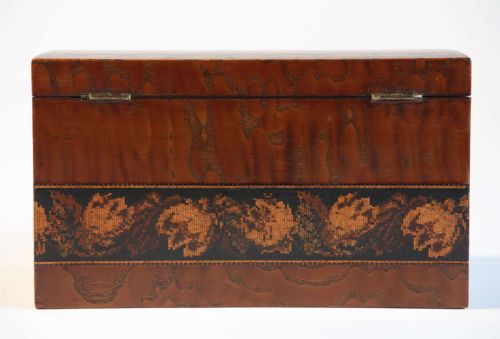
Literature

Edmund Nye (b. 1797 d. 1863) of Parade and Mount Ephraim, Tunbridge Wells was a Tunbridge ware maker and print publisher.

Edmund was the son of James Nye. He became a junior partner to William Fenner Senior and they traded as Fenner & Nye until 1817 when the partnership was dissolved. Nye then opened his own workshop in the nearby market place. Nye was one of the makers considered for the production of a writing table for Princess Victoria in 1826, but William Fenner was ultimately chosen. Nye did however received patronage from the Duchess of Kent.
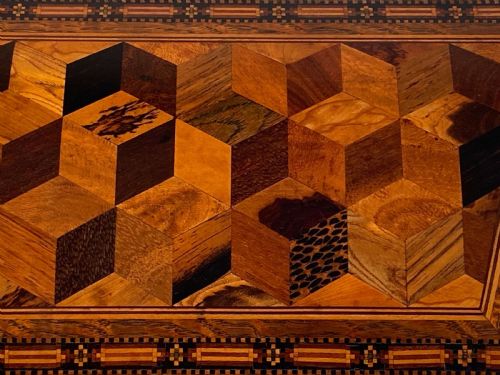
In 1840 the business of Fenner & Co was put into receivership; Nye and his father took over the repository, and then in 1844 the workshops on Mount Ephraim. Nye appears to have carried out extensive building works as trade card engravings depict a single larger and deeper building than the separate repository and workshops shown on the earlier Fenner & Co cards (a trade card for Edmund Nye, c.1830 is in the John Johnson Collection, Bodleian Library).
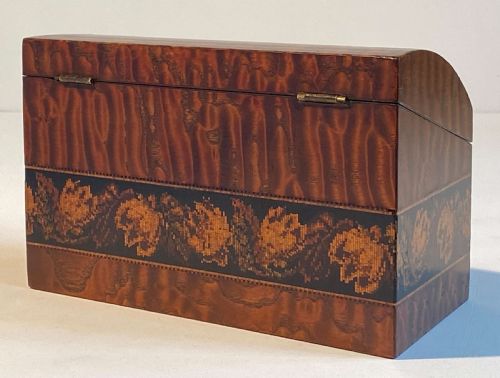
Several prints published by Nye prior to this period are known. One decorated with an illustration of the Baths is dated 1827 and another of the Parade includes Nye’s shop, displaying its facia board reading: ‘MANUFACTURER E. NYE TUNBRIDGE WELLS’. During this period he also opened a shop in Hastings at 10 Castle Street Priory (1826-35). An 1827 print exists with this address on the imprint as well as the Tunbridge Wells one, although the view is of Mount Edgcumbe, Tunbridge Wells.
Nye was a regular user of paper labels on many of his products. One early label reads: ‘NYE/Late Fenner & Nye’/Manufacturer/Tunbridge Wells’, c. 1840. A rectangular one with a decorative border ‘FROM NYE’S/(LATE FENNER & NYE)’ c. 1845, and a third label, with a different decorative border, states ‘EDMUND NYE, MANUFACTURER/Mount Ephraim and Parade,/TUNBRIDGE WELLS’ c. 1848-1853.
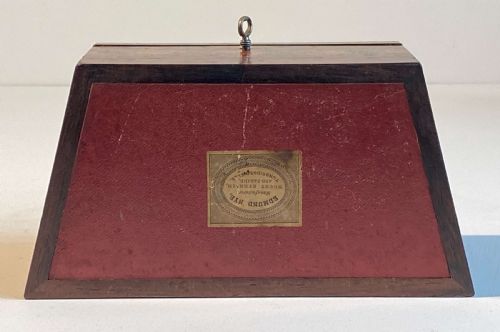
By the mid-1850s larger rectangular and also circular labels were used.

During the same period metal dies were used to stamp the interiors of small boxes. These same 1850s labels and marks were used after 1864 with the name changed to Thomas Barton. Thomas Barton (1819–1903), previously apprenticed at the Wise factory, joined the Nyes in 1836, and worked as Nye's designer. His skills were dutifully recognised by Nye and he employed him to work on the exhibits Nye showed at the 1851 Great Exhibition in Hyde Park. Nye display

Physical Dimensions
Height
14cm (5.51")
Width
23cm (9.06")
Depth
11cm (4.33")
Declaration

The Real Wood Furniture Company has dated this Tunbridge Ware Stationery Box to the 19th Century.

Reference Numbers
Sellingantiques Reference
SA1202458
Dealers Notes

Large showrooms outside Chipping Norton. Please call for an appointment.

www.realwood.co.uk

Description
Mid 19th century Tunbridge ware stationery box by Edmund Nye, manufacturer.
The dome-shaped top is inlaid with a specimen parquetry panel, crossbanded with boxwood and stringing and Tunbridge ware borders.
The Real Wood Furniture Company

The lid is hinged and lifts up to reveal four stationery dividers and retains the original embossed paper. The hinges are marked with the maker's impress: P. M & C patent. The hinges are made in such a way that they allow the lid to lay down completely. The entire box is veneered in a lively quilted walnut burr, satinwood, ash and crossbanded in a broad floral Tunbridge ware border. The underside retains the maker's label: 'Edmund Nye, Manufacturer, Mount Ephrain and Parade Tunbridge Wells.

fig 1. A 19th-century wooden stationery box featuring geometric tumbling block parquetry on the sloped lid and intricate floral mosaic borders around the body.
fig 1. Tunbridge Ware Correspondence Stationery Letters Box by Edmund Nye 19th Century

Tunbridge ware items originate from the beautiful spa town of Royal Tunbridge Wells in Kent. Tunbridge became known in the 17th Century for its therapeutic waters and by the 18th century it had become a hugely popular spa resort. Shops and stalls were set up to sell local work of distinction to visitors as souvenirs.

fig 2. A 19th-century wooden stationery box featuring geometric tumbling block parquetry on the sloped lid and intricate floral mosaic borders around the body.
fig 2. Tunbridge Ware Correspondence Stationery Letters Box by Edmund Nye 19th Century

The original Tunbridge ware boxes were decorated with all sorts of different kinds of designs. Many had a central image with views of castles, churches, pavilions, animals, country scenes and sometimes people, such as the Young Prince of Wales. These were surrounded by a variety of bandings and panels of floral and geometric designs. The famous makers of Tunbridge ware produced their most notable work from about 1830 to 1900.

fig 3. A 19th-century wooden stationery box featuring geometric tumbling block parquetry on the sloped lid and intricate floral mosaic borders around the body.
fig 3. Tunbridge Ware Correspondence Stationery Letters Box by Edmund Nye 19th Century

Literature

Edmund Nye (b. 1797 d. 1863) of Parade and Mount Ephraim, Tunbridge Wells was a Tunbridge ware maker and print publisher.

Edmund was the son of James Nye. He became a junior partner to William Fenner Senior and they traded as Fenner & Nye until 1817 when the partnership was dissolved. Nye then opened his own workshop in the nearby market place. Nye was one of the makers considered for the production of a writing table for Princess Victoria in 1826, but William Fenner was ultimately chosen. Nye did however received patronage from the Duchess of Kent.

fig 4. A 19th-century wooden stationery box featuring geometric tumbling block parquetry on the sloped lid and intricate floral mosaic borders around the body.
fig 4. Tunbridge Ware Correspondence Stationery Letters Box by Edmund Nye 19th Century

In 1840 the business of Fenner & Co was put into receivership; Nye and his father took over the repository, and then in 1844 the workshops on Mount Ephraim. Nye appears to have carried out extensive building works as trade card engravings depict a single larger and deeper building than the separate repository and workshops shown on the earlier Fenner & Co cards (a trade card for Edmund Nye, c.1830 is in the John Johnson Collection, Bodleian Library).

fig 5. A 19th-century wooden stationery box featuring geometric tumbling block parquetry on the sloped lid and intricate floral mosaic borders around the body.
fig 5. Tunbridge Ware Correspondence Stationery Letters Box by Edmund Nye 19th Century

Several prints published by Nye prior to this period are known. One decorated with an illustration of the Baths is dated 1827 and another of the Parade includes Nye’s shop, displaying its facia board reading: ‘MANUFACTURER E. NYE TUNBRIDGE WELLS’. During this period he also opened a shop in Hastings at 10 Castle Street Priory (1826-35). An 1827 print exists with this address on the imprint as well as the Tunbridge Wells one, although the view is of Mount Edgcumbe, Tunbridge Wells.

fig 6. A 19th-century wooden stationery box featuring geometric tumbling block parquetry on the sloped lid and intricate floral mosaic borders around the body.
fig 6. Tunbridge Ware Correspondence Stationery Letters Box by Edmund Nye 19th Century

Nye was a regular user of paper labels on many of his products. One early label reads: ‘NYE/Late Fenner & Nye’/Manufacturer/Tunbridge Wells’, c. 1840. A rectangular one with a decorative border ‘FROM NYE’S/(LATE FENNER & NYE)’ c. 1845, and a third label, with a different decorative border, states ‘EDMUND NYE, MANUFACTURER/Mount Ephraim and Parade,/TUNBRIDGE WELLS’ c. 1848-1853.

fig 7. A 19th-century wooden stationery box featuring geometric tumbling block parquetry on the sloped lid and intricate floral mosaic borders around the body.
fig 7. Tunbridge Ware Correspondence Stationery Letters Box by Edmund Nye 19th Century

By the mid-1850s larger rectangular and also circular labels were used.

During the same period metal dies were used to stamp the interiors of small boxes. These same 1850s labels and marks were used after 1864 with the name changed to Thomas Barton. Thomas Barton (1819–1903), previously apprenticed at the Wise factory, joined the Nyes in 1836, and worked as Nye's designer. His skills were dutifully recognised by Nye and he employed him to work on the exhibits Nye showed at the 1851 Great Exhibition in Hyde Park. Nye display

Height
14cm (5.51")
Width
23cm (9.06")
Depth
11cm (4.33")
Date of Manufacture

The Real Wood Furniture Company has dated this Tunbridge Ware Stationery Box to the 19th Century.

Reference Numbers
Sellingantiques Ref
SA1202458
The Real Wood Furniture Company
Sellingantiques verified Since Oct 2025

The real wood furniture company (chris baylis) sells windsor chairs, decorative furniture and objects from large showrooms in the cotswolds

Dealer Profile

You can view the stock and full dealer information on the The Real Wood Furniture Company Profile Page
PDF SHARE
SAVE
A 19th-century wooden stationery box featuring geometric tumbling block parquetry on the sloped lid and intricate floral mosaic borders around the body.
1 / 10
Archive I A 19th-century wooden stationery box featuring geometric tumbling block parquetry on the sloped lid and intricate floral mosaic borders around the body.

Tunbridge Ware Correspondence Stationery Letters Box by Edmund Nye 19th Century
Archive II A 19th-century wooden stationery box featuring geometric tumbling block parquetry on the sloped lid and intricate floral mosaic borders around the body. View II
Archive III A 19th-century wooden stationery box featuring geometric tumbling block parquetry on the sloped lid and intricate floral mosaic borders around the body. View III
Archive IV A 19th-century wooden stationery box featuring geometric tumbling block parquetry on the sloped lid and intricate floral mosaic borders around the body. View IV
Archive V A 19th-century wooden stationery box featuring geometric tumbling block parquetry on the sloped lid and intricate floral mosaic borders around the body. View V
Archive VI A 19th-century wooden stationery box featuring geometric tumbling block parquetry on the sloped lid and intricate floral mosaic borders around the body. View VI
Archive VII A 19th-century wooden stationery box featuring geometric tumbling block parquetry on the sloped lid and intricate floral mosaic borders around the body. View VII
Archive VIII A 19th-century wooden stationery box featuring geometric tumbling block parquetry on the sloped lid and intricate floral mosaic borders around the body. View VIII
Archive IX A 19th-century wooden stationery box featuring geometric tumbling block parquetry on the sloped lid and intricate floral mosaic borders around the body. View IX
Archive X A 19th-century wooden stationery box featuring geometric tumbling block parquetry on the sloped lid and intricate floral mosaic borders around the body. View X
Enlarged Archival View
Location
At Mo Tighe
Chapel House Grounds
Chipping Norton
Oxfordshire
OX7 5SZ
United Kingdom
Verified Since Oct 2025
Items For Sale 92
The Real Wood Furniture Company
Verified Since Oct 2025
View Dealer Info
Location: At Mo Tighe, Chapel House Grounds, Chipping Norton, Oxfordshire, OX7 5SZ, United Kingdom
Verified
Oct 2025
For Sale
92
A 19th-century wooden stationery box featuring geometric tumbling block parquetry on the sloped lid and intricate floral mosaic borders around the body.
Tunbridge Ware Correspondence Stationery Letters Box by Edmund Nye 19th Century
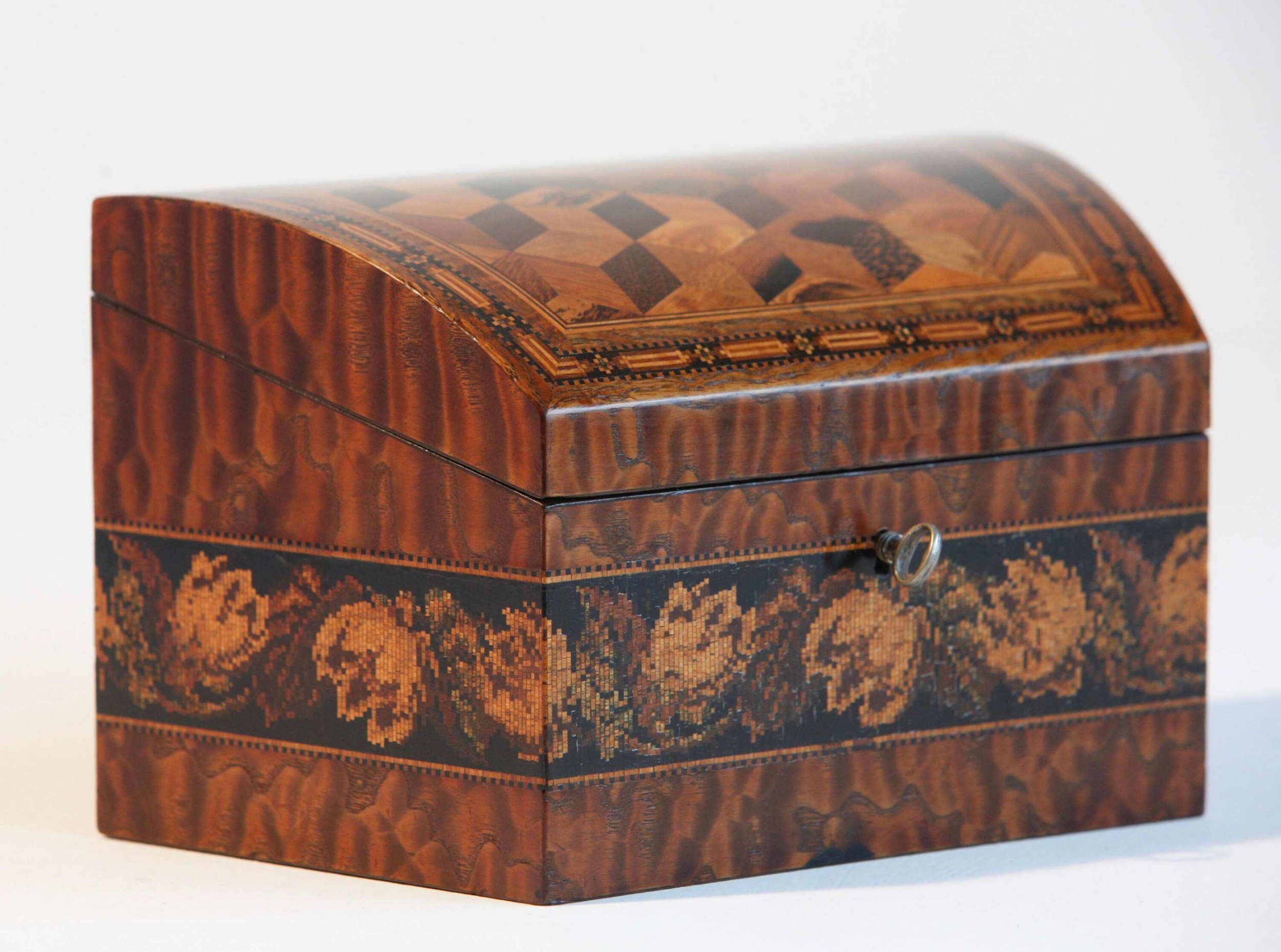
Ref: SA1202458
A 19th-century wooden stationery box featuring geometric tumbling block parquetry on the sloped lid and intricate floral mosaic borders around the body.
Detail View 1
Detail View 2
Detail View 3
Detail View 4
Detail View 5
Detail View 6
Detail View 7
Detail View 8
Detail View 9
Archival Detail
Every single antique dealer on our platform is individually approved by our internal team. We verify their professional trade history, ethical standards, and photographic quality to ensure a secure, high-standard buying environment. Upon joining, every dealer agrees to a strict 9-point code of conduct. While issues can occasionally arise, our dealers typically resolve them swiftly and directly with the buyer. In fact, since our founding in 2002, Sellingantiques has only had to step in to help resolve an issue on roughly five occasions—a true testament to the quality of our dealers and their dedication to your happiness.
Our dealers are highly experienced in packing and shipping fragile, high-value antiques. Because you are in direct contact with the dealer, you will be able to easily go through all available shipping and insurance options together to ensure your item arrives safely.
Antiques are the ultimate green purchase. By choosing historical pieces over newly manufactured goods, you completely eliminate the carbon footprint of modern mass production while preserving exceptional, timeless craftsmanship.

Keep the box away from direct sunlight and fluctuating humidity to prevent timber shrinkage or veneer lifting, dusting regularly with a dry microfibre cloth and applying specialized furniture wax sparingly.

Position the piece atop a contemporary office desk, a hallway console table, or a study bookshelf to serve as an elevated functional storage box and a historical focal point.

Authentic pieces feature end-grain wood mosaics, complex geometric micro-marquetry, period metal hardware, aged patination, and occasionally original paper makers labels from established workshops such as Edmund Nye or Thomas Barton.

These boxes were constructed using timber substrates veneered with native and exotic specimen woods, utilising tessellated wood mosaics, geometric parquetry veneers, brass escutcheons, and fitted interior dividers for letter organisation.

Tunbridge Ware refers to traditional English decorative woodwork produced primarily in Tunbridge Wells, Kent, during the 18th and 19th centuries, characterised by intricate mosaic inlay and geometric parquetry patterns using natural timber shades.
items
Add keywords to the filter
Price
£100
£250000
Era
Movements
Material
Origin
Stock Location
Freshness
Online Payments
Categories