




Antique Hat Boxes
A rigid case built to hold a hat in shape, most often a tall silk top hat, on the train, in the regiment or on a shelf between wearings.
Antique Hat Boxes
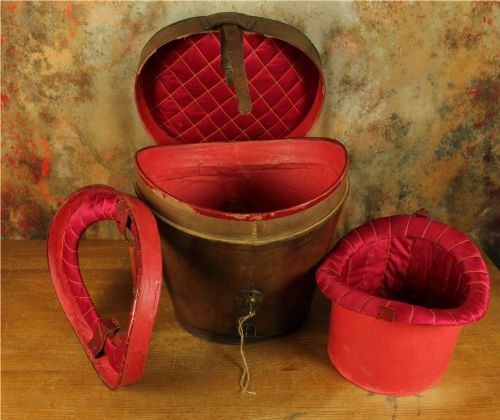
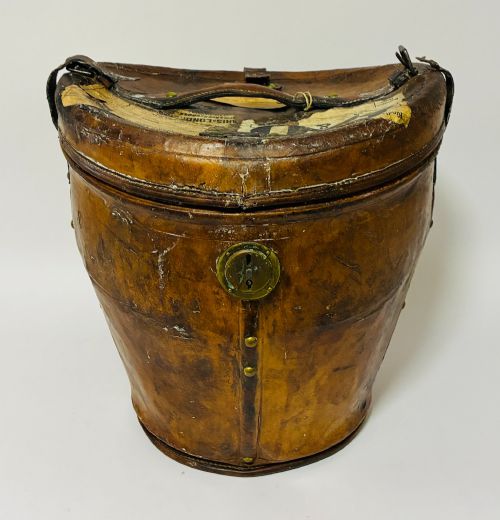
Leather dominates. Of 48 titles on Sellingantiques, 26 say leather or leather-covered, and a third specify a top hat. The form you'll meet most is a cylindrical or dome-topped case with a hinged or lift-off lid and a handle or strap, phrased in listings as a top hat box or a top hat case.
Purpose-made boxes came in with the tall-crowned hat and passenger travel, keeping a silk topper, a dress cap or a bicorne from being crushed on a journey and giving it a dust-free home at home. Rigid leather-covered and japanned tin versions were the standard answer through the nineteenth century and into the early twentieth.
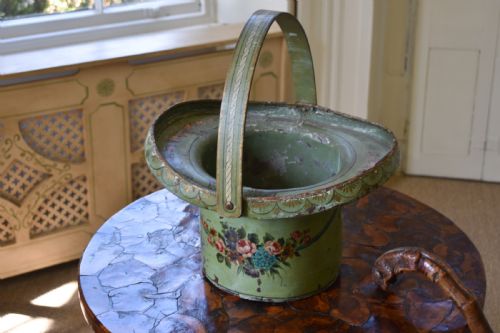
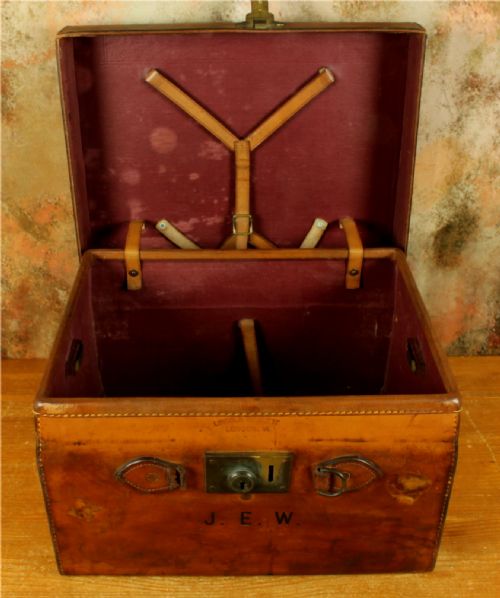
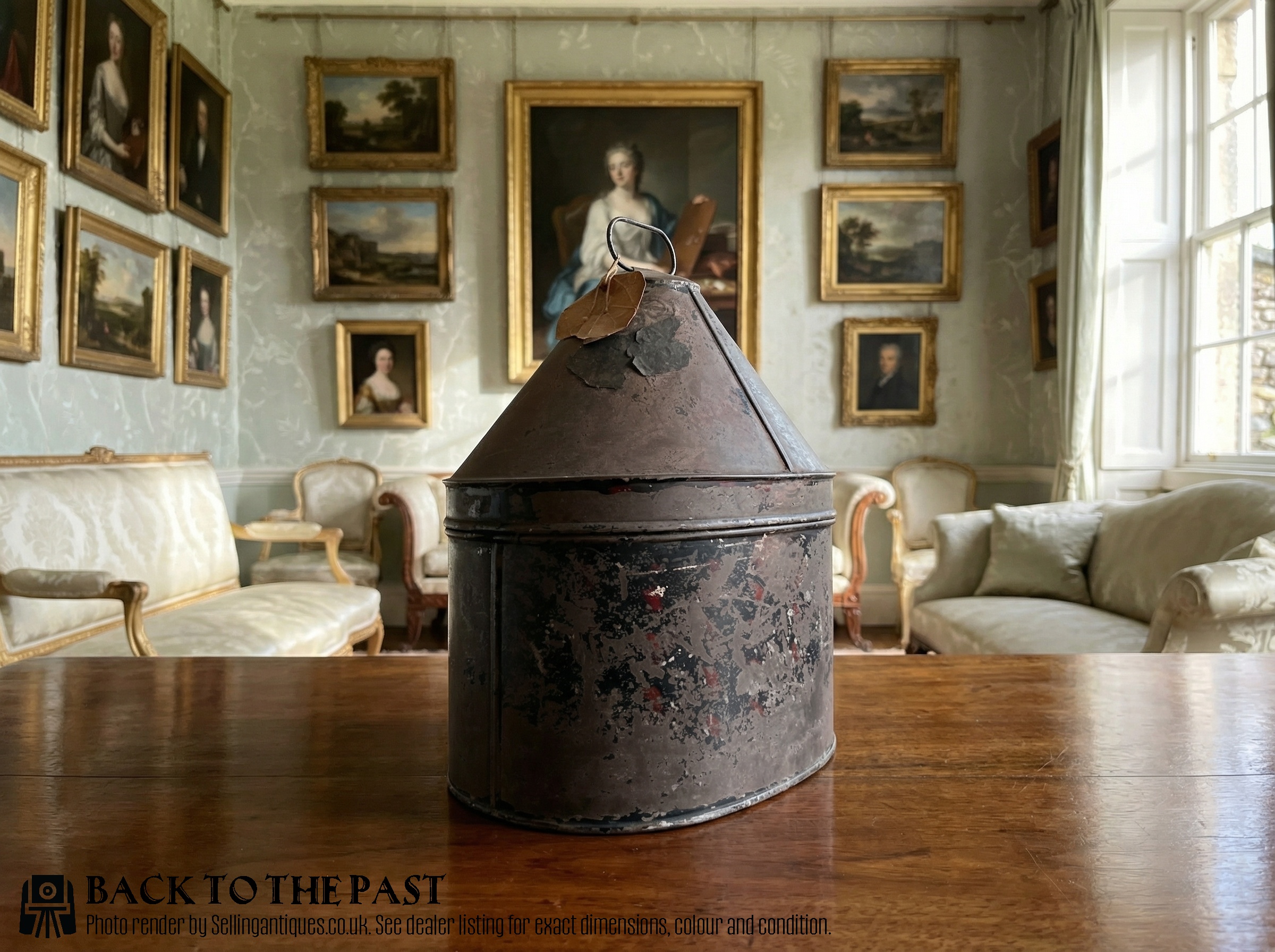
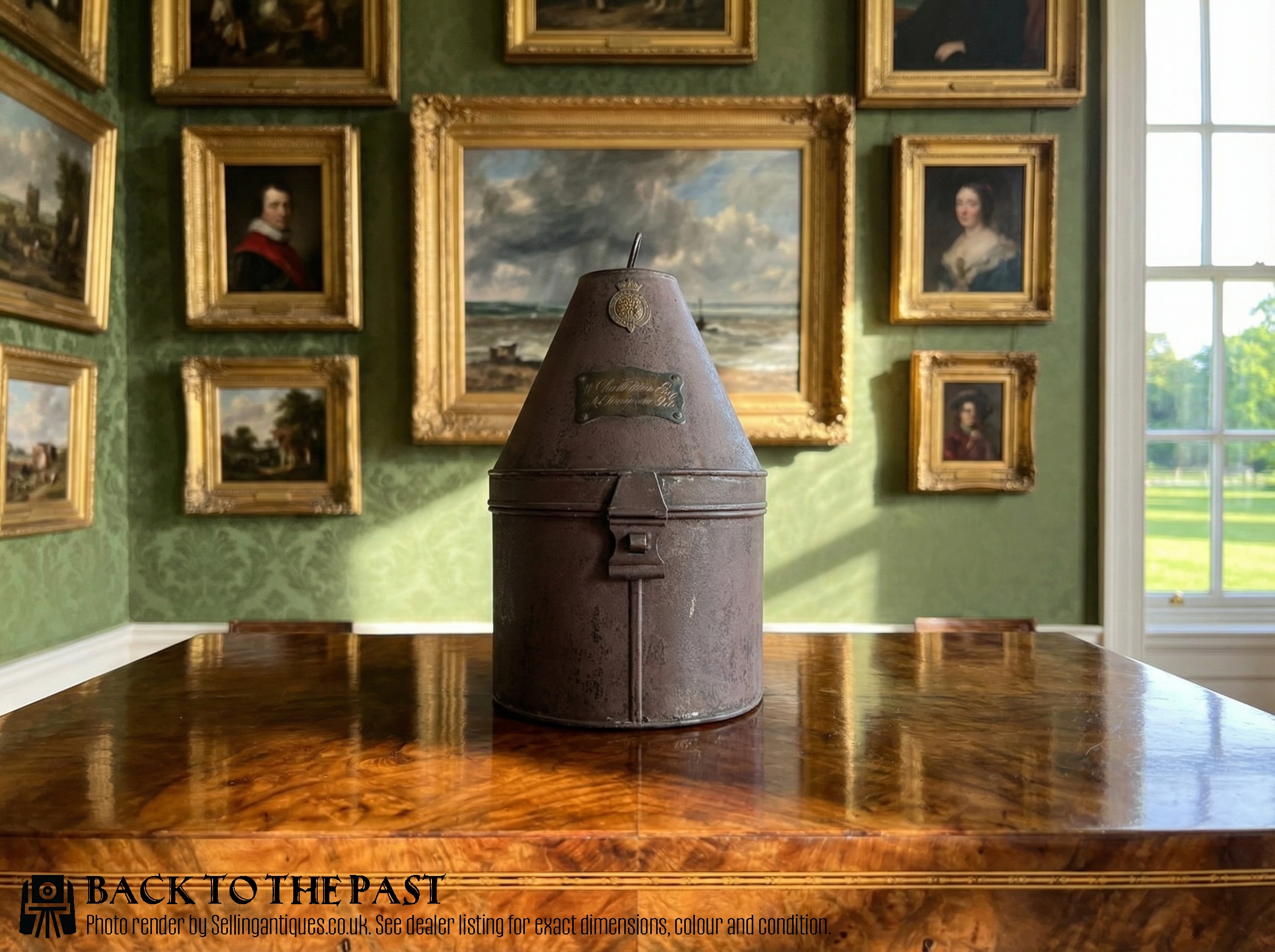
Alongside the leather runs a parallel tradition in painted tinplate, described as toleware and almost always military or naval: Royal Navy boxes, regimental boxes, a sailor's cap box. Wood and lacquer turn up in smaller numbers, including a Georgian oak box described for a tricorn. Capacity is advertised in the title more often than size, so double, triple and multi cases recur, one holding as many as four hats.
Dealer dates run from 1860 to 1940, with 23 listings carrying a clean year and the bulk sitting either side of 1900. Ten are given only as 19th Century and eight as Victorian. The dating is loose: one box titled Victorian carries a date of 1940, so read era words and years as the dealer's own view.

Range And Ranking
Capacity is the clearest divider. Multi, double and triple cases sit above single boxes, and a plain anonymous leather top hat box sits low in the sampled range. A legible trade name or a city on the lining or lid pushes a box upward; the cheapest sampled entries name nobody at all.
In tin, decoration does the work. A painted box, or one in a faux tortoiseshell finish, sits above the repeated plainer toleware military boxes, which are much of a muchness in the middle of the range.
Contents matter as much as the box. Listings that sell the case still holding its silk topper, a pair of top hats, three hats or a naval bicorne in its original tin sit well up. At the very top come the oddities: two scaled-down salesman's samples from the trunk trade, a novelty biscuit box in hat-box shape and a travel inkwell built as a miniature top hat box.
Antique Hat Boxes Retail Price Guide 2026
Typical UK retail prices for hat boxes, calculated from the Sellingantiques database of over a million retail prices indexed since 2003. This retail price guide relies exclusively on Sellingantiques data; no external sources or auction records are used, so the figures do not describe the wider market.
Hat boxes have been listed on Sellingantiques since 2014.
The Antique Hat Boxes Glossary
- Top hat box
- A tall case shaped to the crown of a silk top hat, and the commonest form in this category.
- Multi hat box
- A case built for more than one hat, sometimes with internal divisions; titles also use double and triple.
- Carry case or transit case
- Dealer wording for a box fitted with a handle or strap, meant for travel rather than static storage.
- Toleware
- Painted or japanned tinplate, the material of the military and naval boxes in this archive.
- Leather bound or leather covered
- A box of another material faced in leather, as against one made throughout of hide.
- Salesman's sample
- A reduced-scale trade example made to show a maker's range; two of them appear on Sellingantiques.
Antique Hat Boxes: Frequently Asked Questions
What did people keep in a hat box?
Overwhelmingly a tall silk top hat, called a topper in one title. The leather cases were shaped to the crown, and a third of all titles say top hat outright.
The tin boxes served military and naval dress: peaked caps, a sailor's cap, and the folding bicorne, whose box is flatter and wider than a top hat case.
Are hat boxes usually leather?
Leather dominates to the point of definition. Twenty-six of 48 titles say leather or leather-covered, in cylindrical or dome-topped cases with a hinged or lift-off lid.
The rest divide between painted tinplate, described as toleware, and a few in wood, oak or lacquer.
How old are most of these boxes?
Dealer-supplied dates run 1860 to 1940, and the bulk sits either side of 1900, with the 1900s and 1910s the busiest decades.
Quite a few carry no year at all, only 19th Century or Victorian. Those are labels rather than dates, and one box titled Victorian is dated 1940 by its own dealer.
Do hat boxes ever come with the hat?
Yes, and it recurs. Several listings sell the case with a silk topper inside, a pair of top hats, three hats, or a naval bicorne still in its original tin box.
Those entries sit well up the sampled range.
What is a toleware hat box?
Painted or japanned tinplate. On Sellingantiques the toleware boxes are almost always military or naval, described as Royal Navy, regimental, or as a cap box.
Decoration separates them. A painted example, or one in a faux tortoiseshell finish, sits above the plainer regimental tins.
How often do antique hat boxes come up?
It is a small, steady category. About four come to market a year on Sellingantiques.
Twenty-four different dealers have listed one, close to a dealer per listing, so almost nobody carries them in any depth.