




Antique Sewing Boxes
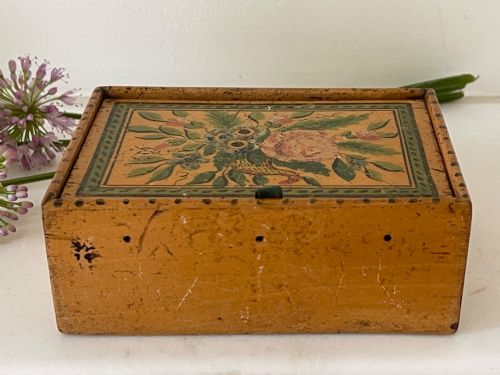
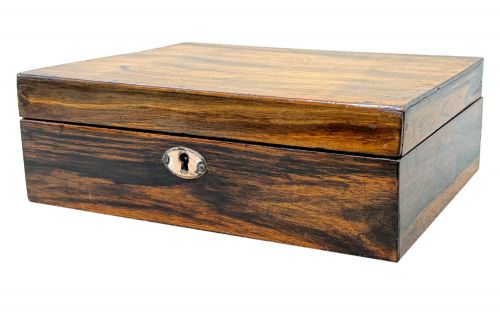
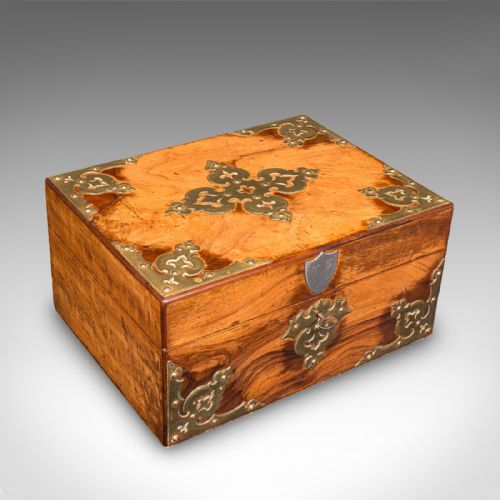
A lidded wooden box, table-top sized, fitted inside with a lift-out tray of compartments for reels, needles, thimbles and scissors.
What Are Antique Sewing Boxes?
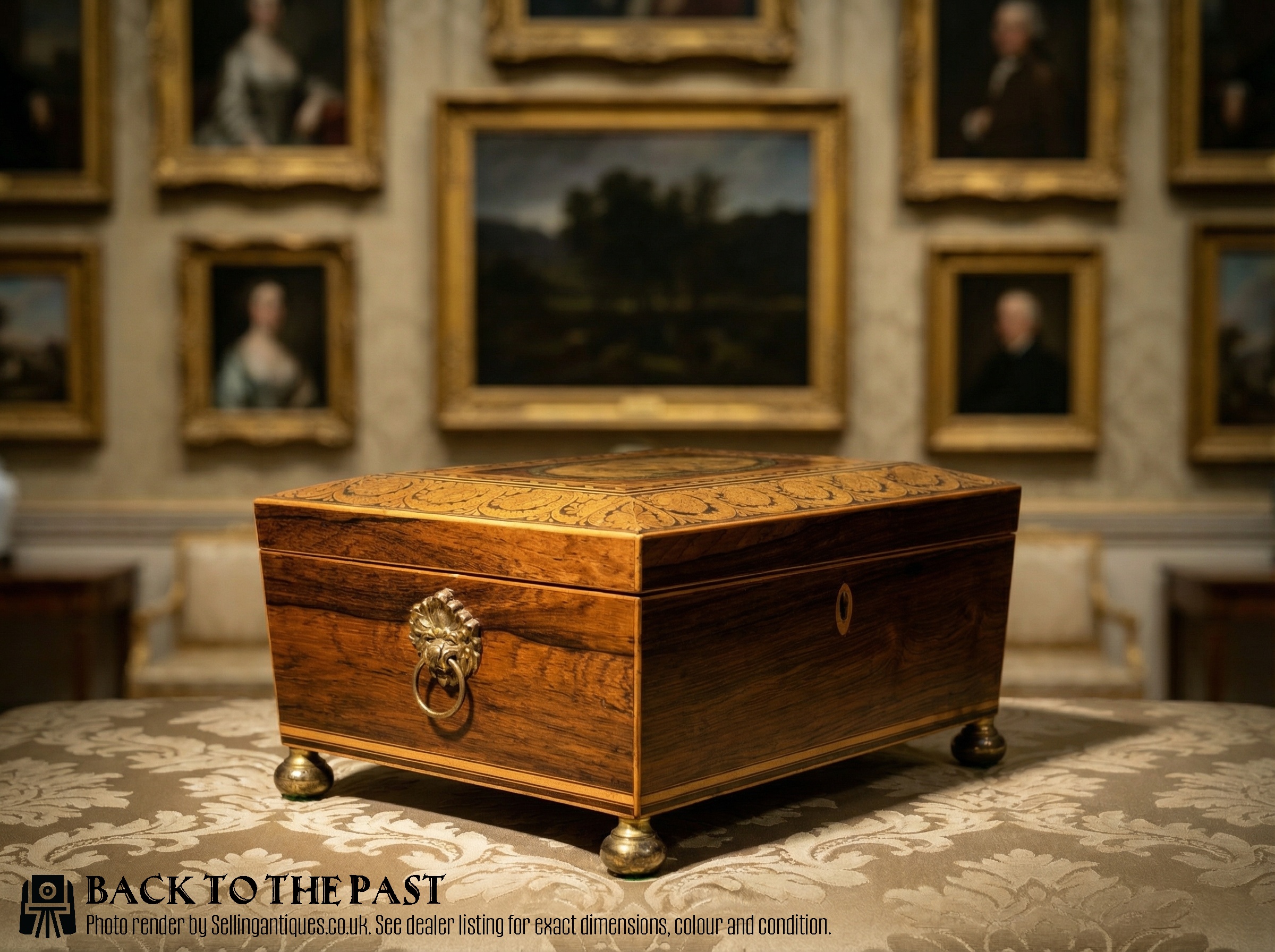
Boxes fitted for needlework became standard drawing-room furniture in Britain from the later 18th century, when sewing was a domestic accomplishment and its tools needed keeping together. They were made as decorative cabinet work, meant to sit out on a table, and the same box was often sold to serve for jewellery or writing as well.
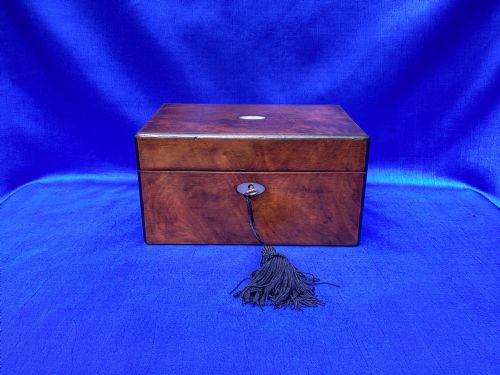
The version you are most likely to meet is a 19th-century English veneered rectangular box with a fitted interior. Rosewood and walnut dominate the timbers, mahogany follows, and inlay of mother-of-pearl or brass appears in a third of titles. Victorian is the commonest period label, with Regency close behind.
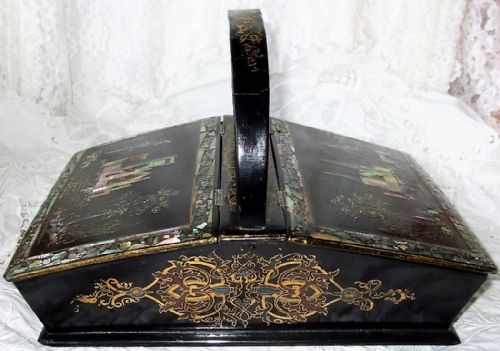
Almost no sewing box in this archive is only a sewing box. Jewellery and work each appear in thirty-eight titles and writing in nineteen, and one title runs sewing, writing and jewellery together as a single compendium. Sarcophagus form is named in eight titles, the pannier or basket shape in another eight.
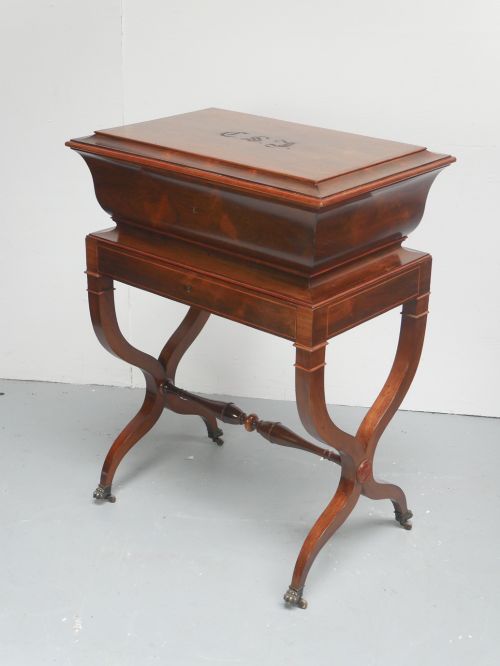
Around half the category is veneered English cabinet work. Tunbridge ware makes up a substantial minority, and it is the one decorative tradition here with a name of its own. Anglo-Indian and colonial export boxes account for fewer, French Palais Royal necessaires fewer still, and a small run are not boxes at all but sewing tables, stands, cantilever cabinets and reel boxes.
Where The Range Splits
The interior does most of the work. Fitted appears in thirty-two titles and fully fitted in ten, and the boxes at the top of the range are the ones described with their original contents still in place, reels counted out and fittings intact. Contents are named in only eight titles, so a surviving tray of tools is the exception rather than the standard.
Timber and figure sort the rest. Coromandel, satinwood, amboyna, kingwood and burr yew sit in the upper half; plain mahogany, oak and paper-covered boxes sit at the bottom. Surface work pulls the same way, with mother-of-pearl, brass stringing, marquetry, penwork and Tunbridge mosaic all placing boxes higher than a plain veneered lid.
Origin and function are the other two levers. Anglo-Indian Vizagapatam and French Palais Royal work sits at the top, the highest-placed piece being a Vizagapatam ivory box built in the form of a colonial house. Combination boxes that take writing as well as sewing place above single-purpose ones.
Retail Price Guide 2026
Typical UK retail prices for sewing boxes, calculated from the Sellingantiques database of over a million retail prices indexed since 2003. This retail price guide relies exclusively on Sellingantiques data; no external sources or auction records are used, so the figures do not describe the wider market.
The most expensive sewing box ever sold on Sellingantiques was an 18th century satinwood embroidery box, in October 2021.
The Antique Sewing Boxes Glossary
- Fitted / fully fitted
- The interior tray and its compartments survive. Thirty-two titles say fitted, ten say fully fitted.
- Work box
- The period name for a sewing box. Work appears in thirty-eight titles, workbox in twelve.
- Sarcophagus
- A tapering, coffin-shaped body with a stepped or domed lid, named in eight titles.
- Burr
- Veneer cut from a knotty growth on the tree, giving swirled figure. Twenty titles, sixteen of them burr walnut.
- Tunbridge ware
- Mosaic of tiny coloured wood strips, usually laid as banding or a lid panel. Twenty-three titles.
- Palais Royal
- A French fitted necessaire with mother-of-pearl or gilt tools, named for the Paris arcades.
Frequently Asked Questions
What woods were sewing boxes made from?
Rosewood and walnut lead the archive, with mahogany behind them. Burr walnut and figured walnut account for a good part of the walnut count.
Coromandel and satinwood turn up regularly in the upper half of the range, and amboyna, kingwood and burr yew surface too. Teak appears on the colonial side.
Why are so many listed as sewing and jewellery boxes?
Because that is how they were sold. The same fitted box served for needlework, trinkets or writing, and dealers title them by both uses.
Jewellery appears in thirty-eight titles and work in another thirty-eight, writing in nineteen. One title covers sewing, writing and jewellery in a single compendium.
How old are most of them?
The dating is mostly given as a period label rather than a year. Nineteenth Century is the commonest tag, then Victorian, Regency and Georgian.
Where decades are given they cluster mid-to-late Victorian, with the 1870s, 1860s and 1880s roughly level. The dated field runs from 1750 to 1930, though only ninety-nine of two hundred and ninety-one listings carry a clean year.
Eighteenth-century boxes barely register: two samples against sixty-five tagged simply 19th Century.
What is Tunbridge ware on a sewing box?
Mosaic built from tiny strips of coloured wood, usually applied as banding round the lid or as a panel in the centre of it.
It runs to twenty-three titles, which makes the Tunbridge Wells tradition the one named decorative style in the category. Boxes carrying it sit in the upper half of the range.
Are these boxes always rectangular?
Rectangular and table-top sized is the norm, but two other silhouettes are named often enough to expect. Sarcophagus form, tapering with a stepped or domed lid, appears in eight titles.
The pannier or basket shape appears in another eight. A small number of listings are sewing tables, stands, cantilever cabinets or reel boxes rather than boxes at all.
Which sewing boxes are French or Continental?
A small thread only. Palais Royal necessaires, fitted with mother-of-pearl or gilt tools, are the consistent Continental presence, and they cluster in the upper part of the range.
Beyond those, a blue-enamel boulle box, kingwood and apple wood pieces and Napoleon III examples turn up singly. The archive on Sellingantiques is otherwise English.