



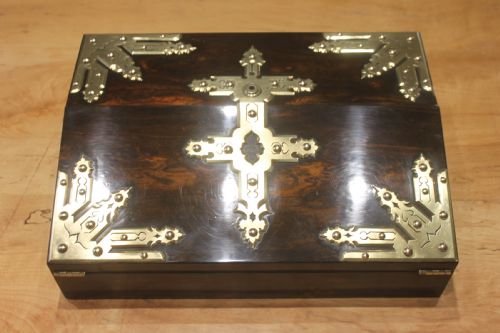


Antique Coromandel Boxes
A coromandel box is a Victorian English case veneered in dark, streaky calamander wood, made to hold letters, jewellery, tea or a traveller's dressing kit.
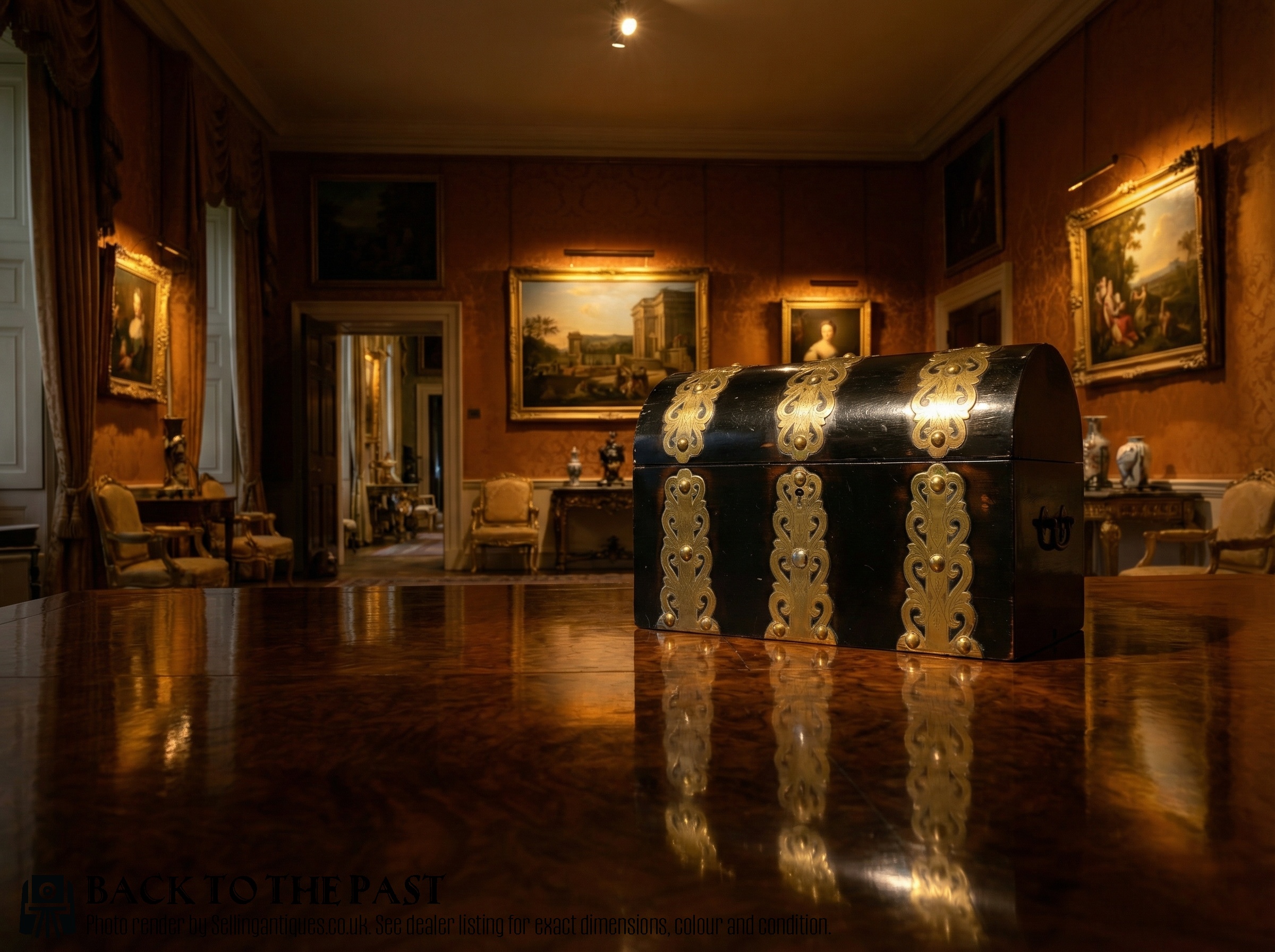
Antique Coromandel Boxes
Coromandel, also called calamander, is a dark banded hardwood brought in from Ceylon and southern India. It came into use as a veneer for English boxwork from the Regency period on, wherever a near-black figured surface was wanted for something portable. The heading groups boxes by that timber rather than by one shape, so the listings run across several kinds of cabinet-work in a single wood.
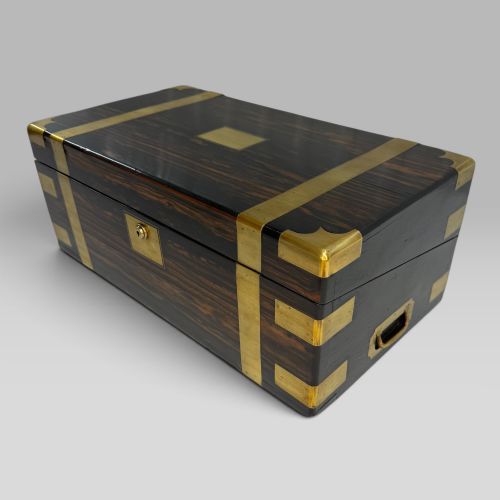
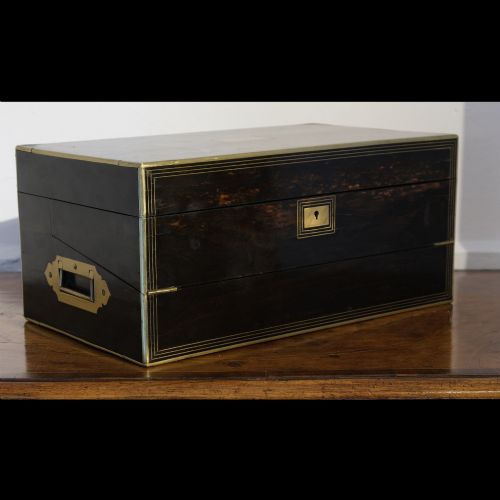
The writing slope dominates. Around a fifth of titles say "writing", and "slope" turns up almost as often, with desk and stationery boxes clustering around the same use. A mid-19th-century English coromandel writing slope, rectangular and often brass bound, is the thing a buyer is most likely to meet. Secret drawers behind the writing well get named in several slope titles.
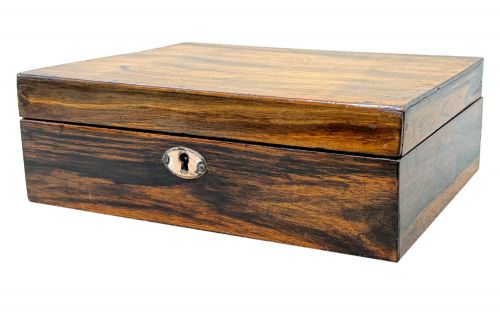
After the slopes come vanity, dressing and travelling cases, fitted with bottles, jars and trays; then jewellery boxes and caskets, which run from plain keepsake boxes to fitted cabinets. Tea caddies, sewing and work boxes and games boxes each hold a smaller corner. Brass is the defining trim, named in far more titles than silver or silver plate.
Dates are loose. Well over half the listings say only "Victorian" or "19th Century", and titles routinely pair a vague dated field with a circa date. Where a decade is given it lands hard on the 1860s and 1850s, so the mid-Victorian middle of the century is where this timber concentrates. Fewer than half carry a clean year at all.
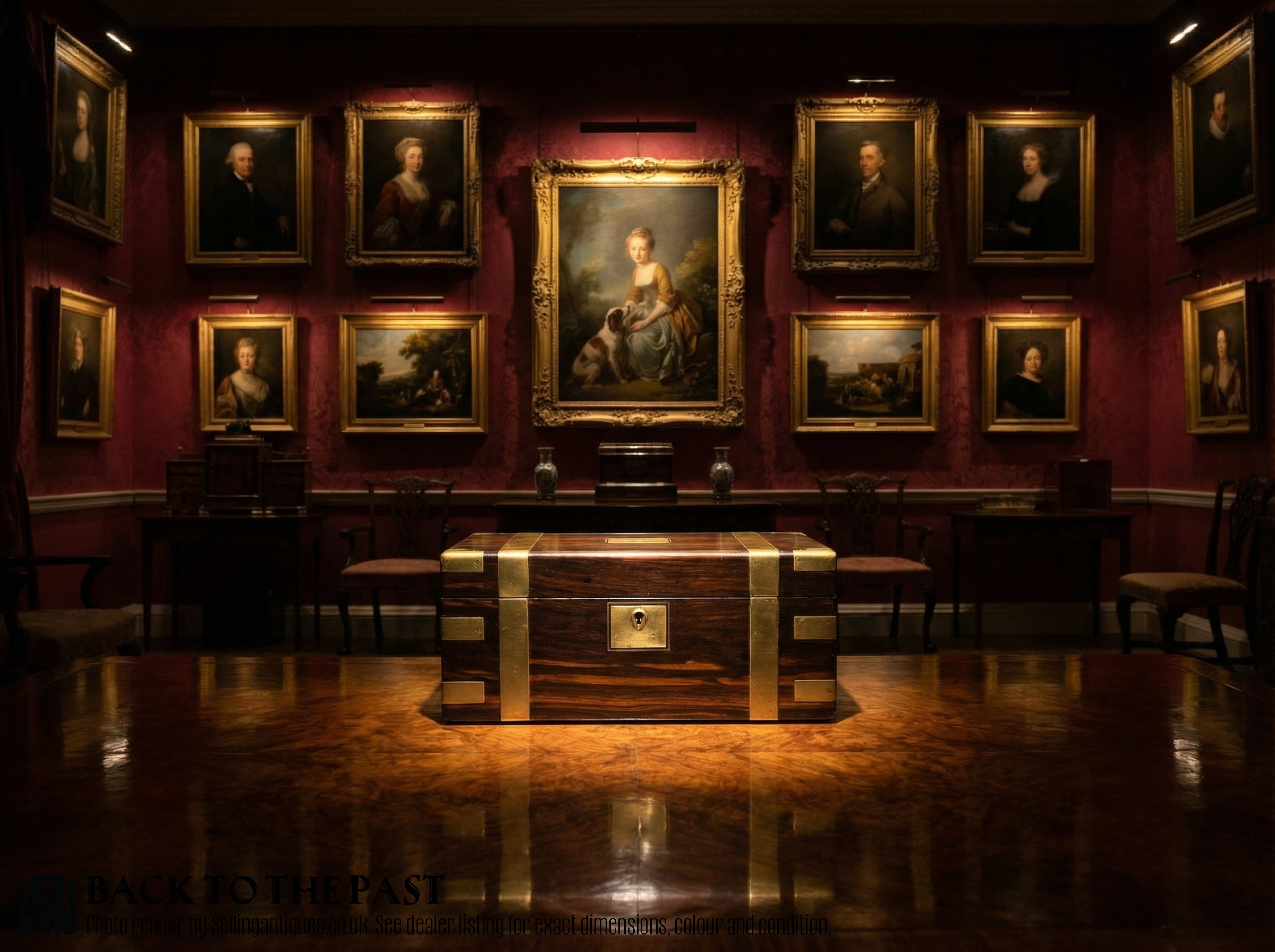
Where The Range Splits
Contents decide a great deal. Boxes described as fitted, sewing boxes listed with their reels, dressing cases still carrying their bottles and jars sit at the top of the range. Empty caskets and bare boxes sit at the bottom. The interior, not the veneer, is doing the work.
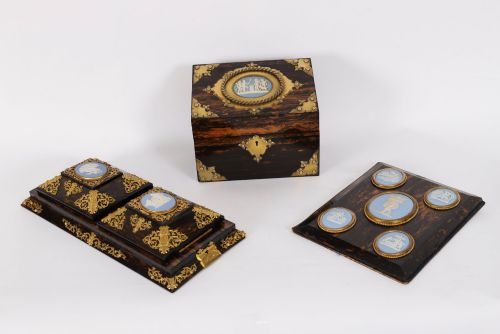
Mounts and enrichment move a box up the same way. Hallmarked silver-topped dressing boxes and sterling-fitted travelling boxes cluster in the upper half, while brass is the ordinary trim throughout. Lids inlaid with mother-of-pearl, malachite, agate, jasperware, pietra dura or a painted porcelain plaque appear above the middle of the range rather than below it.
Form sorts the rest. Travelling vanity and dressing cases and decanter boxes lead; small dome-top stationery boxes, plain jewellery boxes and pill boxes trail. A retailer's name on the box lifts it out of the anonymous run, and titles reading simply "Coromandel Box" tend to sit low.
Antique Coromandel Boxes Retail Price Guide 2026
Typical UK retail prices for coromandel boxes, calculated from the Sellingantiques database of over a million retail prices indexed since 2003. This retail price guide relies exclusively on Sellingantiques data; no external sources or auction records are used, so the figures do not describe the wider market.
Victorian is the period label used most on Sellingantiques for coromandel boxes, with 19th Century next and the 1860s third.
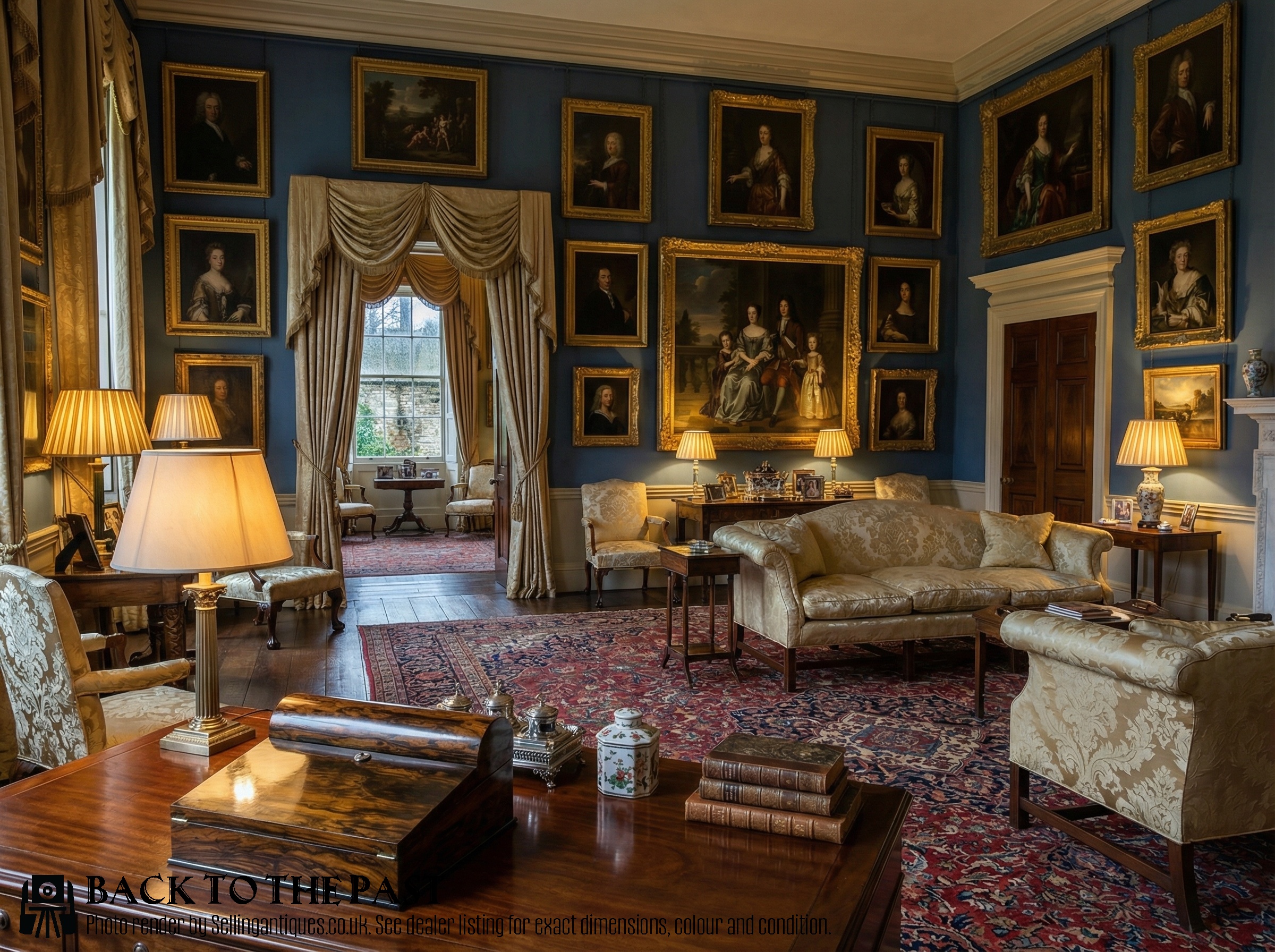
The Antique Coromandel Boxes Glossary
- Coromandel (calamander)
- The dark, streaky imported hardwood used as veneer. Around two dozen titles spell it out as "coromandel wood".
- Writing slope
- A box opening to a sloped writing surface, and the commonest form under this heading. Some have concealed drawers behind the writing well.
- Brass bound
- Brass strapping run along the edges and corners. Distinct from brass mounted or banded, which means applied corners, escutcheons or bands rather than full binding.
- Fitted
- The interior is divided or still holds its original fittings. It appears in a good number of titles and tracks the upper end of the range.
- Vanity case
- A travelling toilet box fitted with bottles, jars and trays. Dressing case is used for the same thing, and both turn up for ladies' and gentlemen's versions.
- Stationery box
- A desk box for letters and paper, sometimes built as a drop-front cabinet. Dealers spell it "stationary" about as often, so both spellings run side by side.
Antique Coromandel Boxes: Frequently Asked Questions
What is coromandel wood?
It's a dark, banded hardwood, also called calamander, imported from Ceylon and southern India. British makers took it up as a veneer for boxwork from the Regency period onward.
The appeal was the surface: rich, figured and close to black. That suited portable objects, which is why it turns up on writing slopes, dressing cases, caddies and caskets through the 19th century.
Which form is most common?
The writing slope, by a clear margin. "Writing" appears in around a fifth of titles on Sellingantiques, with "slope" close behind and desk and stationery boxes gathering around the same correspondence use.
Most are Victorian and rectangular, and a run of them are brass bound.
Are these boxes all English?
The great bulk of the material is English cabinet-work in an imported timber. A handful of listings claim Anglo-Indian or Indian origin and one Chinese.
Non-English attributions are the rarest thing under this heading.
Why do dates say only Victorian or 19th Century?
Because that's what the dealers entered. Well over half the listings give a period rather than a year, and fewer than half carry a clean year at all.
Where decades are given they concentrate on the 1860s and 1850s, with smaller groups in the 1870s and 1880s. Titles often pair a vague dated field with a circa date, so the two can be read together.
What kinds of decoration turn up?
Brass is the defining trim. It's named in more titles than any other treatment, some as full binding to edges and corners, more as applied mounts, bands and escutcheons.
Silver and silver plate appear less often, and cluster on dressing and travelling boxes. Beyond metal, single listings bring in mother-of-pearl, malachite, agate, jasperware, pietra dura and painted porcelain set into the lid.
How often do these come up for sale?
Around twenty-nine are listed in a year on Sellingantiques, and seventy-four different dealers have handled one.
That's a wide, shallow trade. Nobody specialises in them; they arrive as part of a general stock of boxes.