





Antique Humidors
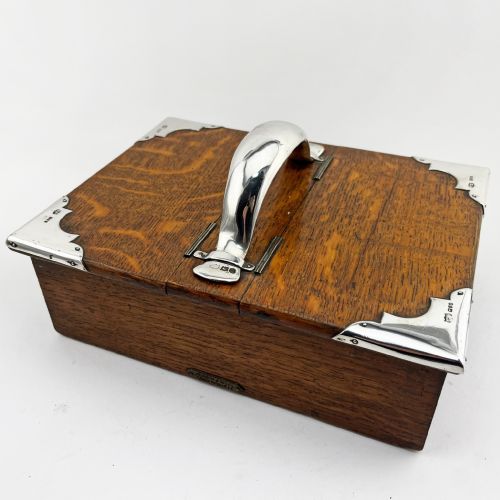
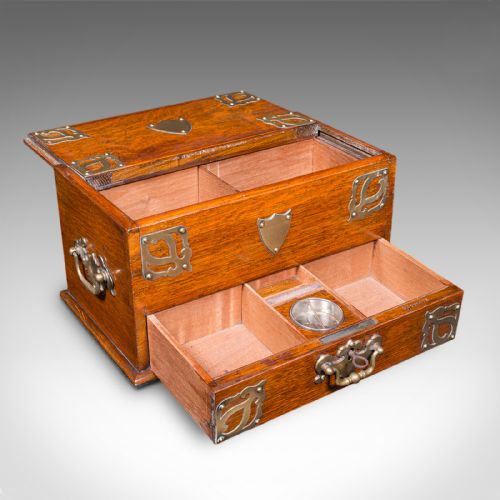
A humidor is a lidded wooden box, casket or small cabinet made to hold cigars or tobacco at a steady moisture level, commonly cedar-lined and, on this site, most often Victorian or Edwardian oak or walnut.
Antique Humidors
Purpose-made cigar and tobacco boxes with sealed, cedar-lined interiors and a dampening element spread with cigar smoking through the 19th century. The point was to hold leaf at a steady moisture level, and domestic and club versions were made as table boxes, caskets and small cabinets for a smoking room or a desk.
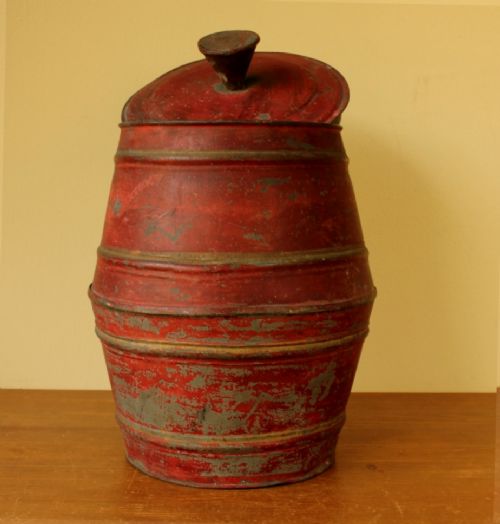
The heading is broad. Just under half of titles say "cigar", over a third say "box" and one in eight says "tobacco", so dedicated humidors sit alongside cigar boxes, smokers' cabinets, tobacco jars and treen tobacco containers. Sizes run from miniature cabinets to large sterling-mounted caskets and multi-drawer desktop cases.
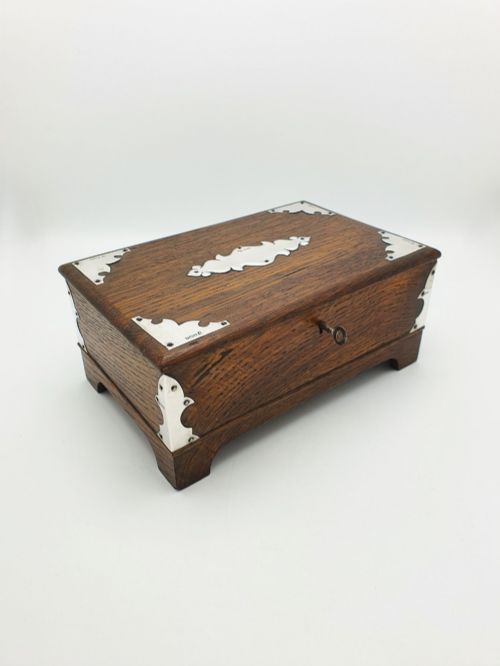
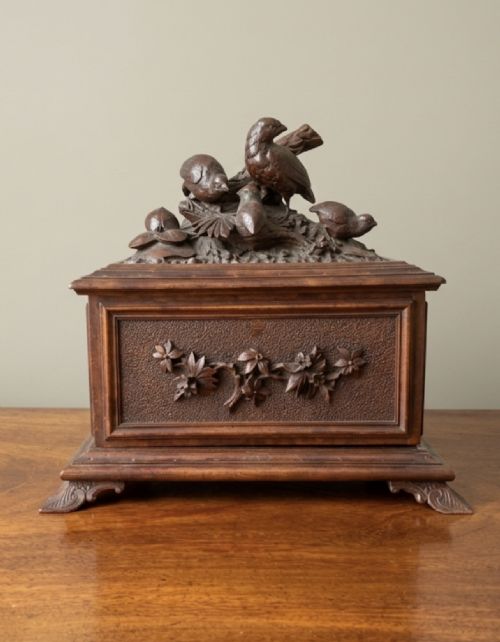
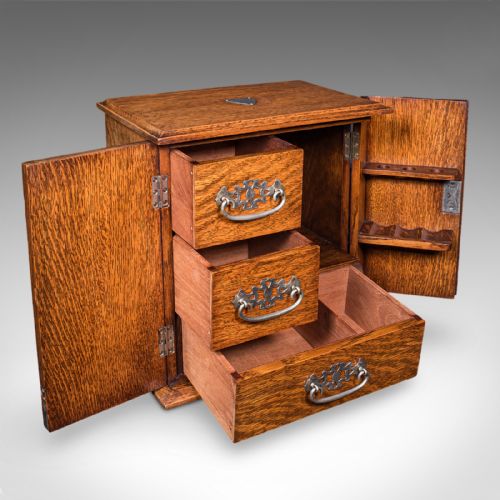
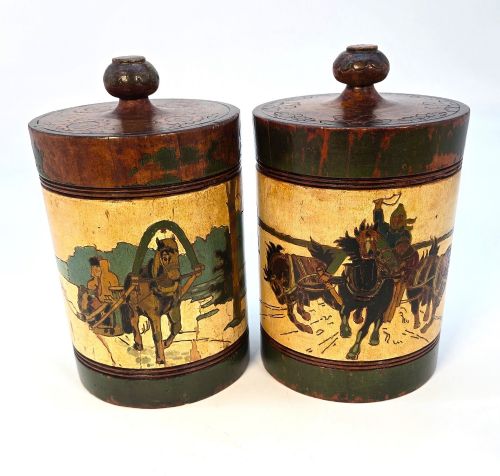
The likeliest encounter is a rectangular oak or burr-walnut cigar humidor of table-box size, sometimes brass-bound or silver-mounted, dated somewhere between the 1860s and the 1910s. Oak is the single most common wood at a third of titles, walnut next; thirteen titles say English, against single Dutch, Austrian, Scandinavian and Russian pieces.
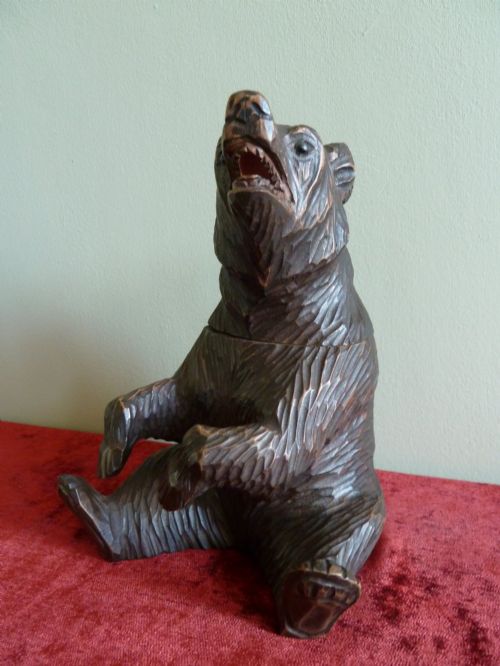
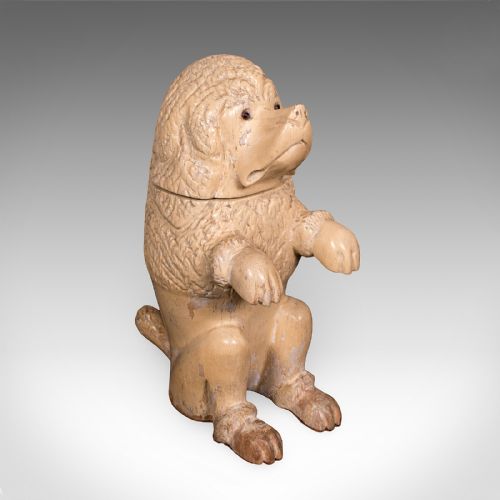
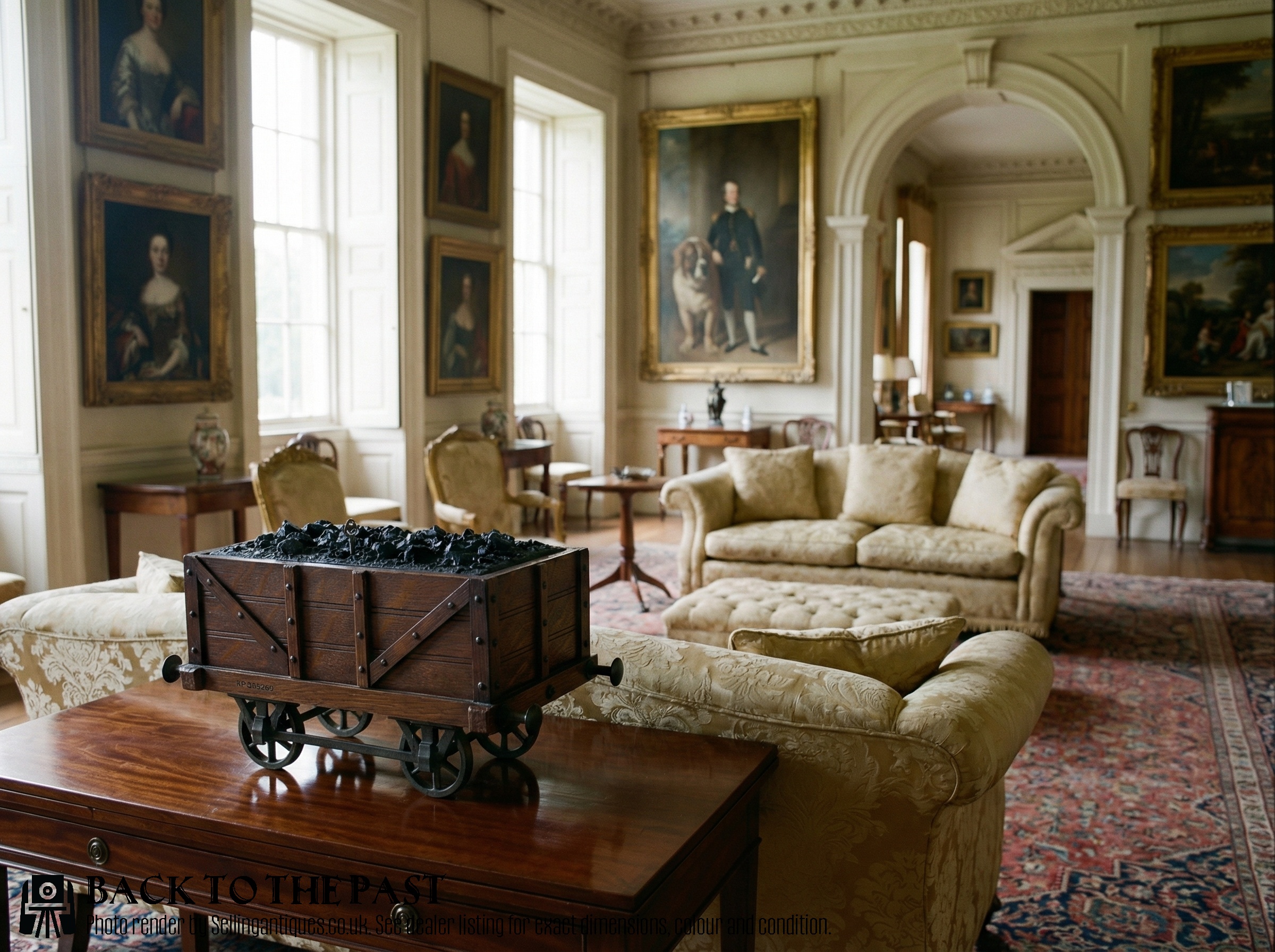
Four other groups run through the category. Smokers' and table cabinets, about one in seven, include pipe cabinets, a tambour-fronted cigar cabinet and locking gentleman's cabinets. Novelty and figural work is a substantial minority: railway coal wagons, dog kennels, carriages, a musical box and carved Black Forest dogs and bears. Silver-mounted, brass-bound, copper and leather cases make up roughly one in six.
Where The Range Widens
Timber does much of the work. Plain oak boxes run through the lower and middle of the range, while burr walnut, rosewood, amboyna, satinwood and coromandel concentrate higher up. Oak is the exception that spans everything, appearing at both the cheapest listing and among the highest-priced.
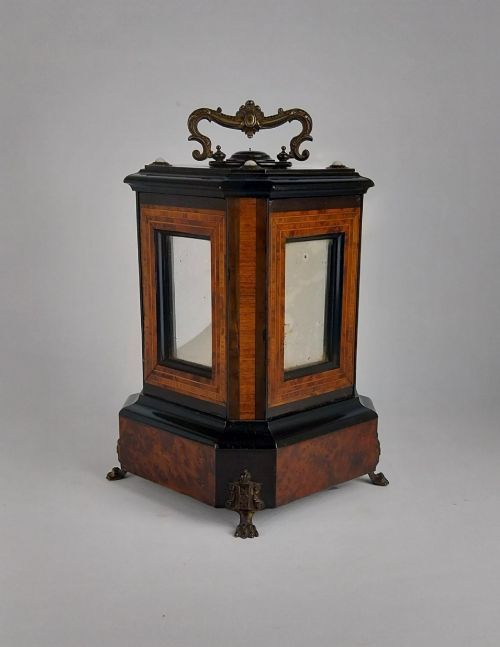
Added metalwork lifts a box. Brass binding, sterling mounts on oak, cut brass inlay and an ormolu-mounted French humidor all sit above the middle of the range. So does fitted complexity: multi-drawer desktop cases, locking cabinets, tantalus combinations and campaign smoker's boxes outrank a simple single-compartment box.
Above all of that sits invention. The railway coal wagon humidors, the GWR wagon, kennel and carriage novelties, musical and automated cigar boxes and the large carved Black Forest animals occupy the upper part of the range, as do titles that carry a naval, railway, campaign or club-lounge angle.
Antique Humidors Retail Price Guide 2026
Typical UK retail prices for humidors, calculated from the Sellingantiques database of over a million retail prices indexed since 2003. This retail price guide relies exclusively on Sellingantiques data; no external sources or auction records are used, so the figures do not describe the wider market.
19th Century is the period label used most on Sellingantiques for humidors, with Edwardian next and Victorian third.
The Antique Humidors Glossary
- Humidor
- A sealed, usually cedar-lined box or cabinet for keeping cigars or tobacco at a steady moisture level.
- Cedar lined
- Interior faced in cedar, the wood conventionally used against cigars. Stated in some titles, left unsaid in others.
- Burr walnut
- Figured walnut veneer cut from a burr growth on the tree. It recurs through the upper half of the range, and attaches to some of the earliest clean years in the archive.
- Brass bound
- Corners and edges strapped in brass, named as a construction feature on several oak examples.
- Treen
- Small turned or carved domestic woodware, used here of tobacco containers and jars, including Russian examples and a Scandinavian pollard birch root box.
- Tambour
- A flexible slatted shutter front, named on one golden oak cigar cabinet in the archive.
Antique Humidors: Frequently Asked Questions
What wood are most antique humidors made from?
Oak is the single most common wood, at a third of all titles, followed by walnut at just under a fifth. Cedar turns up as the lining rather than the carcase.
Beyond those, titles name burr walnut, rosewood, amboyna, satinwood, coromandel and linden wood. A handful of pieces are metal-mounted, copper, or leather-covered instead.
How old are the humidors listed on Sellingantiques?
Dated fields cluster in the second half of the 19th century and the Edwardian years. Thirty of the listings carry a clean year, running from 1850 to 1930.
The rest use era labels: 19th Century, Victorian, Edwardian. Those are periods, not dates, and a few titles carry no date at all.
Two Regency-labelled pieces bracket the early end, and a couple of Art Deco boxes of around 1930 the late end.
Why are railway wagon humidors so often mentioned?
They are the archive's signature oddity. Several separate railway coal wagon humidors have turned up, including one modelled as a GWR wagon.
They sit well up the range, alongside the other novelty forms: dog kennels in rosewood and in oak Black Forest, carriages, a musical cigar box and an automated one.
Is a smoker's cabinet the same as a humidor?
Not quite. A smoker's cabinet is a fitted case or small cabinet holding cigars, pipes and accessories together, rather than cigars alone.
Cabinets account for about one in seven titles, among them pipe smokers' cabinets, a doctor's smoking cabinet, a locking gentleman's cigar and tobacco cabinet and a tambour-fronted cigar cabinet.
Does Black Forest carving appear in this category?
Yes. Six titles use the term, covering carved bears, dogs and linden wood work in the naturalistic animal manner associated with that region.
Carved dogs, bears and a poodle appear as tobacco jars, and the larger carved pieces sit in the upper part of the range.
Are humidors a specialist dealer's category?
No. Only around seven humidors are listed on Sellingantiques in a year, yet 39 different dealers have handled them.
That is close to one dealer per listing, so no single specialist owns the heading and no maker's name defines it.