

Antique Rosewood Boxes
A rosewood box is a nineteenth-century British lidded box, named by the job it did: holding tea, carrying a writing slope, keeping jewellery, sewing kit or dressing-table bottles.
Antique Rosewood Boxes
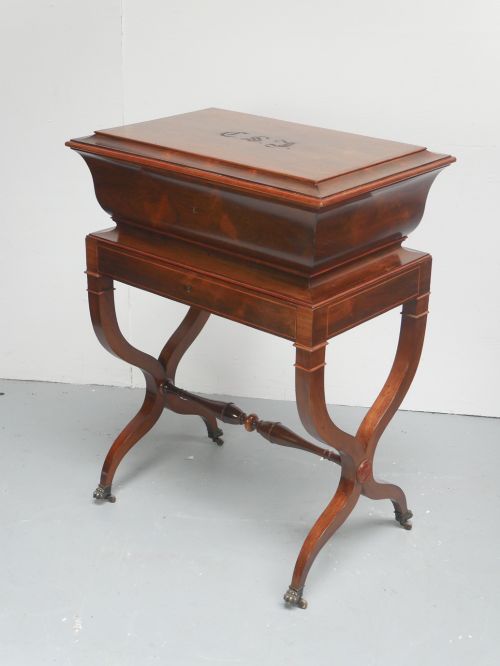
Two functions carry the category. Writing boxes and slopes make up about a fifth of listings, and tea caddies about the same again, with jewellery boxes following. After those come sewing and work boxes, vanity and dressing boxes, and a scattering of related rosewood forms that aren't boxes at all: teapoys, table cabinets, a work table.
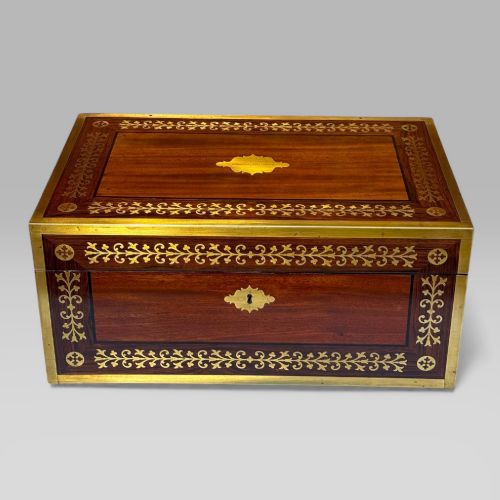
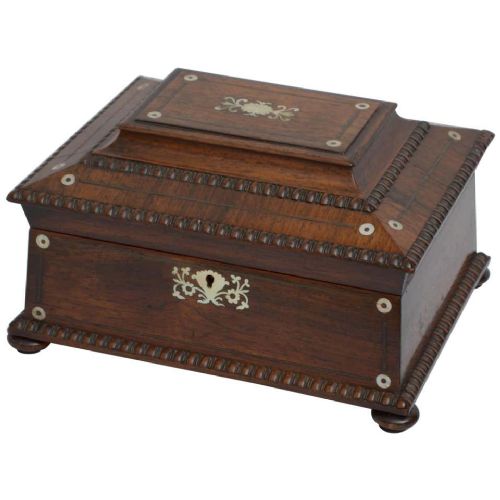
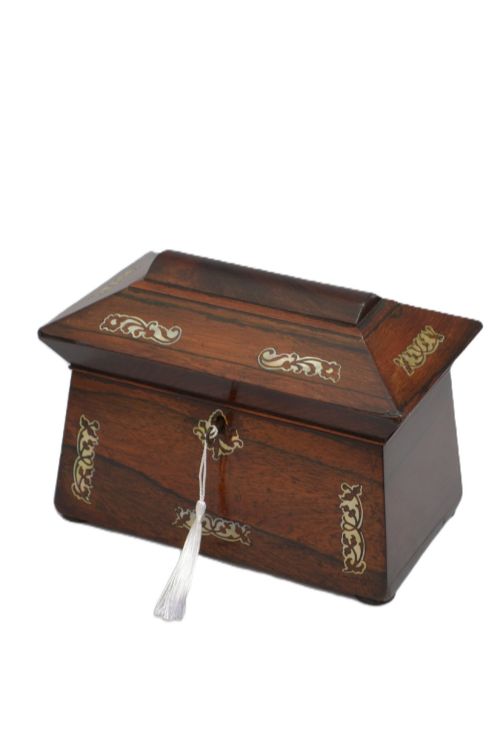
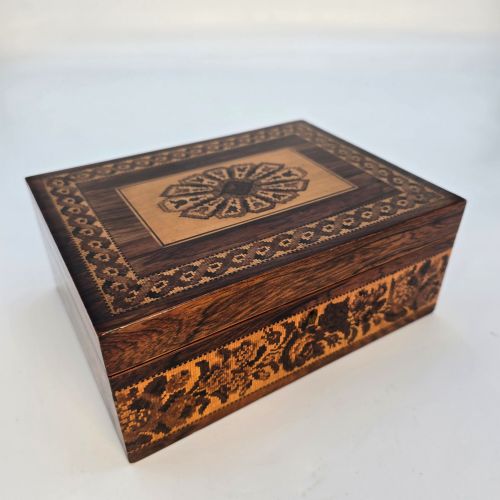
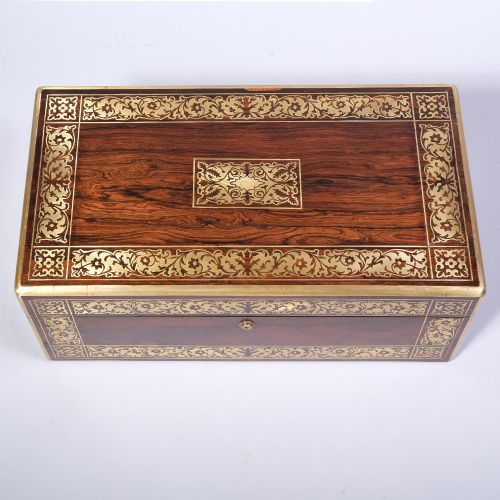
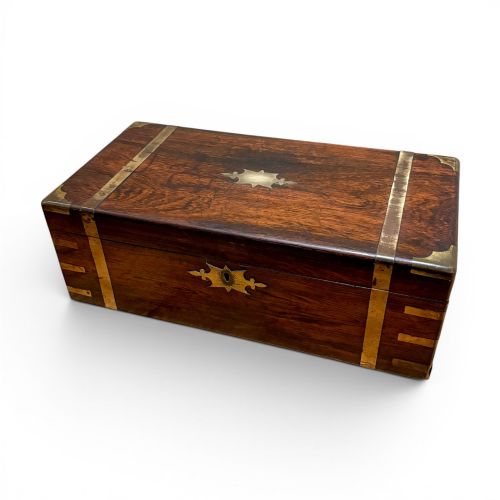
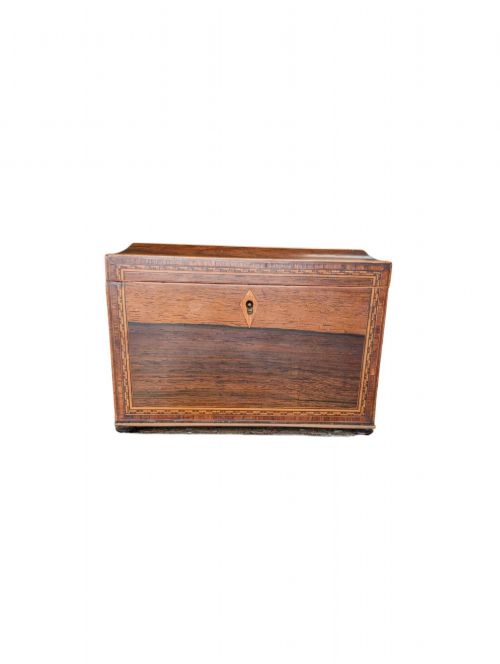
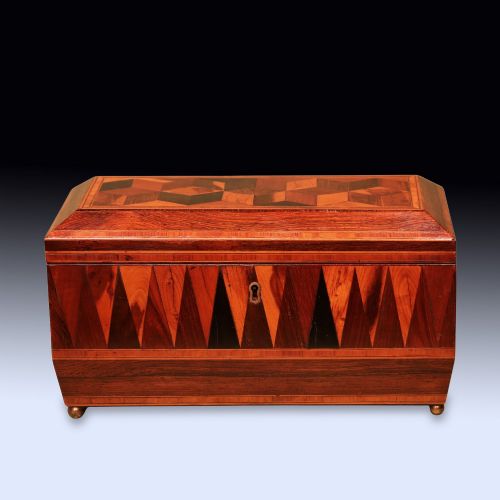
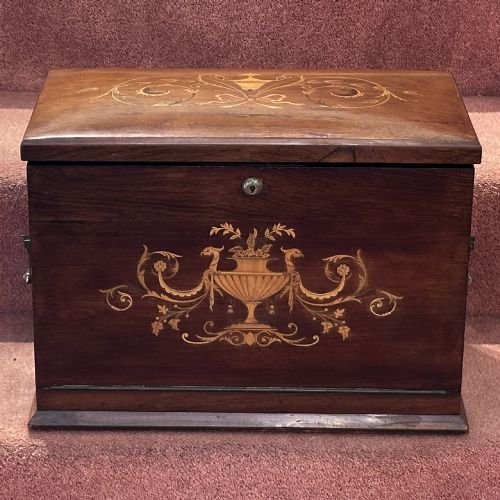
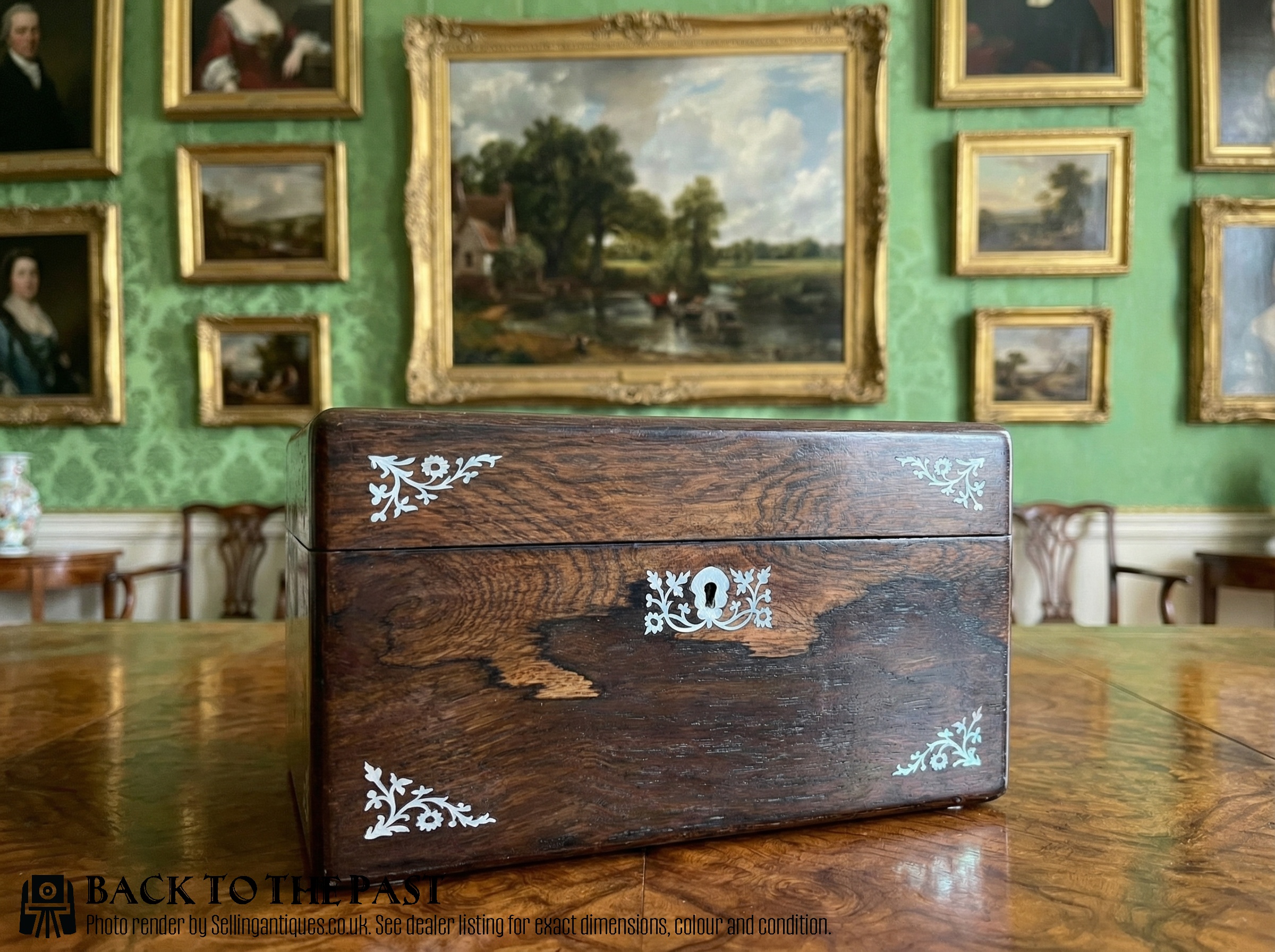
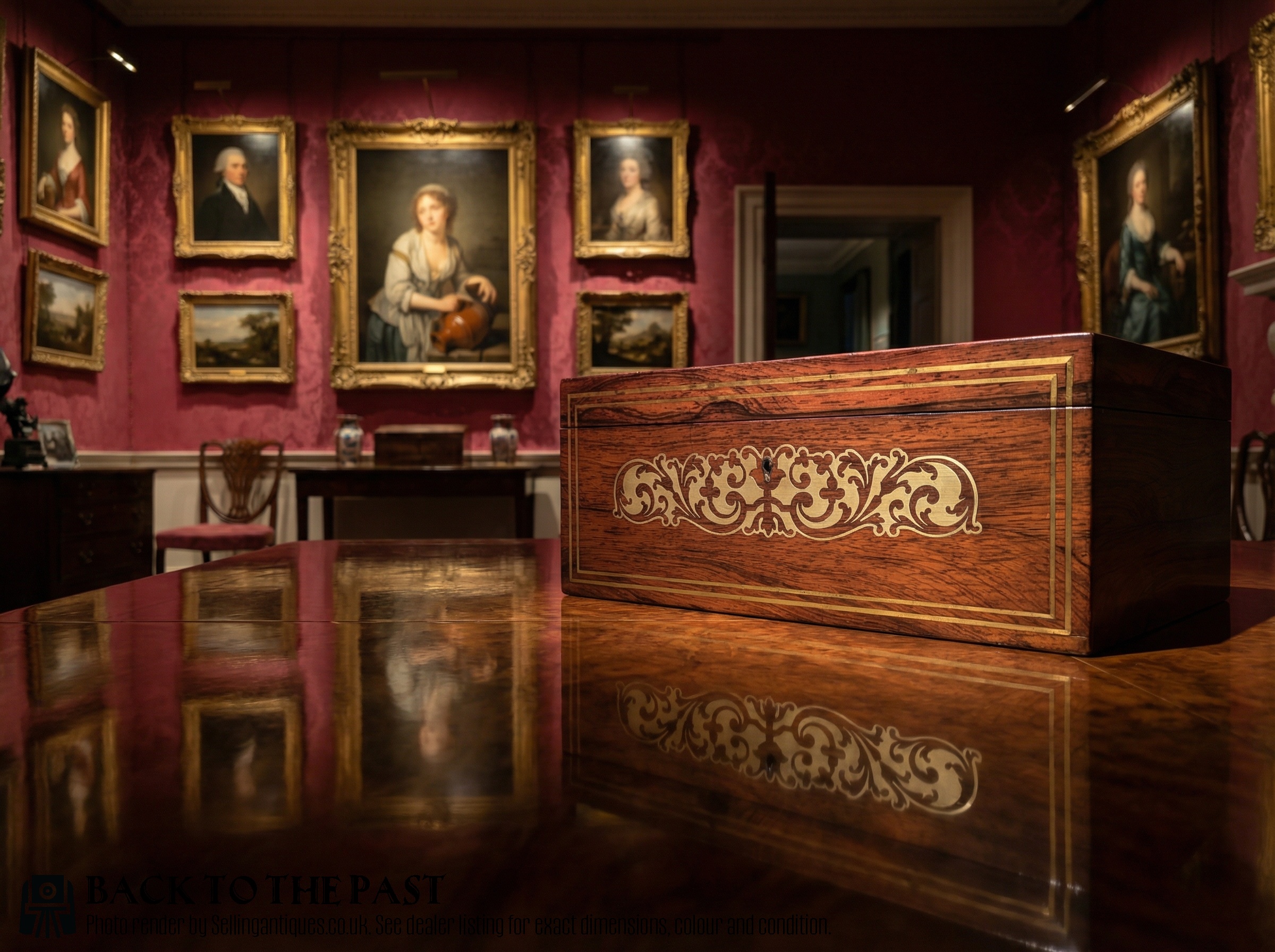
Rosewood is a dense imported timber, used here as veneer and sometimes solid. The decoration you meet most is inlay. Cut brass let into the veneer as lines or scrolling foliage runs through the category, brass strips bound over corners and edges turn up throughout, and mother of pearl appears as cartouches, escutcheons and floral sprays. Tunbridge ware mosaic makes up a small group, mostly on caddies, glove boxes and stamp boxes.
Dating is broad. Dealers lean on reign and century labels rather than years, and only a minority of listings carry a clean date at all. Those that do run from 1800 to 1920, clustering on the middle of the century, so this is a nineteenth-century category with a thin Edwardian tail. Reign names in titles are looser still, and sometimes disagree with the period given, so read both as approximate.
Around eighty reach the market in a year on Sellingantiques, listed by more than 150 different dealers, so the supply is spread thinly across the trade. That breadth throws up one-offs: a pistol box, a string dispenser, a three-bottle decanter case, a piano-shaped letters box, and two separate cigar boxes modelled as dog kennels.
Top And Bottom
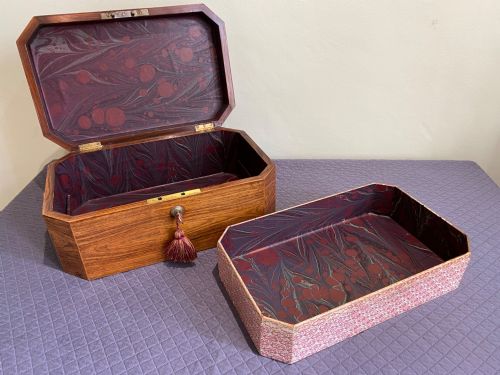
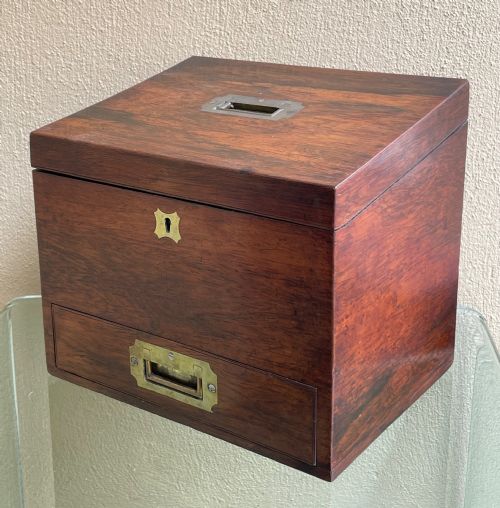
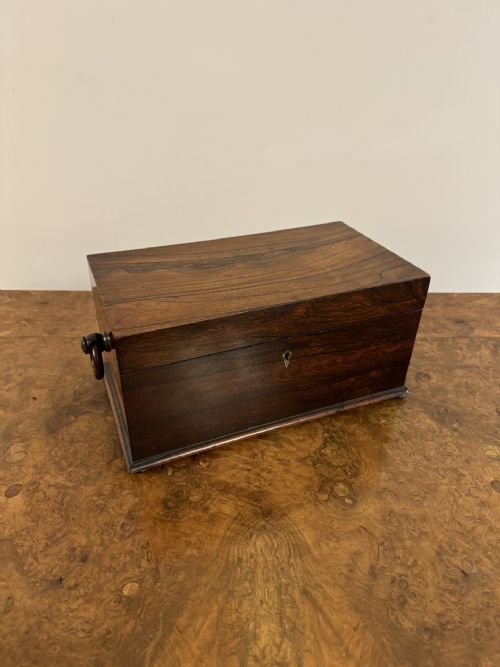
Decoration sorts the range more than anything else. The boxes at the top are the profusely inlaid ones, brass scrollwork covering the lid and sides, or shell laid in across the front. At the bottom sit the plain table box and desk box, rosewood and little more, repeating over and over.
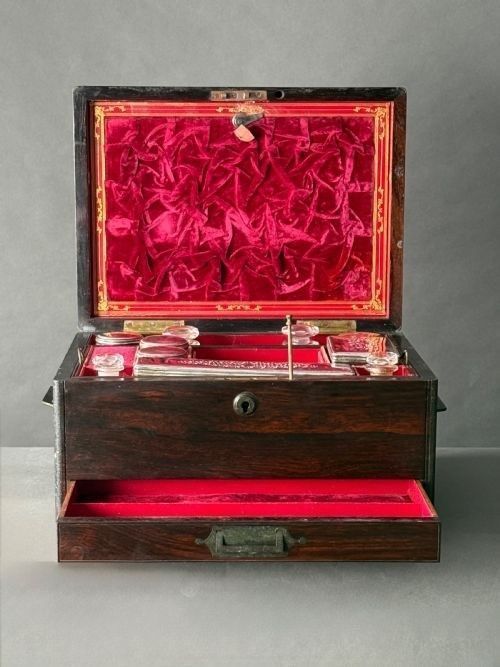
Interiors do the next most work. Caddies that keep their compartments, lids and mixing bowl, sewing boxes described as complete with their trays and contents, writing slopes with silver or plated fittings and hallmarked inkwells: these sit high. Silver-gilt and sterling fittings in vanity boxes belong in the same upper band.
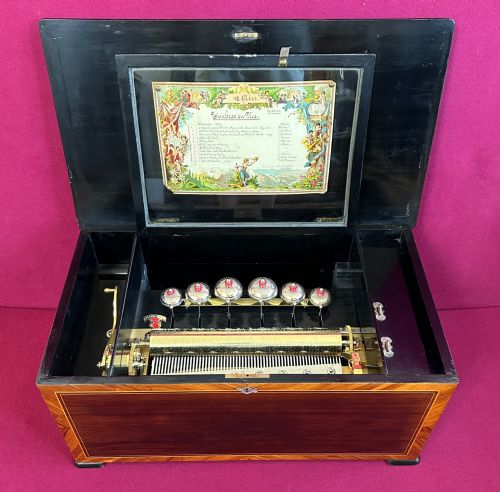
Size and complication push a box up again. Large writing slopes, double hinges, secret drawers, and the forms that step outside the ordinary run of boxes altogether, teapoys on their pedestals, table cabinets, games compendiums, multi-air musical boxes in rosewood cases. The generic trinket box populates the base.
Antique Rosewood Boxes Retail Price Guide 2026
Typical UK retail prices for rosewood boxes, calculated from the Sellingantiques database of over a million retail prices indexed since 2003. This retail price guide relies exclusively on Sellingantiques data; no external sources or auction records are used, so the figures do not describe the wider market.
The largest things to pass through Sellingantiques under this heading stretch the word box: a rosewood work table, and a table cabinet fourteen inches each way.
The Antique Rosewood Boxes Glossary
- Writing slope
- A portable box whose hinged lid opens to a sloping leather-covered writing surface. The exact phrase appears in well over a hundred titles.
- Sarcophagus
- A shape with outward-sloping sides and a stepped lid, named for the classical tomb. Used mostly of caddies.
- Brass bound
- Brass strips or edging applied over the corners and edges of the box, as opposed to inlaid flush into the veneer.
- Fitted
- Retaining its interior divisions, trays or bottles. Often written as 'fully fitted'.
- Teapoy
- A tea chest raised on its own pedestal or stand rather than sitting on a table.
- Tunbridge ware
- Mosaic decoration built from bundled coloured wood rods, sliced across to give pictorial or geometric bands.
Antique Rosewood Boxes: Frequently Asked Questions
What were rosewood boxes used for?
Specific domestic jobs, and the title usually names the job first. Tea, letter-writing, jewellery, sewing kit and dressing-table bottles account for the bulk of what turns up.
The smallest end was made for narrower tasks still. Postage stamp boxes, glove boxes and needle cases all appear, glove boxes in ten titles.
Which type is most common?
Writing boxes and slopes form the largest single block, at roughly a fifth of listings. Tea caddies run almost level with them.
Jewellery boxes come next, then sewing and work boxes, with the two uses paired freely in the same title. Vanity and dressing boxes make a smaller but distinct group.
How old are most of these boxes?
Nineteenth century. Victorian and Regency are the labels dealers use most, followed by plain '19th Century', with Georgian well behind.
Clean years, where they are given, run from 1800 to 1920 and cluster on the middle decades. Only a minority of listings carry a year at all.
What does brass inlaid mean on a caddy?
Cut brass let into the rosewood veneer, as lines, borders or scrolling foliage. It's a Regency habit and it runs right through the category.
Brass bound is different: strips or edging laid over the corners and edges rather than set into the surface. Both phrases appear in the titles.
Are rosewood boxes British?
The title vocabulary is overwhelmingly English, and dozens of listings say so outright. Purpose-made boxes for tea, writing and needlework were standard household furnishing in Britain across the century.
Non-British examples surface singly rather than as a group: a Karlsbad souvenir box, a Palais Royal jewellery box, Chinese and Anglo-Indian travelling boxes, a French box on stand.
Do rosewood writing slopes have secret drawers?
Some do, and they are advertised when they are there. Secret drawers and hidden compartments show up in a small handful of writing slopes.
They are not a general feature of the form. Where they appear, they tend to sit alongside other signs of a more elaborate box, such as size, double hinges or heavy inlay.