



Antique Tortoiseshell Boxes
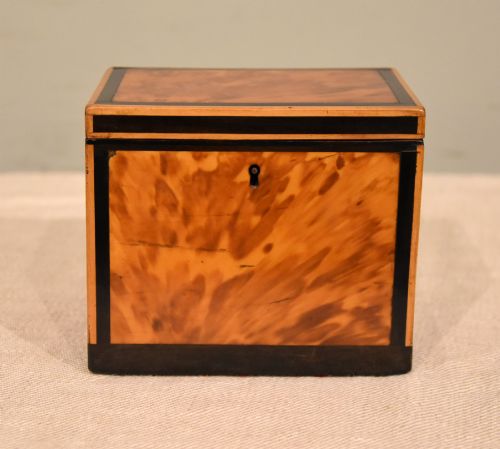
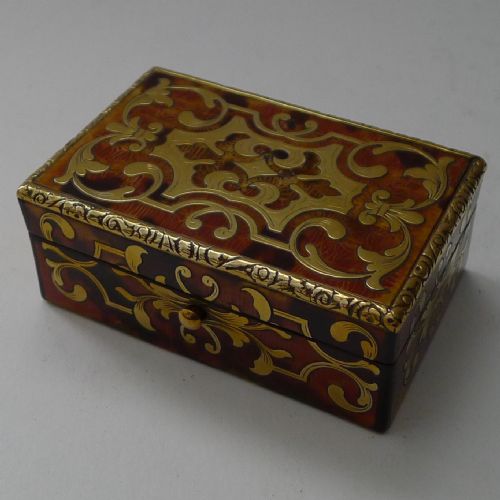
Small lidded boxes veneered or mounted in tortoiseshell, made to hold things that were once costly enough to deserve a costly container: tea, snuff, patches, pins and jewellery.
What They Are
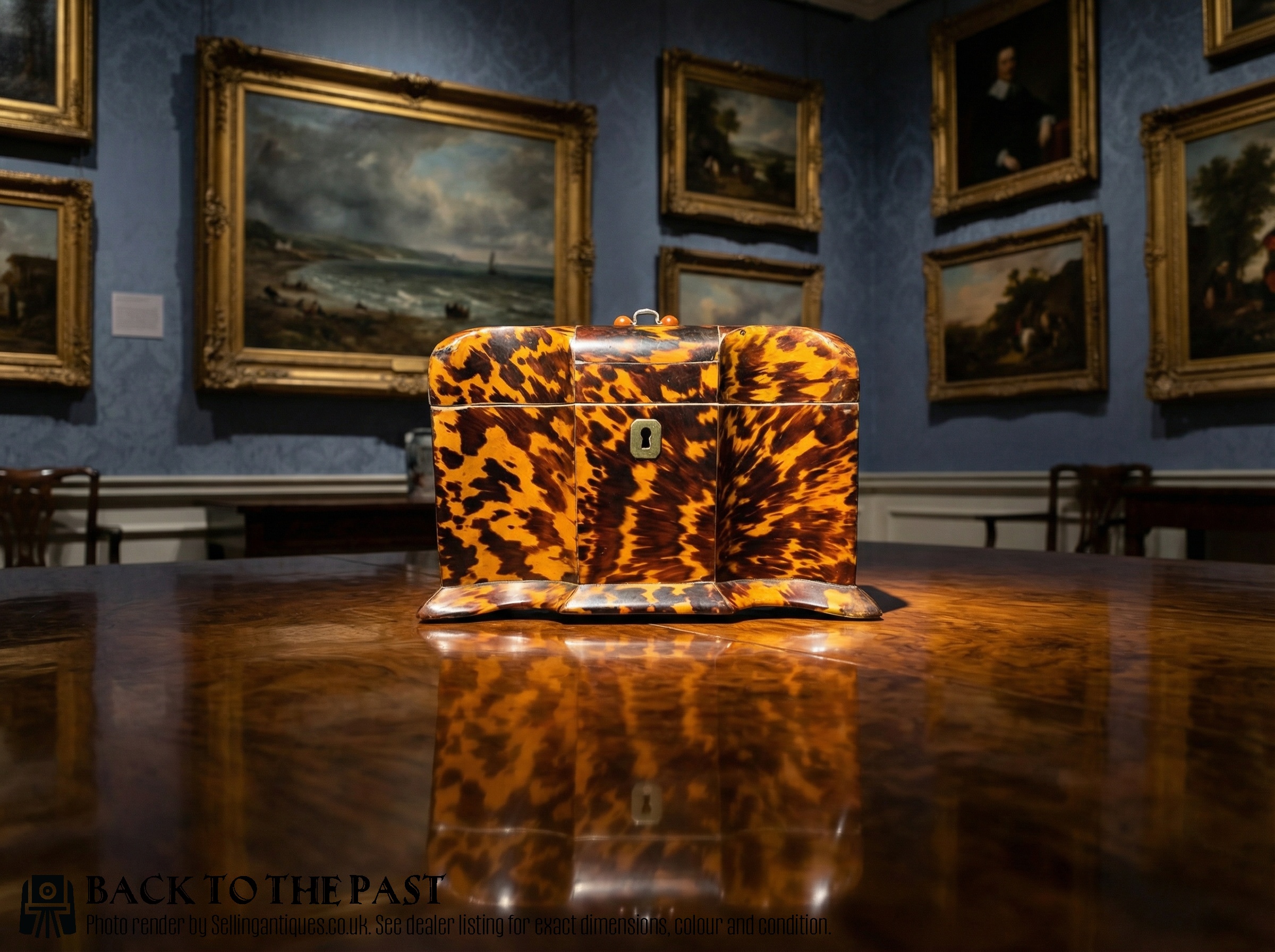
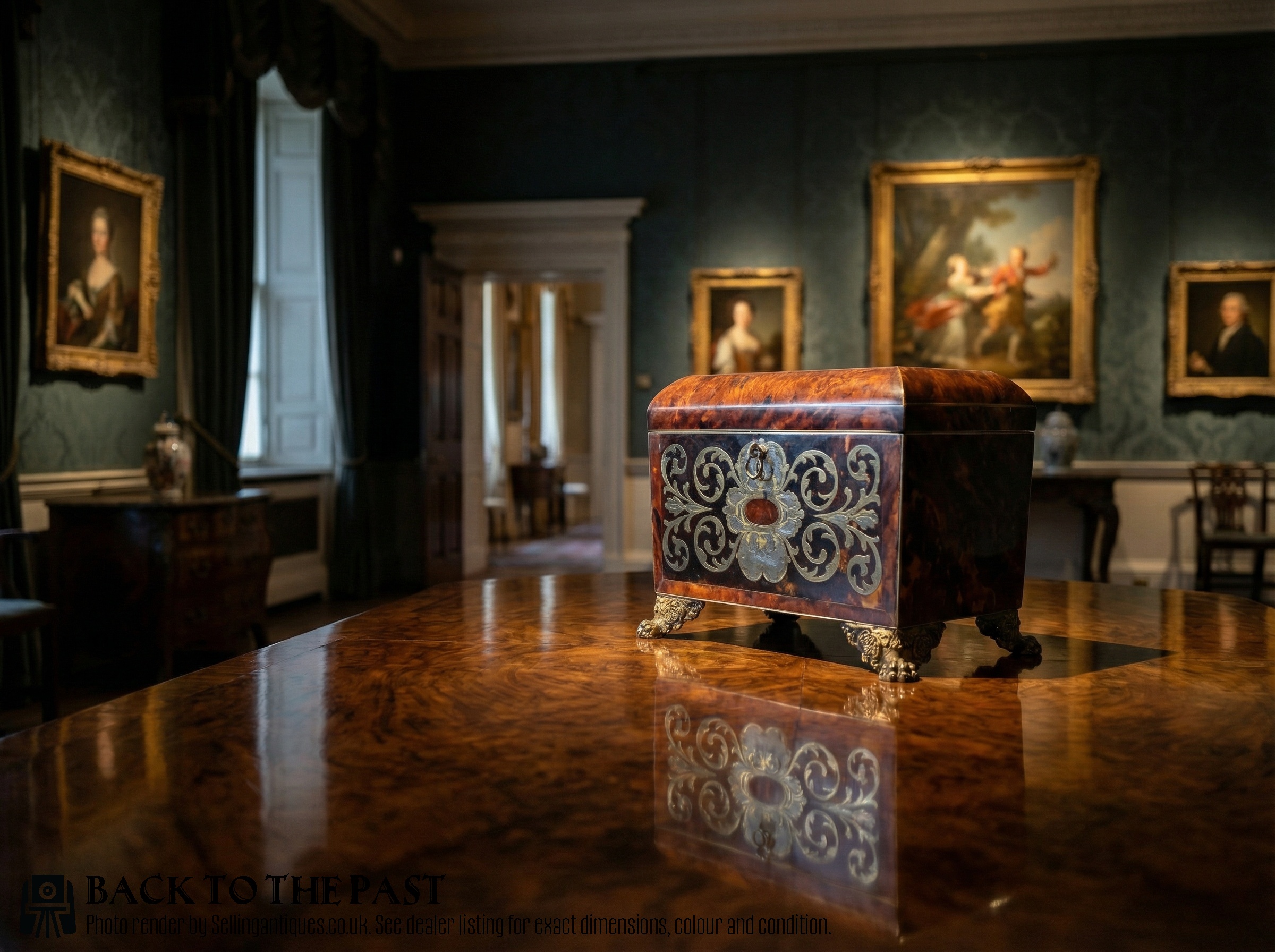
The category is defined by the material, not the shape. Shell is laid as veneer over a wooden carcase, or set into silver and white-metal mounts. Tortoiseshell is the plate of the hawksbill turtle, worked in Europe from the seventeenth century because it could be heated, pressed and moulded as well as cut.
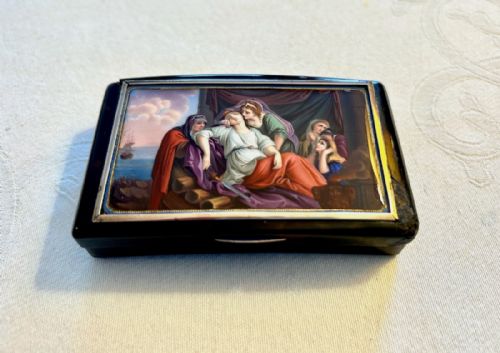
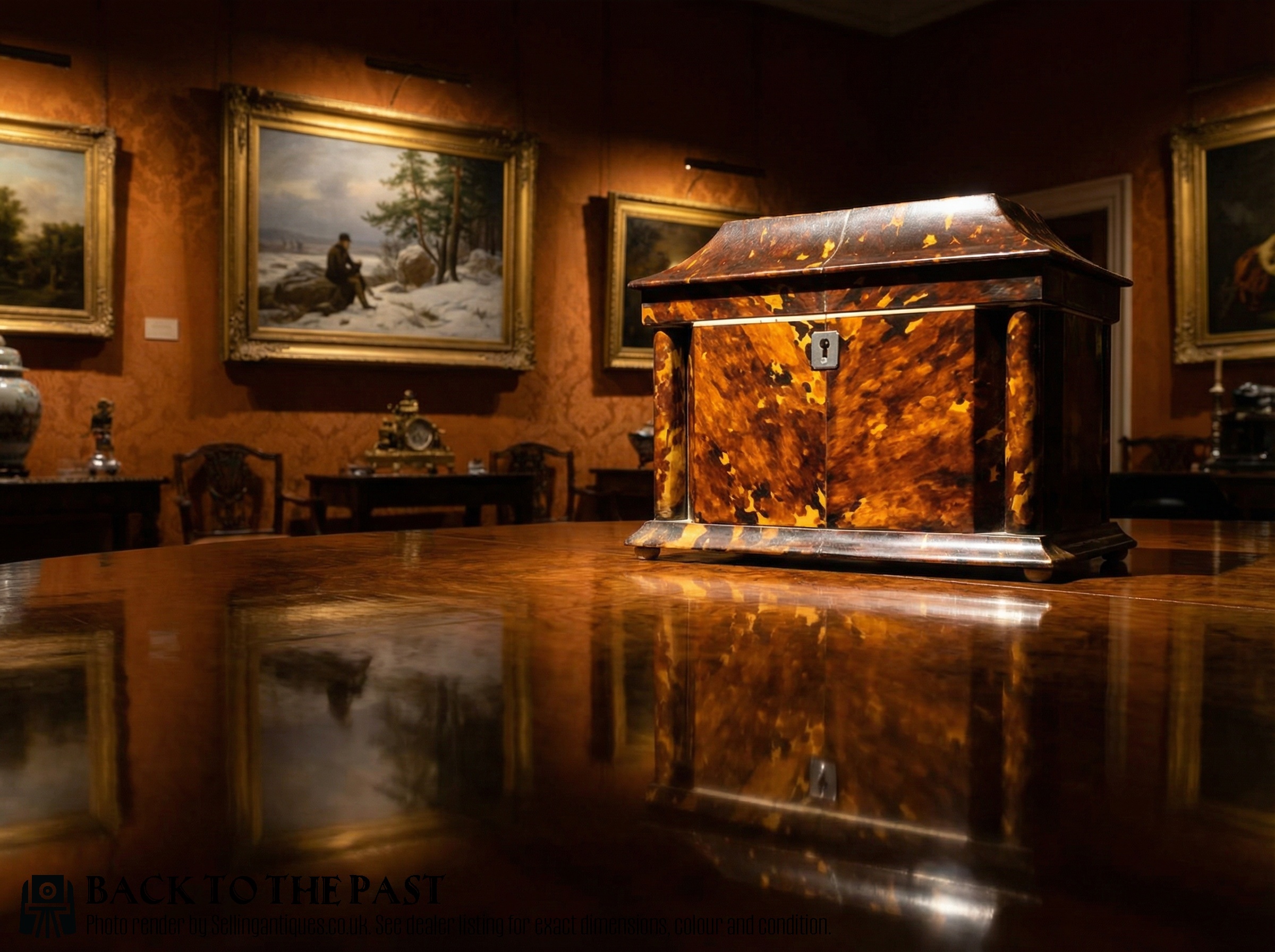
The form you'll meet most often is the tea caddy. Caddy appears in 39 of 115 titles on Sellingantiques, roughly one listing in three, and those caddies run oblong, hexagonal, octagonal, decagonal, bow-fronted, casket-shaped and domed, single or double compartment, often with silver or ivory stringing. The snuff box is next at 23 titles, and around it sit patch, needle, pin, ring, pill, toothpick and cigar boxes.
Silver turns up in 24 titles, one in five, which makes metal mounts the most advertised feature after the shell itself. Beyond those two groups come caskets, sewing and work boxes, jewellery, stationery and writing boxes, and a visible minority in faux or pressed shell, or shell used as inlay and lining rather than as the whole surface.
Dating is loose. The field runs 1750 to 1930, but only 35 of the 115 listings carry a clean year, and the largest single label is the vague "19th Century" at 27, ahead of Regency and Georgian at 15 each. The same caddy is sometimes called Georgian in the title and dated 19th Century in the field, so read era labels as the dealer's shorthand. Origins named in listings reach past England to French, Swiss, Scottish, Anglo-Indian and Dutch East Indies work.
What Sets Them Apart
Form does most of the work. Tea caddies occupy nearly every position in the upper half of the sampled range, including the two highest, while snuff, patch and needle boxes fill the bottom. An octagonal Regency caddy and a pair of miniature caddies hold the top; a plain oblong sits lower than a shaped one every time, and the hexagonal, decagonal, bow-fronted and double caddies climb accordingly.
Then the shell itself. Titles that say faux tortoiseshell, or tortoiseshell inlaid, cluster low and mid. Those that say tortoiseshell outright, or single out blonde shell or well-figured plates, sit high. Colour and figure get named in listings for a reason: they are what a buyer looking at photographs can actually judge.
Mounts and inlay push a box upward. Silver, silver-gilt, gold, gold piqué, ivory stringing, mother-of-pearl and ormolu all appear in the higher-placed titles, and a box carrying two of them tends to sit above one carrying none. The twentieth-century listings are small silver-mounted things: ring boxes, pill boxes, trinket boxes.
Retail Price Guide 2026
Typical UK retail prices for tortoiseshell boxes, calculated from the Sellingantiques database of over a million retail prices indexed since 2003. This retail price guide relies exclusively on Sellingantiques data; no external sources or auction records are used, so the figures do not describe the wider market.
The 1750s is the earliest bracket on Sellingantiques for these boxes, and every one dated there is a tea caddy.
The Antique Tortoiseshell Boxes Glossary
- Tea caddy
- A lidded box for storing tea leaves, sometimes divided into two compartments. A double caddy has two lidded wells, occasionally with a central bowl for sugar or mixing.
- Faux tortoiseshell
- Imitation shell: stained horn, pressed composition or a painted finish. Five sample titles say so outright, and the term places a box in the lower and middle part of the range.
- Blonde tortoiseshell
- The paler, more translucent grade of shell. It gets named in several caddy and snuff box titles, and it turns up among the dearer sampled pieces.
- Piqué
- Gold or silver pins and strips inlaid into the shell surface. It recurs across snuff and trinket boxes, and gold piqué appears in higher-placed listings.
- Stringing
- Fine contrasting lines of ivory, silver or wood inlaid along edges and panel borders. A recurring note in caddy descriptions.
- Treen
- Small turned or carved woodwork. Several snuff boxes in the archive are treen bodies with shell mounts rather than shell throughout.
Frequently Asked Questions
How often do these come up for sale?
About ten a year on Sellingantiques, from an archive of 115 listings. Fifty-five different dealers have listed one.
That spread tells you something: it's a category almost every box dealer meets occasionally, and almost none stocks in depth.
What shape are the caddies?
Shape gets named surprisingly often for so small an object. The caddies alone run oblong, hexagonal, octagonal, decagonal, bow-fronted, casket-shaped and domed.
Single and double compartments both appear, and a pair of miniature caddies sits among the highest listings in the archive.
Are snuff boxes common in this category?
Yes. Snuff appears in 23 of 115 titles, the second most common form after the caddy.
Around them sit the other pocket-sized boxes: patch, needle, pill, ring, toothpick, stud and cufflink boxes, and cigar cases. As a group they anchor the lower part of the range.
Which periods do these boxes come from?
The dated field spans 1750 to 1930. Four listings sit in the 1750s, the earliest bracket in the archive, and every one of them is a tea caddy.
The nineteenth century dominates, whether labelled Regency, Georgian, Victorian or simply 19th Century. Only eight listings are twentieth century, four in the 1910s and four in the 1920s.
Do these boxes carry maker's names?
Rarely. A scan of the archive returned no maker name reaching even two dealers, so this isn't a category read by signature.
What listings name instead is material, shape and mounts: blonde or well-figured shell, silver or gilt metal, piqué, stringing.
What unusual forms turn up?
Alongside the caddies and snuff boxes, the archive holds caskets, sewing and work boxes, jewellery, stationery and writing boxes.
A handful of forms surface only once each: a toothpick box, a stud or cufflink box, a games box, a desk tray, a military hat box, a lady's handbag and a Ceylon Dutch Colonial betel-nut casket.