

Victorian Boxes
Wooden and metal lidded boxes made for nineteenth-century desks, dressing tables and parlours: writing, tea, sewing, jewellery, snuff and a long tail of single-purpose containers.
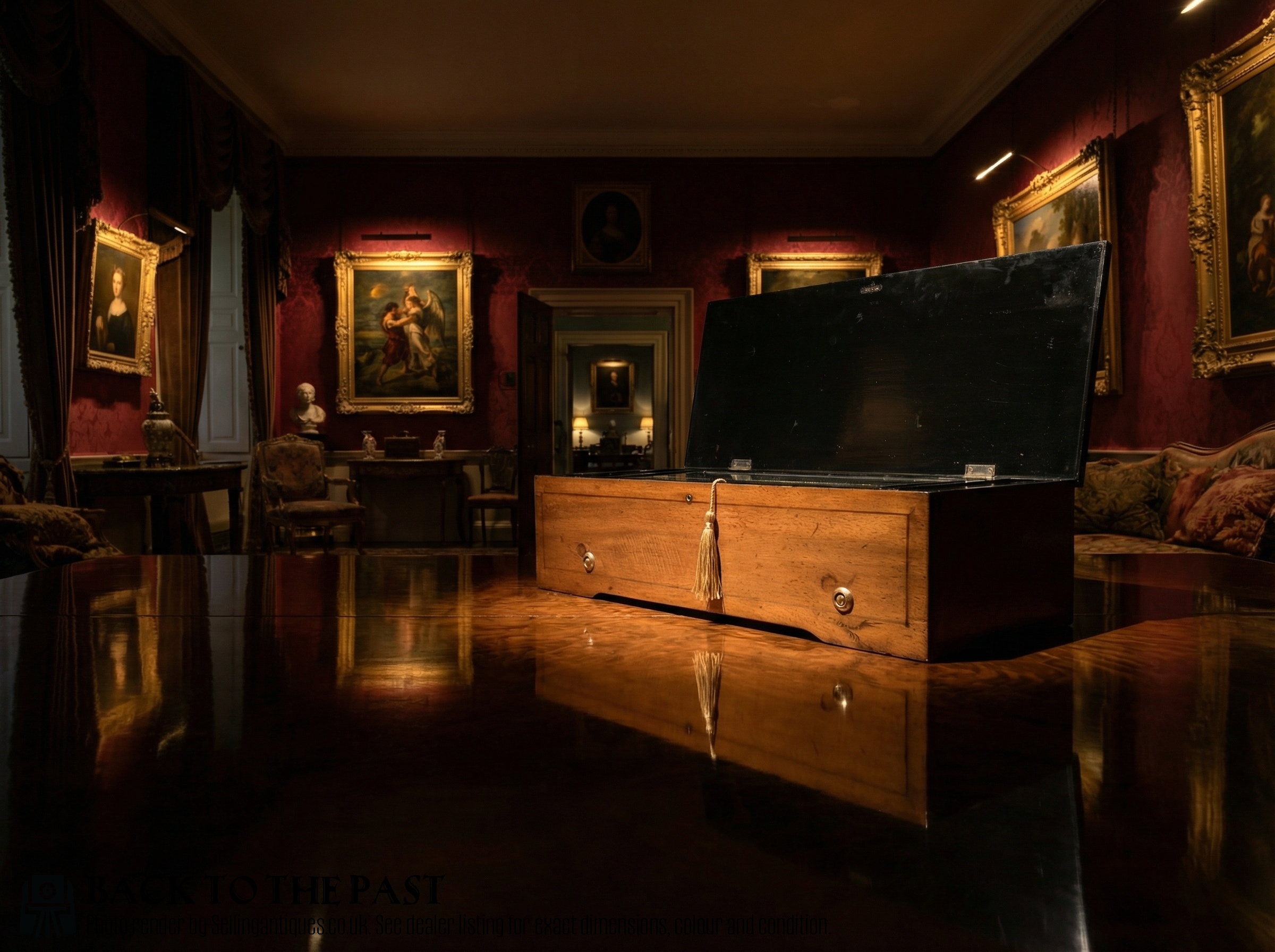
Victorian Boxes
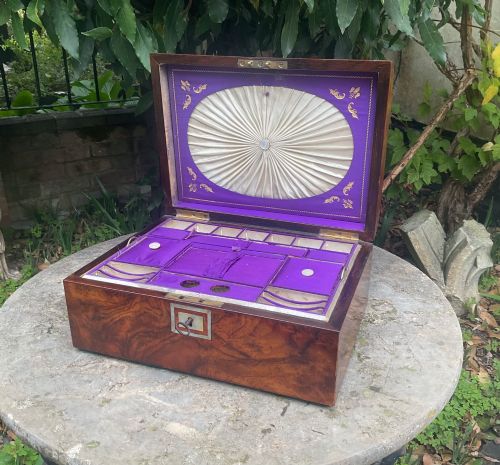
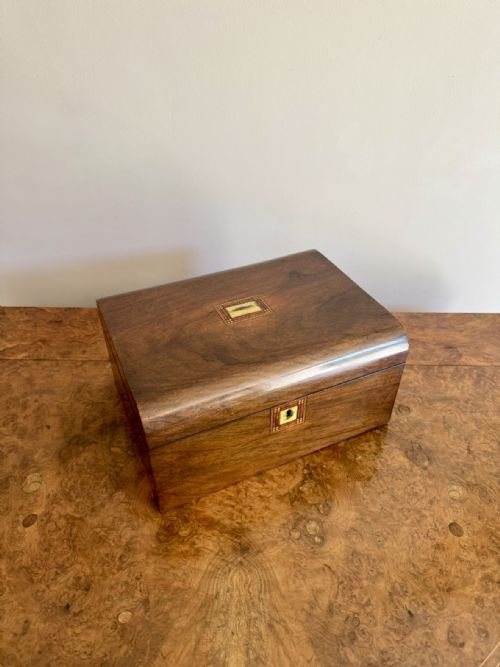
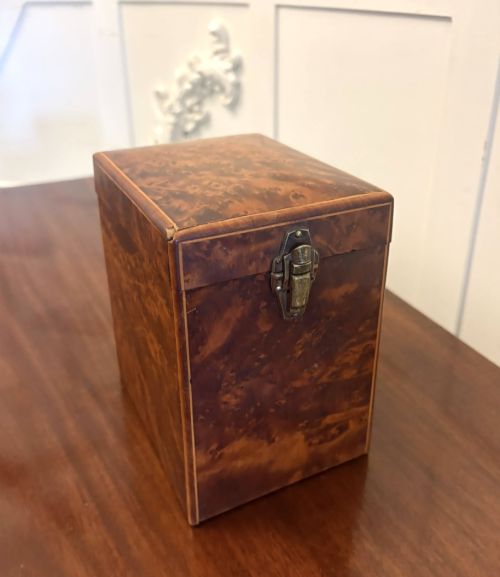
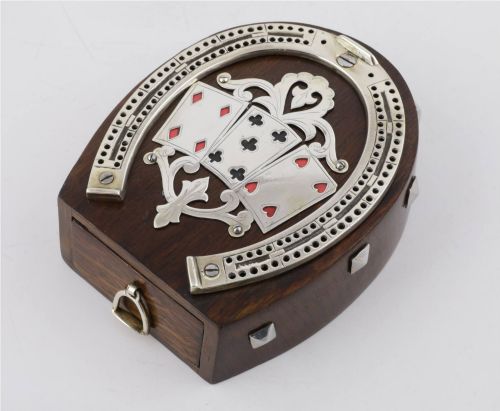
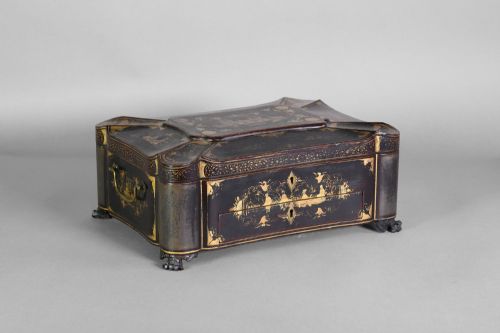
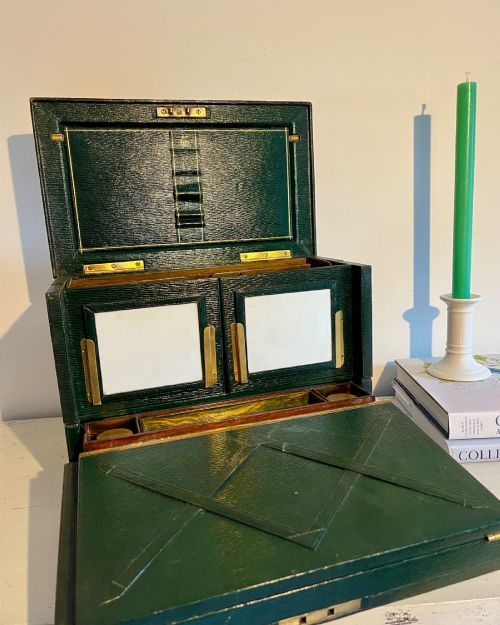
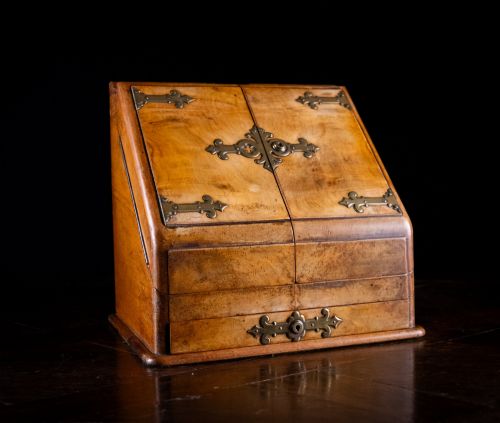
The heading covers small and medium containers made for domestic and desk life: writing slopes and lap desks, jewellery and trinket boxes, tea caddies, stationery boxes and cabinets, work boxes, vanity boxes, snuff boxes, and one-purpose things like stamp, glove, cribbage, deed and letter boxes. Sizes run from a pill box up to blanket boxes, box settles, teapoys and country-house post boxes.
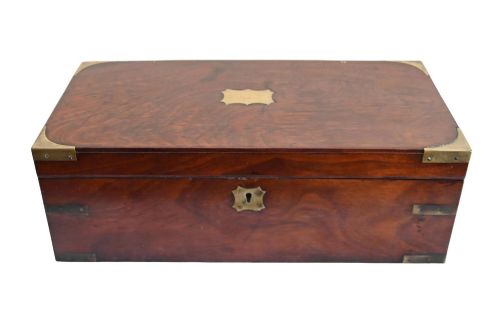
The writing slope in walnut dominates. "Writing" appears in 380 of the titles and "writing slope" in 273, while walnut turns up in 404, half of those specifying burr walnut. Jewellery boxes are the clear second population at 242 titles, then tea caddies at around 120, then stationery boxes and cabinets. Rosewood, mahogany, oak and coromandel follow walnut as the timbers, and brass binding or inlay runs across all of them.
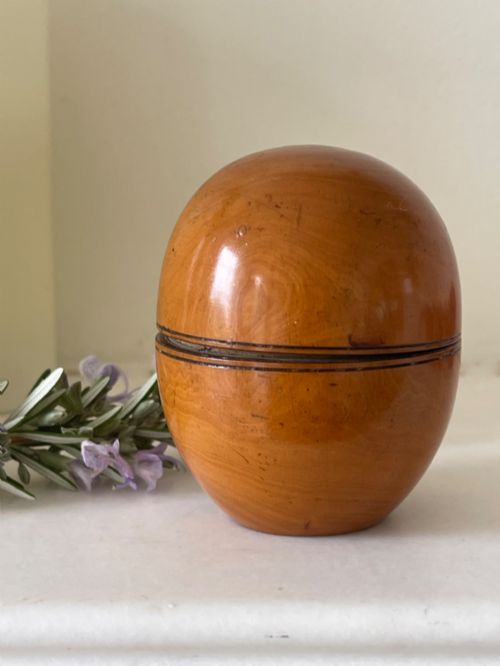
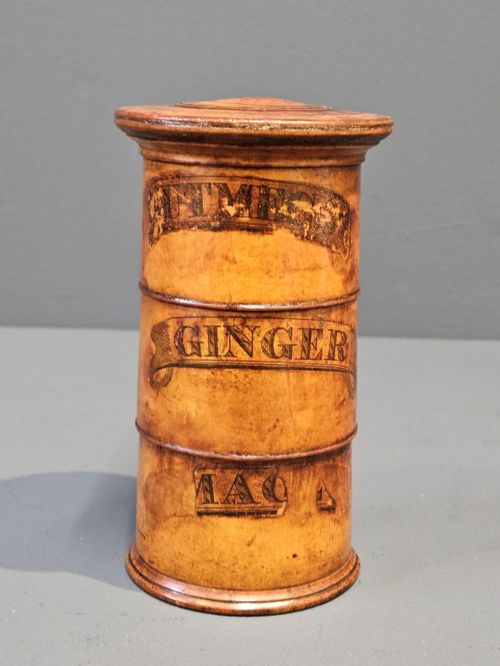
Smaller collectors' boxes make up the most varied branch by material: snuff boxes in horn, tortoiseshell, treen, coquilla nut and tartanware, Tunbridge ware stamp boxes and needle holders, silver and mother of pearl. Musical boxes sit apart as their own small cluster, described by the number of airs and by whether the bells are in view.
Dating is mostly a period label. Of 1,768 listings, 844 say only "Victorian" and 240 only "19th Century"; where decades are stated they gather in the 1850s to 1890s. The dated field stretches from 1750 to 1940, so a few earlier and later pieces sit inside the category, and "Victorian" in a title is best read as a style bracket unless a year comes with it. Around 221 are listed a year on Sellingantiques, handled by 263 different dealers.
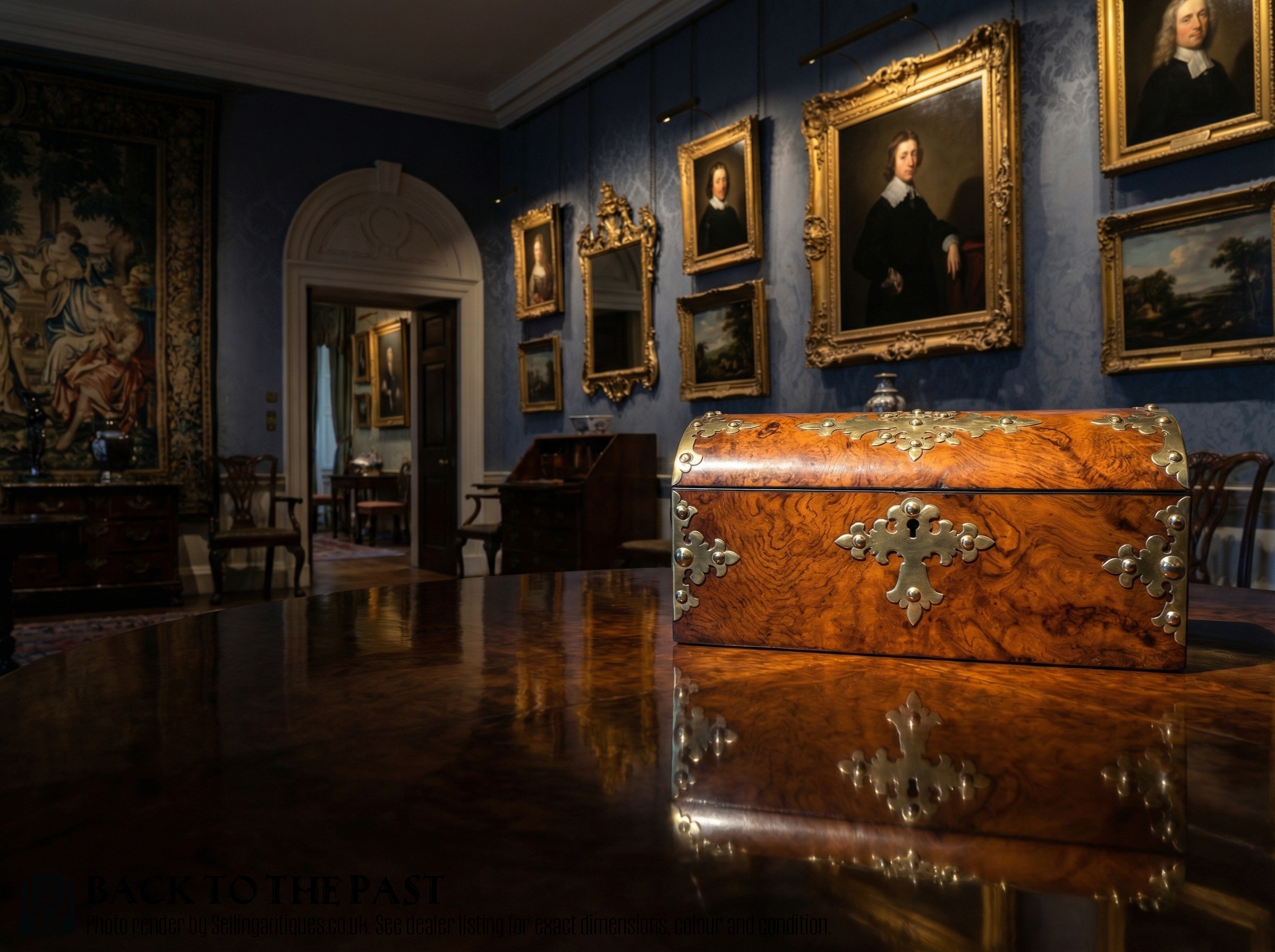
Where The Range Splits
Veneer does much of the work. Burr and figured cuts of walnut, named in nearly 200 titles, and coromandel, in 108, sit repeatedly in the upper half of the range, while plainer mahogany and oak hold the lower ground. Brass pushes the same way: 256 titles mention it, 108 of them brass bound, and brass inlaid and brass mounted recur on the more costly slopes, caddies and stationery boxes.
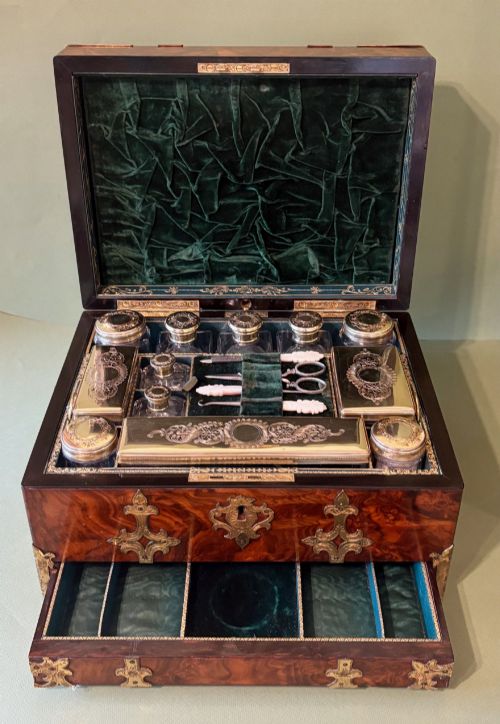
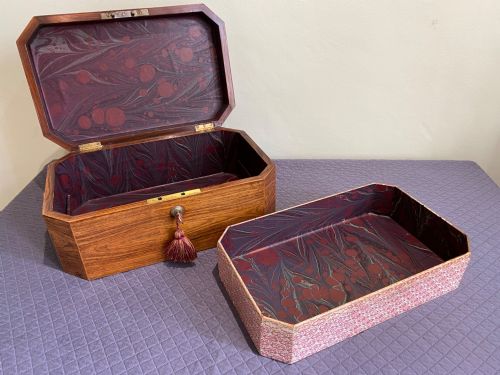
Interiors matter as much as the outside. Fitted and lined boxes, vanity cases with plated bottles, apothecary boxes with their bottles, artists' boxes with contents, games compendia complete: these carry more than an empty shell. Concealment counts too, with 42 titles advertising secret drawers outright and several slopes naming a patent lock.
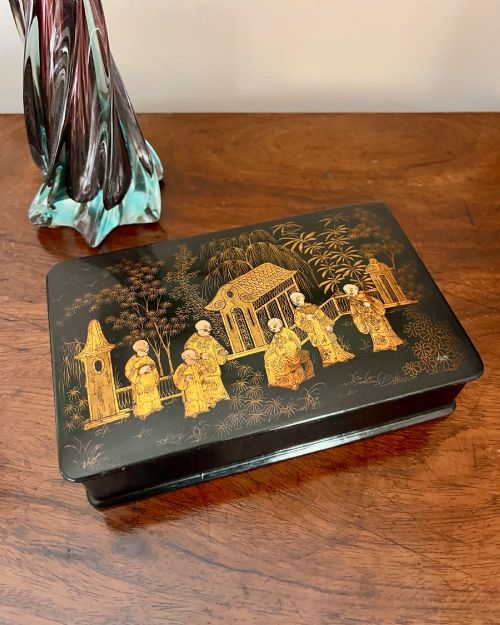
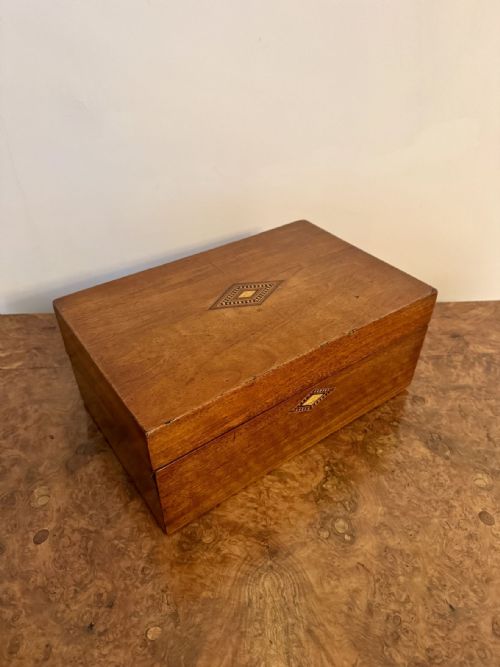
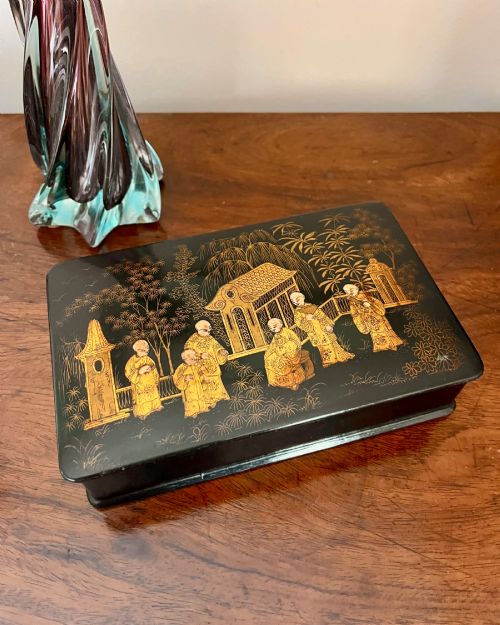
Decorative technique is the third lever. Tunbridge ware mosaic, marquetry and parquetry inlay, mother of pearl, painted papier-mâché and carved work all lift a box above a plain veneered one. The top of the sampled range is not always wooden, though: a gold snuff box, a silver table box with cameo and enamel and a coromandel decanter box all sit above every writing slope, while a painting box and a studded money box hold the bottom.
Victorian Boxes Retail Price Guide 2026
Typical UK retail prices for victorian boxes, calculated from the Sellingantiques database of over a million retail prices indexed since 2003. This retail price guide relies exclusively on Sellingantiques data; no external sources or auction records are used, so the figures do not describe the wider market.
Secret drawers are advertised in the titles of dozens of Victorian boxes on Sellingantiques, and some slopes name a patent lock.

The Victorian Boxes Glossary
- Writing slope
- A box whose hinged lid opens to a sloped writing surface, usually leather-covered. The phrase appears in 273 titles, making it the commonest single description in the category.
- Brass bound
- Corners and edges strapped in brass for strength and show, named in 108 titles. Brass inlaid and brass mounted describe decoration set into or fixed onto the surface rather than wrapped round it.
- Burr walnut
- Veneer cut from a burr growth on the tree, giving swirling figure. Named in 150 titles, against 46 for figured walnut.
- Coromandel
- A dense dark-striped tropical hardwood used as veneer on better boxes, in 108 titles. It reads almost black with paler stripes.
- Secret drawers
- Concealed compartments, usually released from the pen tray of a slope. Forty-two titles name them, so they are advertised rather than hidden from the buyer.
- Tunbridge ware
- Mosaic decoration built from bundles of coloured wood rods, glued up and sawn into slices. It runs through 59 to 69 titles, including stamp boxes small enough to hold in a palm.
Victorian Boxes: Frequently Asked Questions
What kind of box is most common?
The writing slope in walnut. "Writing" appears in 380 titles and "writing slope" in 273, and walnut is named in 404, which makes the brass bound walnut slope the face of the category.
Jewellery boxes come second at 242 titles, then tea caddies at around 120, then stationery boxes and cabinets.
Which timbers turn up in these boxes?
Walnut is the house timber, in 404 titles, with 150 of those specifying burr walnut and 46 figured walnut. Rosewood follows at 187, then mahogany at 129, oak at 124 and coromandel at 108.
Papier-mâché accounts for a smaller group of about 37 titles, usually black and painted, often with mother of pearl set in.
Does Victorian in the title mean a firm date?
Usually it means a period bracket. Only 579 of 1,768 listings carry a clean year, while 844 give the word Victorian alone and a further 240 say only "19th Century".
Where decades are stated they cluster in the 1850s to 1890s. The dated field as a whole runs from 1750 to 1940, so a handful of earlier and later boxes sit inside the group.
Are secret drawers usual in a writing slope?
They come up often enough to be a stated feature rather than a curiosity. Forty-two titles advertise secret drawers, and "secret" appears in 49.
In slopes the concealed compartment is normally released from the pen tray. Some slopes also name a patent lock as part of the description.
What are the smallest boxes in this category?
Snuff boxes, stamp boxes, pill boxes, vesta cases and needle holders. Tunbridge ware stamp boxes come in single, double and triple-section forms and sit at the bottom of the range.
This is also the most varied branch by material: horn, tortoiseshell, treen, coquilla nut, tartanware, silver and mother of pearl all appear.
Do musical boxes belong in this group?
Yes, as a distinct cluster of roughly 34 to 42 titles.
They are described by the number of airs played, six, eight and twenty being the counts that recur, and by whether the bells are "in view" rather than hidden under the bed plate.