



Antique Money Boxes
A small container with a coin slot, made to hold savings safely out of reach, from turned wooden boxes and glazed pottery cottages to cast iron novelty banks and locking strongboxes.
Antique Money Boxes
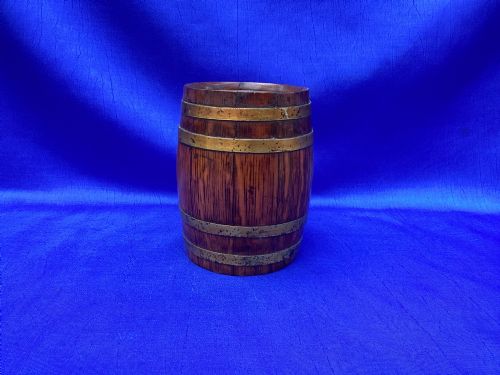
The object you'll meet most often is a 19th-century English box in wood or pottery, painted or slip-glazed, and frequently modelled as a building. Treen is the single most common material word in titles, and "19th Century" is the dealer's period on 38 of 85 listings.
Buildings are the recurring subject. Houses appear in ten titles and cottages in eight, made variously in pottery, painted wood, brass and cast iron. Animals, chapels and figures follow the same idea: the box is shaped as something else, and the slot is worked into the roof or the back.
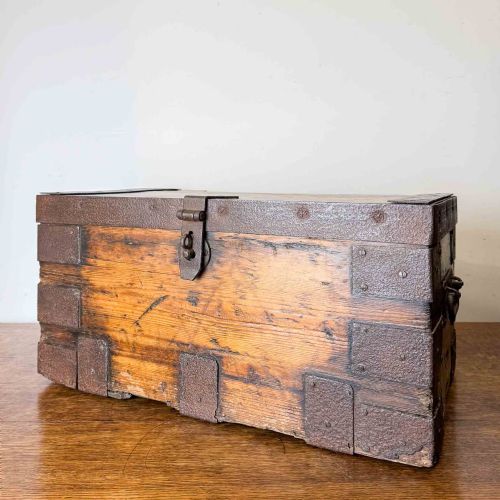
Cast iron and tinplate novelty banks are the clear second stream, with iron in nine titles. Alongside them sits a smaller tail of strongboxes, combination safes, patent lock boxes and cash tills, which were made to secure coin rather than to make saving a game, and which are the largest and heaviest things in the category.
Origins run wider than the English core. French pottery and tinware, German and Austrian tinplate, Swedish, American and Black Forest pieces all turn up, with single Japanese and Qajar Persian examples. The word "bank" is used interchangeably with "money box" throughout, and several listings hedge by using both.
What Sets Them Apart
Being modelled as something is the main divide. Plain boxes sit at the bottom of the sampled range, while figural pieces climb: Scottish terriers, a hare, an elephant, a Black Forest bear, an owl. The more the box pretends to be an animal or a building, the higher it tends to sit.
Mechanism and security do the same work at the other end. A three-dial combination safe, a patent lock box and a mechanical football bank all sit well above the plain-box band, and the heavy iron-bound strongboxes top the range outright. Naming and dating matter too: a Prattware Wesleyan chapel with an inscribed date of 1847, or earthenware identified to Yorkshire or Halifax, carries far more than an unnamed pottery pig.
Surviving original paint is a selling point in its own right, used on Regency treen, folk art cottages and a Swedish green strong box. Scale counts as well. Two otherwise identical Scottish terrier banks are separated in the listings only by the word "Large".
Antique Money Boxes Retail Price Guide 2026
Typical UK retail prices for money boxes, calculated from the Sellingantiques database of over a million retail prices indexed since 2003. This retail price guide relies exclusively on Sellingantiques data; no external sources or auction records are used, so the figures do not describe the wider market.
The most expensive money box ever sold on Sellingantiques was a Pratt Wesleyan Chapel money box from Mexborough Pottery, dated 1847. It sold in July 2025.
The Antique Money Boxes Glossary
- Treen
- Small turned or carved domestic woodware, and the most common material word in this category. Fruitwood, sycamore, walnut, rosewood, oak, elm and pine all appear.
- Still bank
- A money box with no moving parts, as distinct from a mechanical one. The mechanical exception in the samples is a football bank.
- Slip glaze
- A liquid clay coating fired to a glaze, named on a 19th-century pottery pig. Treacle glaze is its dark brown cousin, carried by two French pottery banks.
- Prattware
- Brightly enamelled earthenware, named in two titles including a Yorkshire cottage. The Wesleyan chapel dated 1847 is the same family.
- Folk art
- Naive, non-workshop decoration, in eight titles and usually paired with the word painted. Cottages and boxes both carry it.
- Zenibako
- Japanese for money box, used on one listing. Coffre-fort, French for safe, appears on a combination-lock iron box.
Antique Money Boxes: Frequently Asked Questions
How many money boxes come up for sale?
Around nine reach this market in a year, spread across 37 dealers on Sellingantiques. That means the great majority of dealers who handle them have listed just one.
It's a category that arrives in ones rather than runs, so the mix on offer at any moment shifts a good deal.
What's the difference between a money box and a bank?
Nothing, in practice. The two words compete for the same object, with "bank" in 14 of 85 titles and "money box" in the rest.
Several listings hedge by using both. A cast iron novelty is more likely to be called a bank, a treen or pottery piece a money box, but the line isn't firm.
How old are most antique money boxes?
The dated field runs 1800 to 1930, with one sampled walnut collection box reaching back into the 18th century and nothing recorded later than the 1930s.
Dating is mostly loose. "19th Century" alone accounts for 38 listings and "Victorian" a further 11, so decade-level dating is the exception. Where decades are given they cluster late, in the 1920s, 1900s and 1890s.
Which materials turn up most often?
Wood and pottery lead. Treen is in 13 titles, covering fruitwood, coopered mahogany and sycamore, figured walnut, rosewood, oak barrel and iron-bound elm and pine.
Cast iron follows with nine titles, joined by German and Austrian tinplate figures. Pottery runs through the category as Prattware, red earthenware, slip-glazed pigs and treacle-glazed French banks, with brass appearing on some of the buildings.
Why are cottages and houses so common?
The miniature building is the recurring subject of the whole category. Houses appear in ten titles and cottages in eight, cutting across pottery, painted wood, brass and cast iron.
Chapels and churches belong to the same idea, including a Prattware Wesleyan chapel with 1847 inscribed on the piece itself.
Are strongboxes and safes listed as money boxes?
They are, and they form a small but consistent stream. Iron-bound strongboxes, a Swedish painted strong box, a French three-dial combination safe, an English patent lock box and a mahogany and iron money till all appear.
They belong to an older and separate tradition, made to secure coin rather than encourage saving. They're also the largest, heaviest pieces in the category and sit at the top of the range.