

Antique Marquetry Boxes
A small lidded wooden box decorated with inlaid veneers rather than carving or paint, made to dress up a plain carcase and to signal the worth of what it held, from tea to needlework.
What Is A Marquetry Box?
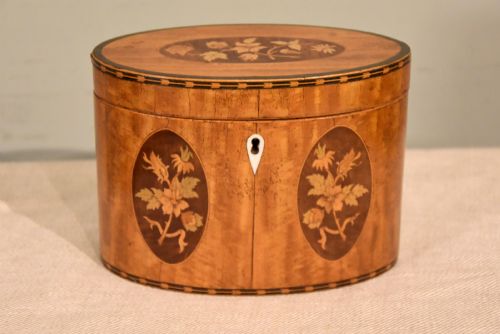
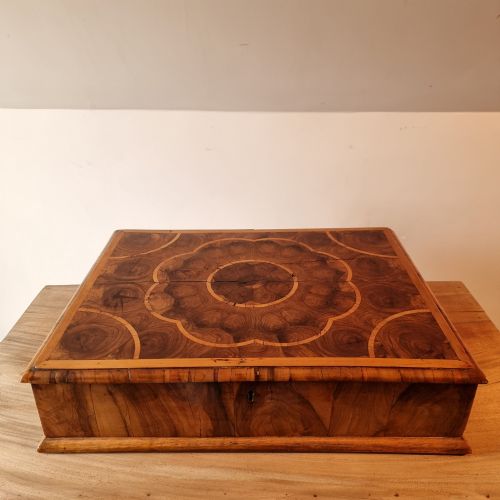
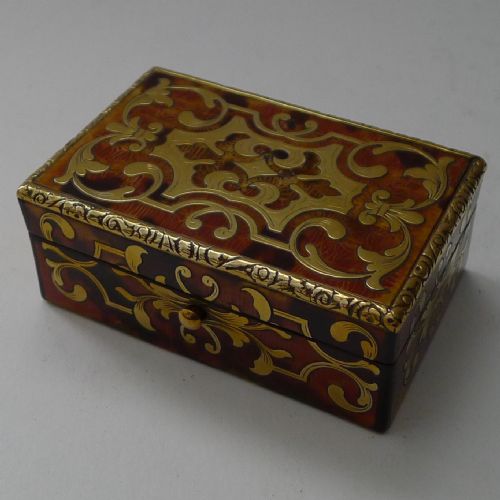
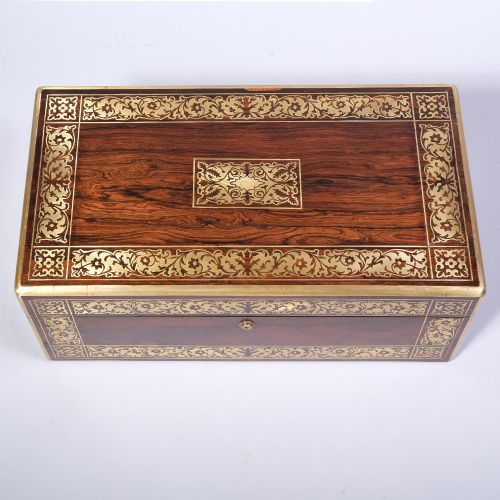
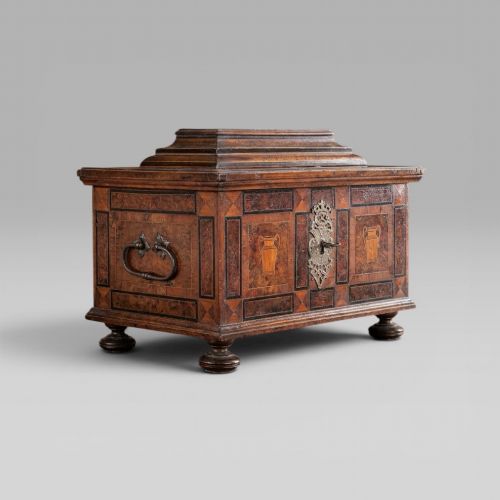
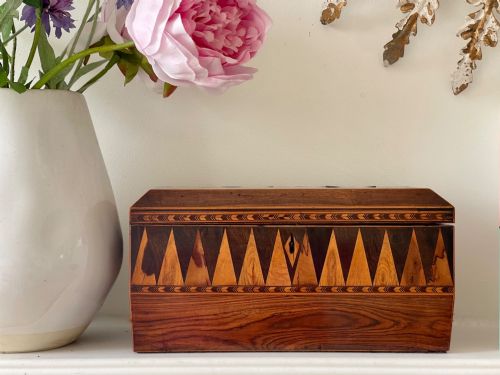
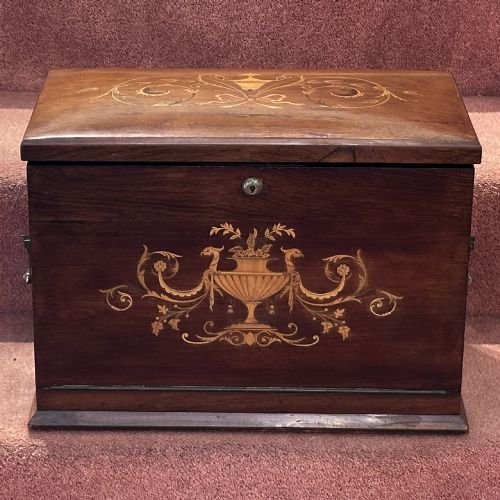
The decoration is inlaid: marquetry pictures and flowers, parquetry blocks, banding, stringing, mosaic and cut brass, laid onto a carcase or veneer of rosewood, walnut, mahogany, satinwood, harewood, yew or olive wood. The technique reached small domestic boxes from the 17th century, once thin sawn veneers were practical to work.
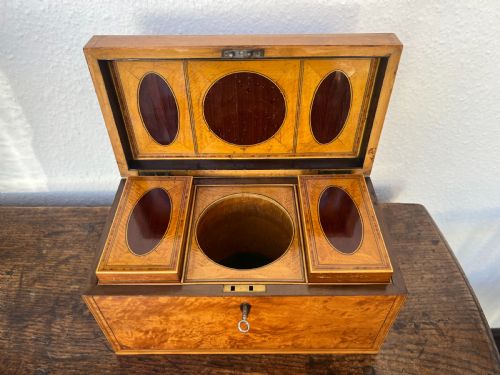
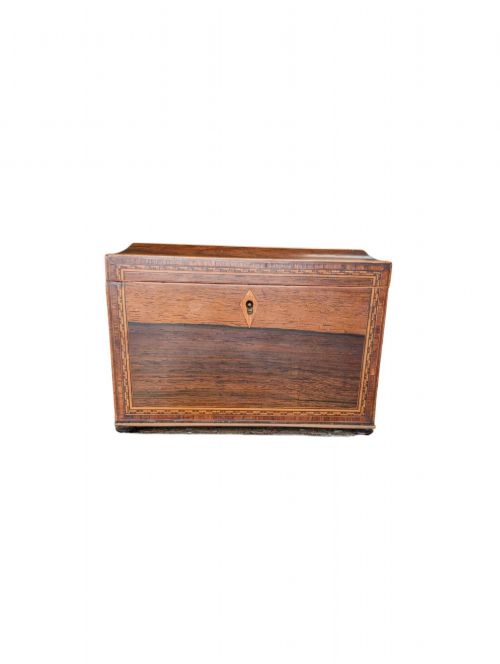
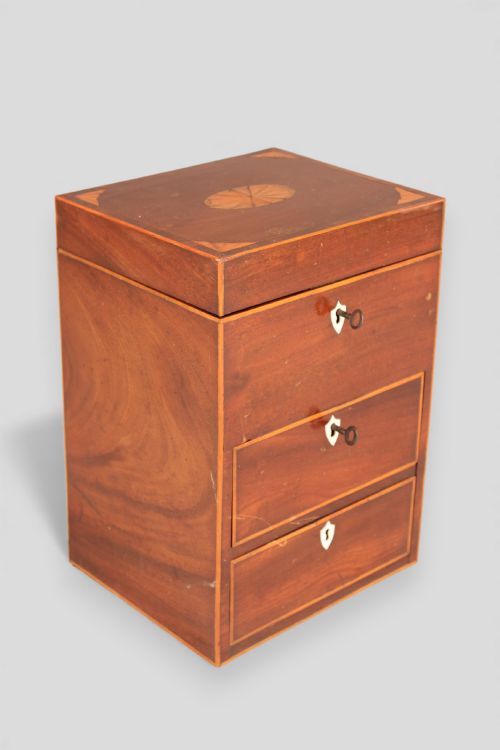
Under this heading the tea caddy dominates. The word appears in 54 of 198 titles, and the caddies arrive in an odd spread of geometries: octagonal, oval, hexagonal, cube, sarcophagus and domed-top all turn up in a single run of listings. A typical one is 19th-century English in rosewood, walnut, mahogany or satinwood.
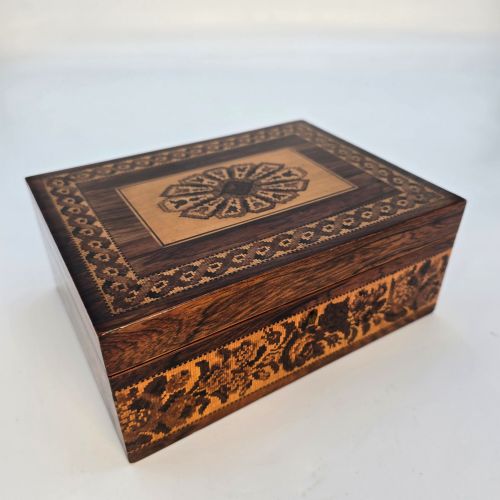
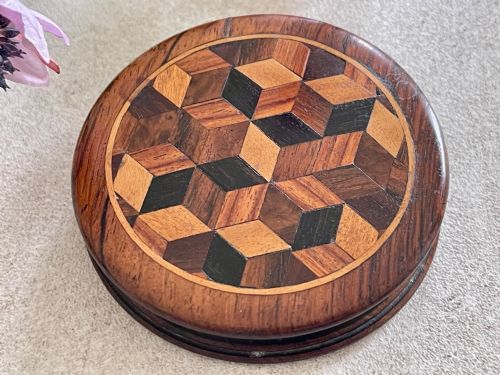
After caddies come Tunbridge ware boxes, about one in seven of the category, from stamp and match boxes up to needlework caskets. Writing boxes and slopes account for roughly one in ten, with sewing, jewellery and work boxes a little behind them, and cylinder musical boxes in inlaid cases about one in twenty.
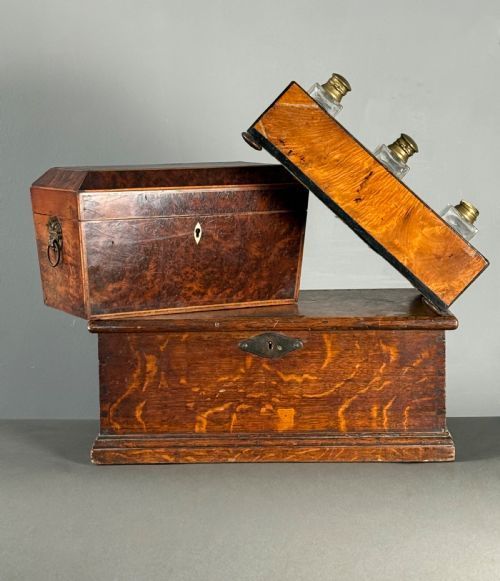
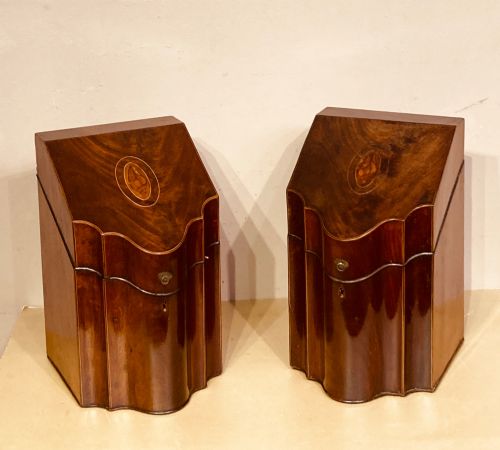
Dating is loose more often than precise. Dealer-entered years run 1750 to 1930, but "19th Century" and "Victorian" between them outweigh any decade band, and Georgian, 18th-century and Regency overlap each other. A few samples reach back to the 17th century, and the largest items are not pocket things at all: pairs of Georgian mahogany knife boxes, stationery cabinets and Regency teapoys on their own stands.
Where The Range Splits
Tunbridge ware sits at both ends at once. Unattributed postage stamp, match and snuff boxes occupy the bottom of the range, while rosewood caddies and needlework caskets naming a Tunbridge maker cluster well above them. The mosaic itself is not the divider; the attribution is.
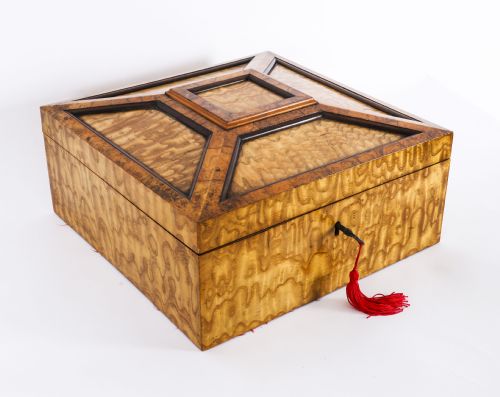
Timber does a lot of the work. Burr appears in 13 titles and satinwood in 12, and boxes in burr yew, burr thorn, harewood, amboyna, tulipwood, calamander, thuya and Gonçalo Alves sit above plain-veneer equivalents. Early date pushes the same way: the 17th-century lace boxes and caskets and the caddies dated 1750 hold the top band, while stamp and trinket boxes from 1890 to 1930 hold the lowest.
On musical boxes the movement is the measure. Titles that spell out air counts and bells, six airs, eight airs with six bells, ten air, twelve air, rise steadily through the range. Elsewhere scale and completeness lift a box: matched pairs of knife boxes, unusually large examples, and interiors described as fitted, with inner canisters or a compendium.
Retail Price Guide 2026
Typical UK retail prices for marquetry boxes, calculated from the Sellingantiques database of over a million retail prices indexed since 2003. This retail price guide relies exclusively on Sellingantiques data; no external sources or auction records are used, so the figures do not describe the wider market.
Among the one-offs to pass through: a Napoleonic prisoner-of-war straw work box, an Art Deco safe disguised as a book, and a lignum swan paperweight.
The Antique Marquetry Boxes Glossary
- Marquetry
- Pictorial or floral pattern built from shaped pieces of contrasting veneer set into a veneered ground.
- Parquetry
- The same technique worked in geometric blocks and lozenges instead of pictures, named in several caddy and slope titles.
- Tunbridge ware
- Mosaic decoration made from bundled coloured wood rods sliced into patterned strips, in 29 titles.
- Writing slope
- Box with a sloping hinged lid that opens to a writing surface and compartments.
- Teapoy
- A tea caddy raised on its own stand or pillar; four appear in the samples.
- Harewood
- Sycamore stained grey-green, used as a decorative veneer on Georgian caddies.
Frequently Asked Questions
Which form turns up most often?
The inlaid tea caddy, by a wide margin. "Caddy" appears in 55 of 198 titles and "tea caddy" in 54, and "inlaid" is the single commonest word in the titles.
The sampled caddies run from small twin-compartment boxes and octagonal or oval shapes up to sarcophagus and hexagonal forms, some with domed tops.
What woods are used?
Rosewood leads, then walnut, mahogany and satinwood. Those four cover the bulk of the carcases and veneers described.
The decorative timbers are named far more widely than that suggests. Burr yew, burr thorn, burr maple, partridge wood, harewood, amboyna, tulipwood, calamander, thuya, kingwood, olive, lignum and Gonçalo Alves all appear in listings.
Are these all English?
Mostly, but not entirely. French turns up in 12 titles, and a persistent seam of other origins runs through the archive.
That seam takes in Italian souvenir marquetry and Renaissance-revival caskets, Dutch marquetry boxes, Japanese lacquer worked with marquetry, Swiss cylinder musical boxes, an Irish slope and one Persian piece.
How old are marquetry boxes?
Dealer-entered dates span 1750 to 1930, with 60 listings carrying a clean year. The earliest clean years in the samples are two pieces dated 1750, a burr thorn wood caddy and a tortoiseshell and boulle caddy.
A handful of samples sit outside that span. Seventeenth-century lace boxes and caskets appear at one end, and at the other a Persian tissue box and an Art Deco sunray-inlaid caddy, both 1930.
Do dealers specialise in these?
Barely. Around 25 come up a year on Sellingantiques, and 90 different dealers have listed one.
That means most have handled a single example rather than carrying the category as a line.
What unusual pieces appear under this heading?
One-offs surface that fit none of the usual branches. A Napoleonic prisoner-of-war straw work box, an Art Deco secret safe made to look like a book, a French ballot box and an inlaid coal box have all been listed.
At the larger end there are stationery cabinets, correspondence chests and teapoys raised on stands, alongside pairs and matched pairs of Georgian mahogany knife boxes.