
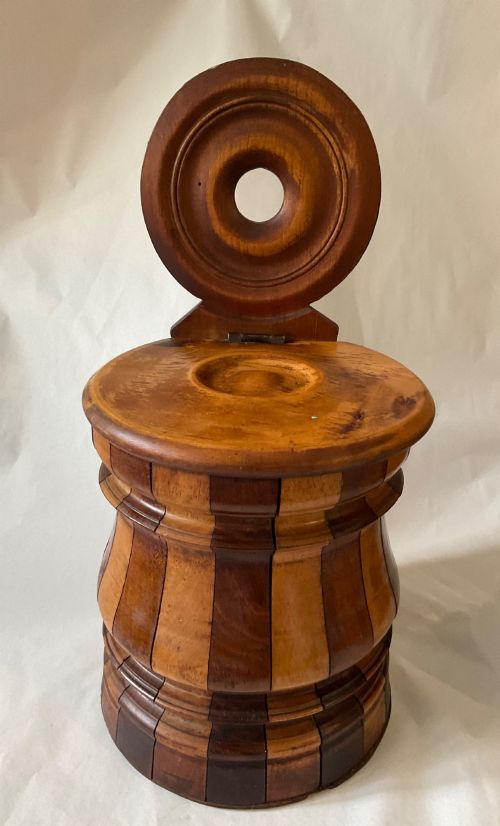
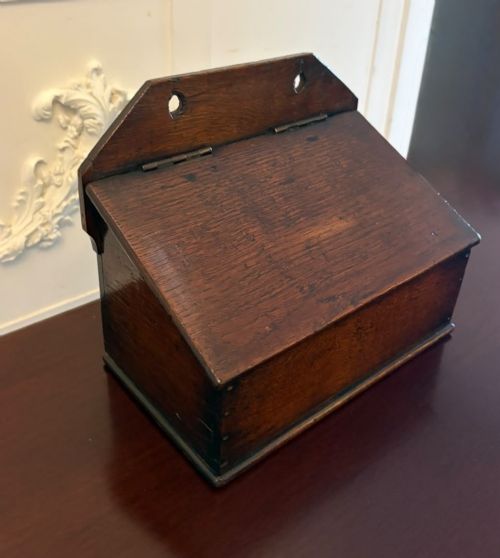
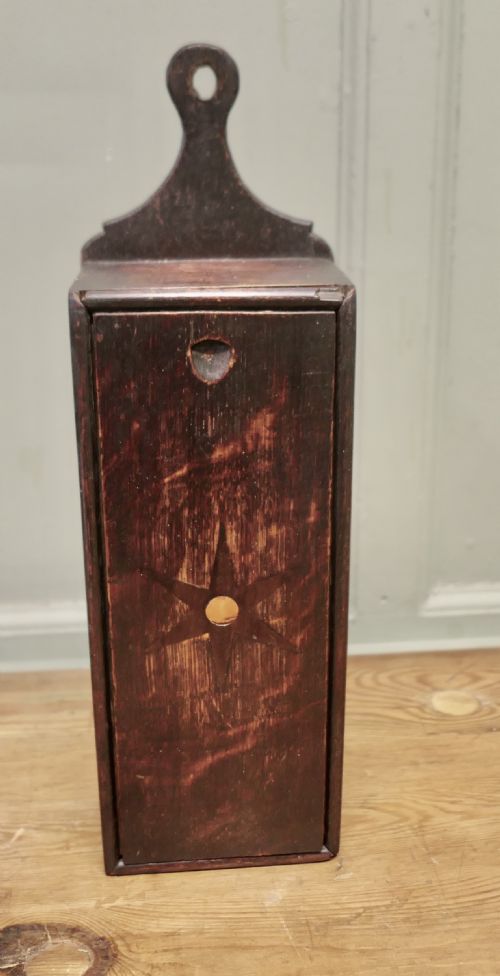
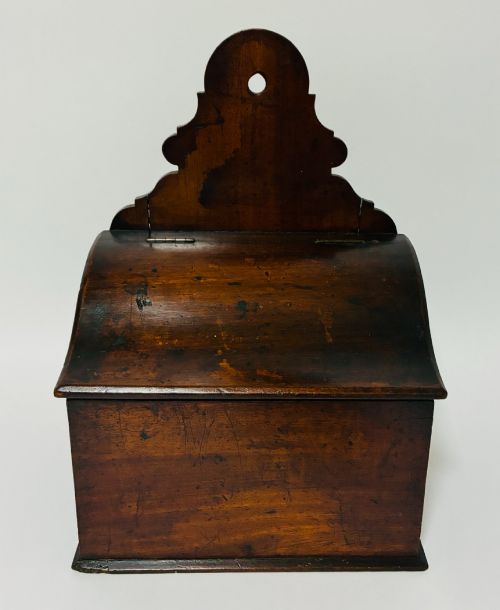
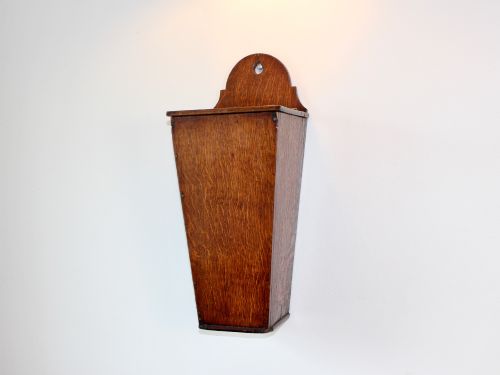

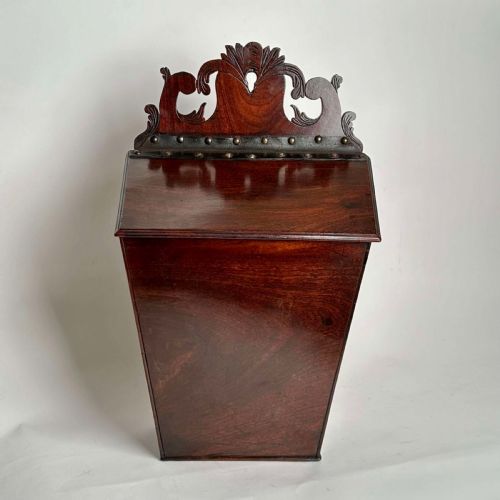


Antique Salt Boxes
A small lidded wooden box, often hung on the wall beside the hearth, made to keep salt dry in a kitchen before packaged free-running salt arrived.
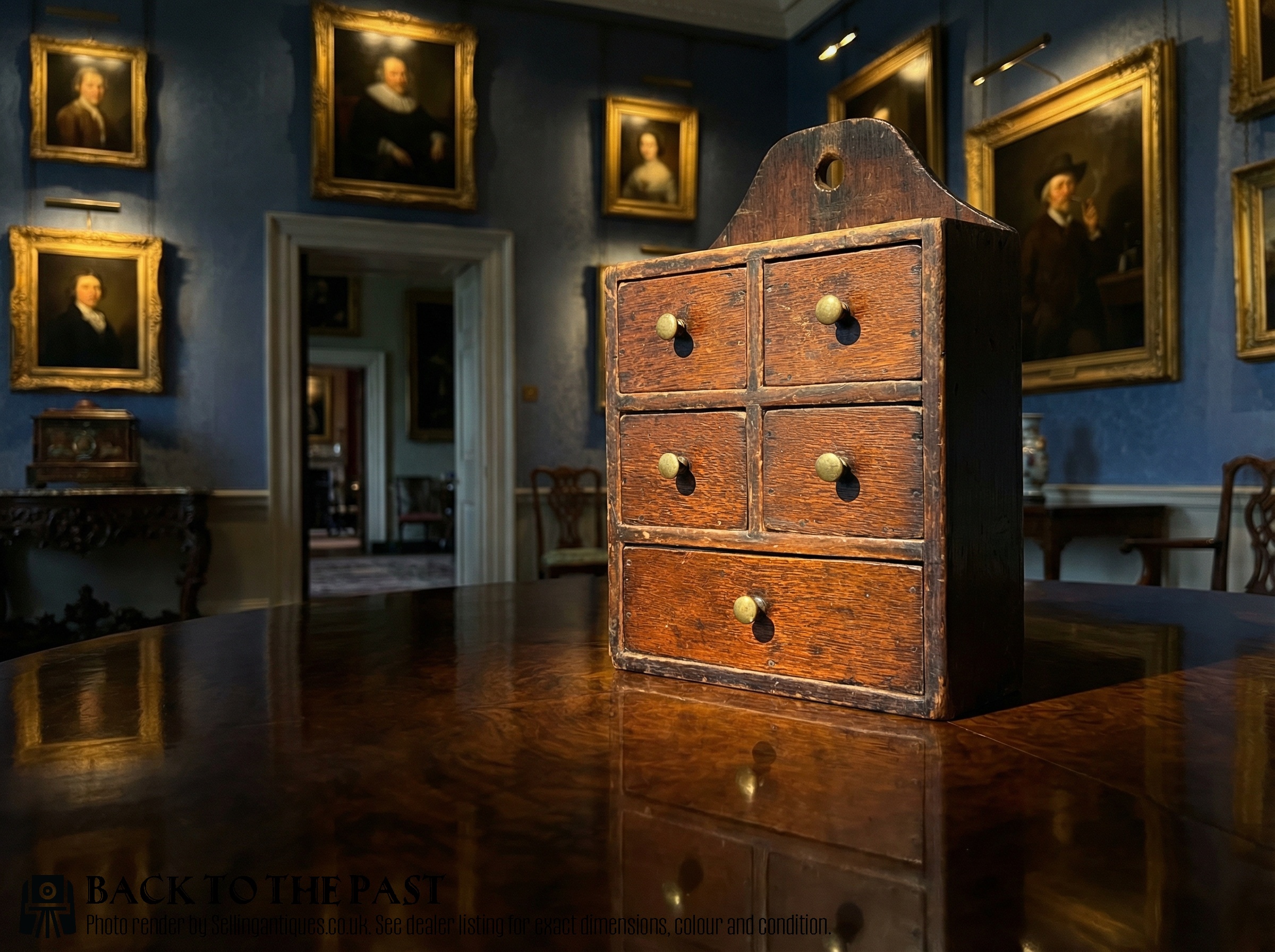
What Are Antique Salt Boxes?
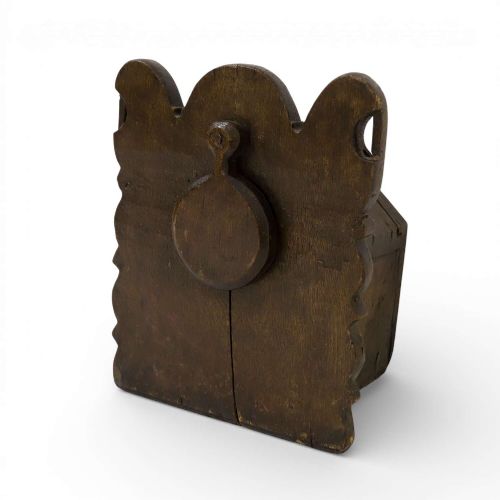
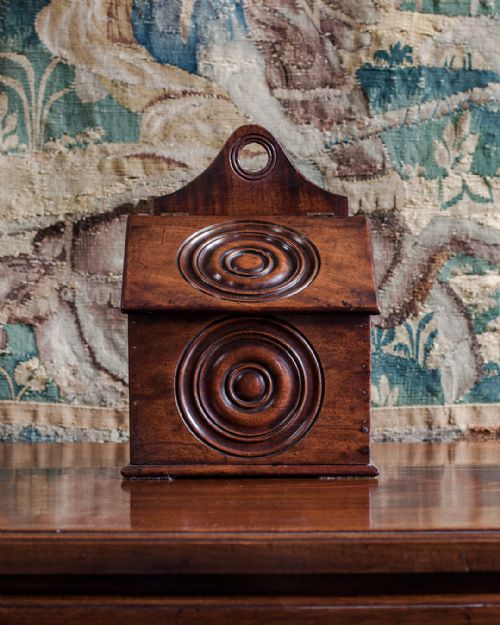
The form is simple: a box with a hinged or sliding lid, sometimes a shaped back pierced for hanging, sized for a handful of salt kept close to the fire. Boxes like these were in general use in British and northern European kitchens from the seventeenth century onwards.
Oak dominates. It appears in 24 of 54 titles on Sellingantiques, and the box you are most likely to meet is an oak wall-hanging example catalogued as Georgian or 19th century. Mahogany turns up in several listings, with pine, elm and beech in ones and twos.
The same wall box held candles, and dealers routinely decline to choose: "candle" appears in 15 titles, and several read "salt or candle box" outright. Read the two names as one form rather than two objects. Coopered and staved construction, built from staves like a barrel, shows up three times, including a Scottish staved treen box and a George III coopered box with its own spoon rack.
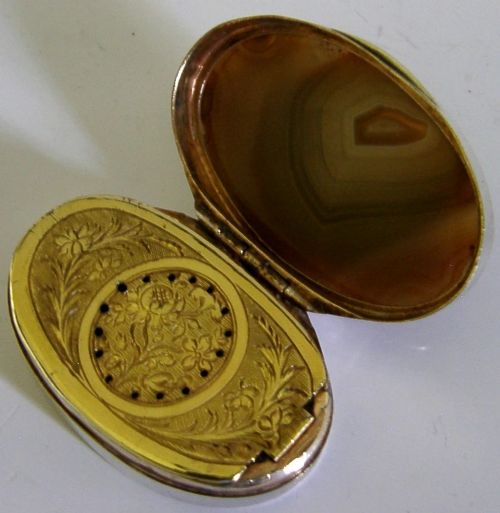
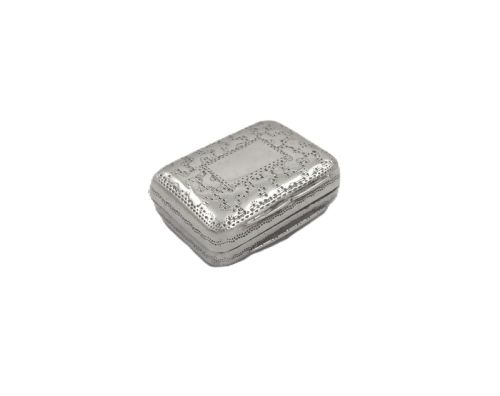
Dating is mostly by band, not year. The dealer date field runs 19th Century, 18th Century, Georgian, 1800s, with only eight listings carrying a clean year, and those fall between 1800 and 1870. The bands are applied loosely, so a title reading Georgian can sit in a 17th-century field. A minority of listings under this heading are adjacent small boxes: spice, cutlery and knife boxes, a wall organiser, and a couple of silver vinaigrettes.
Where The Range Sits
Timber and surface separate the ends of the range. Mahogany and figured oak sit above the plainer examples, and a Welsh pine salt or candle box sits low. Original iron hardware, red paint traces and an untouched surface push a box upward, since the paint and hinges are what most of these lost.
Early dates carry weight. The 17th and 18th-century British oak boxes and a Queen Anne elm wall box put at around 1710 sit well above the Victorian and Edwardian examples, and the earliest oak boxes here are catalogued 17th/18th century.
Complexity does the rest. Inlaid Georgian fronts, a carved Victorian oak candle box, spice drawers below the box, compartments and a spoon rack all lift a piece; the plainest small candle boxes sit at the bottom. The most elaborate things filed under this heading, a wall box with spice drawers and an oak wall organiser, are not strictly salt boxes at all.
Retail Price Guide 2026
Typical UK retail prices for salt boxes, calculated from the Sellingantiques database of over a million retail prices indexed since 2003. This retail price guide relies exclusively on Sellingantiques data; no external sources or auction records are used, so the figures do not describe the wider market.
The word salary comes from the Latin salarium, the money once handed out for salt.
The Antique Salt Boxes Glossary
- Salt box
- A lidded box for keeping salt dry, usually hung by the hearth so the heat kept the contents free of damp.
- Candle box
- The same wall-hung form used for tapers. Titles on Sellingantiques often say "salt or candle box" and leave the question open.
- Hanging
- Fitted with a pierced back or hanging hole so the box sits flat on the wall. The word appears in nine titles.
- Coopered
- Built from staves bound in the manner of a barrel rather than from jointed boards.
- Treen
- Small domestic objects turned or made wholly from wood, used here of a Scottish staved example.
- George III
- A narrower Georgian label than Georgian itself, appearing on three titles under this heading.
Frequently Asked Questions
Why do listings say salt or candle box?
Because the two are the same object. A small lidded wall box near the hearth suited either salt or tapers, and nothing in the surviving form settles which it held.
Dealers reflect that. The word "candle" sits in 15 of the 54 titles here, and several read "salt or candle box" on a single piece.
What wood are they usually made from?
Oak, more often than anything else: 24 of 54 titles name it.
Mahogany appears in several listings, including a George III and a 19th-century example. Pine, elm and beech each turn up once or twice, and one box is Welsh pine.
How many come up for sale each year?
About four a year on Sellingantiques. Thirty-four different dealers have listed one, which works out at roughly one apiece.
No dealer treats them as a stock line, so they arrive singly rather than in runs.
Are any of these boxes marked by a maker?
No. These were kitchen boxes made without signature, and the listings return no maker names at all.
What listings name instead is timber, period band and sometimes a region.
Which regions are named in the descriptions?
Regional attributions are scattered and few. Scottish appears on three listings, Welsh on two, and single listings claim French, Swedish and generic British origin.
The Swedish example is described as being in original paint.
How reliable are the dates given?
Read them as shorthand. The date field is mostly a band: 19th Century, 18th Century, Georgian, 1800s, 17th Century.
Only eight listings carry a clean year, and those run from 1800 to 1870. The bands are also used loosely, with a "Georgian oak salt box" sitting in the 17th Century field.