
Antique Jewellery Boxes
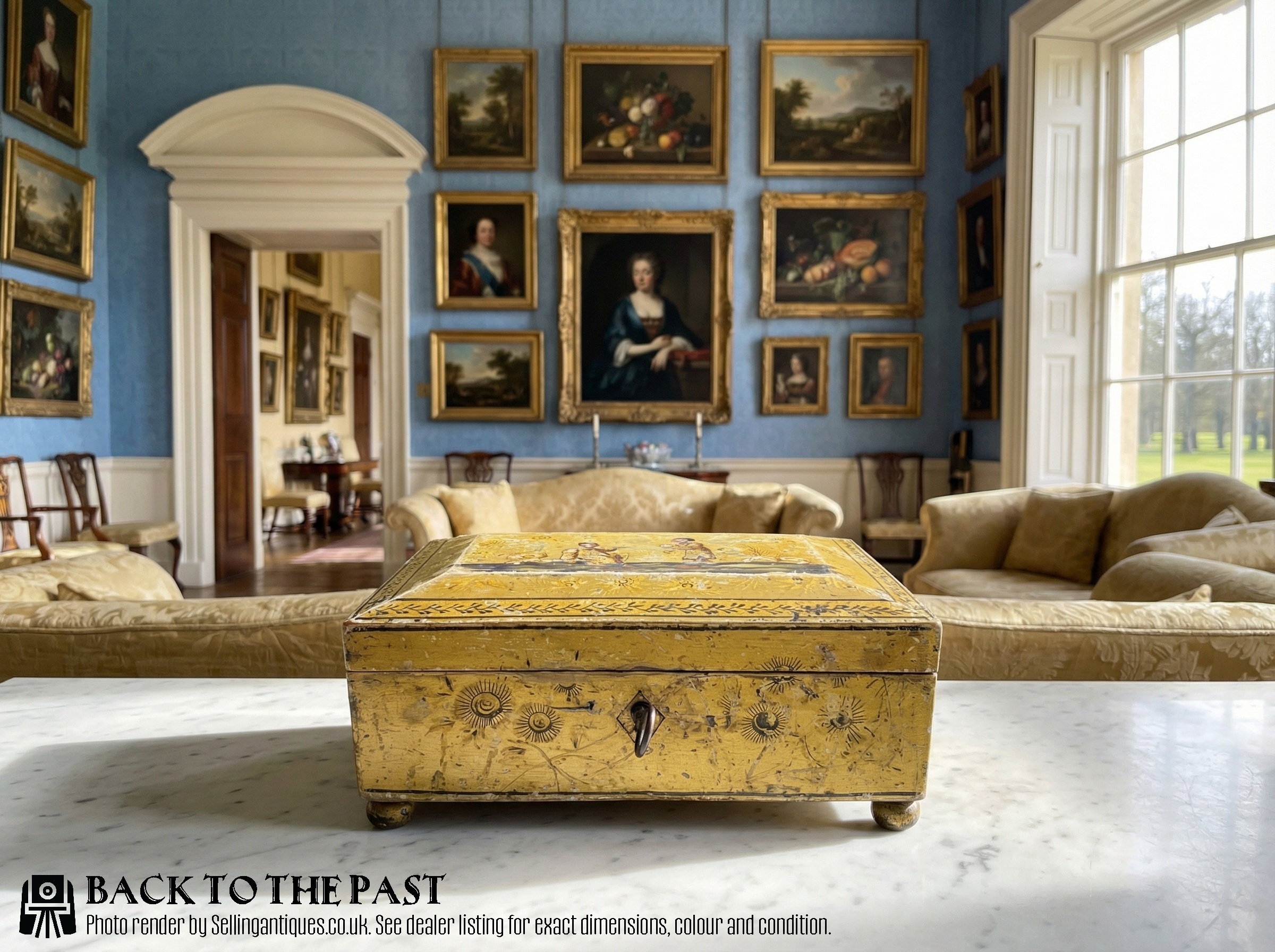
A small lidded box, usually table-top size, made or later used for keeping rings, brooches and chains, and listed as a box, casket or trinket box.

What They Are
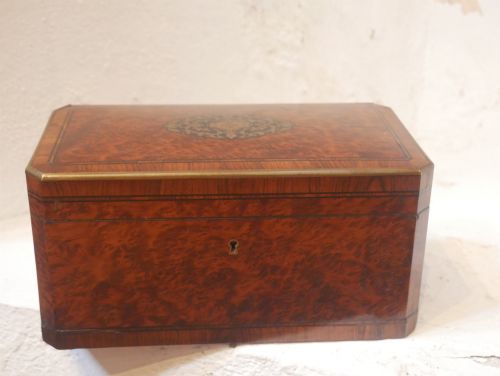
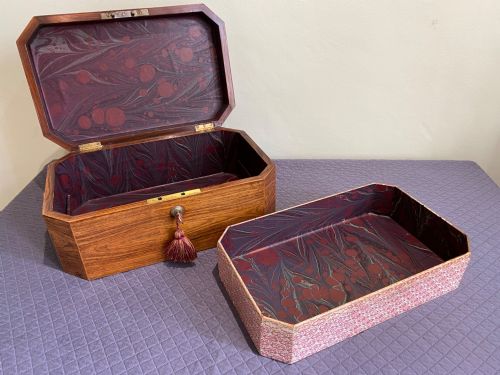
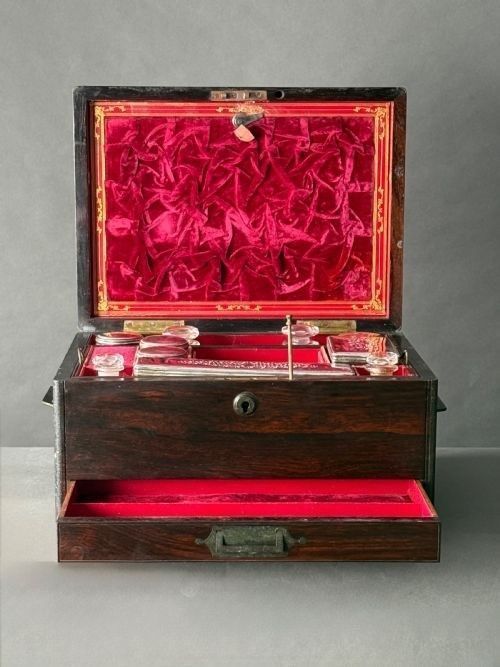
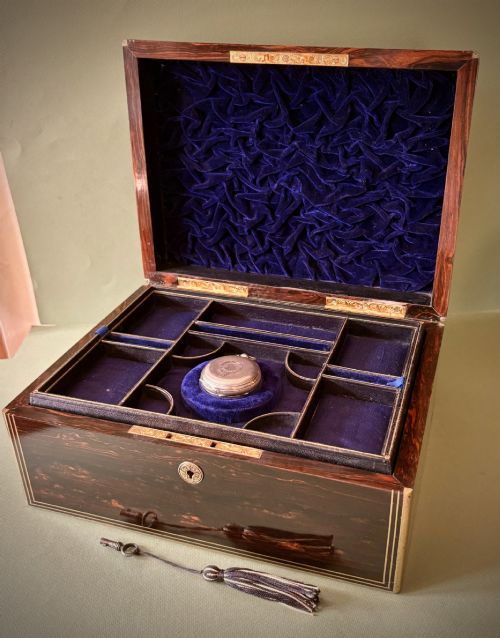
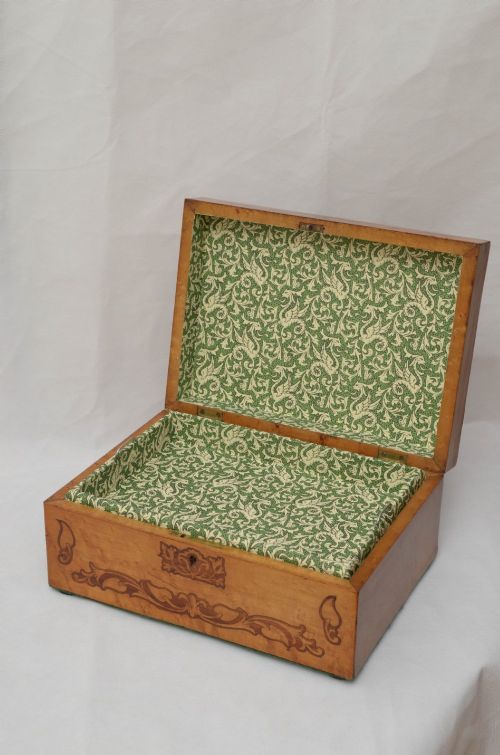
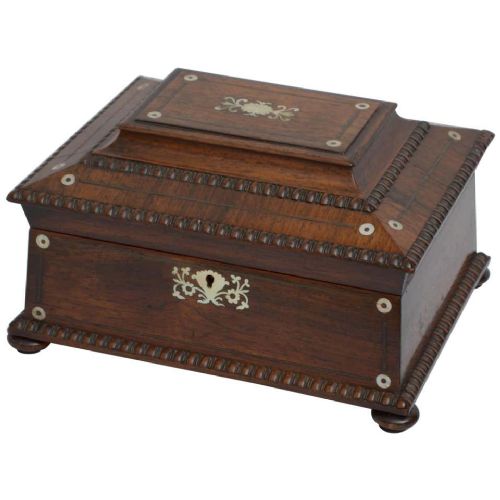
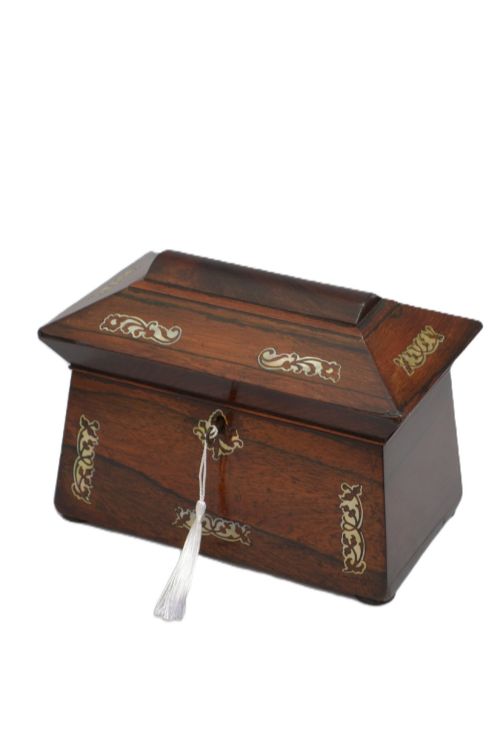
The one you'll meet most often is a Victorian English veneered table box in walnut. 'Victorian' appears in 246 of the titles on Sellingantiques and 'walnut' in 199, with burr walnut and figured walnut named separately as grades. Rosewood is the next most common timber, then mahogany and coromandel, often with inlay, brass binding and a lined or tray-fitted interior.
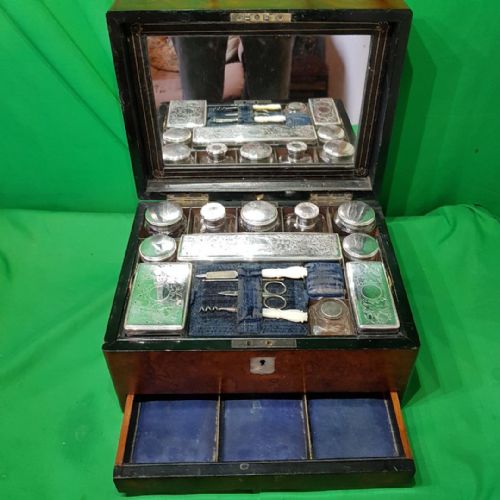
Purpose-made jewellery boxes became common in the 19th century, growing out of the work box, the dressing case and the writing slope. That shared ancestry shows up in the listings: a fifth of the category was made for something else, and sewing boxes, dressing and vanity cases, writing slopes, glove boxes and tea caddies all appear under the heading because they now hold jewellery.
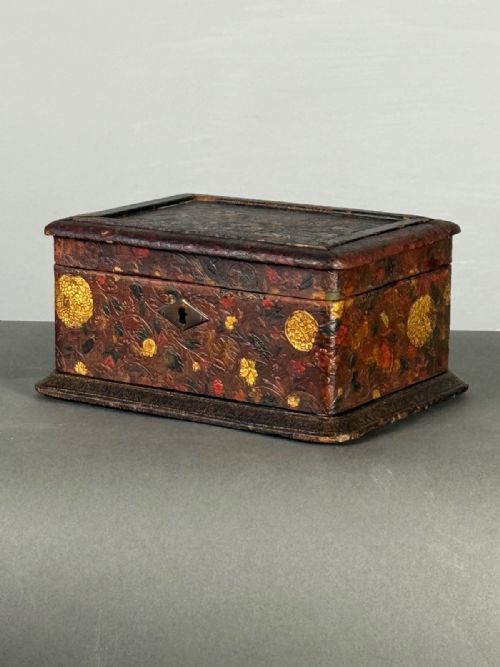
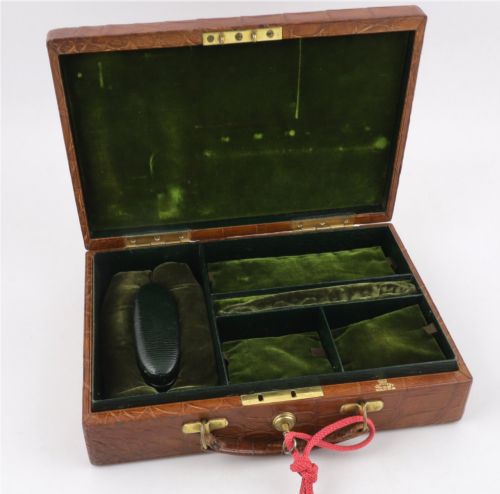
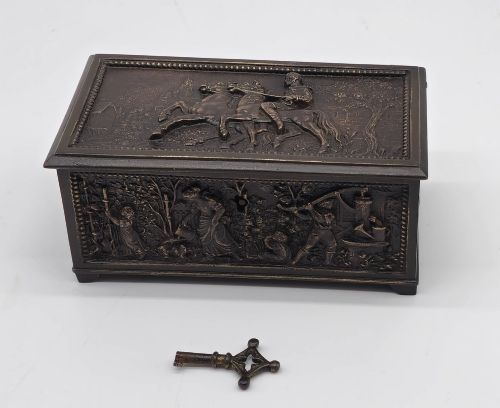
Not everything here is wooden. Leather and skin-covered cases run to about one in twelve, in green, red, brown and black, with crocodile, pig's skin and snake skin among them. Another group, roughly a sixth, is French metal, glass and ceramic: ormolu and bevelled glass caskets, gilt bronze, porcelain and Limoges enamel. The word 'casket' turns up in 115 titles and travels with these.
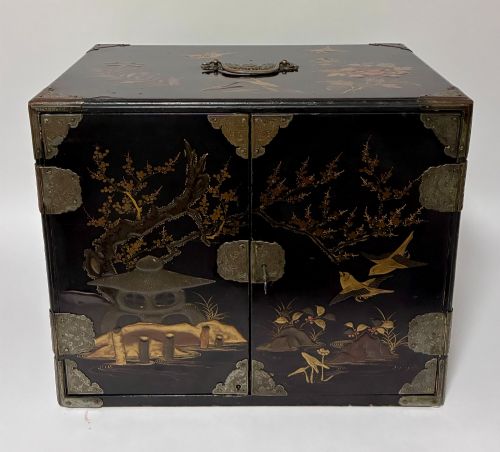
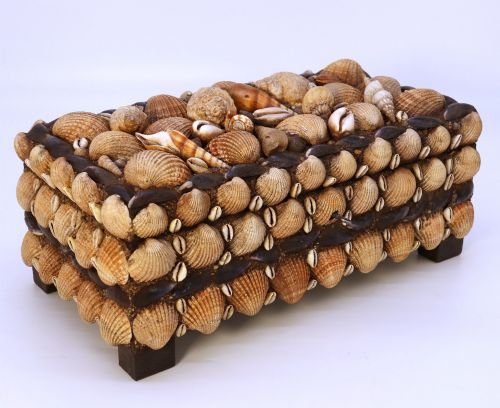
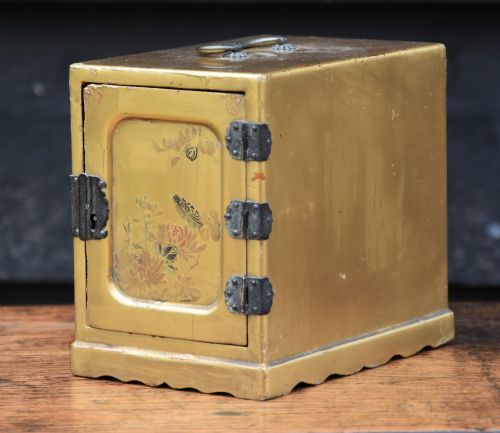
A further sixth is decorative work from further afield. Anglo-Indian sadeli mosaic, Vizagapatam, sandalwood and porcupine quill boxes, Japanese lacquer and cloisonné, Chinese hardwood, Black Forest carving, Italian pietra dura and Sorrento marquetry. Tunbridge ware forms its own pocket of around 25 titles, in rosewood, walnut, sycamore and burr walnut.

Where The Range Splits
Veneer does most of the work. A plain walnut box and a burr walnut one are the same object with different skins, and burr and figured cuts sit well above plain walnut across the sampled range. Burr is named in 70 titles, figured in 45, which is dealers telling you the grade matters enough to put in the heading.
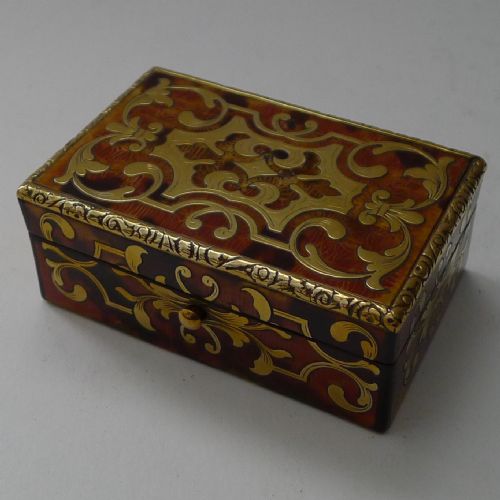
Then the inside. A box left plain, or lined and no more, sits low; a fully fitted interior with trays, compartments, silver fittings or cut crystal bottles sits at the top, and the highest-priced titles are repeatedly lady's dressing and jewellery cases rather than jewellery boxes proper. Applied ornament pushes the same way: inlay, mounts, ormolu, pietra dura, malachite and specimen hardstone appear in the upper part of the range.
Size and a name split the ends cleanly. 'Small' in a title tends to mean a modest leather box or trinket box; 'large', 'oversized' and 'grand large' recur high, up to table cabinets. A named London retailer lifts a box too, though names are scarce enough that most of these were never signed at all.
Retail Price Guide 2026
Typical UK retail prices for jewellery boxes, calculated from the Sellingantiques database of over a million retail prices indexed since 2003. This retail price guide relies exclusively on Sellingantiques data; no external sources or auction records are used, so the figures do not describe the wider market.
One-offs to pass through include a jewellery box shaped like a miniature piano, a porcupine quill box from Ceylon and an Indian star tortoise shell.
Lund of Cornhill
The Antique Jewellery Boxes Glossary
- Casket
- A lidded box, often domed or metal-mounted. Used in 115 titles interchangeably with 'box', and most at home on the French glass and porcelain group.
- Fitted
- An interior divided with trays, compartments or bottles rather than left open. Named in 39 titles, and it usually points to a dressing or vanity origin.
- Burr
- Veneer cut from a knotty growth on the tree, giving a swirled figure. In 70 titles, and on walnut it is a named grade rather than a flourish.
- Brass bound
- Protective brass strapping or banding along edges and corners. Turns up throughout the veneered English boxes, sometimes as 'banded'.
- Parquetry
- Geometric veneer inlay, as against pictorial marquetry. Distinct from Tunbridge ware, which builds its mosaic from tiny wood rods.
- Sadeli
- Anglo-Indian micro-mosaic of ivory, bone, horn and wood in small geometric patterns, worked in bands across lid and sides.
Frequently Asked Questions
What wood are Victorian jewellery boxes made from?
Walnut dominates, in a fifth of all titles on Sellingantiques, and it arrives in named grades: burr, figured and blonde. Rosewood is second, then mahogany and coromandel.
Beyond those, the archive throws up amboyna, kingwood, satinwood, calamander, thuya, olive wood, apple wood, laburnum oyster and burr yew, usually as veneer over a carcase.
Why are sewing boxes listed as jewellery boxes?
Because about a fifth of the category was made for another job. Sewing, work, dressing, vanity and writing boxes all appear, along with glove boxes and tea caddies described as now serving as jewellery boxes.
The forms are close cousins. Purpose-made jewellery boxes developed alongside the work box, the dressing case and the writing slope, and share the same veneers, brass binding and tray-fitted interiors.
So the heading often describes present use rather than original purpose.
How old are these boxes usually?
The dealers' dated field runs from 1800 to 1950, with 443 of 992 listings carrying a clean year. Victorian is the single biggest label at 244.
Decade labels cluster in the 1880s, 1860s, 1900s, 1890s and 1870s, with a smaller 1920s group. A good number are given only as '19th Century', which is a bracket rather than a date, and Regency and Georgian appear the same way.
A scatter of 17th- and 18th-century pieces sits outside that range, including Welsh oak chip-carved and olive wood lace boxes.
Are jewellery boxes ever signed by a maker?
Rarely. Only one name clears three dealers across the whole archive, Lund of Cornhill, and a handful of other London retailer names appear from a single dealer each.
Where a name does show, it comes as a stamp or a trade label inside the lid, or as an attribution in the description with nothing on the box itself.
What is a casket as opposed to a box?
In these listings, much the same thing. 'Casket' appears in 115 titles and often signals a domed or metal-mounted lid rather than a flat one.
The word travels with the French group: ormolu and bevelled glass, gilt bronze, silvered copper, porcelain and Limoges enamel.
How many come up for sale each year?
Around 104 a year on Sellingantiques, and 187 different dealers have offered one.
That spread tells you something. This is a category handled across the whole trade rather than held by a few specialists, so what appears in any given month is mixed in timber, origin and size.