


Antique Work Boxes
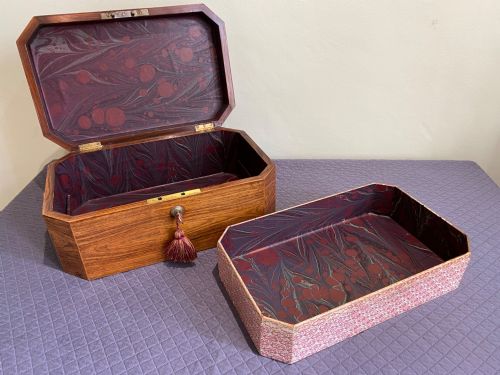
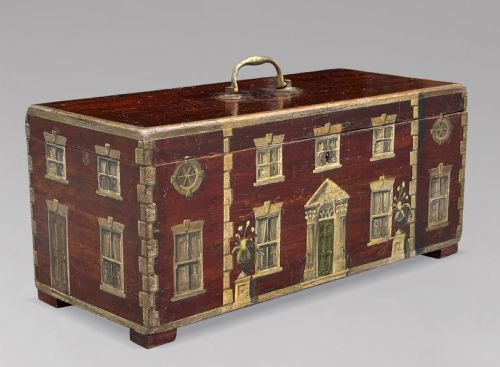
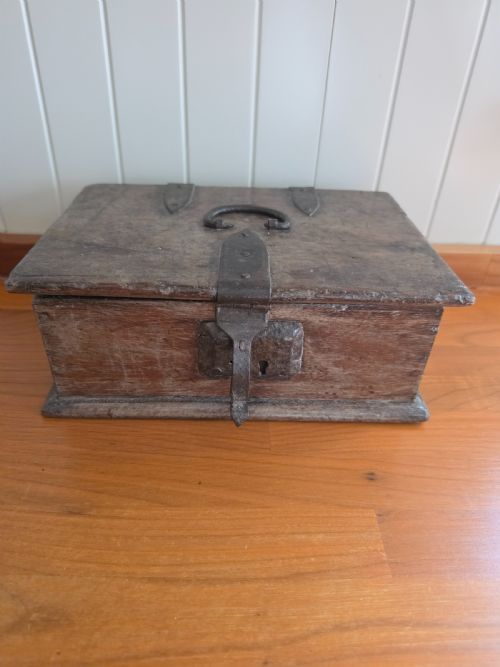
A work box is a portable lidded wooden box, roughly table-top size, fitted inside to hold sewing tools and materials, and often used for jewellery and keepsakes as well.
What Are Work Boxes?
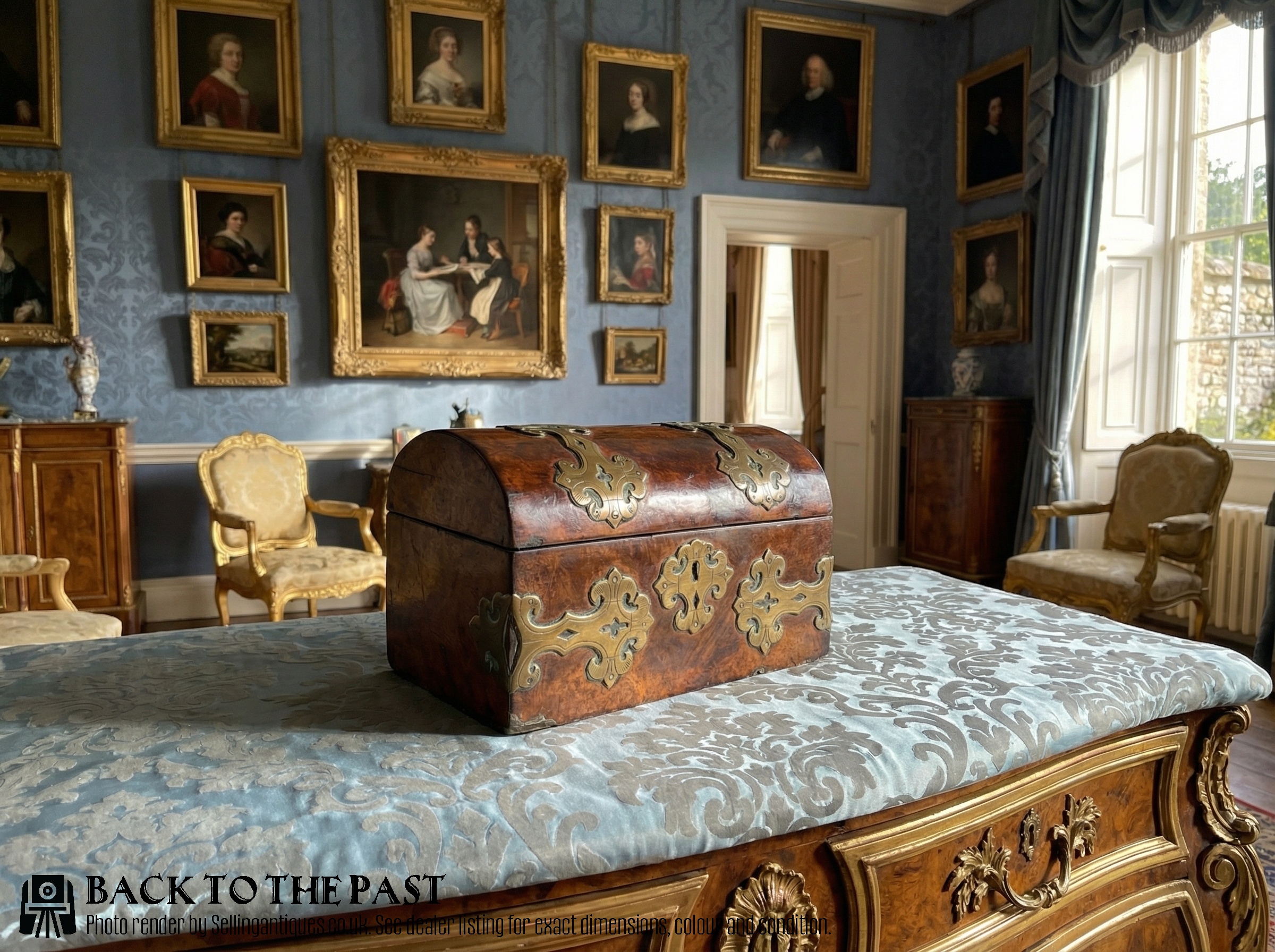
The form is a domestic one. Made from the 18th century and turned out in quantity through the 19th, when needlework was a routine household accomplishment. What separates a work box from a plain box is the inside: compartments, a lifting tray, wells for spools and needles. Many also carry a lock, and twelve titles on Sellingantiques note that the key is still with the box.
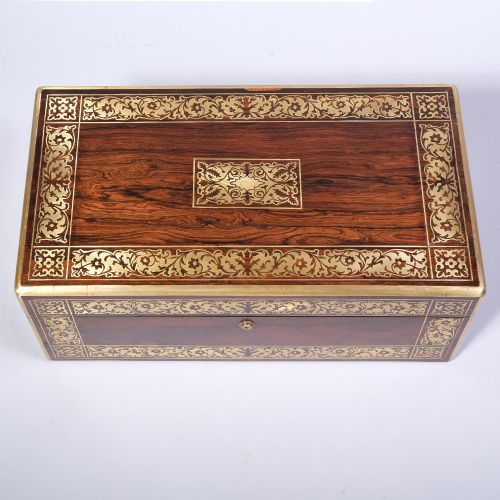
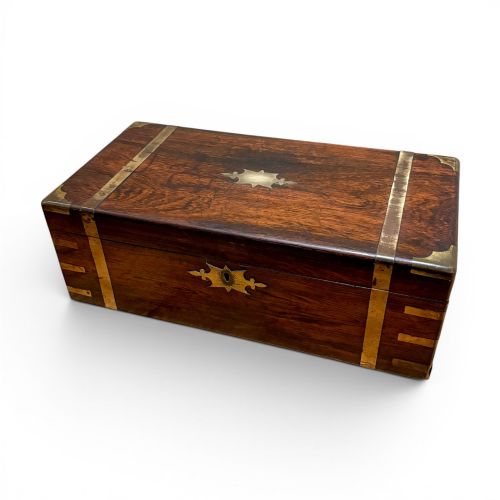
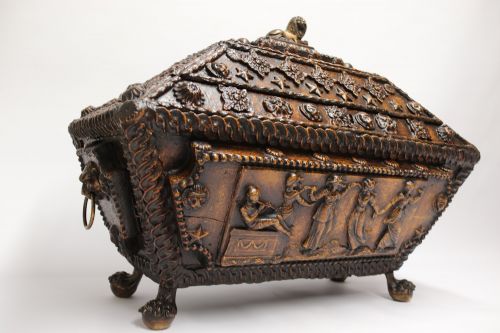
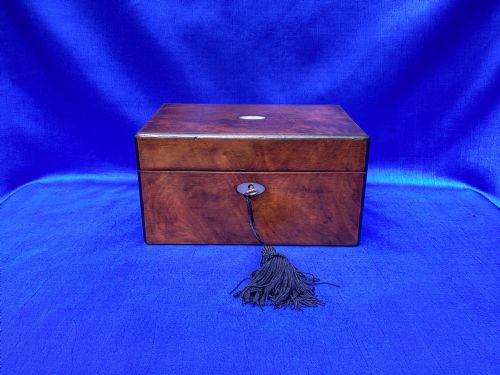
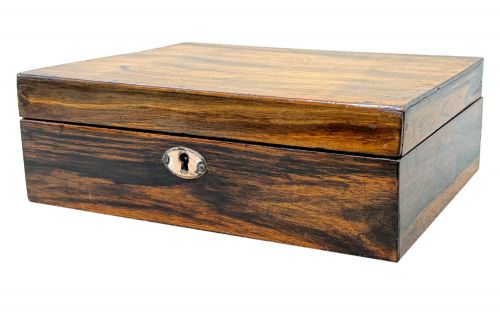
The version you'll meet most often is a 19th-century English veneered box, rectangular or sarcophagus-shaped, in rosewood or walnut. Rosewood appears in 30 titles and walnut in 28, with mahogany behind them and coromandel in ten. Inlay is named in 24 titles, in mother-of-pearl, brass or mosaic. Jewellery turns up in 18 titles, usually describing the same box.
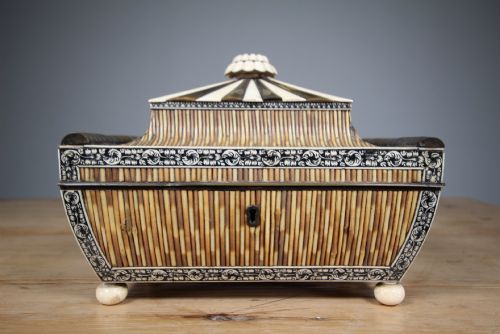
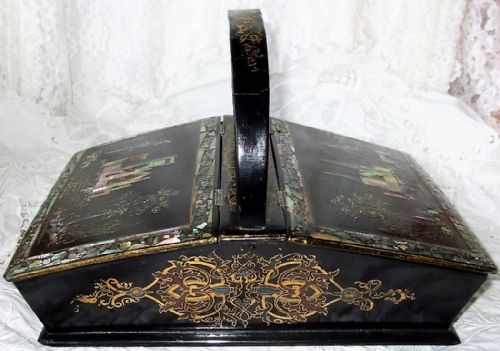
Beyond that core sit several smaller groups. Anglo-Indian and Indian export boxes account for about one in eight, including sadeli micro-mosaic, Vizagapatam work and sandalwood. Tunbridge ware and other souvenir mosaic wares make up around one in ten, and decorated-surface boxes in penwork, painted japanning, papier-mache, quill work and straw work about the same.
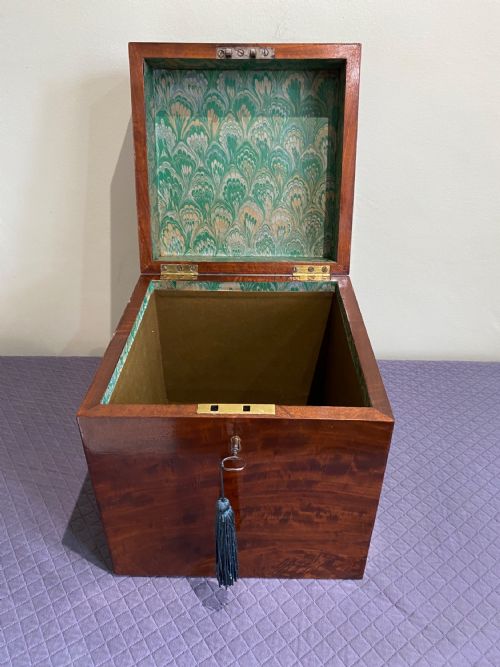
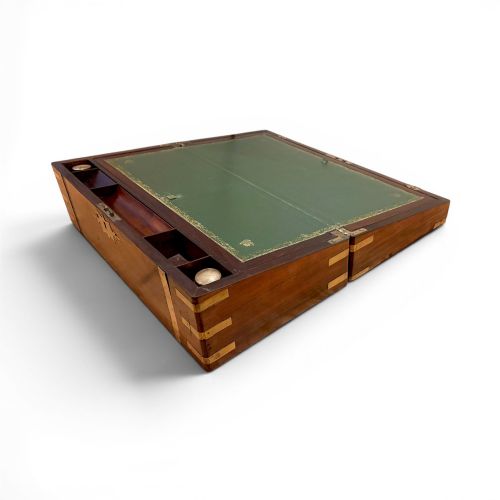
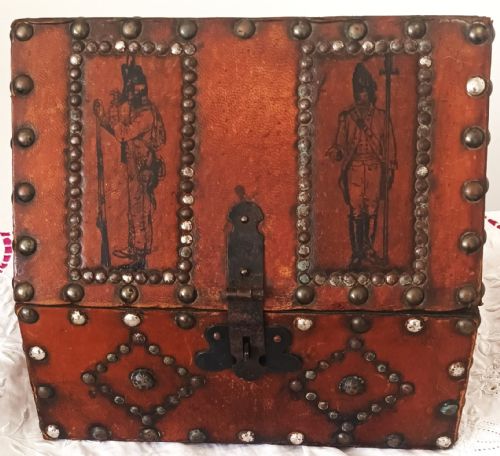
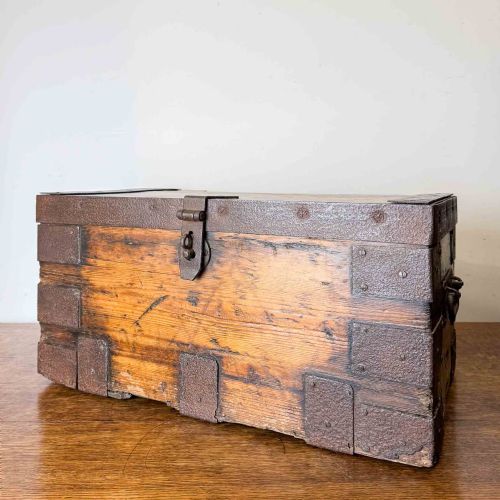
The heading is broad. Alongside true fitted sewing boxes you'll find writing slopes, tea caddies, games and stationery boxes, strong boxes and a few work tables, perhaps one listing in five, because dealers use the word for the form and for the needlework function alike.
Where The Range Splits
The interior does most of the work. Titles that say fitted interior, with tray to the inside, silk lined or with contents sit toward the top of the range; the plainest say only work box and name the wood. Contents cannot be assumed either way, since only a few listings mention them at all. A surviving lock and key counts too, and dealers spend the characters to say original working key when it applies.
Timber and figure separate the middle from the top. Burr appears in 15 titles and figured in 12, with burr walnut and figured walnut the common pairings, and coromandel, satinwood, amboyna, birdseye maple and burr yew all recur on the upper half. Plain veneer in rosewood or mahogany is the everyday end.
Then there's decoration and identity. Inlaid on its own is common at every level, but penwork, papier-mache, quill work and dense mosaic sit well above ordinary veneered boxes. So do named wares: Tunbridge ware, Tartan ware, Sorrento marquetry, Killarney arbutus ware, Vizagapatam and sadeli each give a box a documented origin rather than a generic one.
Retail Price Guide 2026
Typical UK retail prices for work boxes, calculated from the Sellingantiques database of over a million retail prices indexed since 2003. This retail price guide relies exclusively on Sellingantiques data; no external sources or auction records are used, so the figures do not describe the wider market.
About twenty-five work boxes are listed on Sellingantiques each year, and 109 dealers have listed one, so most handle only a box or two.
The Antique Work Boxes Glossary
- Fitted interior
- The compartmented layout, usually with a lifting tray, that makes a box a work box rather than a plain box.
- Sarcophagus form
- A box with outward-sloping or stepped sides, tapering upward; a recurring shape in the Regency and William IV listings.
- Burr walnut
- Veneer cut from a burr growth, giving a swirling knotted figure. Ten titles pair the two words.
- Brass bound
- Edges and corners reinforced with brass strip or mounts. Bound appears in twelve titles, brass in twelve.
- Tunbridge ware
- Boxes decorated with fine end-grain wood mosaic, a named souvenir ware, in thirteen titles.
- Penwork
- Black-and-gold pen-and-ink decoration over a japanned or light ground, common on Regency boxes.
Frequently Asked Questions
What wood are most work boxes made from?
Rosewood and walnut dominate. Between them they account for 58 titles in the archive, more than a quarter of the category, with mahogany in 14 and coromandel in 10.
Burr and figured versions of rosewood and walnut are singled out in another 27 titles. Satinwood, amboyna, birdseye maple and burr yew turn up as well, in smaller numbers.
How are these boxes usually dated?
Loosely. Only 60 of 226 listings carry a clean year, and the single commonest entry is the bucket "19th Century", used 60 times. That covers everything from Regency to late Victorian.
Below it sit Victorian, Regency, Georgian and 18th Century, then decade tags such as the 1850s, 1800s and 1880s. Dating is also inconsistent between fields, so a title's period word and the date entry are worth reading together.
Do work boxes still have their fittings inside?
Some do. Titles mentioning a fitted interior, a lifting tray, silk lining or surviving contents sit toward the higher end of the range.
But only a few listings say anything about the inside at all, so a complete fitted interior isn't the norm across the category.
Are Indian work boxes common in this category?
They're a steady minority, roughly one in eight. Indian appears in 13 titles and Anglo-Indian in 11.
The named types include sadeli micro-mosaic, Vizagapatam boxes faced in horn and ivory, sandalwood, Ceylon walnut and a Ceylonese porcupine quill box that appears once and nowhere else.
Why are writing slopes and tea caddies listed as work boxes?
Because dealers use "work" for the box form and for the needlework function alike. Around one listing in five is an adjacent object.
Writing slopes, tea caddies, games and stationery boxes, strong boxes and a few work tables all appear under the heading.
How many work boxes come up on Sellingantiques?
Around 25 a year, and 109 different dealers have handled one.
That means almost every dealer carrying them carries only one or two, rather than the category sitting with a handful of specialists.