

Antique Letter Boxes
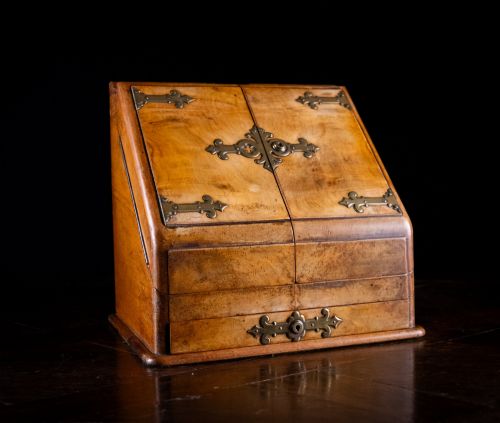
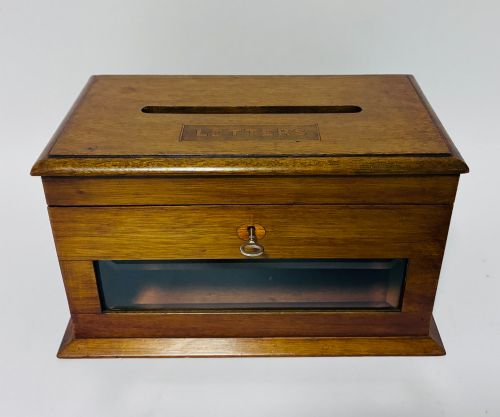
Wooden boxes and desk cabinets made to hold letters and writing materials at home, from lockable hall boxes for the day's post to drop-front stationery cabinets that kept paper, envelopes and stamps in order.
What Are Antique Letter Boxes?
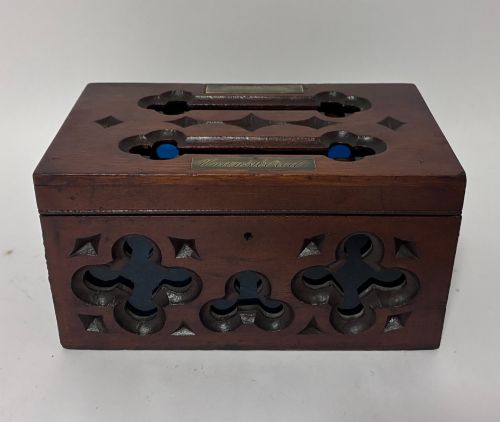
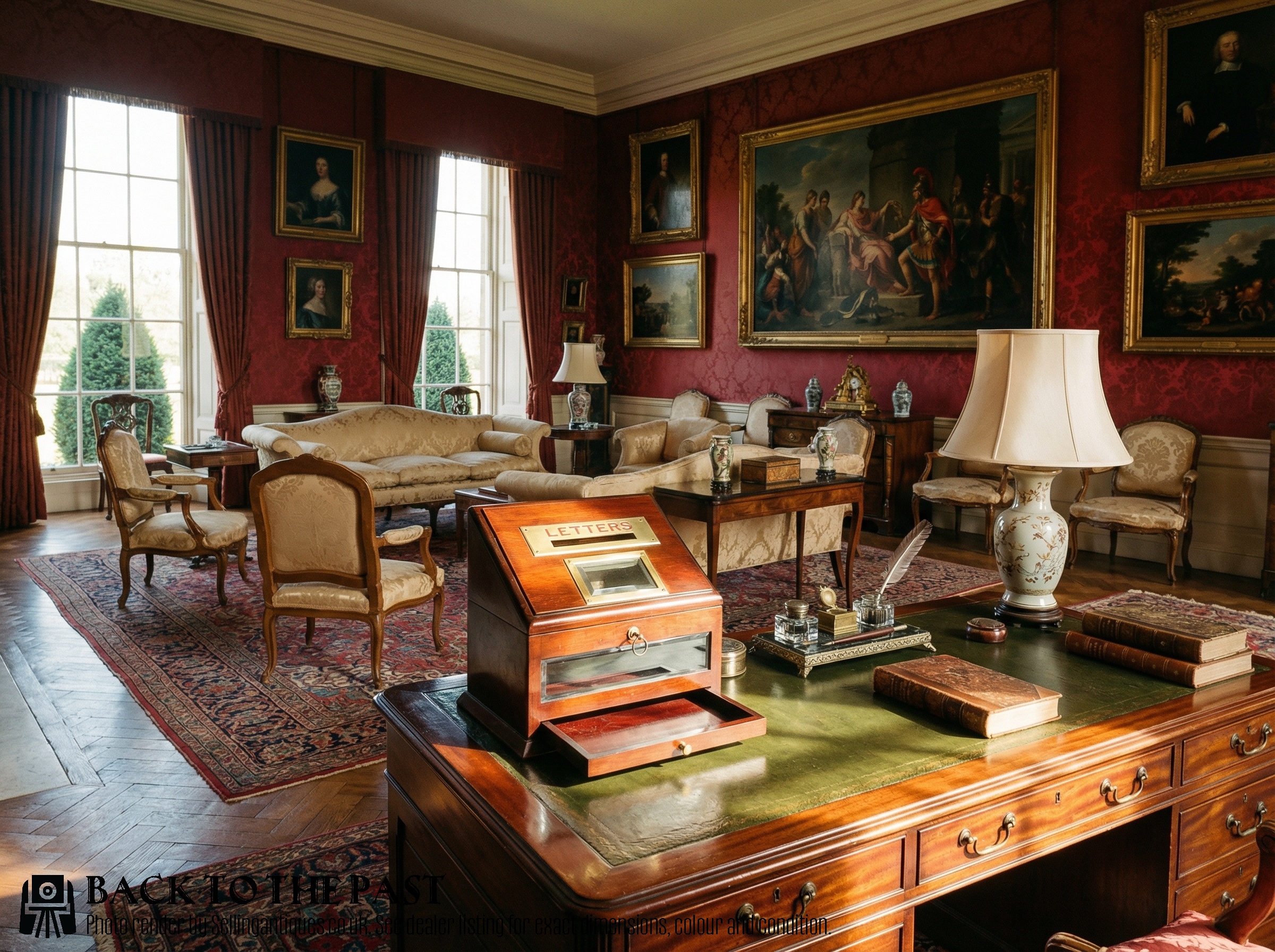
These are domestic boxes, not the cast-iron pillar boxes of the street. Purpose-made containers for letters and writing materials became ordinary household furniture in the nineteenth century, when cheap prepaid postage and frequent deliveries pushed up the volume of correspondence in every house.
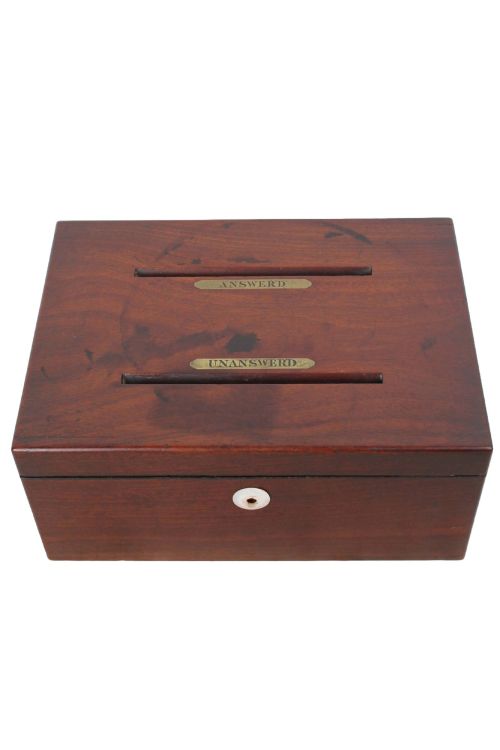
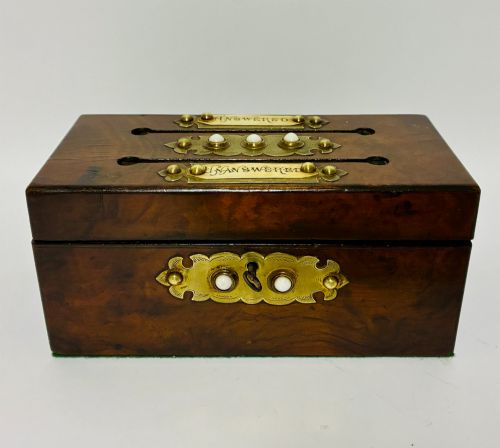
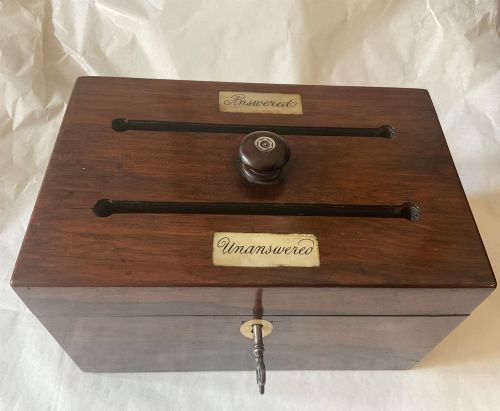
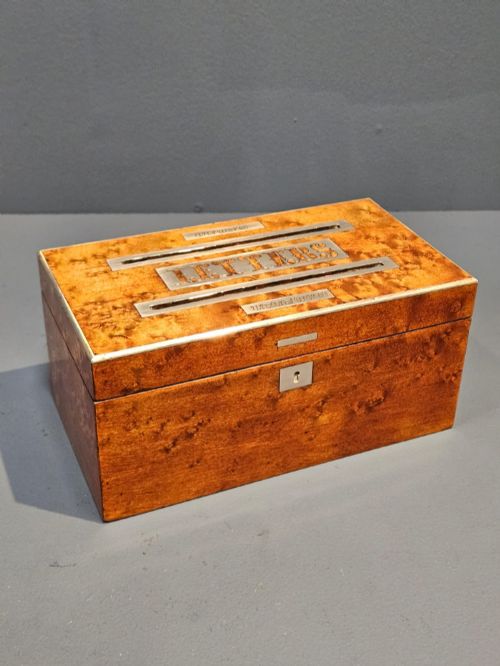
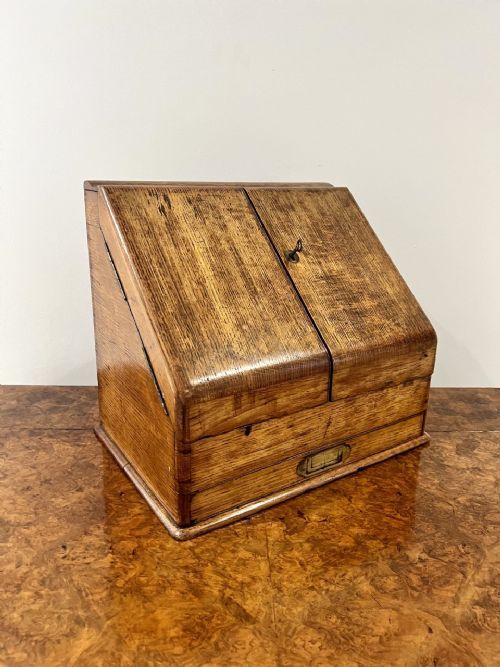
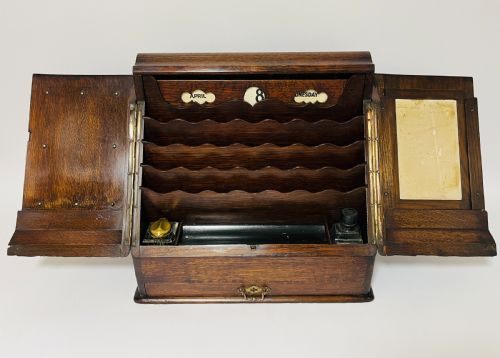
The listing you're most likely to meet is a Victorian oak box with brass mounts. Oak appears in a third of titles and Victorian in just under a third, with English attribution common, and many carry labelled divisions reading Post and Delivery, or Answered and Unanswered. Dating clusters around the 1860s to 1900.
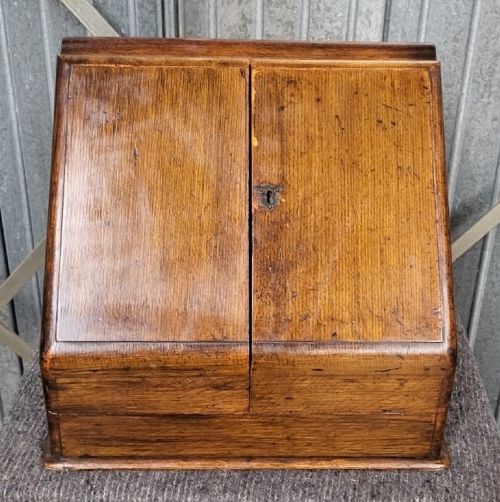
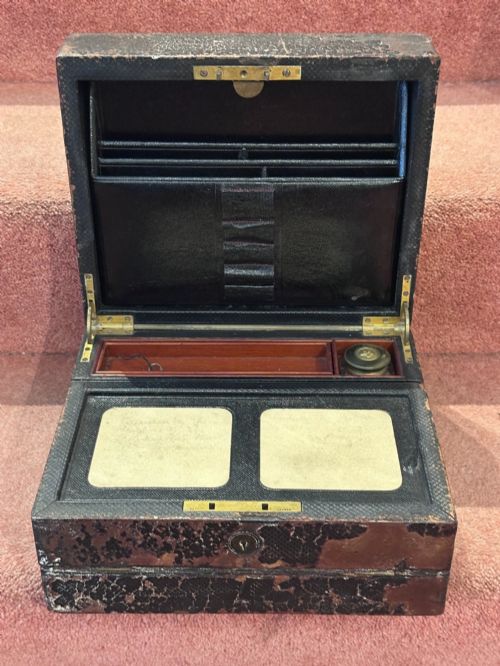
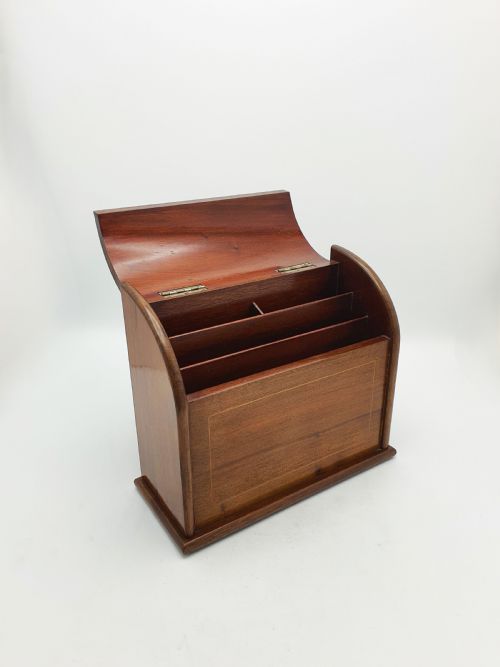
Alongside those sit the desk boxes: stationery cabinets, drop-front and fall-front forms with pigeonholes inside, and plain stationery boxes for paper and envelopes. Together they account for close to a third of the category, and they're stronger in current stock than in the archive. Note the spelling, though: dealers write it stationery in thirty-four titles and stationary in twenty-eight, so the category hides under two words.
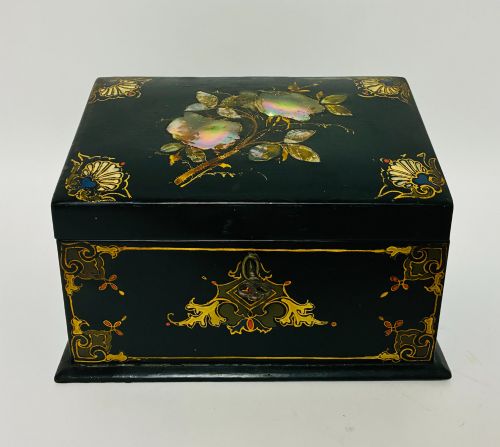
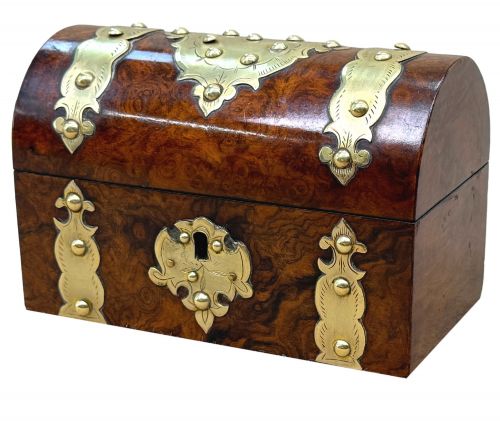
Smaller seams run through the rest. Correspondence caskets in walnut, rosewood and coromandel, often dome-topped, make up around a sixth. Letter racks, desk tidies and writing-slope hybrids form a steady tenth. Japanese lacquer fubako turn up as a recurring group of eight titles, the only non-European form to appear more than once.
Where The Range Splits
Timber does much of the work. Plain oak is the base of the category and the bottom of it is plain oak desk boxes of the 1900s and 1920s. Coromandel, rosewood, burr walnut, satinwood, olivewood and macassar ebony recur further up, and brass binding or applied brass mounts lift a box again.
Scale and setting matter more than you might expect. Hall, hotel, estate and wall-hung posting boxes sit well above the small desk-top boxes, and the very top of the range on Sellingantiques is occupied by large carved oak and architectural posting boxes rather than by little caskets in precious materials.
Decoration is the other lever. Marquetry, Tunbridge ware mosaic, pietra dura, hand-painted porcelain, tortoiseshell and silver mounts all push a box upward, as does a London retailer's name or a design source cited in the title. No single maker dominates the category, so those names read as one-off marks rather than a roll call.
Retail Price Guide 2026
Typical UK retail prices for letter boxes, calculated from the Sellingantiques database of over a million retail prices indexed since 2003. This retail price guide relies exclusively on Sellingantiques data; no external sources or auction records are used, so the figures do not describe the wider market.
The dealer-supplied dates on Sellingantiques run from 1800 to 1930, and fewer than half the listings carry a clean year rather than an era label.
The Antique Letter Boxes Glossary
- Country house letter box
- A lockable hall or estate box for household post. The phrase appears in thirty-three titles and describes the job rather than any particular style.
- Stationery cabinet
- An upright desk cabinet fitted with compartments, often with a drop front. Eleven titles use the exact phrase.
- Post & Delivery
- The two labelled slots or divisions found on many oak-and-brass boxes, separating what came in from what was going out.
- Drop front / fall front
- A hinged front that lowers to make a writing surface or open up the pigeonholes behind it.
- Coromandel
- A dark striped exotic hardwood used for the better caskets, named in nine titles.
- Fubako
- A Japanese lacquer letter box, usually rectangular or rounded-rectangular in shape.
Frequently Asked Questions
Are these the same as pillar boxes?
No. The category covers wooden table-top, desk and hall boxes made for domestic letters and writing materials.
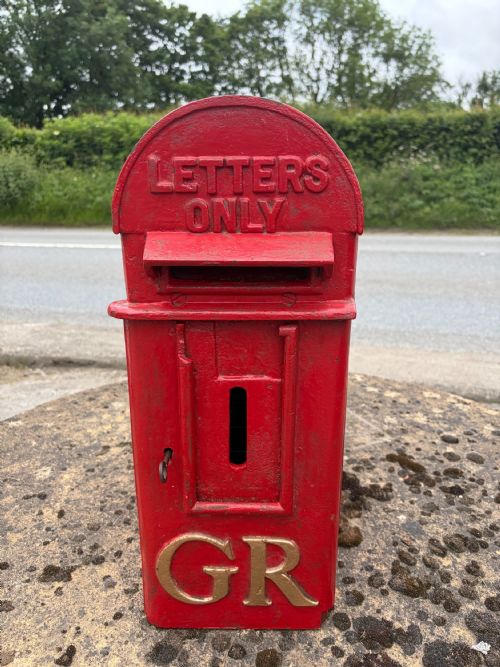
A handful of wall-hung and free-standing posting boxes do appear, and a cast-iron wall post box has turned up once across the whole record on Sellingantiques.
What wood are they usually made from?
Oak is the defining timber, present in a third of all titles, and it's what the classic Victorian hall or country-house box is made of.
Figured and exotic woods form the second population: walnut in seventeen titles, rosewood in twelve, coromandel in nine, with burr walnut, satinwood, olivewood and macassar ebony recurring in the caskets.
Why is stationery spelled two ways?
Dealers simply spell it both ways. Stationery appears in thirty-four titles, stationary in twenty-eight, almost equal frequency.
Both mean the same thing: a desk box for paper and envelopes. Searching one spelling shows you roughly half of what's listed.
What does Answered & Unanswered mean?
It's a two-compartment correspondence box, dividing letters already dealt with from those still waiting on a reply.
The labels are usually applied in brass on the lid or the divisions, and the phrase recurs alongside Post and Delivery on oak-and-brass examples.
How old are most of them?
The dealer-supplied dates span 1800 to 1930, though much of the dating is loose: Victorian is used forty-two times and a bare 19th Century thirty-five times.
Where decades are given, they gather in the 1880s to 1900s, with the 1860s close behind. Regency at one end and the 1920s and 30s at the other are thin.
How often do letter boxes come up for sale?
About twenty-four come to market in a year on Sellingantiques.
Eighty-one different dealers have listed one, so no single specialist owns the category. Stationery cabinets and desk boxes are stronger in current stock, while country-house and hall boxes are concentrated in the archive.