




Brown Wood Letter Box
These brown wood letter box pieces are practical desk accessories built to hold daily correspondence.
Brown Wood Letter Box
A brown wood letter box is a desk tidy or stationery cabinet designed to organise incoming and outgoing post in period homes. The examples seen on this page span the Victorian, Edwardian, and Georgian eras, reaching back to the eighteenth century.
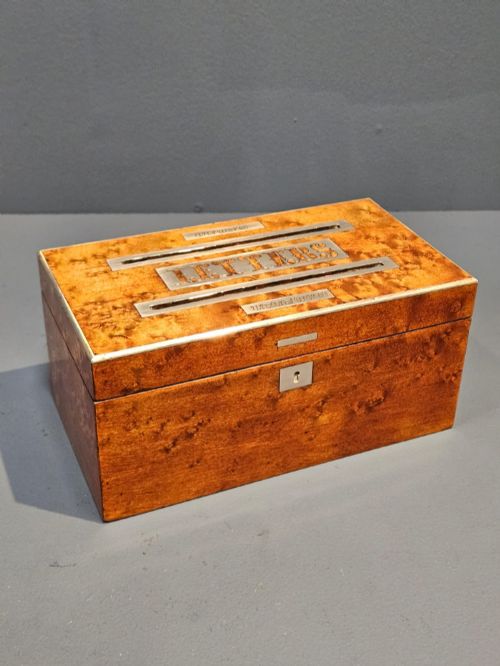
Buyers frequently encounter mahogany, walnut, and oak versions fitted with brass mounts or inlaid details. These range from compact desk tidies to larger country house post boxes equipped with adjustable dates.
How they were made
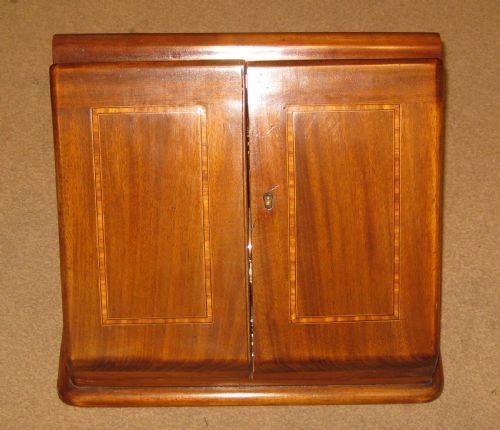
Cabinet makers utilised dense hardwoods such as mahogany, walnut, and oak for the primary carcases, often applying burr satinwood or mixed hardwood veneers to exterior surfaces. Selected pieces incorporate decorative boxwood stringing and intricate Tunbridge ware mosaic patterns.
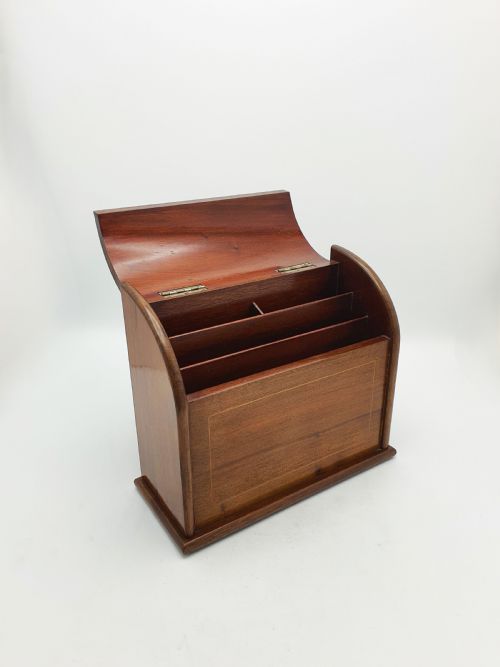
Functional metalwork plays a key structural role, with cast brass hinges, locking mechanisms, and mounts fitted to secure the lids and doors. Internal compartments are constructed with thin dividers to separate envelopes, correspondence, and writing paper.
What varies in quality
Quality rests upon the selection of timber veneers and the precision of the joinery rather than the sheer size of the box. Superior examples display carefully matched grain patterns across the mahogany or walnut surfaces, alongside crisp inlay and tight dovetail joints.
The sophistication of the internal fitments also separates standard desk tidies from exceptional stationery cabinets. Finer pieces feature specialised compartments, functional brass hardware, and intricate decorative techniques like Tunbridge ware mosaic work.
Edmund Nye
The Brown Wood Letter Box Glossary
- Tunbridge Ware
- A form of decorative woodwork originating from Kent, characterised by tiny mosaic tiles formed from naturally coloured woods to create pictorial scenes or geometric bands.
- Stationery Cabinet
- A desk-top cabinet with doors or a sloping front that opens to reveal pigeonholes, small drawers, and slots for paper and envelopes.
- Desk Tidy
- A compact desktop accessory designed to hold writing instruments, inkwells, and letters in an organised manner.
- Correspondence Chest
- A lidded box or small chest built specifically to store letters, writing paper, and sealing wax.
Brown Wood Letter Box: Frequently Asked Questions
What is a brown wood letter box?
A brown wood letter box is a period desk accessory designed to hold, sort, and protect correspondence in nineteenth-century studies and hallways. These items range from simple lidded boxes to elaborate cabinets fitted with internal pigeonholes.
They reflect the domestic writing habits of the Victorian and Edwardian eras, when physical post required dedicated desktop storage.
How were these boxes used?
Households used them to keep incoming mail private and organised before collection or sorting. Larger country house post boxes often featured slots for letters and adjustable dates to track daily correspondence.
Smaller desk tidies sat on writing tables to hold stamps, envelopes, and unanswered letters within easy reach.
How do I date a letter box?
Dating relies on the prevailing timber choices, construction methods, and decorative styles of the period. Georgian and early nineteenth-century pieces tend to feature simpler mahogany or walnut carcases, while Victorian examples often incorporate rich veneers and Tunbridge ware.
Edwardian items from around nineteen hundred frequently display lighter mahogany with delicate inlaid details.
Where should I place one at home?
These boxes sit naturally on modern desks, sideboards, or entryway consoles where they continue their original function of holding letters and small items. Their warm mahogany, walnut, and oak tones complement both traditional and contemporary interiors.
Keep them away from direct heat sources to protect the wood and delicate veneer work.