
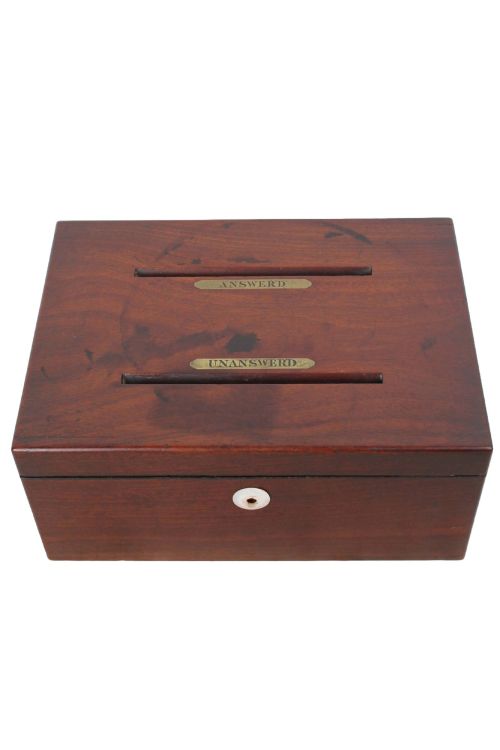
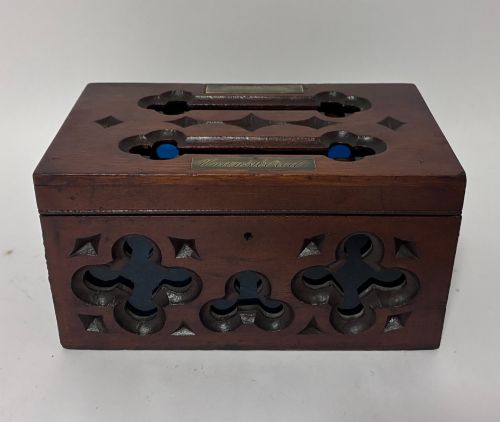
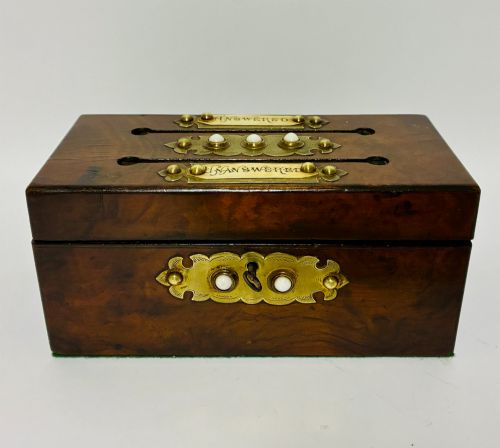
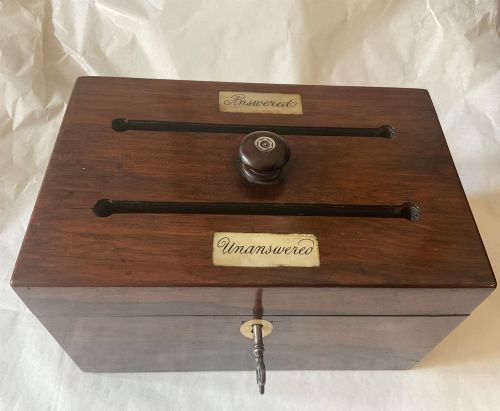
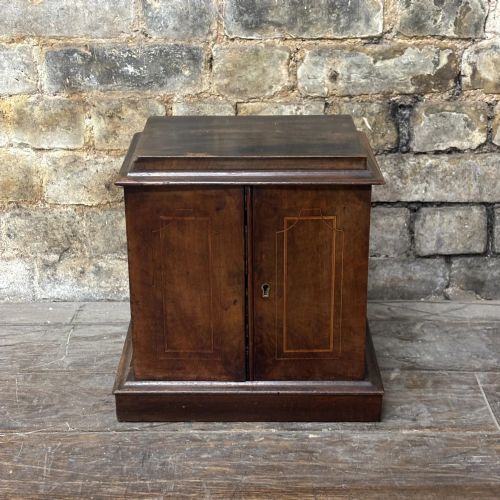
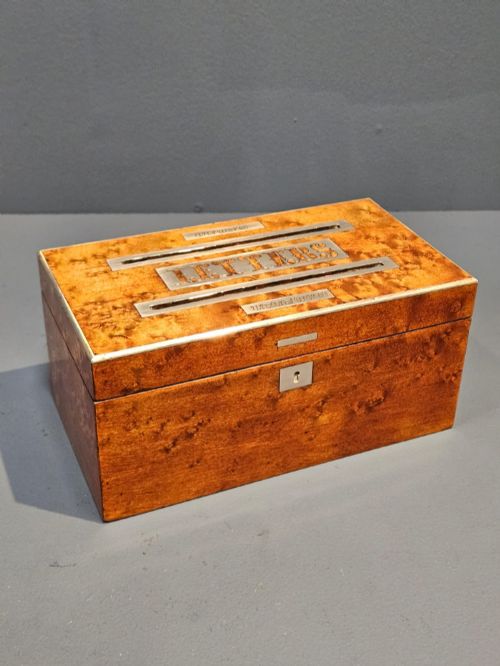


Correspondence Letter Box
A correspondence letter box organises the desk with compartments for post, coming to us in woods and brass from the nineteenth and early twentieth centuries.
Correspondence Letter Box
When you search for a correspondence letter box, you look at desktop containers designed to sort mail, paper, and envelopes in the nineteenth and early twentieth centuries. These pieces range from simple wooden caskets to elaborate cabinets with fall fronts and internal slots labelled for answered and unanswered letters.
You are most likely to meet Victorian and Edwardian examples on this page, often built from mahogany, walnut, or oak, frequently fitted with brass mounts or lock plates. They served domestic and professional spaces alike, keeping correspondence private and tidy before the era of mass communications.
The assortment includes country house letter boxes alongside smaller folding stationery cabinets and wall pockets. Each form reflects the specific writing habits of its period, from simple sloped lids to complex tiered interiors.
Materials and Construction
Cabinet makers built these boxes using dense timbers such as mahogany, oak, and walnut, frequently applying veneers of burr walnut, coromandel, or satinwood to visible surfaces. These woods provided a stable carcase that could withstand daily use on a writing desk.
Metal fittings played a crucial structural and decorative role, with brass straps, hinges, corner brackets, and mounts securing the joints and protecting edges. Interiors often lined out in velvet, roan leather, or silk accompanied by bone or ivory dividers for paper and pens.
Some Victorian letter boxes solved domestic procrastination by sorting post quite literally into answered and unanswered compartments.
Assessing Quality
The standard of a correspondence letter box rests on the choice of timber figure and the precision of its joinery. Superior examples display symmetrical burr veneers, tightly fitted dove-tailed corners, and substantial brass hardware rather than stamped plate.
Refinement shows in the interior architecture, where integrated spring mechanisms, working locks with original keys, and hand-tooled leather surfaces elevate an ordinary desktop accessory. Lesser pieces rely on plain timber planks and simpler butt joints without internal dividers.
Edmund Nye·W & J Milne·Houghton & Gunn·Briggs Piccadilly London
The Correspondence Letter Box Glossary
- Fall front
- A hinged front panel that drops downward when opened to reveal letter slots and pigeon holes inside. This design allows access to correspondence without lifting the entire lid.
- Brass bound
- A method of reinforcing wooden box corners and edges with structural brass straps and plates. It added both durability for travel and decorative contrast against dark woods.
- Tunbridge ware
- Small wooden objects decorated with intricate mosaic patterns made from tiny wood blocks of various natural colours. These geometric designs create pictorial scenes or borders on the lid.
- Ormolu
- Gilded bronze mounts cast and chased with decorative foliage or scrollwork. These French mounts embellish the exterior of walnut and marquetry caskets.
- Papier mache
- A composite material formed from paper pulp or sheets mixed with glue and pressed into moulds. Once dry, it was lacquered and painted for wall pockets and desk items.
Correspondence Letter Box: Frequently Asked Questions
What is a correspondence letter box?
A correspondence letter box is a desktop box or small cabinet designed to hold stationery, envelopes, and incoming or outgoing post. They keep writing materials organised and private.
Most examples date from the Victorian and Edwardian periods, constructed from woods like mahogany or walnut and fitted with internal partitions.
How were letter boxes used?
They sat on writing desks in country houses and town residences to sort daily post into categories such as answered and unanswered mail. The slots ensured letters remained private until read.
Some models included locking mechanisms to secure sensitive correspondence away from household staff or visitors.
How do I tell periods apart?
Victorian pieces often feature heavy brass mounts, coromandel, or burr walnut with Gothic or country house proportions. Edwardian examples tend toward lighter satinwood or simpler oak constructions with Arts and Crafts influences.
Earlier Regency items display fine rosewood veneers and brass inlay, whereas later Edwardian cabinets favour clean mahogany lines and simpler hardware.
How do I care for wooden boxes?
Keep wooden boxes away from direct sunlight and radiators to prevent the timber and decorative veneers from shrinking or cracking. Consistent room humidity preserves the joints and polish.
Apply a traditional wax polish occasionally to nourish the wood surface and maintain the natural lustre of the grain.