




Vintage Correspondence Box
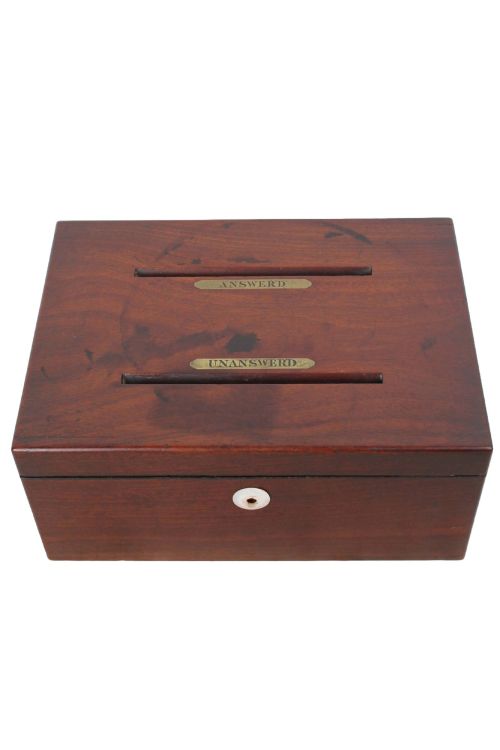
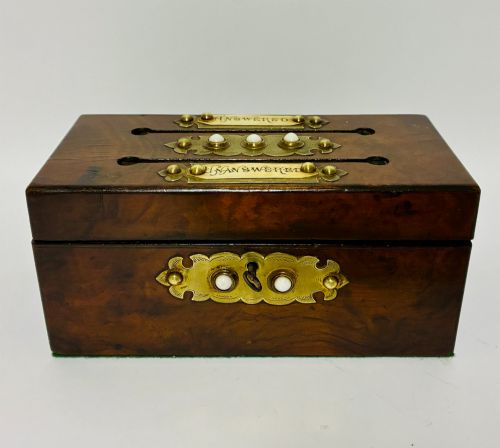
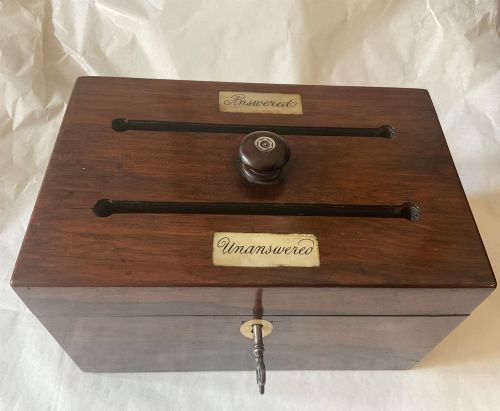
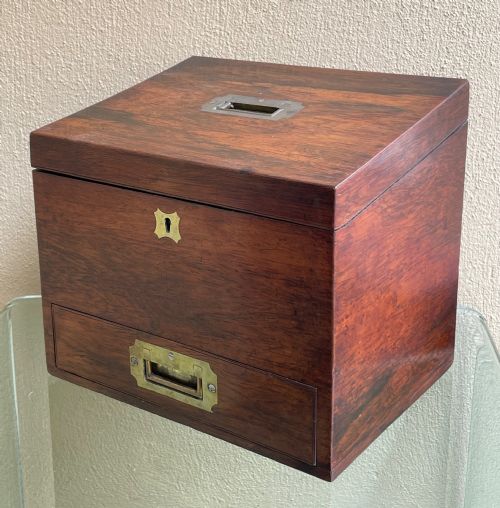
A vintage correspondence box organises letters and stationery with the craftsmanship of the nineteenth and early twentieth centuries.
Vintage Correspondence Box
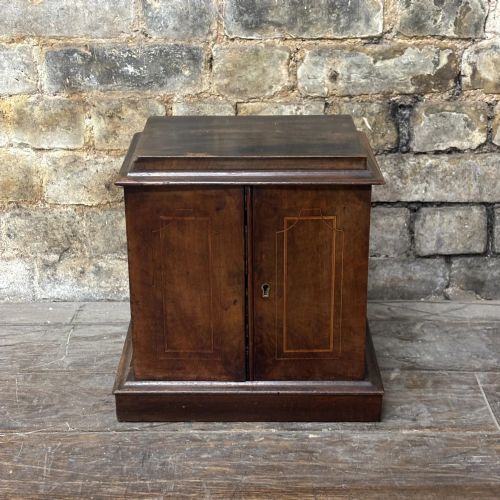
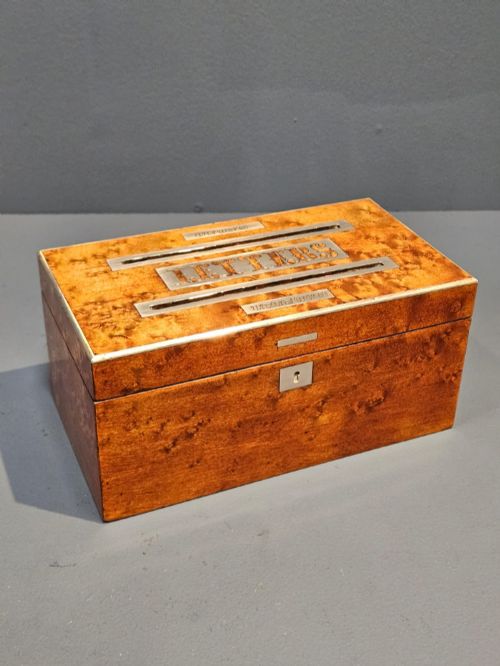
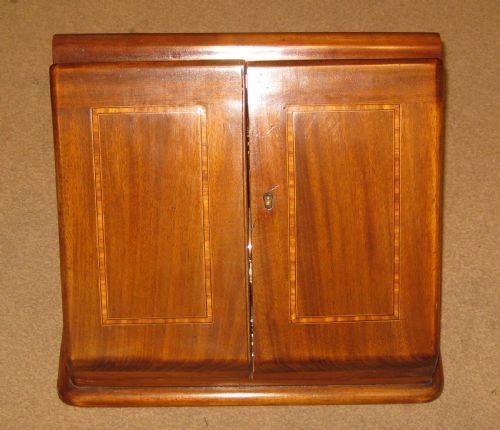
When you search for a vintage correspondence box, you encounter pieces designed to hold letters, papers, and writing materials upon a desk or table. The selections span the Victorian, Edwardian, Georgian, and Regency periods, originating from English, Irish, and Anglo Indian workshops.
The forms vary from simple country house post boxes and fall-front desk tidies to elaborate stationery cabinets and bi-fold writing slopes. Mahogany, oak, and walnut dominate the offerings, frequently accented with brass mountings, boxwood, bone, or leather interiors.
You are most likely to meet Victorian and Edwardian examples constructed as letter boxes or stationery cabinets, often featuring compartments for daily correspondence. Some pieces combine the function of a letter box with a writing slope or secret drawers.
How they were made
Cabinet makers utilised dense hardwoods such as mahogany, walnut, oak, and rosewood to construct the outer carcases of these boxes. These woods provided the necessary durability for daily desktop use and accepted fine polishing.
Metalwork played a structural and decorative role, with brass hinges, handles, and mounts securing the corners and drops. Internal fittings often incorporated leather surfaces, bone escutcheons, and satinwood veneers for compartments and slant lids.
The listings show a strong representation of Victorian and Edwardian oak, mahogany, and walnut stationery cabinets alongside traditional writing slopes.
What varies in quality
The distinction between standard utility boxes and finer examples rests upon the selection of timber and the complexity of internal arrangement. Figured veneers such as burr satinwood or carefully matched walnut indicate greater attention from the cabinet maker.
Specialised construction details, such as secret drawers, fall-front mechanisms, and campaign brass handles, separate mass-produced items from bespoke commissions. The integration of robust locking mechanisms and original hardware preserves the integrity of the piece.
Austin·William IV·Houghton & Gunn
The Vintage Correspondence Box Glossary
- Writing slope
- A portable desk featuring a slanted writing surface that folds open to reveal storage for paper and ink. These boxes often include hidden compartments beneath the stationery wells.
- Stationery cabinet
- A desktop piece designed to hold envelopes, notepaper, and writing implements upright or in tiered ledges. They frequently feature fall-front doors or double doors opening to pigeonholes.
- Campaign box
- A piece constructed for military travel with recessed brass handles and reinforced corners to withstand frequent transport. These items prioritise sturdy construction and practical folding mechanisms.
- Escutcheon
- A small plate surrounding a keyhole, typically fashioned from brass, bone, or ivory to protect the surrounding wood from wear. They serve both a decorative and a protective function on box lids and doors.
- Fall-front
- A hinged front panel that drops downward to provide access to interior pigeonholes and drawers. This mechanism allows quick access to desk tidies without opening the entire lid.
Vintage Correspondence Box: Frequently Asked Questions
What is a correspondence box?
A correspondence box is a desktop container specifically built to store writing paper, envelopes, and incoming or outgoing mail.
These pieces range from simple wooden letter boxes to compartmentalised cabinets designed to keep a nineteenth-century desk orderly.
How do I date a wooden box?
Dating relies on observing the timber choices, construction methods, and hardware styles associated with periods like the Georgian era or the Edwardian years.
Mahogany and rosewood point towards earlier nineteenth-century pieces, while golden oak and simpler joinery frequently suggest later Edwardian or Arts and Crafts production.
Where were these boxes used?
These boxes belonged in the libraries, studies, and drawing rooms of country houses and town residences.
They sat upon large partner desks or writing tables to manage the heavy volume of daily letter-writing before the era of telephones.
Can I use an antique box today?
These boxes accommodate modern stationery, fountain pens, and letters just as they did for Victorian writers.
Their internal compartments suit contemporary desks, though standard modern envelopes may require careful sizing depending on the internal pigeonhole dimensions.