



Nineteenth Century Campaign Box
A nineteenth century campaign box served officers on the move, combining clever joinery with tough materials to protect valuables across the empire.
Nineteenth Century Campaign Box
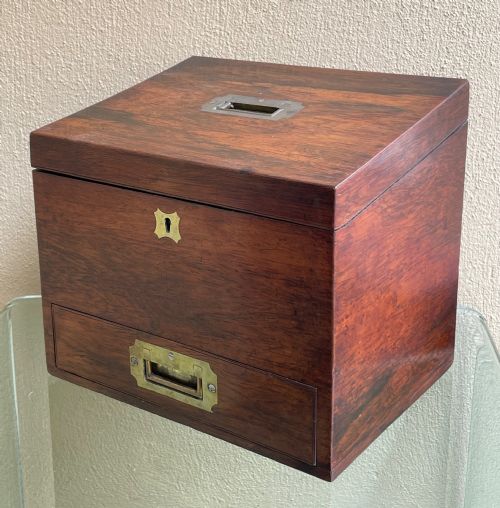
When someone searches for a nineteenth century campaign box, they are looking at portable furniture designed for travel and military service during the Georgian, Regency, and Victorian eras. These items include writing slopes, correspondence boxes, blanket chests, and larger trunks intended to withstand arduous journeys.
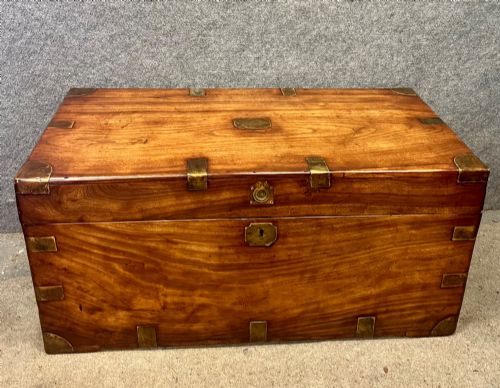
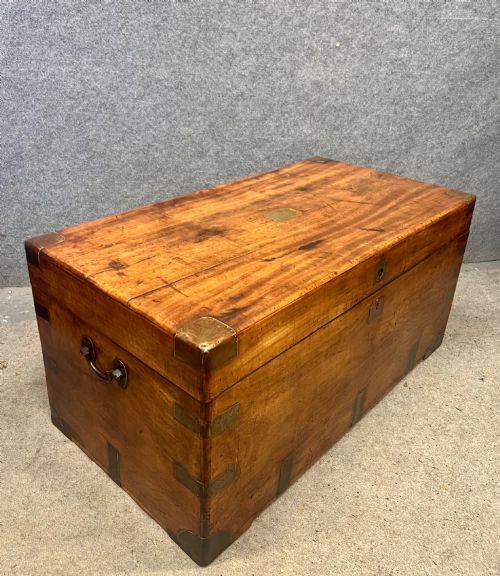
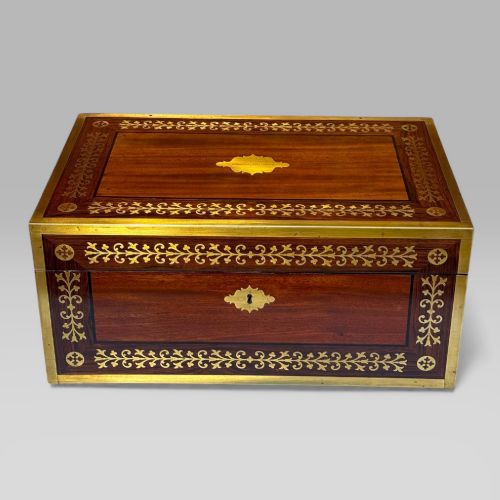
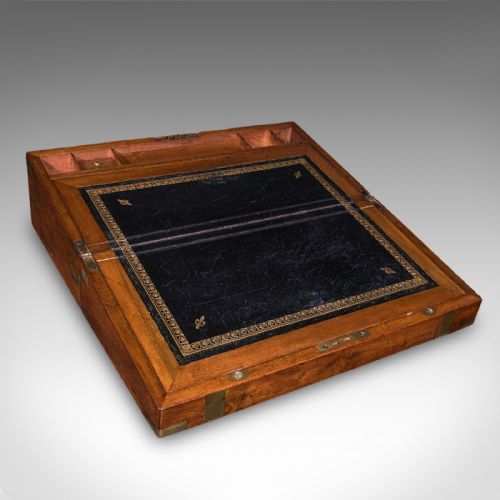
The version most commonly met on this page is the brass-bound mahogany writing slope or the solid camphorwood chest dating from around eighteen fifty. These pieces combine compact storage with folding mechanisms, often featuring fitted interiors for ink, paper, or personal items.
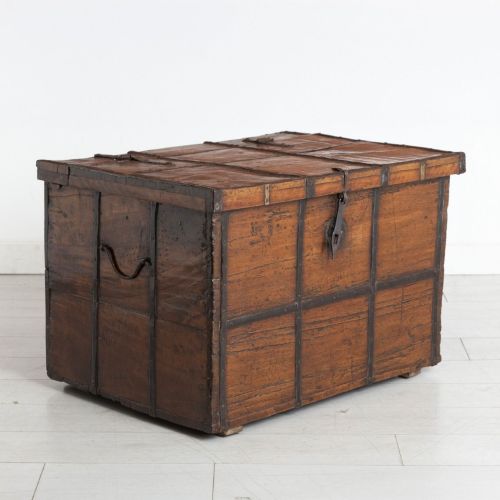
Origins stretch from English workshops to Anglo-Indian hubs and the China Trade, resulting in a rich variety of regional timbers and mounting styles. Buyers encounter both robust utilitarian trunks bound in iron and refined rosewood boxes inlaid with brass.
Materials and construction
Cabinetmakers built these pieces using dense hardwoods such as mahogany, teak, camphor wood, and rosewood to resist humidity and rough handling during transit. Camphor wood offered the added benefit of natural insect deterrence for stored uniforms and documents.
Corner brass brackets, strap work, and flush-fitting carrying handles protected vulnerable joints and allowed items to pack tightly into transport wagons or ship cabins. Iron and hide bindings also appear on utilitarian travelling trunks designed for heavier loads.
Writing slopes and correspondence boxes utilised complex internal partitioning, folding writing surfaces lined with leather, and hidden secret compartments to secure valuables.
Listings feature items spanning the nineteenth century, including Regency, Georgian, and Victorian periods, constructed in mahogany, camphor wood, teak, and rosewood.
Assessing quality and craftsmanship
Quality rests in the precision of the brass work and the stability of the timber construction under varying climatic conditions. Superior examples feature hand-cut dovetail joints, flush-fitting hardware, and deeply figured grain selected by skilled makers.
The sophistication of the internal mechanism separates standard boxes from exceptional ones, particularly in writing slopes that fold smoothly and lock securely with original brass keys. The choice of secondary woods and the neatness of internal satinwood or rosewood veneering reveal the tier of the workshop.
Seabrook of St Pauls London
The Nineteenth Century Campaign Box Glossary
- Campaign chest
- A modular chest of drawers built in two or more stacking sections for easy transport on military expeditions. These units feature recessed brass pulls and corner protectors to prevent snagging.
- Writing slope
- A portable box with an angled lid that opens to reveal a flat or sloped writing surface, inkwells, and storage compartments. Interiors often include a tooled leather insert.
- Brass bound
- The application of brass corners, straps, and banding to the exterior edges of a wooden box to reinforce structural integrity. This technique prevents splitting during rough travel.
- Anglo-Indian
- Furniture made in the Indian subcontinent during the British colonial period, often employing native timbers like camphor wood and incorporating traditional local carving or brass mounting. These pieces reflect a fusion of British forms and local craftsmanship.
- Correspondence box
- A specialised desk accessory designed to hold stationery, letters, and sealing wax, sometimes combining a writing slope with vertical document compartments.
Nineteenth Century Campaign Box: Frequently Asked Questions
What is a campaign box?
A campaign box is a portable piece of furniture designed for officers and travellers on the move during the eighteenth and nineteenth centuries.
These items range from compact writing slopes to large camphor wood trunks, all built to withstand the rigours of military campaigns and long sea voyages.
How were writing slopes used?
Writing slopes provided a stable, portable desk surface for writing letters and conducting official correspondence while away from home.
Users opened the hinged lid to reveal a slanted writing pad, compartments for ink and pens, and secure storage for stationery and documents.
Why use camphor wood?
Camphor wood was favoured for campaign chests and trunks because its natural aromatic oil repels insects and protects stored textiles.
This durable timber also resists moisture well, making it ideal for officers stationed in humid colonial climates.
How do I date a campaign piece?
Dating relies on identifying timber choices, construction techniques, and the style of brass hardware fitted to the exterior.
Georgian and Regency examples often showcase finer rosewood inlay and lighter proportions, while mid-Victorian pieces typically employ heavier mahogany and robust brass corner strapping.
Can I use these for modern storage?
These boxes and chests integrate easily into contemporary interiors as functional coffee tables, blanket storage, or desk organizers.
Their sturdy historical construction means they remain entirely practical for holding modern stationery, mementoes, and household linens.