



Rosewood Lap Desk
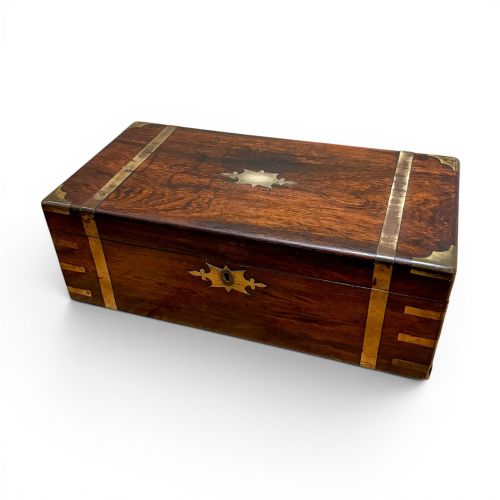
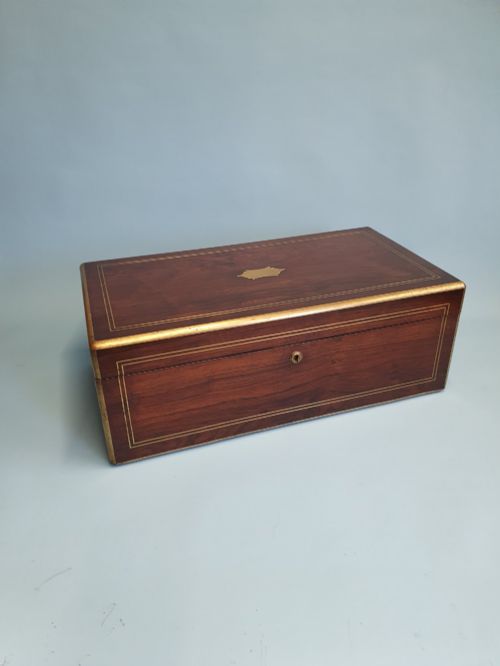
A rosewood lap desk is a portable writing box designed for travel and correspondence, offering fitted compartments and a sloping writing surface that collectors prize for its rich timber and brass details.

Rosewood Lap Desk
A rosewood lap desk is a portable writing box built to house writing instruments, paper, and correspondence while offering a functional slope for writing on the move.
The pieces on this page span the Georgian, Regency, William IV, and Victorian periods, reflecting shifting tastes in portable stationery containers through the nineteenth century.
Most examples combine solid or veneered rosewood with fitted interior compartments, secret drawers, and brass mounts designed for officers, travellers, and domestic correspondence.
How They Were Made
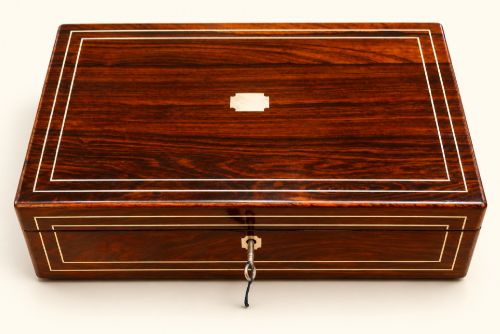
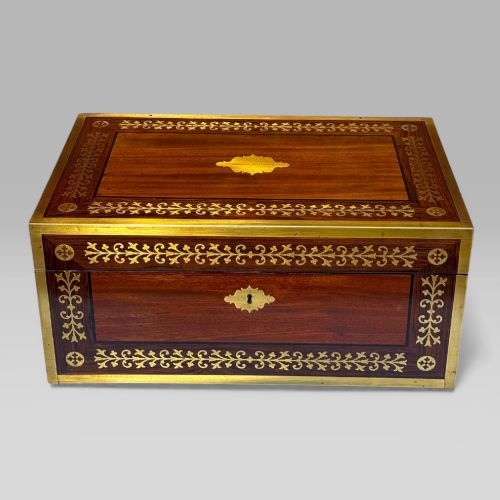
Cabinet makers utilised dense rosewood timber over secondary woods, often accentuating the grain with satinwood, burr maple, or amboyna interior fittings.
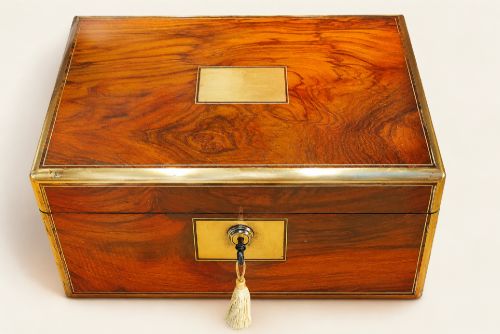
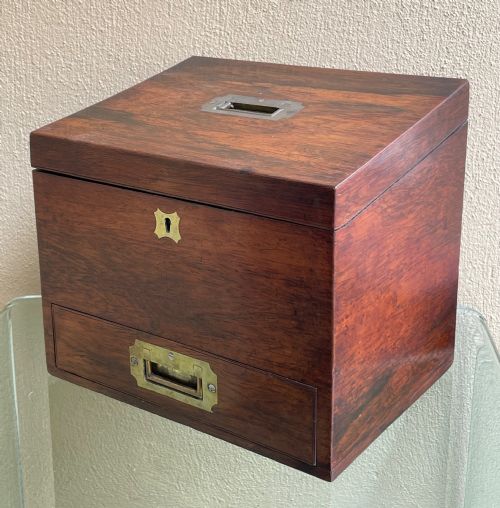
Structural durability on campaign pieces was achieved through brass binding, corner reinforcement, and flush-fitting campaign handles secured into the wooden carcass.
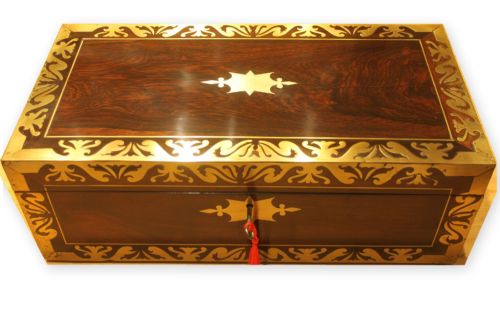
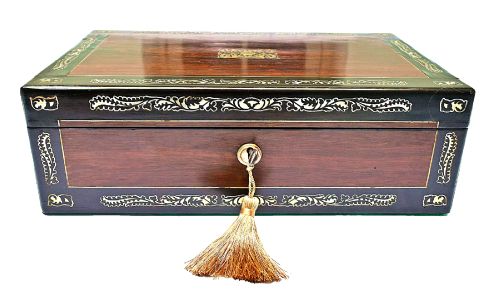
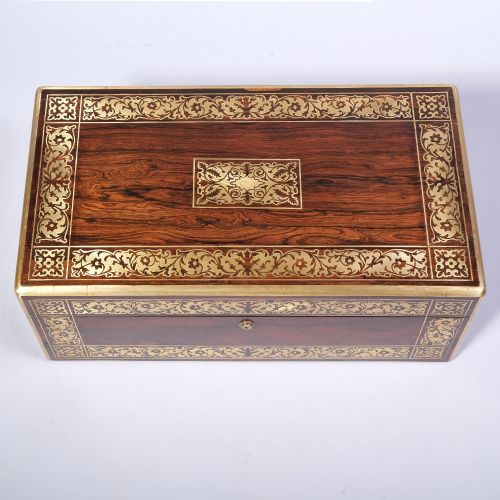
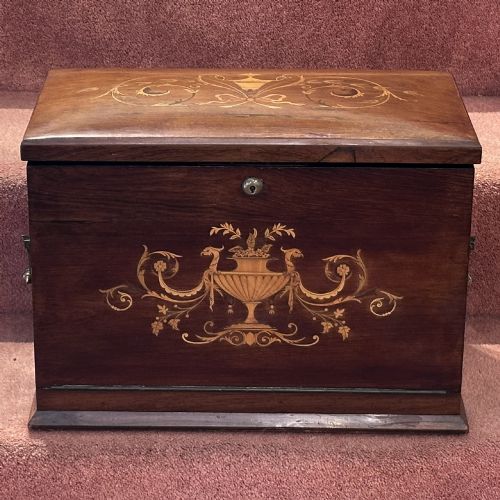
Decorative embellishment relied on precision inlay work, incorporating cut brass, mother-of-pearl, abalone, boxwood, and pewter into the exterior lids and escutcheons.
Rosewood Lap Desk Retail Price Guide 2026
Typical asking prices for rosewood lap desk among the pieces listed under this phrase on Sellingantiques today, from the lower quarter to the upper quarter. They describe what is for sale here now, not the wider market.
Listings feature brass-bound Regency and Victorian writing slopes incorporating rosewood alongside mahogany, satinwood, and mother-of-pearl.
What Varies in Quality
The calibre of a rosewood lap desk depends on the complexity of its interior fit-out, including secondary timber choices for hidden drawers and stationery racks.
Superior execution shows in the precision of brass stringing and inlay work, where metal and shell sit flush with the surrounding rosewood grain.
Originality of components, such as working locks, matching keys, and intact velvet or leather writing surfaces, elevates an individual piece above altered examples.
George Austin Dublin
The Rosewood Lap Desk Glossary
- Lap desk
- A portable box with a hinged, sloping lid that opens to reveal a writing surface and storage compartments. These items were essential for travellers writing letters before the advent of fountain pens.
- Campaign style
- Furniture constructed for military officers on the move, featuring recessed brass handles, corner brackets, and robust joints. Such items were built to withstand the rigours of transit.
- Secret drawers
- Concealed compartments hidden behind false panels or accessed via clever spring mechanisms within the desk interior. Victorian makers used these spaces to secure valuables and sensitive correspondence.
- Tunbridge Ware
- Small wooden objects decorated with intricate mosaic patterns made from tiny blocks of naturally coloured timbers. This technique created pictorial or geometric designs on box lids.
- Escutcheon
- A flat plate surrounding a keyhole that protects the surrounding wood from wear and adds a decorative metal accent to the front of the box.
Rosewood Lap Desk: Frequently Asked Questions
What is inside a lap desk?
Inside, you will find sloping panels that fold flat, compartments for inkwells, nibs, and stamps, and often small secret drawers hidden beneath removable stationery dividers.
Many examples retain their original leather or velvet writing surfaces, creating a complete portable writing station from the nineteenth century.
How do I date a rosewood lap desk?
Dating relies on construction methods, brass inlay styles, and secondary timbers. Regency examples often feature elaborate foliate cut brass inlay, while Victorian boxes frequently incorporate mother-of-pearl.
Examining the lock stamps, hinge types, and overall proportion helps narrow the manufacturing period to within a few decades.
Were these used for travel?
Yes, these boxes were designed specifically for officers, diplomats, and travellers who needed to write letters on the move. Campaign versions featured robust brass binding to protect the corners during long journeys.
Table top models were also produced for stationary use in domestic studies and drawing rooms.
How do I maintain the wood?
Rosewood benefits from occasional light waxing with a traditional beeswax polish to nourish the timber and maintain its natural lustre. Avoid placing the box near direct heat sources or strong sunlight to prevent the wood and internal veneers from drying out.
Keeping brass components clean with a dry cloth preserves the contrast between the metal and the dark grain.