

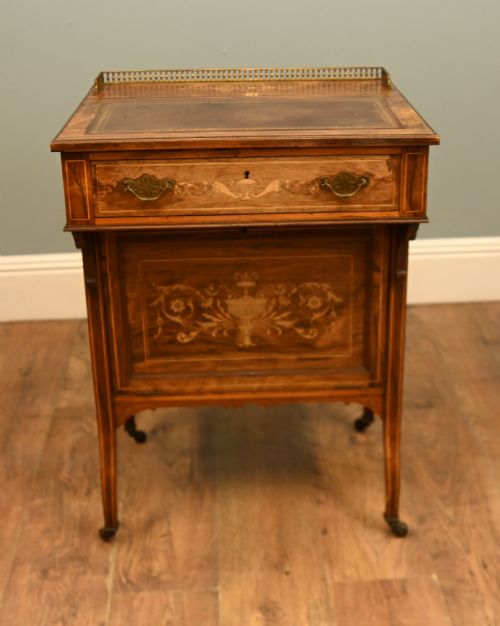

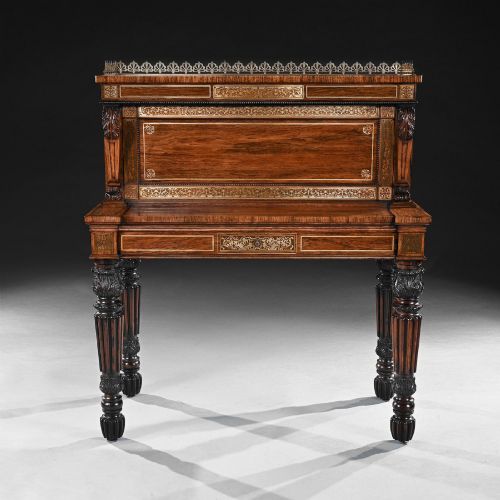
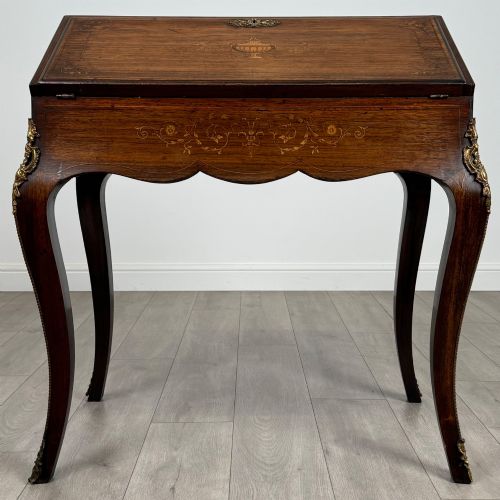
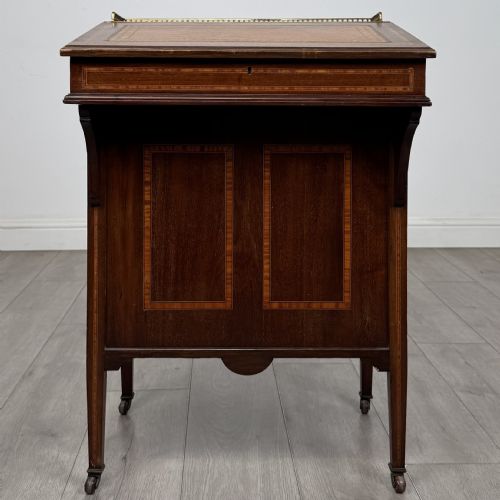

Brass Inlaid Slope
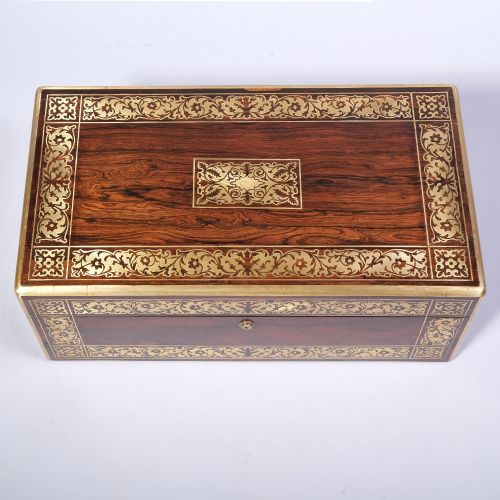
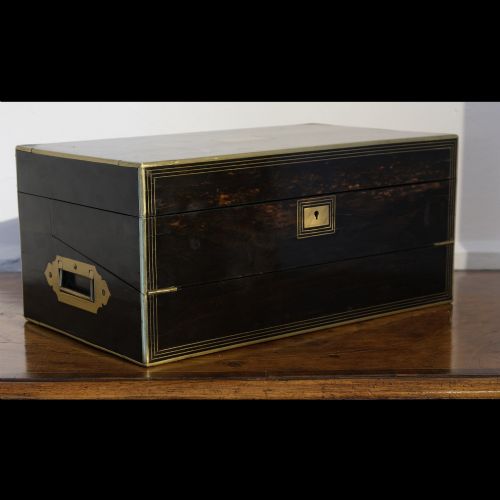
A brass inlaid slope is a portable writing desk designed to house correspondence equipment safely while offering a firm surface for letter writing.
Brass Inlaid Slope
When you search for a brass inlaid slope, you encounter portable writing boxes engineered during the Georgian, Regency, and Victorian periods. These compact wooden chests feature hinged lids that fold downward to reveal a sloping writing surface lined with leather or velvet.
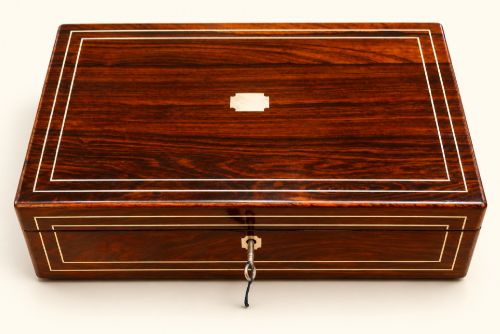
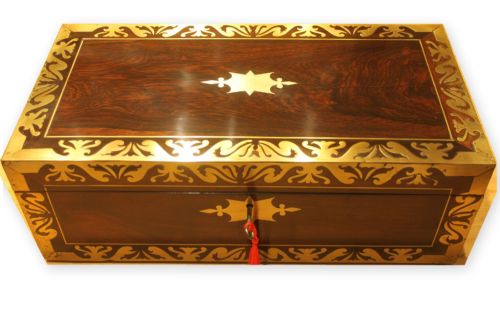
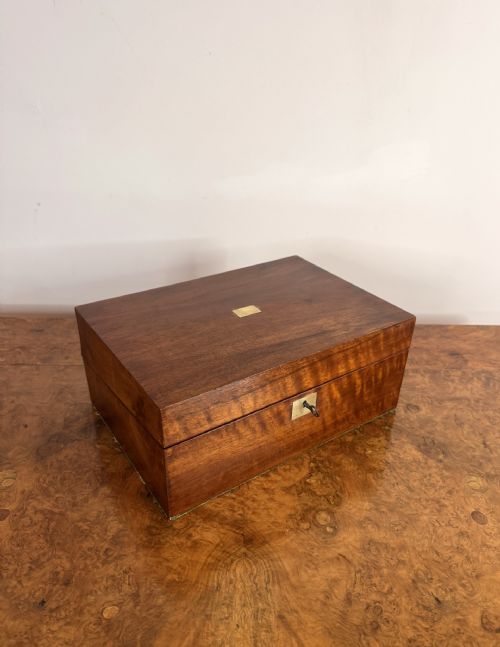
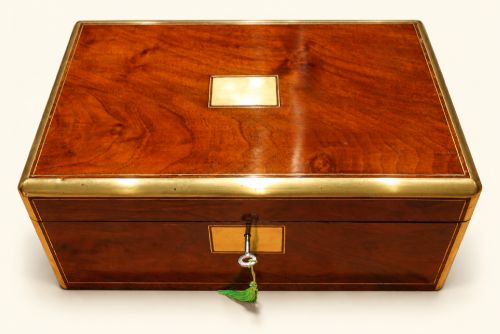
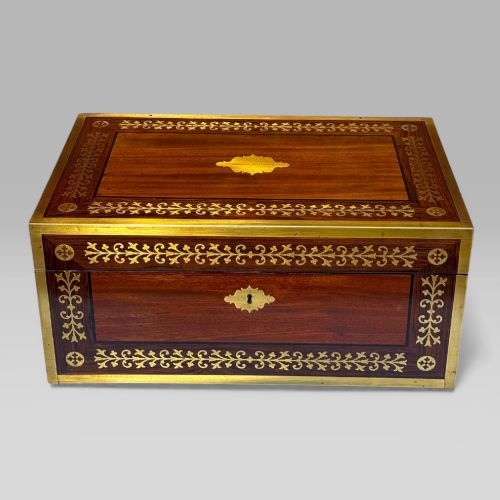
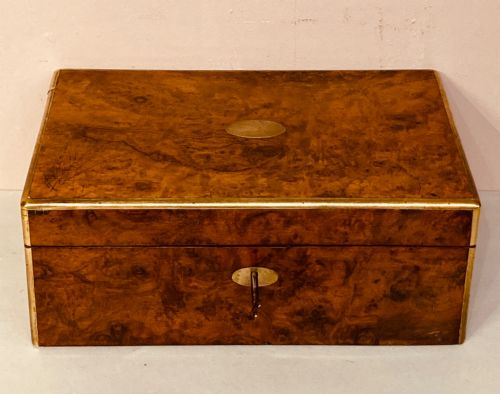
The most common examples on this page are rosewood and burr walnut boxes decorated with meticulous brass stringing, escutcheons, and corner brackets. They often conceal secret drawers, inkwell compartments, and specialised storage for stationery.
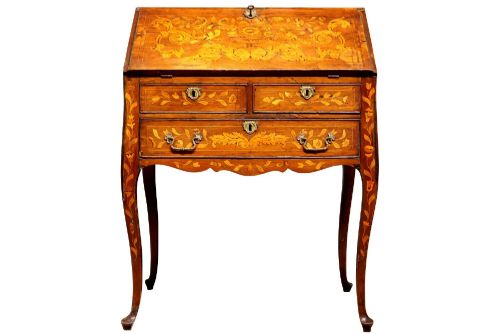
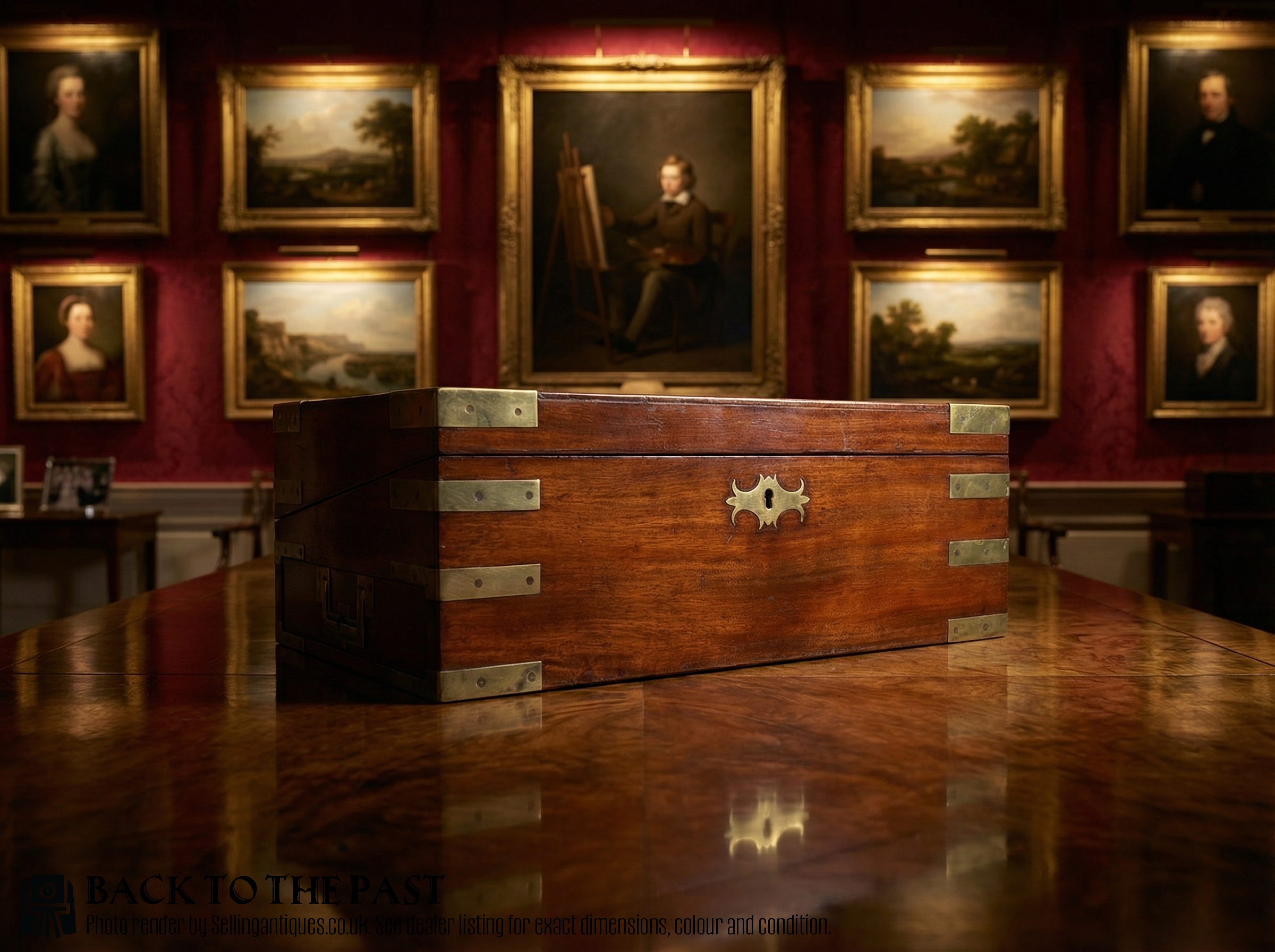
Beyond standard portable boxes, the selection includes larger campaign pieces, bureau de dame desks, and writing tables originating from nineteenth-century workshops. Each variation reflects the evolving domestic and travel habits of period writers who required functional security for their papers.
How They Were Made
Cabinetmakers constructed these writing boxes using dense hardwoods such as mahogany, rosewood, burr walnut, and coromandel as a stable foundation for decorative treatments. Artisans channelled the timber surfaces by hand to recess precise geometric or foliate brass inlays, sometimes combining the metalwork with mother of pearl.
Internal mechanisms rely on hidden springs, subtle panel releases, and specialised brass locks, notably those produced by Bramah, to secure confidential documents and small valuables. Structural durability was essential for travel, leading craftsmen to reinforce box edges and corners with brass banding and flush-fitting campaign handles.
Brass Inlaid Slope Retail Price Guide 2026
Typical asking prices for brass inlaid slope among the pieces listed under this phrase on Sellingantiques today, from the lower quarter to the upper quarter. They describe what is for sale here now, not the wider market.
Some military campaign slopes included dedicated candle sconces so officers could finish their dispatches after lights out.
What Varies in Quality
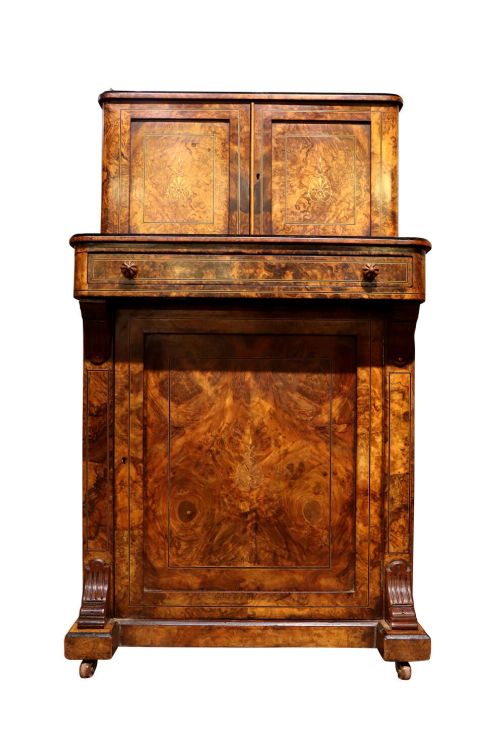
The standard of a brass inlaid slope depends heavily on the crispness of the metal cutting and the natural grain selection of the timber. Finer pieces display tight, symmetric burr walnut or figured rosewood veneers paired with flush, hand-engraved brass stringing that sits completely flat with the wood.
Internal execution distinguishes exceptional cabinetmaking from standard production, particularly the complexity of concealed compartments and the smooth operation of hidden secret drawers. Maker attribution, original fitted leather writing surfaces, and robust locking mechanisms further elevate the standing of an individual box.
Gillows Oxford Street Workshop·George Austin of Dublin
The Brass Inlaid Slope Glossary
- Brass stringing
- Thin strips of brass inlaid into channels cut into the wooden surface to form geometric borders or decorative motifs. This linear embellishment defines the outer lid design of Regency and Victorian writing boxes.
- Campaign box
- A portable desk or chest built for military officers or travellers, featuring recessed brass handles and reinforced corners. These sturdy pieces were designed to withstand frequent transport.
- Secret drawers
- Concealed compartments hidden behind false partitions or triggered by sliding panels within the interior of a writing slope. They provided secure storage for sensitive correspondence and valuables.
- Escutcheon
- A protective metal plate surrounding a keyhole, often fashioned from brass to match the exterior stringing and corner mounts of the slope. It prevents the surrounding wood from sustaining damage from the key.
- Bramah lock
- A high-security cylindrical lock patented by Joseph Bramah in the late eighteenth century, frequently installed in premium nineteenth-century writing boxes. These mechanisms were renowned for their complex internal-action design.
Brass Inlaid Slope: Frequently Asked Questions
What is a brass inlaid slope?
A brass inlaid slope is a portable wooden box designed to open into a slanted writing surface. It held paper, ink, and pens for letter writing during the Georgian and Victorian eras.
Cabinetmakers decorated the exterior of these boxes with polished brass stringing and corner mounts, creating a decorative object intended for use on a table or while travelling.
How were writing slopes used?
Users placed the box on a table or across their knees, opened the hinged lid to create an angled writing plane, and stored their writing supplies inside the base compartments.
Many examples included dedicated slots for glass inkwells, pen trays, and secret drawers designed to keep private documents secure from prying eyes.
How do I date a writing slope?
Dating relies on observing the choice of timber, the style of the brass inlay, and internal hardware such as locks and hinges. Regency pieces frequently employ rosewood with delicate brass lines, while Victorian examples often feature burr walnut and more robust construction.
Makers' stamps, patent locks, and overall proportions also provide reliable clues to the decade of manufacture.
Are secret drawers common in these boxes?
Secret drawers appear in many better-quality writing slopes from the nineteenth century. They are typically accessed by removing an inkwell or sliding a structural divider.
Cabinetmakers integrated these hidden compartments to give owners a secure place to store currency, jewellery, and confidential letters.