







Nineteenth Century Slope
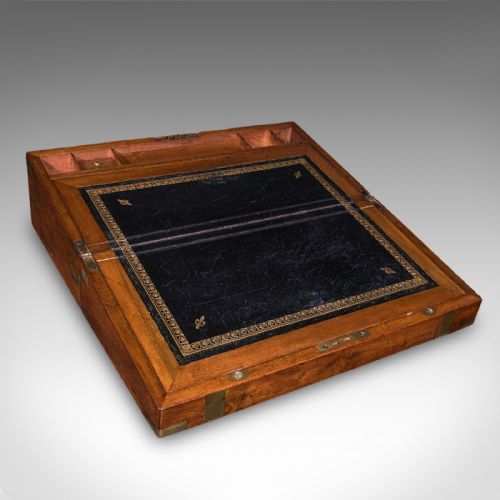
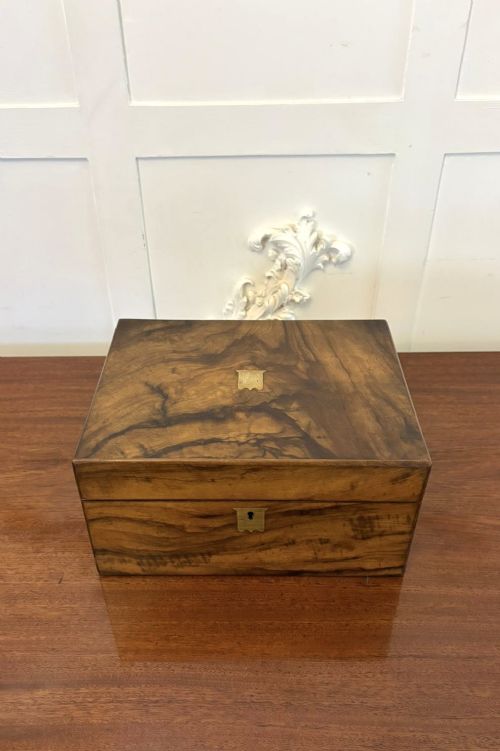
A nineteenth century slope is a portable or compact writing box designed for correspondence, offering a sloping surface that folds flat when not in use.
Nineteenth Century Slope
A nineteenth century slope encompasses traditional travelling writing boxes, lap desks, and Davenport desks designed to facilitate correspondence in an era before widespread fountain pens and digital communication.
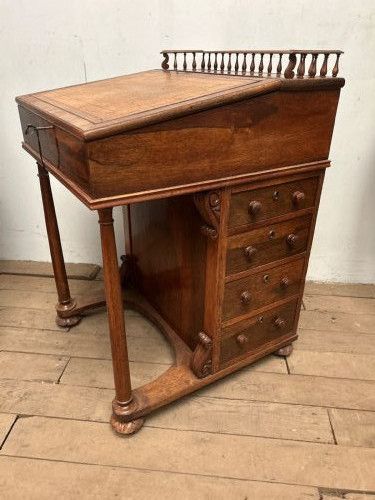
The pieces appearing on this page span the Georgian, Regency, William IV, and Victorian periods, taking forms from simple mahogany or rosewood boxes to elaborate Tunbridge ware and Davenport desks.
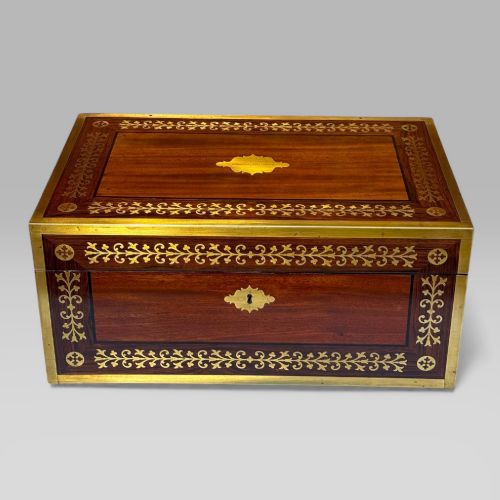
Buyers encounter everything from brass-bound campaign boxes intended for travel to fitted walnut writing slopes with leather-lined writing surfaces and secret compartments.
How they were made
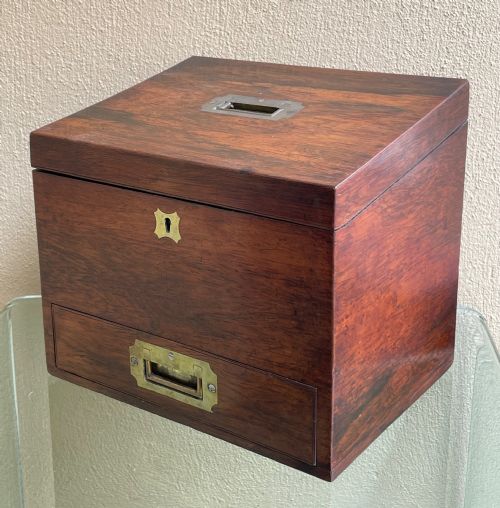
Cabinetmakers utilised dense hardwoods such as mahogany, rosewood, walnut, and burr walnut, often applying veneers to create richly figured surfaces on the exterior of the box.
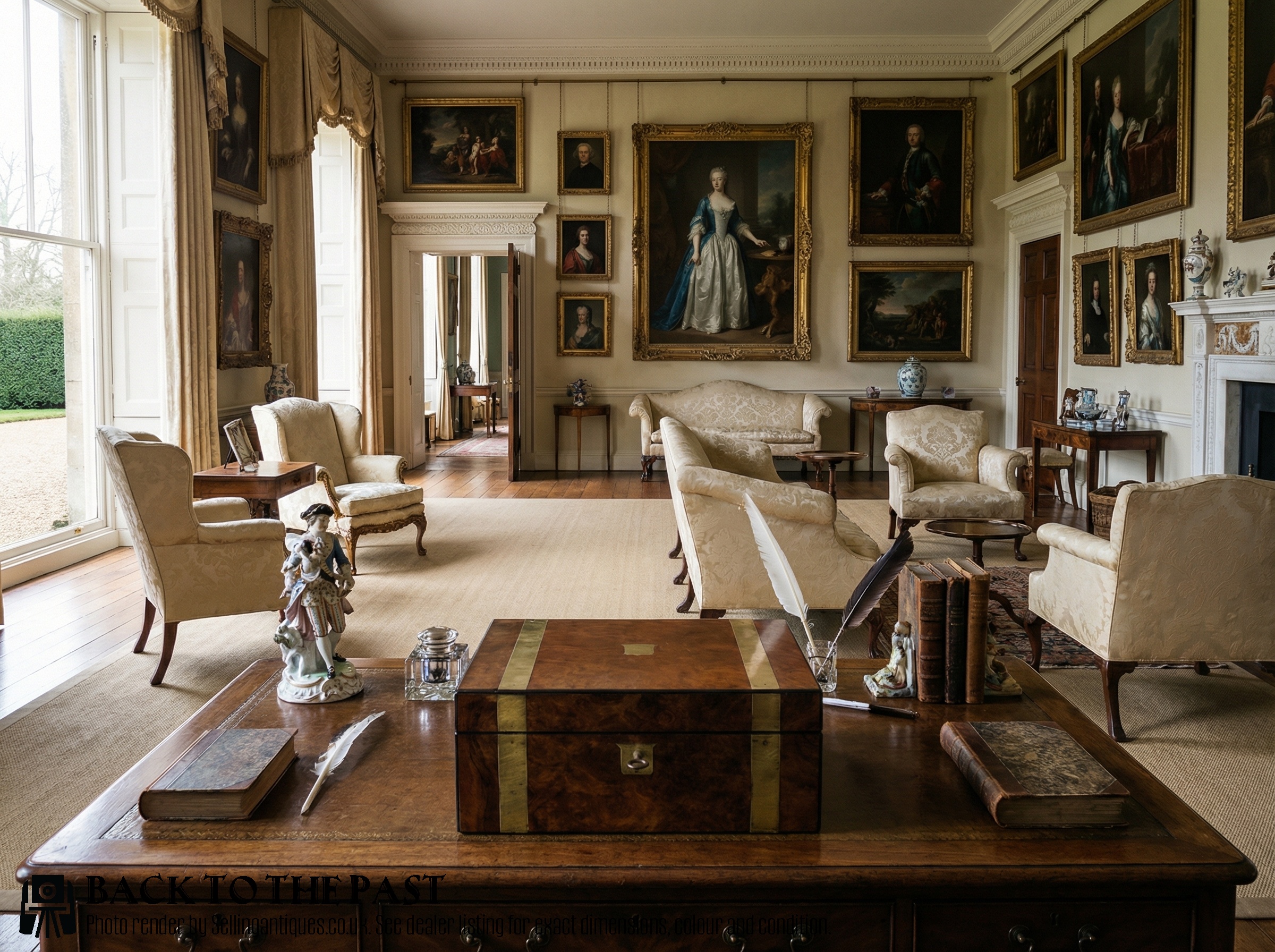
Brass corners, straps, and inlaid stringing reinforced the structural integrity of campaign styles, protecting the wood from the rigours of travel while adding a distinct decorative contrast.
Interiors incorporated fitted compartments, pen trays, inkwells, and sloping writing surfaces lined with leather or velvet to provide a stable platform for paper.
Nineteenth Century Slope Retail Price Guide 2026
Typical asking prices for nineteenth century slope among the pieces listed under this phrase on Sellingantiques today, from the lower quarter to the upper quarter. They describe what is for sale here now, not the wider market.
Period styles represented include Regency, William IV, French Empire Revival, and Victorian campaign.
What varies in quality
The selection of timber grain dictates much of the visual appeal, with highly figured burr walnut, amboyna, and satinwood standing above plain domestic hardwoods.
Internal complexity and completeness separate standard boxes from superior pieces, particularly those featuring well-preserved fitted interiors, secret drawers, and original brass hardware.
The precision of the cabinetwork, including tight dovetail joints and seamless inlay, marks the distinction between standard workshop production and master craftsmanship.
Gillows·Gillow Lancaster
The Nineteenth Century Slope Glossary
- Writing slope
- A portable box with an angled lid designed to hold writing materials and provide a slanted surface for writing letters. The hinged lid typically opens to reveal compartments for ink, pens, and paper.
- Campaign
- A style of furniture designed to be easily dismantled or folded for military travel. These pieces often feature recessed brass handles and corner brackets for protection.
- Davenport
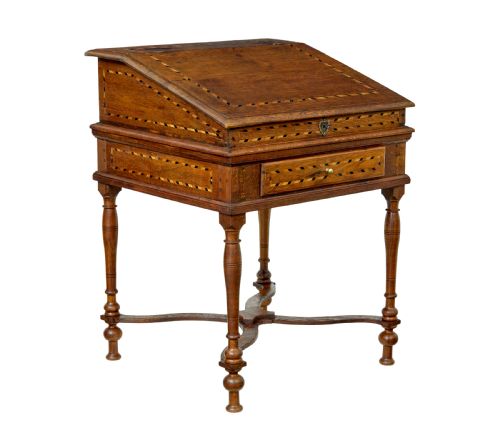
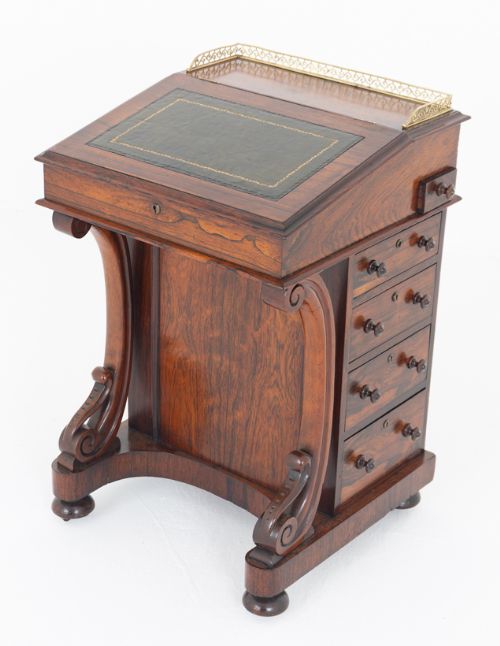
- A small pedestal desk featuring a sloping writing surface above a set of drawers. They gained popularity during the Regency and Victorian periods for domestic use.
- Tunbridge ware
- A type of decorative woodwork characterised by tiny mosaic tiles formed from different coloured woods to create pictorial designs. It appears frequently on Victorian stationery boxes and small containers.
- Correspondence box
- A desk accessory or small chest designed specifically to store letters, envelopes, and stamps. Some examples incorporate a folding writing slope into the design.
Nineteenth Century Slope: Frequently Asked Questions
How do I use a writing slope today?
These boxes function well on modern desks for storing stationery, notebooks, and writing instruments while providing a compact writing surface.
The interior compartments accommodate small modern items like pens and stamps just as they held inkwells and sealing wax in the past.
What is the difference between a slope and a Davenport?
A writing slope is typically a portable box placed on a table or used on the lap, whereas a Davenport is a freestanding pedestal desk with a fixed sloping top.
Davenports incorporate drawers beneath the writing surface, offering a permanent writing station rather than a transportable box.
Are campaign slopes waterproof?
Campaign slopes used dense hardwoods and brass reinforcement for durability during travel rather than waterproofing.
While robustly constructed to withstand rough handling on journeys, they require standard indoor care to protect the wood and leather.
How can I tell a Regency slope from a Victorian one?
Regency pieces often display classic restrained lines with brass inlay or rosewood veneers, reflecting classical influence.
Victorian examples frequently utilise burr walnut, heavier carving, or decorative treatments like Tunbridge ware mosaic work.