


Brass Bound Slope
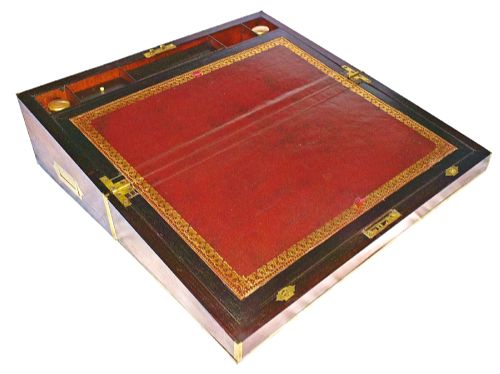
When you open a brass bound slope, you lift a hinged lid onto an inclined leather writing surface designed to travel across the nineteenth century.
Brass Bound Slope
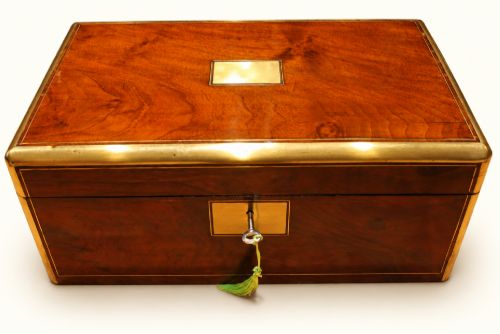
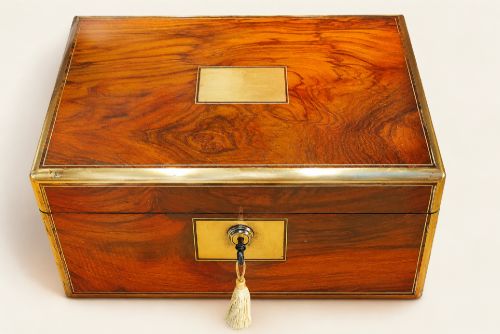
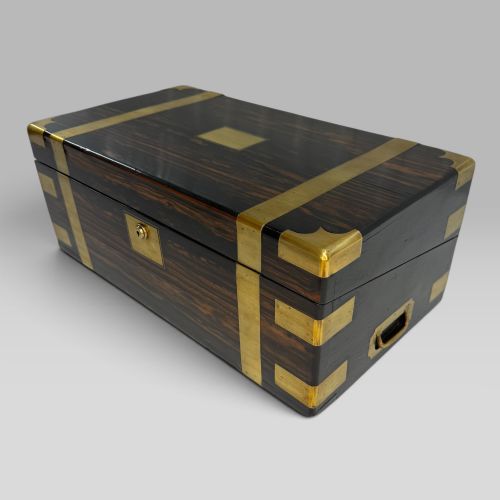
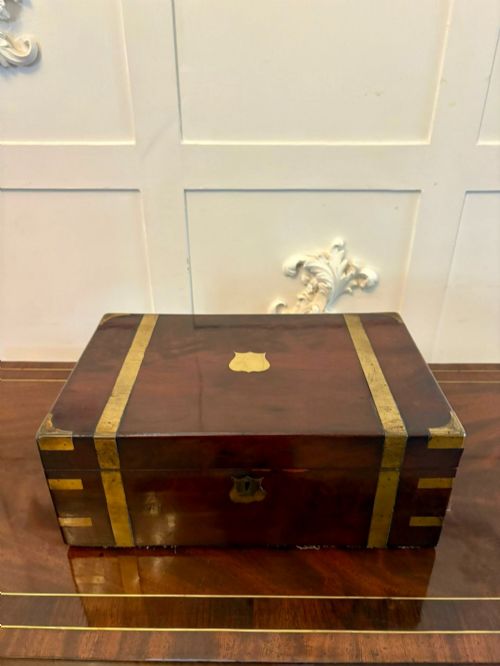
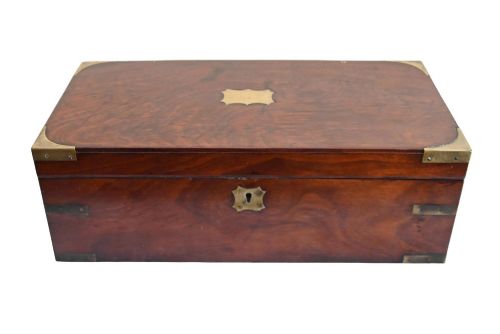
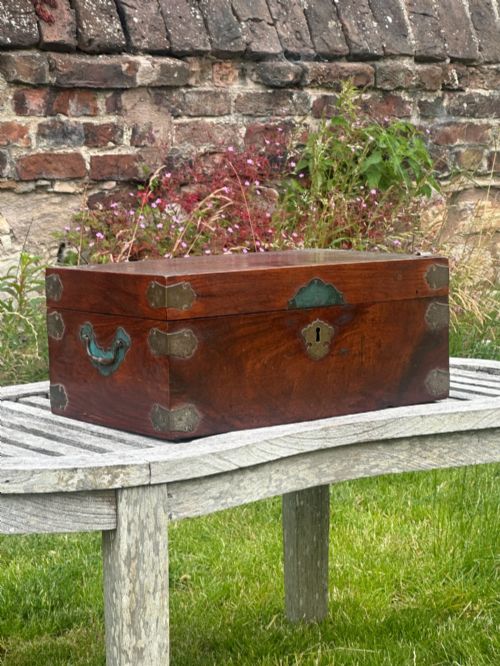
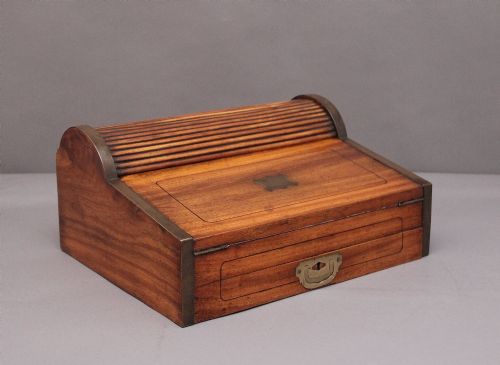
A brass bound slope is a portable writing desk or box reinforced with metal corners, edge strips, and sometimes flush carrying handles for travel. These pieces bridge the Georgian, Regency, and Victorian periods, serving travellers, officers, and writers who required a mobile workspace.
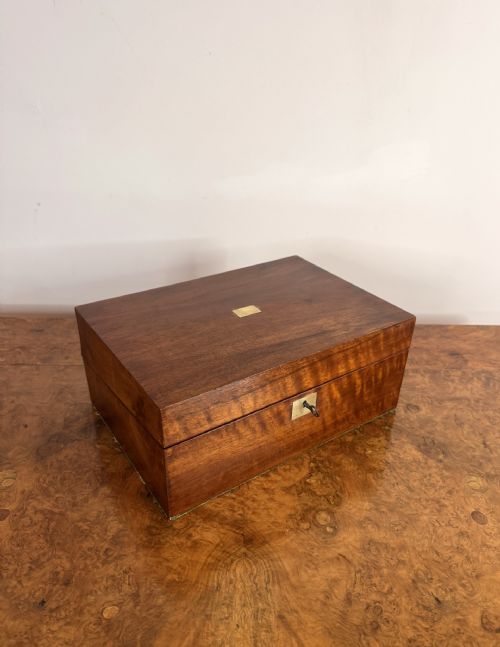
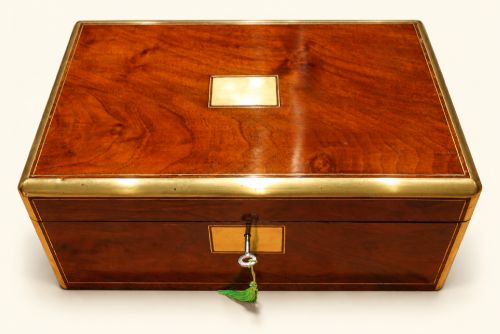
The most common examples on this page are mahogany and walnut writing boxes from the mid-Victorian era, often fitted with secret drawers beneath internal compartments. Alongside standard writing slopes, the evidence shows related forms including deed boxes, stationery boxes, and occasional campaign chests.
Origins span standard English workshops to more distant colonial outposts, reflected in materials like camphor wood and padouk alongside traditional European hardwoods. Each box opens to reveal compartments for inkwells, pens, and correspondence, maintaining an organised desk inside a compact timber shell.
Materials and Construction
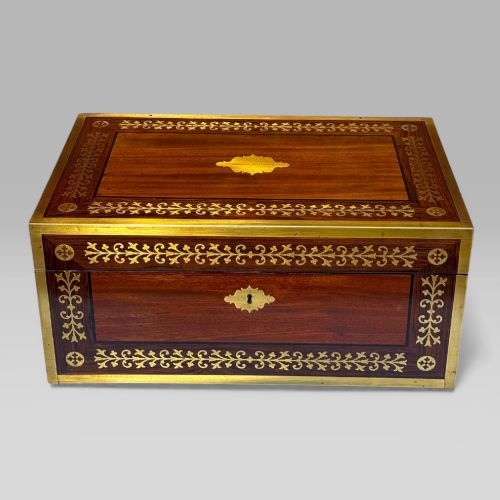
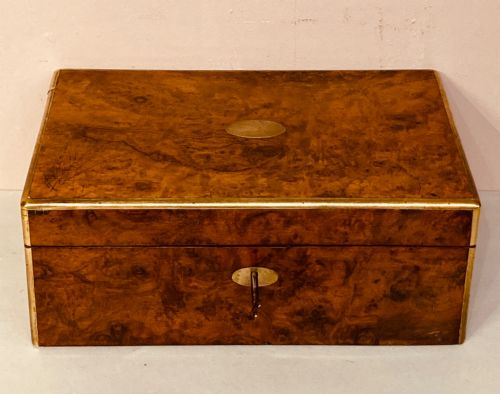
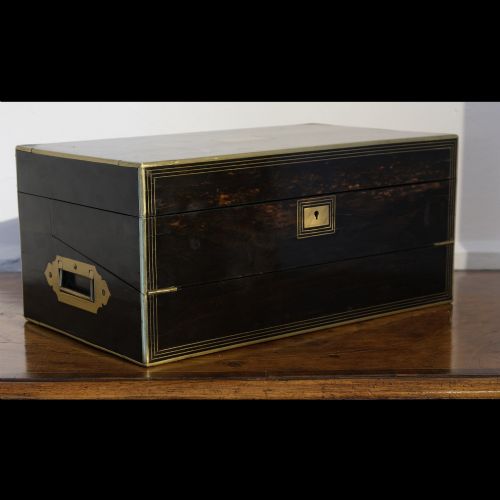
Cabinetmakers constructed these boxes from dense timbers including mahogany, rosewood, burr walnut, and coromandel, often selected for rich grain patterns. These wooden carcasses were reinforced with brass corners and inlay to withstand the rigours of travel and frequent handling.
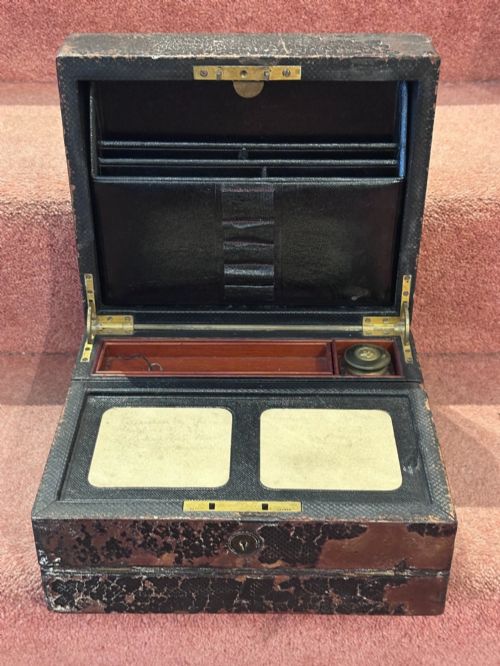
Interiors combined sloping writing surfaces lined with leather, hidden compartment mechanisms, and specialised hardware like Bramah locks and working keys. Woods were frequently finished to a high polish, protecting the exterior while highlighting the natural figuring of walnut or mahogany.
Brass Bound Slope Retail Price Guide 2026
Typical asking prices for brass bound slope among the pieces listed under this phrase on Sellingantiques today, from the lower quarter to the upper quarter. They describe what is for sale here now, not the wider market.
Internal fittings range from simple stationery compartments and pen trays to secret drawers, candle sconces, and dedicated sovereign sections.
Evaluating the Pieces
Quality rests in the precision of the brass work, the choice of timber figuring such as burr walnut or flame mahogany, and the cleverness of internal mechanisms like secret drawers. Superior boxes display flush-fitting brass mounts and robust carcase construction that prevents warping over time.
The presence of original fitted interiors, working locks with keys, and specialised additions such as candle sconces or sovereign sections elevate specific examples. Finer workshops ensured that hinges, secret compartments, and folding writing surfaces operated smoothly without binding.
Austin·Haynes·Briggs
The Brass Bound Slope Glossary
- Brass Bound
- A box reinforced along its edges and corners with brass strips and corner pieces to protect against impact during travel. This construction is a defining feature of military campaign furniture.
- Campaign Style
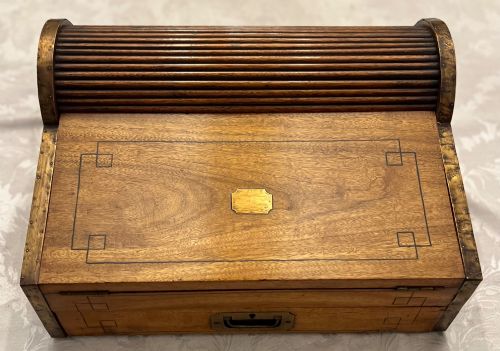
- Furniture designed to fold, dismantle, or withstand rigorous transport by officers on military campaigns. These pieces typically feature recessed brass handles and reinforced edges.
- Secret Drawers
- Hidden compartments concealed behind false panels or removable partitions within the interior of a writing box. They were used to store valuables or sensitive correspondence.
- Bramah Lock
- A high-security tumbler lock invented by Joseph Bramah in the late eighteenth century, frequently found on better quality nineteenth-century boxes. It requires a cylindrical key with precision cuts.
- Writing Slope
- A desk accessory with an inclined surface designed for comfortable handwriting. When closed, it forms a rectangular box containing storage space for stationery.
Brass Bound Slope: Frequently Asked Questions
What is inside a brass bound slope?
Lifting the lid reveals a sloping leather writing surface that often splits to store paper underneath. Deeper compartments house inkwells, pen trays, and small accessories.
Many examples contain hidden panels or secret drawers operated by releasing small wooden catches. These compartments kept postage stamps, money, and private letters secure.
How do I date a writing box?
Stylistic shifts and timber choices help narrow the decade of manufacture. Georgian and Regency boxes often lean toward simpler mahogany or rich rosewood, while Victorian examples favor burr walnut and coromandel with heavier brass mounts.
Hardware details also provide clues. Patented locks, construction methods, and maker labels stamped into the wood or leather offer a more precise timeline.
What was a campaign slope used for?
Officers and diplomats used campaign slopes to write letters, sign orders, and manage documents while travelling on military campaigns or colonial postings. The brass binding protected the wooden carcase from rough handling in tents and carriages.
These portable desks functioned as self-contained offices. Everything required for daily correspondence packed down securely into a single locked box.
How do I care for antique wood?
Keep wooden boxes away from direct sunlight and extreme temperature shifts to prevent the timber from drying and splitting. Natural wax polishes applied sparingly help maintain the finish of rosewood, walnut, and mahogany.
Leather writing surfaces benefit from gentle cleaning without excessive moisture. Ensuring the surrounding room maintains stable humidity protects both the wood and the internal brass components.