




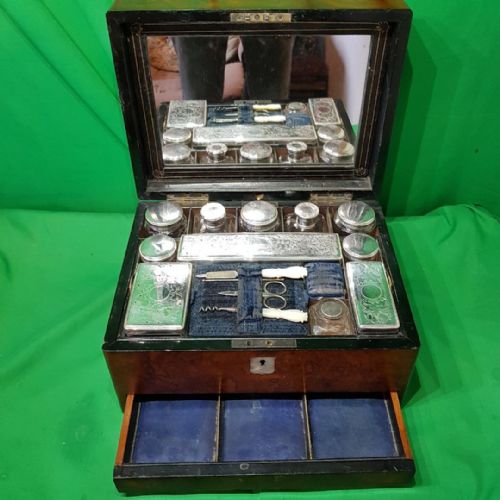
Victorian Walnut Box
When you search for a victorian walnut box, you are looking at nineteenth-century craftsmanship designed to organise letters, store jewellery, or hold tea.

Victorian Walnut Box
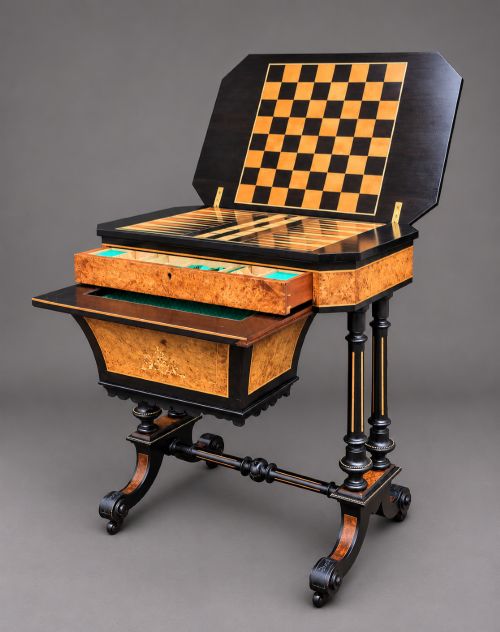
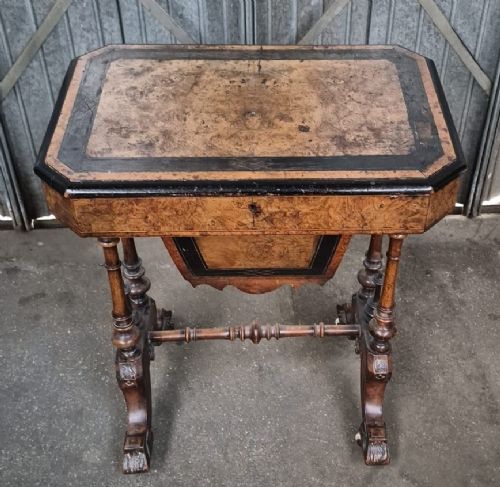
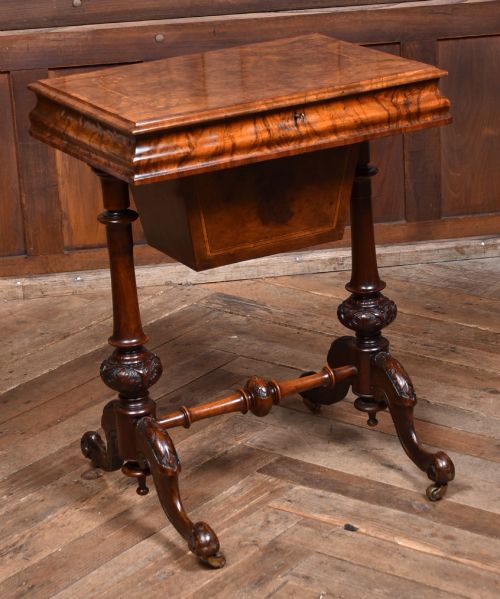
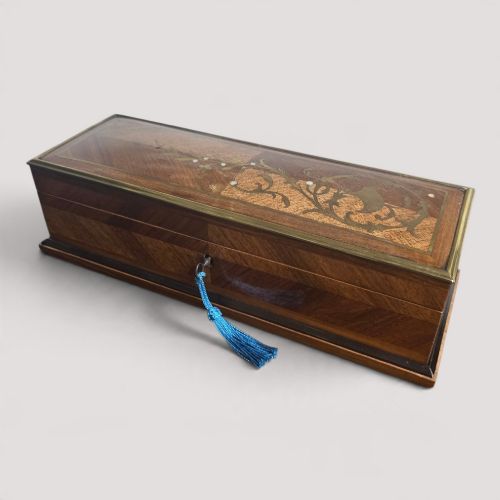
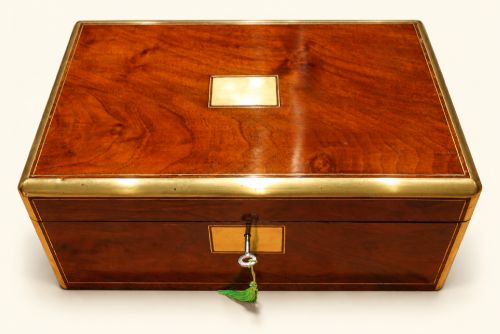
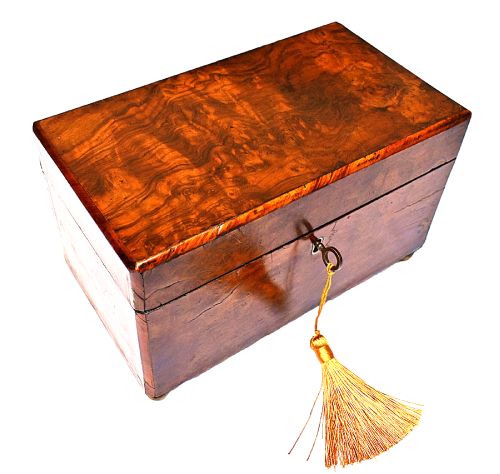
A victorian walnut box encompasses a wide array of nineteenth-century domestic containers, from small stationery cabinets and lap desks to tea caddies, sewing boxes, and larger caskets. The pieces span styles from plain Victorian to Gothic Revival, Black Forest carving, and Tunbridge Ware mosaic inlay, reflecting the diverse tastes of the period.
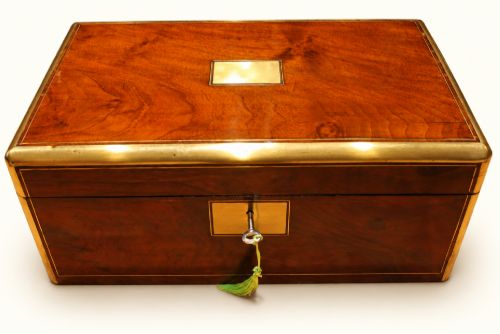
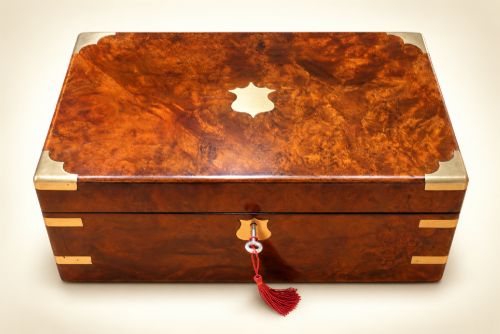
Burr walnut is the dominant timber seen across these objects, prized for its mottled grain and rich tone. Cabinet makers utilised the swirling patterns of the root wood on exterior surfaces, often framing the panels with contrasting stringing or heavier brass mounts.
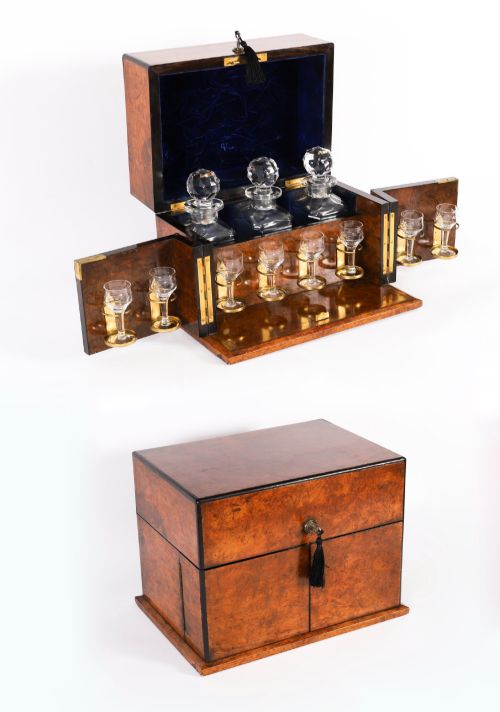
The interiors typically feature velvet, silk, or leather linings, fitted compartments for letters, pens, or cosmetics, and sometimes hidden drawers. Smaller examples serve as jewellery caskets or card boxes, while larger companions function as writing slopes or portable desks.
How They Were Made
Cabinet makers constructed the foundational carcase from solid pine or mahogany before applying thin veneers of figured walnut or burr walnut to the exterior surfaces. This technique allowed workshops to display dramatic, symmetrical grain patterns across lids and front panels without risking the structural movement inherent in solid timber.
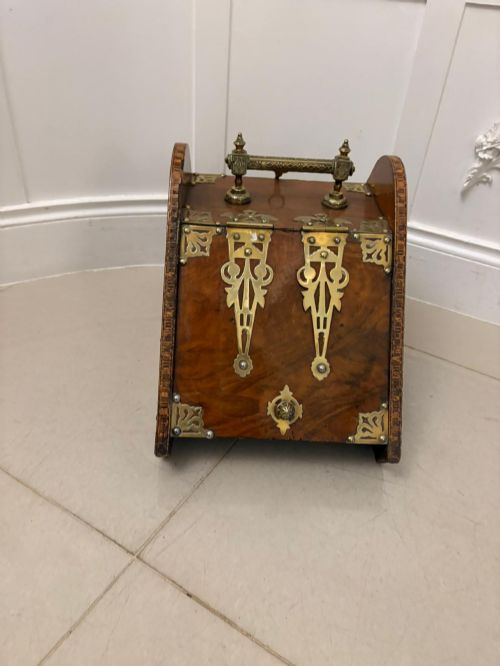
Decoration relied heavily on brass binding, mother-of-pearl inlay, and parquetry geometric patterns, alongside intricate wood carving found in Black Forest and Gothic Revival pieces. Tunbridge Ware examples incorporate thousands of tiny wood blocks assembled into pictorial mosaics, while brass or ormolu mounts provide structural reinforcement and decorative contrast.
Victorian Walnut Box Retail Price Guide 2026
Typical asking prices for victorian walnut box among the pieces listed under this phrase on Sellingantiques today, from the lower quarter to the upper quarter. They describe what is for sale here now, not the wider market.
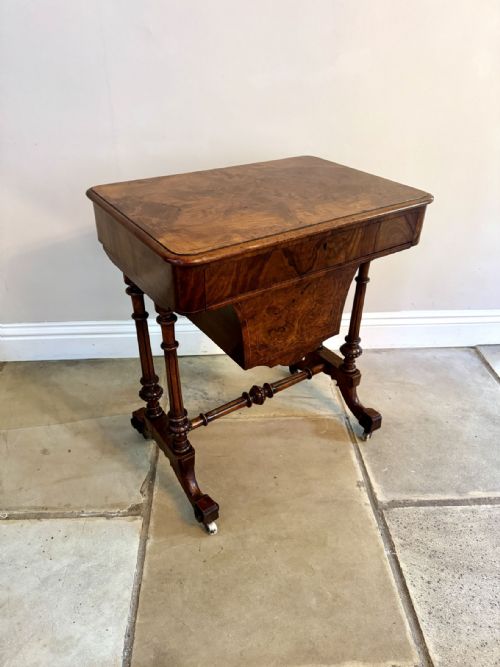
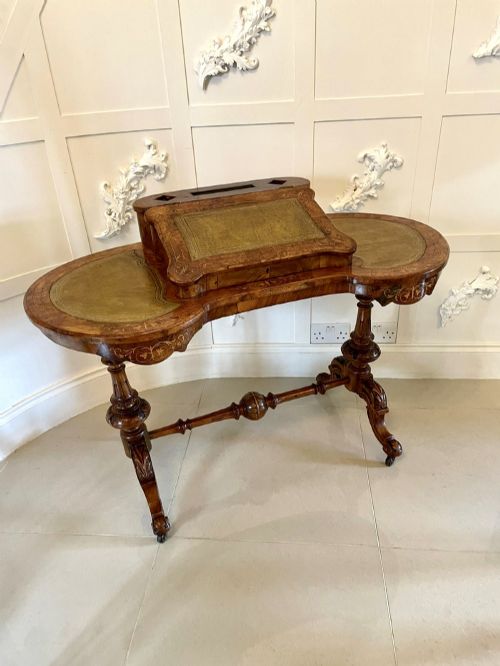
Desk accessories and work tables dominate the functional forms, spanning the Victorian period alongside Swiss musical movements.
What Varies in Quality
Quality rests primarily on the selection and matching of the burr walnut veneer, where symmetrical grain alignment across a lid indicates superior craftsmanship. Dense, lively grain patterns with deep figuring command greater attention than flat, plain walnut boards.
The complexity of the interior fittings and the precision of the joinery further distinguish the pieces. Fitted velvet or leather compartments, secret drawers, and substantial brass hardware - such as flush handles and Bramah or Chubb locks - elevate an object from standard utility work to high-end salon furniture.
Henry Hollamby·Edmund Nye·Samson Mordan·Leuchars of London
The Victorian Walnut Box Glossary
- Burr Walnut
- A timber harvested from the gnarled growth on walnut trees, yielding highly decorative swirling grain patterns. It was the favoured veneer for luxury nineteenth-century boxes and writing slopes.
- Tunbridge Ware
- A form of mosaic woodwork originating in Kent, featuring tiny polygonal wooden tiles arranged to form geometric or pictorial motifs. These geometric designs decorate the lids of specialty tea caddies and stationery cabinets.
- Writing Slope
- A portable desk featuring a hinged, sloping lid that opens to reveal a velvet-lined writing surface and compartments for ink and nibs. Many incorporate hidden spring-released drawers.
- Stationery Box
- A desktop cabinet designed to hold writing paper and envelopes upright in tiered slots, often featuring a sloping or domed lid. They frequently appear alongside matching inkstands.
- Parquetry
- A geometric mosaic of wood pieces used for surface decoration on boxes and small tables. Makers combined contrasting timbers to create three-dimensional cube illusions or simple borders.
Victorian Walnut Box: Frequently Asked Questions
What is the difference between a tea caddy and a jewellery box?
Tea caddies are internal lidded containers designed to keep dry leaves fresh, often featuring lead foil linings or multiple compartments for different blends.
Jewellery boxes prioritize velvet or satin-lined trays, ring rolls, and mirrored lids to safely store personal ornaments.
How do I care for a burr walnut box?
Keep wooden surfaces away from direct sunlight and household heat sources to prevent the walnut veneer from drying and lifting.
Apply a light microcrystalline wax periodically and buff gently with a soft cloth to maintain the polish.
Why do some boxes have brass banding?
Brass corners and straps provided structural reinforcement for travelling trunks and campaign boxes destined for colonial service or carriage transport.
On stationary cabinets and writing slopes, the metal acts as a decorative border that frames the figured walnut grain.
What is Tunbridge Ware inlay?
Tunbridge Ware is a specialised form of mosaic woodwork where thousands of tiny dyed wood strips are bundled together and sliced to create pictorial tiles.
Craftsmen applied these geometric or floral panels directly onto the lids of correspondence boxes and work tables.