






Gothic Revival Box
A gothic revival box brings architectural ambition to a desk or shelf, housing letters, papers and keepsakes with mediaeval weight.

Gothic Revival Box
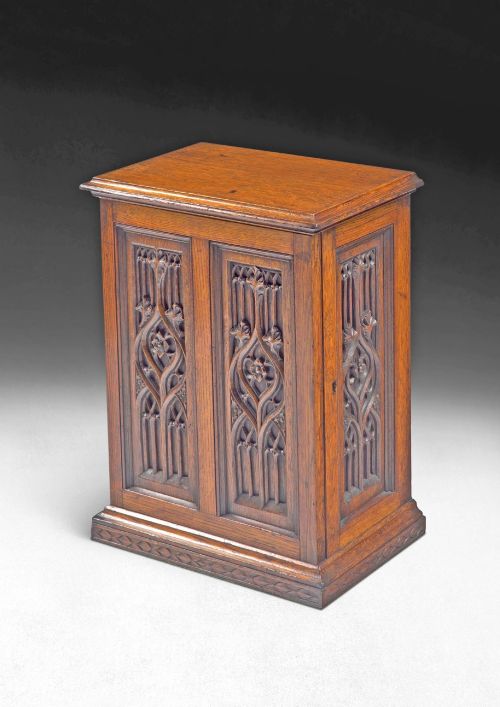
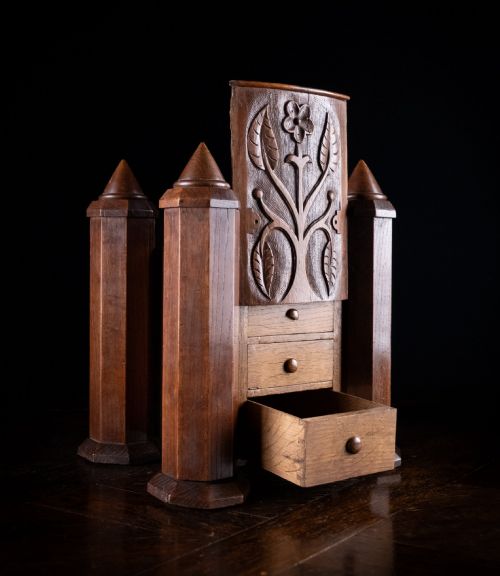
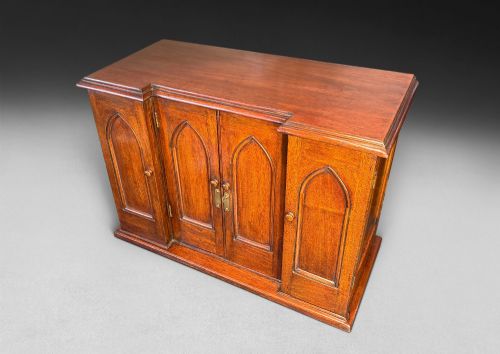
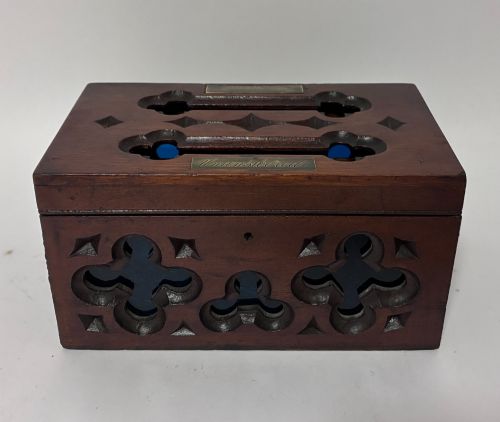
A gothic revival box is a container built to hold stationery, letters, tea, or valuables, taking its architectural cues from mediaeval pointed arches, tracery and ironwork. When you search for this phrase, you meet items principally from the Victorian period, though Edwardian and Arts and Crafts examples also appear.
The stationery box or correspondence box dominates the selections, often fitted with sloping lids or dome tops to mimic ecclesiastical furniture. Alongside these desk accessories, you find smaller tea caddies, sewing cases, glove boxes and occasional larger coffers.
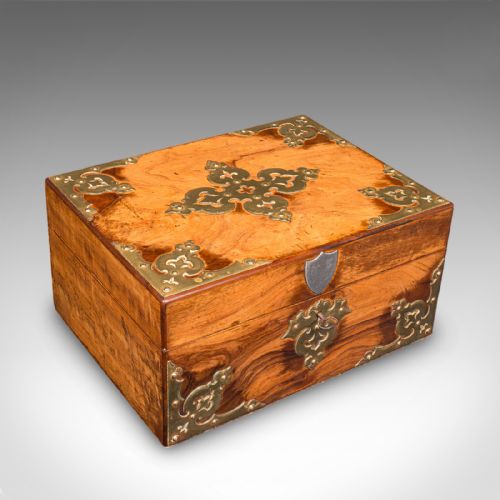
The origins span English workshops, Scottish makers, and continental European metalwork. Oak and coromandel are the primary woods encountered, frequently augmented by heavy brass strapwork and mounts.
Materials and construction
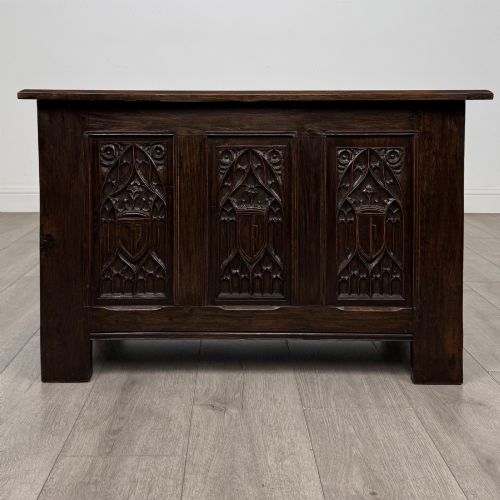
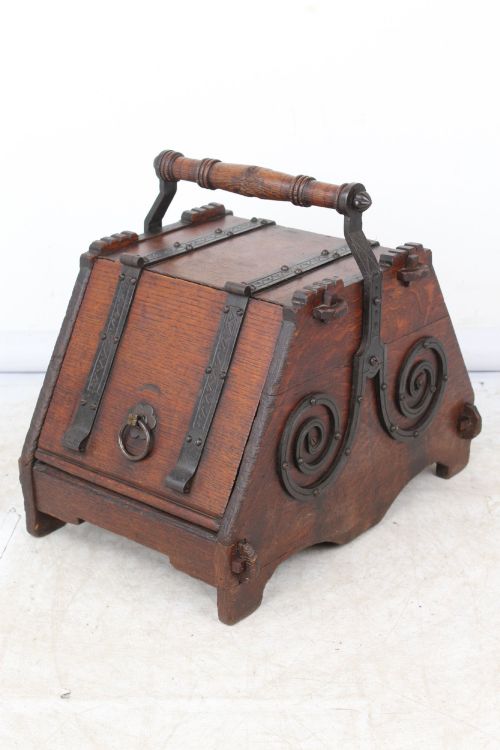
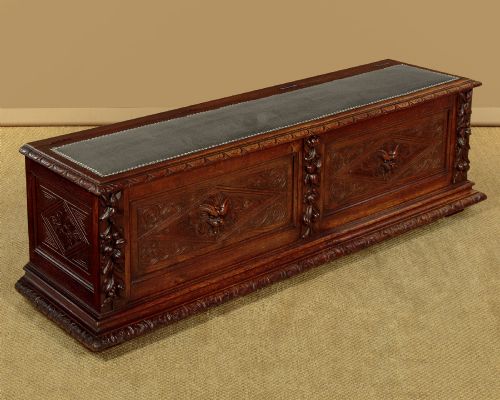
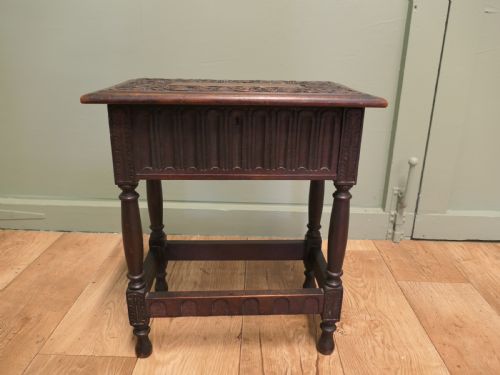
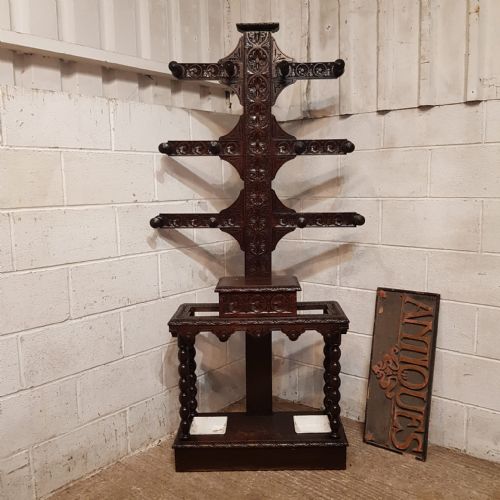
Makers relied heavily on solid oak for large coffers and architectural cabinets, employing deep chip-carving and linenfold panels to echo church woodwork. For desk accessories and letter boxes, dense exotic timbers like coromandel and burr walnut provided a dark, rich ground for polished metal fittings.
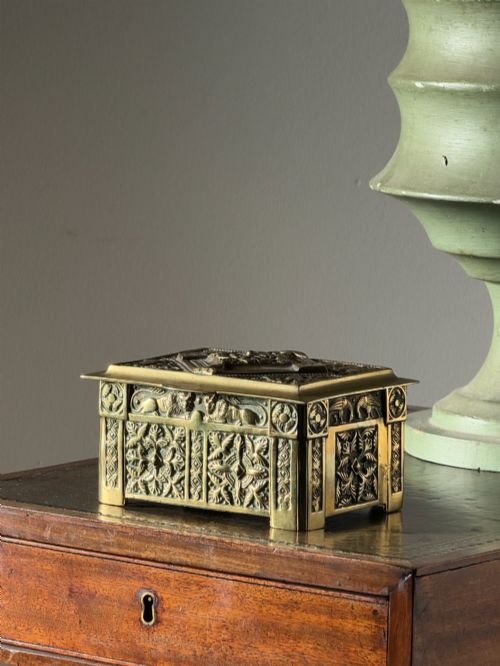
Brass formed the structural spine of many pieces, appearing as heavy strapwork, strap hinges, corner brackets and domed rivets that secured the timber joints. Iron and steel were utilised for drop handles, locks and church collection boxes, sometimes beaten and riveted by hand in the Arts and Crafts manner.
Gothic Revival Box Retail Price Guide 2026
Typical asking prices for gothic revival box among the pieces listed under this phrase on Sellingantiques today, from the lower quarter to the upper quarter. They describe what is for sale here now, not the wider market.
Listings demonstrate a strong preference for oak and coromandel timbers across Victorian desk accessories and stationary boxes.
Judgement of quality
Quality rests in the relationship between the timber and its metal mounts, where hand-beaten brass or heavy cast fittings integrate securely with the carcase rather than sitting as thin superficial plates. The crispness of the architectural carving reveals the maker's hand, distinguishing sharp tracery from soft, mechanical moulding.
Internal arrangement separates utilitarian containers from superior items, such as fitted stationery slots, velvet-lined compartments, or concealed secret drawers. Well-constructed boxes retain their original locks, functional keys and tight mitre joints that withstand changes in humidity.
Christopher Dresser·Jack Grimble·Briggs, 27 Piccadilly, London·Rodman and co of Belfast
The Gothic Revival Box Glossary
- Coromandel
- A dense, heavily figured Southeast Asian timber displaying dark brown stripes, frequently selected for luxury Victorian stationery boxes. It provides a striking contrast against bright brass strapwork.
- Strapwork
- Flat bands of metal, usually brass or bronze, fixed across the exterior of a box to reinforce corners and joints. This technique borrows directly from mediaeval ironwork on church doors and coffers.
- Teapoy
- A small lidded container or chest mounted on a central pillar or feet, designed to store loose tea leaves. In the nineteenth century, these often adopted gothic architectural proportions.
- Writing slope
- A portable desk featuring a hinged, angled lid that opens to reveal a velvet-lined writing surface and compartments for ink and pens. Many incorporate gothic brass mounts and coromandel veneers.
- Cofer
- A heavy wooden chest with a lid, historically used for storing valuables and documents. Smaller table-top versions imitate this ancient form.
Gothic Revival Box: Frequently Asked Questions
What is a gothic revival box?
A gothic revival box is a lidded container for desk storage, tea, or keepsakes that borrows decorative motifs from mediaeval architecture. These pieces utilise pointed arches, heavy hinges, and carved tracery.
They reflect the nineteenth-century fascination with the Middle Ages, translating cathedral details into domestic desk accessories and small chests.
How were these boxes used?
Victorian households used them to organise correspondence, store writing paper, hold gloves, or secure family documents. Sloped lids were specifically designed to accommodate letters and envelopes.
Some served as tea caddies or tobacco humidors, while larger coffer-style boxes held household accounts or textiles in a hallway or study.
How do I date a gothic revival box?
Dating relies on combining timber choices, hardware styles, and construction methods. The movement peaked during the Victorian era, particularly around eighteen-eighty, producing oak and coromandel boxes with heavy brass strapwork.
Later pieces from the early twentieth century often show Arts and Crafts influence, featuring beaten copper or riveted steel rather than cast brass mounts.
How do I care for coromandel wood?
Coromandel requires stable indoor humidity and protection from direct sunlight to prevent the dense timber from splitting or fading. Gentle dusting with a dry, soft cloth maintains the polished finish.
Avoid applying modern silicone polishes, as they build up a residue over the historic varnish and brass mounts.