


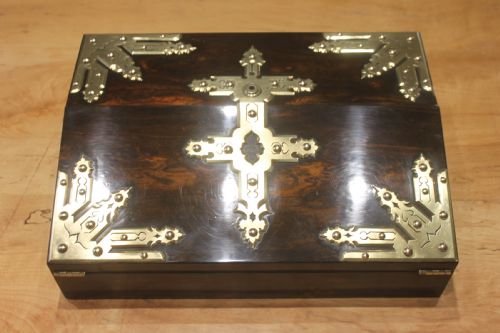


Victorian Coromandel Box
A victorian coromandel box brings rich timber grain and robust nineteenth-century craftsmanship to any desk or dressing table.

Victorian Coromandel Box
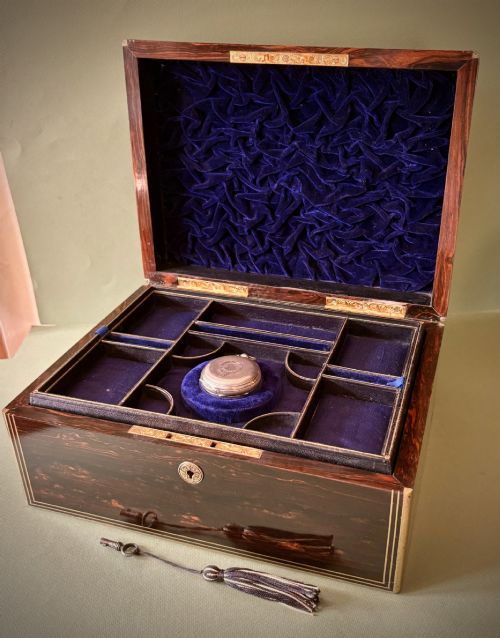
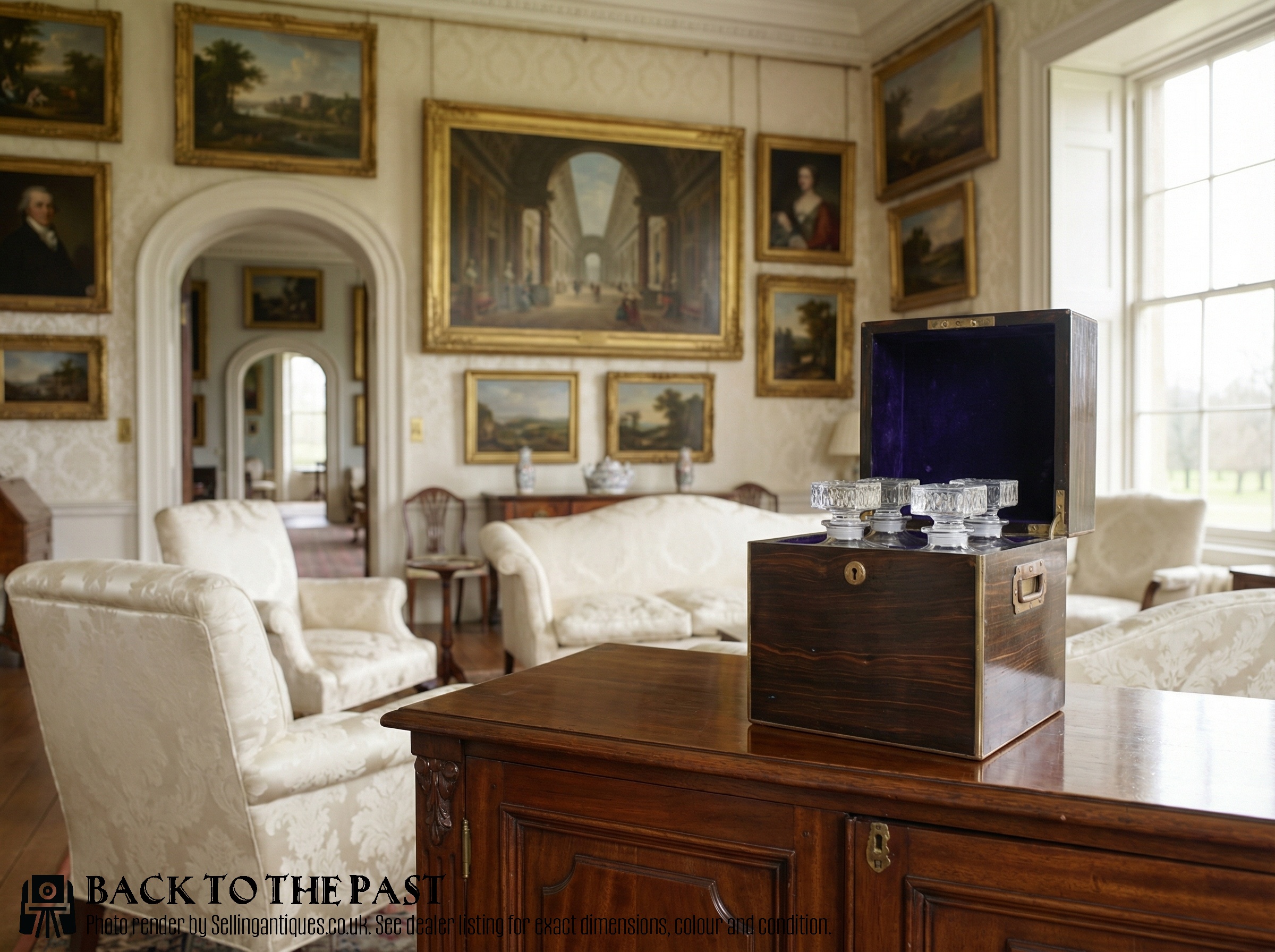
The most common versions met on this page are rectangular writing boxes and compartmented jewellery cases featuring hinged lids and secret compartments. Many examples survive with their original velvet linings, cut crystal glass bottles, and brass carrying handles intact.
How They Were Made
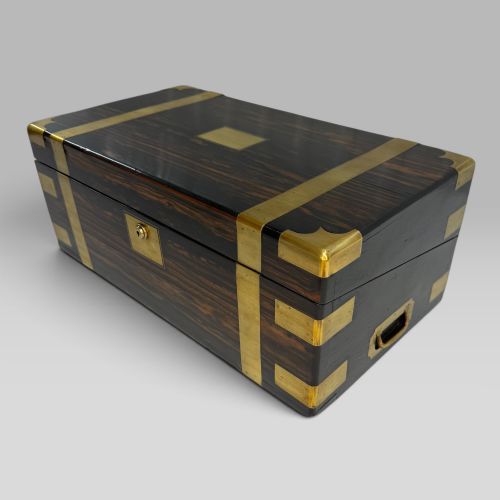
Makers constructed these pieces using dense coromandel wood veneered over a sturdy secondary timber foundation, often embellishing the exterior with heavy brass banding, corners, and escutcheons. Intricate inlay work utilising mother-of-pearl and metal stringing frequently decorates the surfaces.
Victorian Coromandel Box Retail Price Guide 2026
Typical asking prices for victorian coromandel box among the pieces listed under this phrase on Sellingantiques today, from the lower quarter to the upper quarter. They describe what is for sale here now, not the wider market.
Several boxes contain cunningly concealed secret drawers activated only by pressing hidden interior wooden springs.
What Varies In Quality
The distinction between standard commercial boxes and high-end examples lies in the complexity of the internal fittings and the depth of the coromandel grain. Superior pieces feature comprehensive matching sets of cut crystal bottles with silver mounts, elaborate secret drawer releases, and robust framing.
Execution of the parquetry and mother-of-pearl inlay also separates tiers of production, alongside the presence of signed maker plaques or retailer stamps inset into the woodwork or leather desk surfaces.
H Mitchell·Briggs·Asprey·Houghton and Gunn·Mechi and Bazin·Edwards·Lund of London·Parkins and Gotto·John Bagshaw of Liverpool
The Victorian Coromandel Box Glossary
- Coromandel
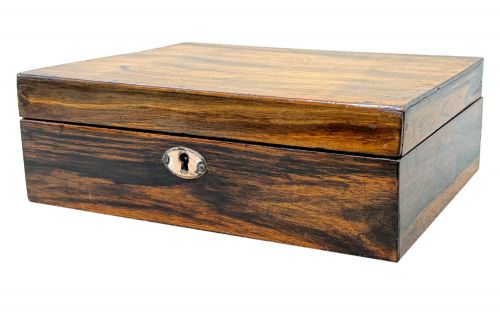
- A dense, heavily figured tropical hardwood featuring dark brown and black banding, highly prized for nineteenth-century luxury furniture and boxes. It provides the distinctive dark striated appearance characteristic of these objects.
- Writing Slope
- A desk accessory featuring a hinged, sloping lid that opens to reveal a slanted writing surface, pen trays, and inkwell recesses. The interior often conceals hidden drawers behind removable panels.
- Tantalus
- A locking beverage cabinet designed to secure decanters while still displaying their contents through a wooden and metal framework. The mechanism prevents the removal of the bottles until the retaining bar is unlocked with a key.
- Escutcheon
- A decorative and protective metal plate surrounding a keyhole, usually fashioned from brass. It strengthens the wood around the lock and adds a formal geometric accent to the exterior.
Victorian Coromandel Box: Frequently Asked Questions
What is a coromandel box used for?
These boxes served specific domestic and travel functions in the nineteenth century, ranging from holding stationery and writing instruments to storing jewellery and toiletries.
Larger variations accommodated decanters, playing cards, or sewing supplies for use in drawing rooms and gentlemen's studies.
Are keys usually included with these boxes?
Many surviving pieces retain their original working keys, though replacement keys are sometimes fitted by later collectors to operate the brass locks.
Working locks secure the folding lids and secret drawer mechanisms that protect the internal contents.
What styles of coromandel boxes exist?
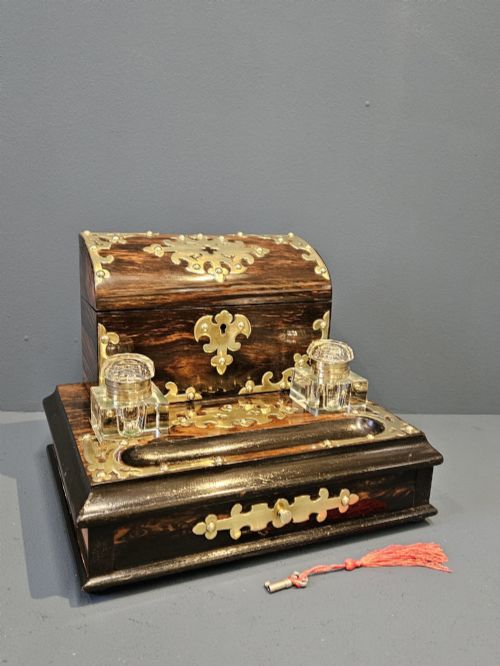
Examples range from early Victorian plain brass-banded designs to Gothic Revival arched stationery boxes and Aesthetic Movement creations.
Anglo-Indian pieces also appear, showcasing distinct regional carving traditions applied to the dense coromandel timber.