


Dark Wood Dressing Box
A dark wood dressing box organises personal valuables and aids morning preparation on a table or chest.
Dark Wood Dressing Box
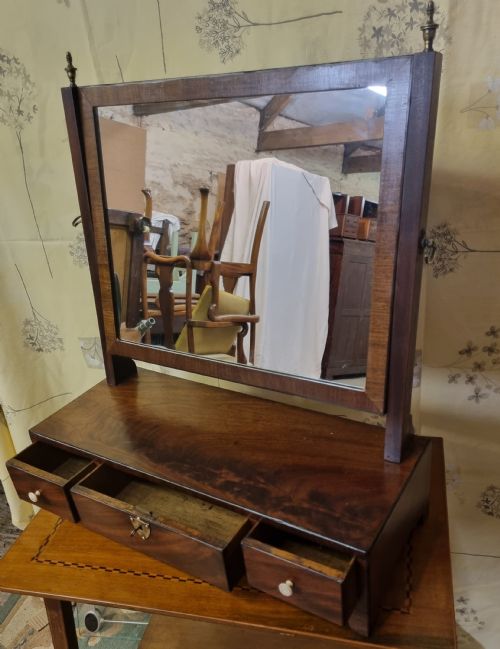
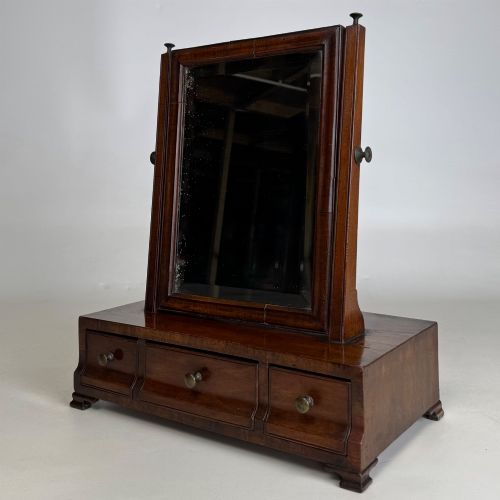
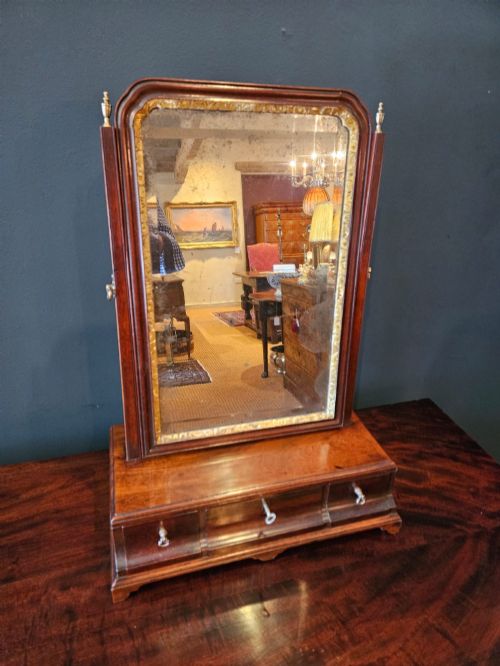
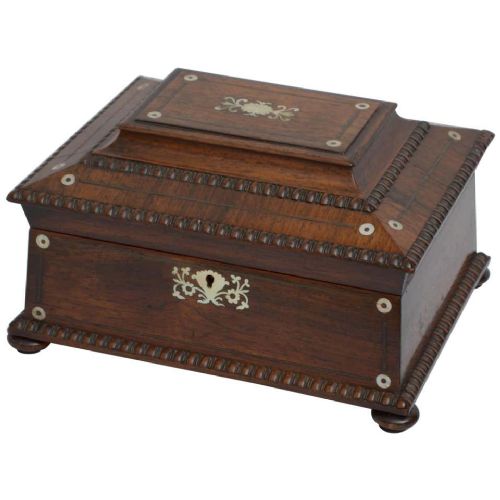
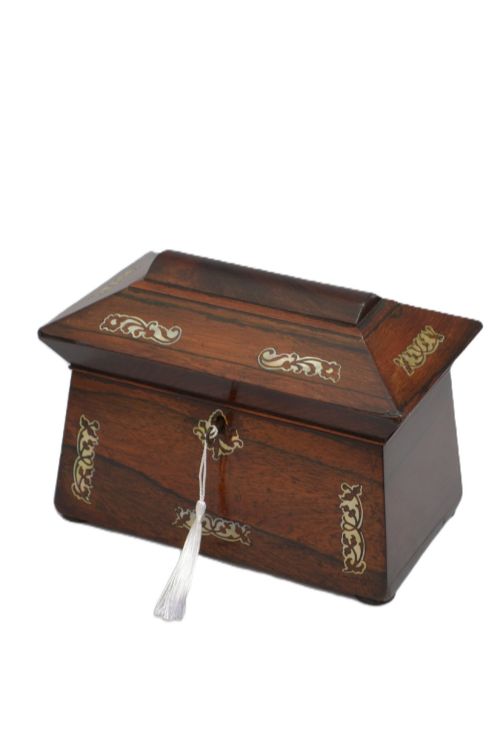
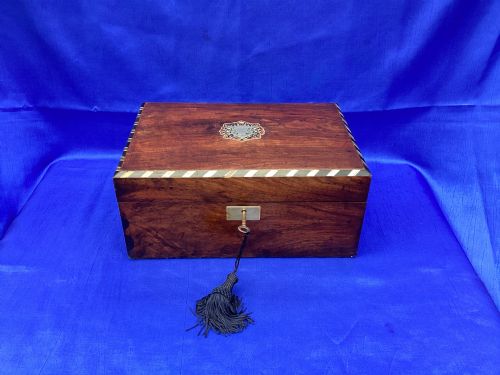
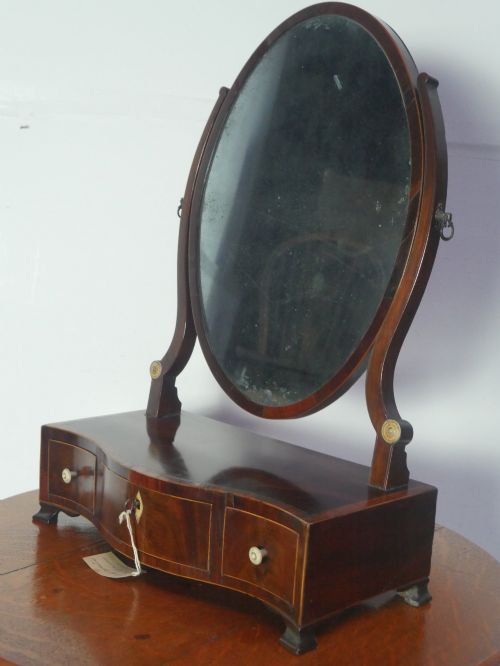
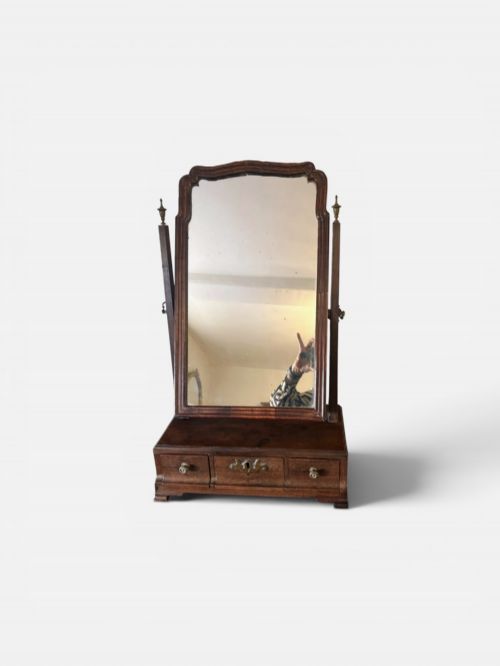
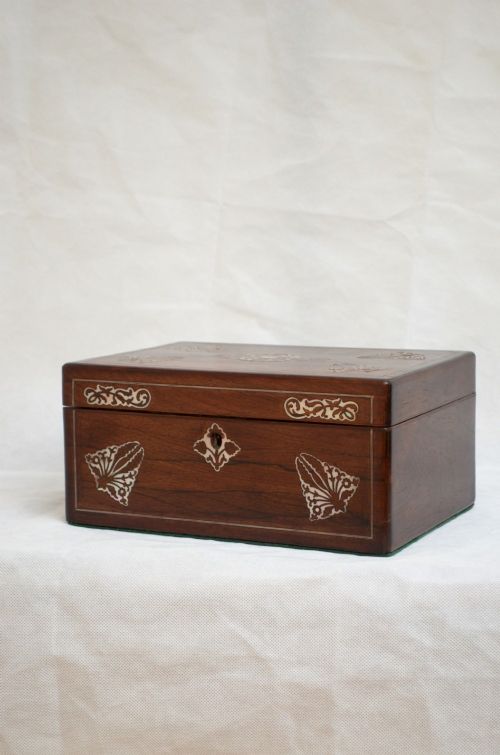
A dark wood dressing box encompasses both table mirrors with drawers and portable caskets intended for jewellery and cosmetics. Search results for a dark wood dressing box bring up Georgian and Victorian examples constructed from rich timbers like mahogany, rosewood, and coromandel. These items served daily grooming routines in domestic bedchambers and boudoirs.
The versions most frequently encountered on this page date from the Georgian and Victorian eras. Buyers often find mahogany toilet mirrors with swing frames alongside fitted rosewood or coromandel travelling vanity cases. These pieces reflect the cabinet-making standards of 18th- and 19th-century England.
Mirrors and caskets appear across specific stylistic revivals and periods such as Regency, William IV, and the Aesthetic Movement. Each variant demonstrates the changing domestic requirements for personal storage and grooming over two centuries.
Materials and construction
Cabinet-makers utilised dense dark timbers including mahogany, rosewood, and coromandel for the primary carcasses of these boxes and mirrors. These woods provided durable surfaces that accepted deep polishing and intricate joints.
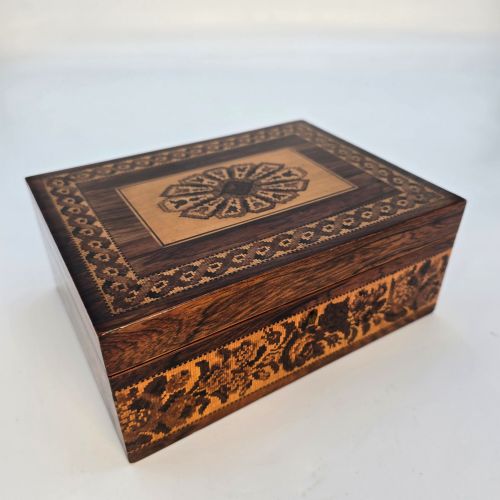
Decoration relied on contrasting details such as brass inlays, cut brass work, and mother-of-pearl accents set into the timber surface. Tunbridge Ware marquetry also appears, showing precise geometric wood mosaic techniques.
Internal compartments utilised fitted trays, glass bottles, and textile linings to organise personal items securely within travelling and table cases.
Indicators of quality
Quality rests upon the selection of timber grain and the precision of the joinery used in the frame or carcass. Superior pieces display harmonious figuring in the mahogany, rosewood, or coromandel.
The refinement of internal fittings, such as original glass scent bottles, working locks with keys, and neat silk or velvet linings, separates standard utility boxes from superior examples. Hand-cut brass inlay and crisp marquetry indicate skilled workshop production.
Edmund Nye·H Mitchell·John Franklin
The Dark Wood Dressing Box Glossary
- Toilet mirror
- A small adjustable looking glass mounted on a wooden frame with drawers beneath. These stood on dressing tables for personal grooming.
- Coromandel
- A dense, heavy tropical timber with dark brown and black figuring. It was favored for high-end Victorian luxury boxes.
- Marquetry
- The art of applying small pieces of wood veneer to a structure to form decorative patterns. Tunbridge Ware utilised this technique for microscopic geometric designs.
- Swing mirror
- A mirror plate pivoted within upright supports allowing the angle of reflection to change. It forms the upper section of a dressing table mirror.
Dark Wood Dressing Box: Frequently Asked Questions
How do I date a dark wood dressing box?
Dating relies on timber choice, construction methods, and stylistic cues present in the brasswork or feet. Georgian pieces often feature simpler mahogany frames, whilst Victorian examples frequently employ coromandel and mother-of-pearl.
Secondary indicators include drawer dovetails and lock mechanisms. Examining these structural elements reveals the manufacturing period.
Were these boxes used for travel?
Many fitted boxes served as travelling vanity cases for wealthy owners on journeys. They housed glass bottles and brushes securely in dedicated compartments.
Table mirrors remained stationary in the bedchamber for daily use. Portable caskets included locks to protect valuables during transit.
What is coromandel wood?
Coromandel is an exotic hardwood resembling calamander, known for dark streaks against a rich brown background. Cabinet-makers used it extensively on luxury Victorian cases.
Its density made it suitable for decorative inlays and robust box construction. Pieces utilising this timber represent high-status production.
How should I clean the wood surface?
Maintenance requires gentle dusting with a dry, soft cloth to protect the polished finish. Avoid modern chemical polishes that can damage old timber.
Applying microcrystalline wax occasionally helps preserve the dry sheen of antique mahogany and rosewood. Care must be taken around brass inlays and fabric linings.