


Victorian Travelling Dressing Case
A victorian travelling dressing case gathers the portable luxuries of the nineteenth century into one compact, fitted box.
Victorian Travelling Dressing Case
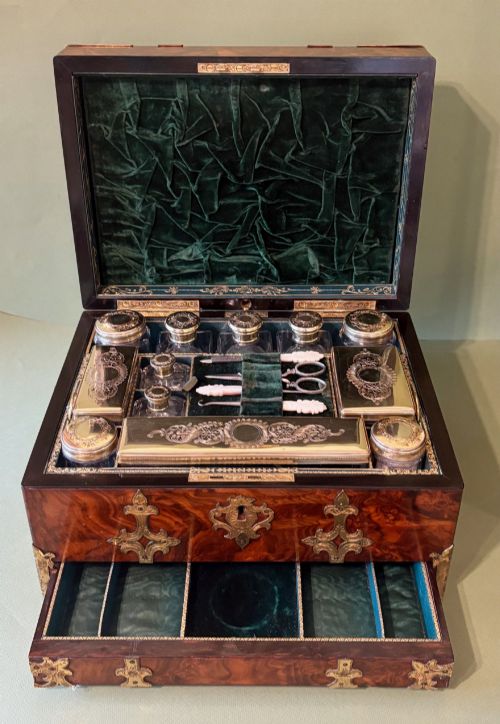
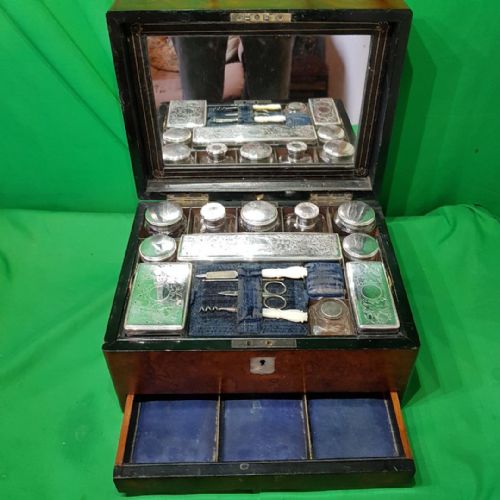
A victorian travelling dressing case is a fitted box designed to hold grooming implements, scent bottles, and jewellery during travel. These pieces emerge primarily from the Victorian and Edwardian periods, spanning the nineteenth and early twentieth centuries.
Most examples take the form of dressing boxes, vanity cases, and jewellery boxes equipped with internal compartments and trays. Some combine writing slopes or sewing provisions alongside spaces for cosmetics and personal items.
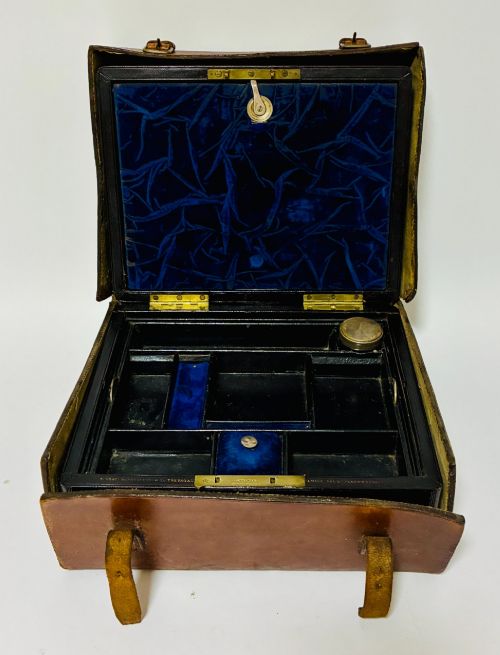
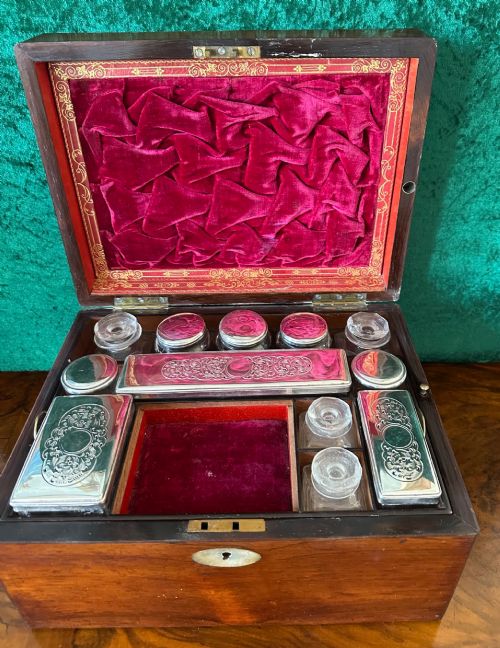
Origins include English workshops as well as Chinese export pieces, utilising rich woods and protective outer leather cases. Buyers frequently encounter fitted interiors lined with velvet and organised for specific glass and silver containers.
What varies in quality
The distinction between standard boxes and exceptional examples rests in the completeness of the original fittings and the precision of the internal joinery. Boxes retaining their matching sets of cut glass bottles, sterling silver lids, and manicure tools command greater attention from collectors.
Timber selection and the complexity of the hidden mechanisms further define the hierarchy of these pieces. Elaborate coromandel or burr walnut veneers paired with robust brass hardware and intact velvet linings represent the superior end of the range.
Listings feature woods including coromandel, burr walnut, and rosewood alongside leather and brass.
F. West·Jane Brownett·Alexander Jones·Asprey
The Victorian Travelling Dressing Case Glossary
- Coromandel wood
- A dense, heavily figured timber from Asia featuring dark brown and black striations used for luxury nineteenth-century boxes. It provides a rich, dark contrast against polished brass mounts.
- Silver-gilt
- Sterling silver that has been coated with a thin layer of gold on its surface. This treatment protects the metal from tarnishing inside moist travelling environments.
- Dressing box
- A portable cabinet fitted with compartments, mirrors, and receptacles for personal grooming items. These boxes served travellers on long journeys by coach or rail.
- Campaign case
- A piece of luggage or furniture designed for easy transport and military or field use. They often incorporate recessed handles and reinforced brass corners.
- Writing slope
- A hinged desk box that opens to reveal an angled writing surface and storage for paper and ink. Certain travelling boxes integrated this feature alongside vanity compartments.
Victorian Travelling Dressing Case: Frequently Asked Questions
How were these boxes used?
Owners used these cases to maintain personal grooming standards while staying away from home. They packed them with cosmetics, perfumes, brushes, and jewellery.
The fitted trays lifted out to reveal deeper storage spaces beneath. Many examples also served as dressing table organisers when stationary at a residence.
What materials did makers use?
Makers utilised dense hardwoods including burr walnut, rosewood, and coromandel for the exterior carcase. Brass banding and corner pieces added structural protection against the bumps of travel.
Interiors featured plush velvet, leather, and silk to cushion fragile items. Glass, sterling silver, and silver-gilt formed the materials for the internal bottles and implements.
How do I care for the wood and velvet?
Keep these boxes away from direct sunlight and extreme humidity to protect the delicate wood veneers and leather. Gentle dusting maintains the surface without harming historical finishes.
Avoid using modern liquid polishes on aged timber or velvet linings. Professional conservation methods ensure the internal fabrics and mechanisms remain intact.