



19th Century Vanity Case
A 19th century vanity case provides a fitted, portable interior for travelling cosmetics and personal effects, prized for craftsmanship in exotic woods and precious metals.
19th Century Vanity Case
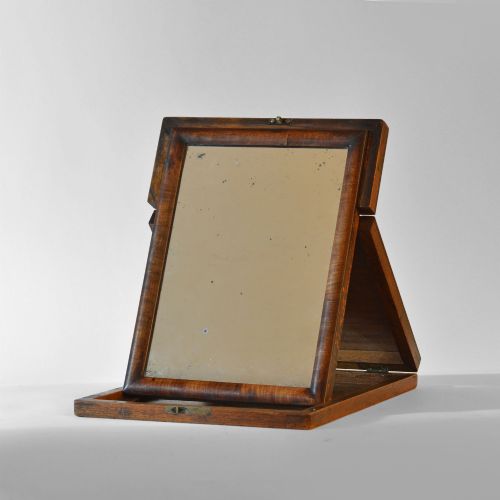
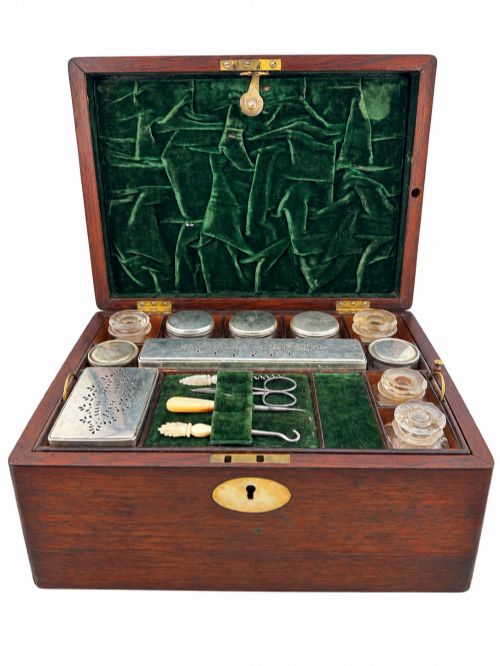
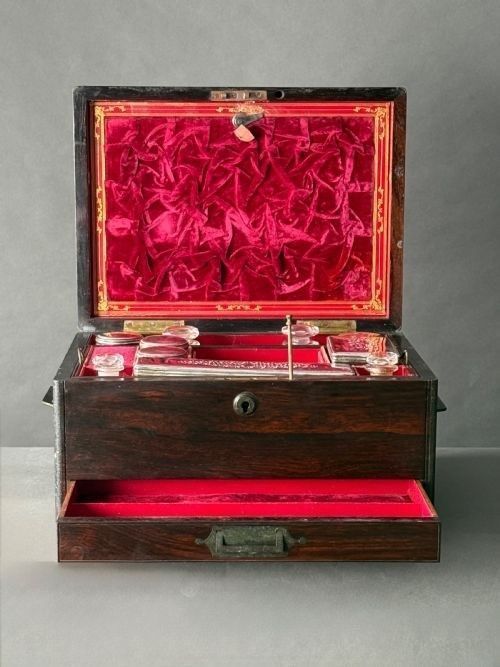
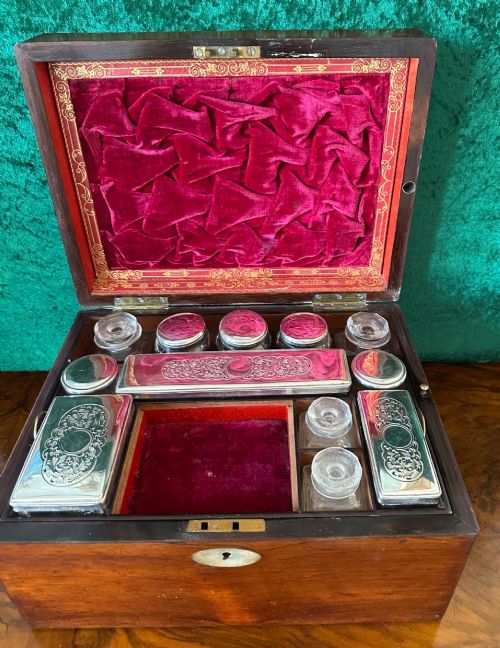
A 19th century vanity case encompasses portable dressing boxes, travelling sets and jewellery caskets designed for personal grooming during travel. These pieces accommodate fitted interiors with glass bottles, silver elements, mirrors and dedicated compartments.
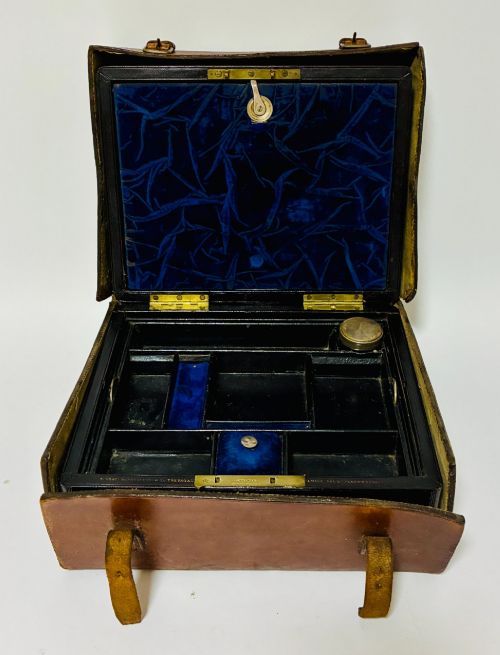
Victorian and Georgian examples dominate the selection, spanning rosewood, coromandel, burr walnut and leather. Makers ranged from renowned retailers to specialist trunk makers, producing both ladies and gentlemen's travelling boxes.
Forms include brass-bound campaign pieces, French inlaid boxes, and combination writing slopes or sewing workboxes. The most frequently encountered pieces utilise rich tropical hardwoods combined with velvet lining and original glass fittings.
What Varies in Quality
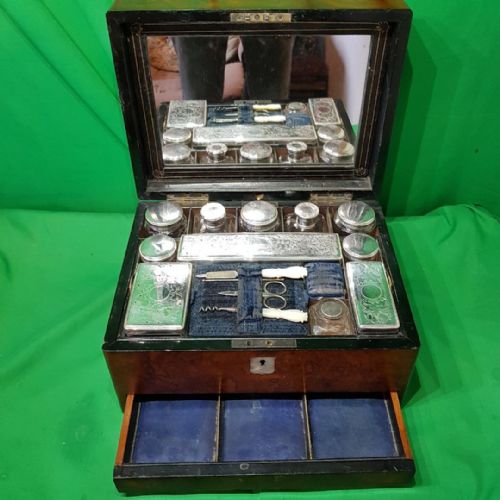
Quality rests upon the selection of timber veneers, the precision of brass inlay and the integrity of internal fittings. Superior boxes retain their original cut glass bottles, silver-gilt tops, fitted trays and working keys rather than replacement components.
Maker provenance elevates a piece significantly, evidenced by signatures from makers such as Asprey, F. West, H Mitchell, Edwards or Drew & Sons. The complexity of the interior mechanism, such as swing-out compartments or secret drawers, distinguishes standard production from high-grade commissions.
19th Century Vanity Case Retail Price Guide 2026
Typical asking prices for 19th century vanity case among the pieces listed under this phrase on Sellingantiques today, from the lower quarter to the upper quarter. They describe what is for sale here now, not the wider market.
Pieces on this page span the Georgian, Regency, and Victorian eras, including French campaign and Qing dynasty items.
F. West·H Mitchell·Asprey·Drew & Sons·Edwards
The 19th Century Vanity Case Glossary
- Coromandel wood
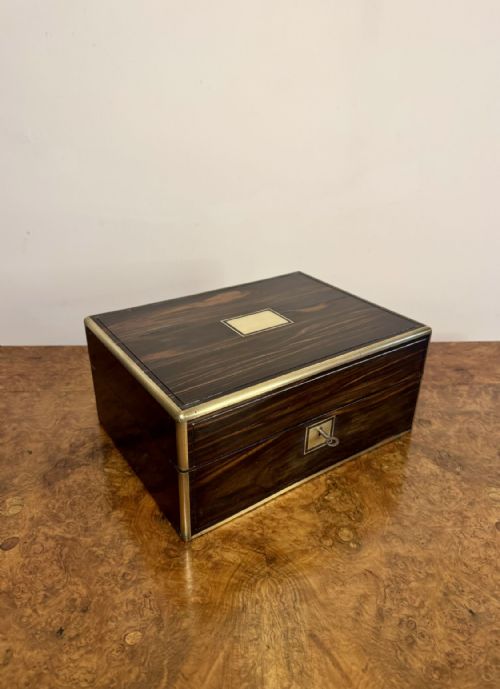
- A dense, heavy timber from Asia featuring dark brown grain with striking black stripes, highly favoured for luxury Victorian boxes. It provides exceptional durability and a polished finish.
- Guilloche
- A decorative engraving technique producing precise, intricate geometric patterns upon metal surfaces such as silver-gilt boxes. It offers texture and visual depth beneath a translucent enamel or metal finish.
- Necessaire
- A small, fitted case or box containing essential toilet and sewing implements such as scissors, tweezers and scent flasks. These compact items often feature mother-of-pearl or gold fittings.
- Tantalus
- A locking beverage or scent bottle holder displaying the decanters while preventing removal without a key. This mechanism secures fragile glass containers during travel or household display.
19th Century Vanity Case: Frequently Asked Questions
What is inside a vanity case?
These boxes typically contain fitted tiers, velvet-lined compartments, removable trays and cut glass perfume bottles with silver or silver-gilt caps. Many include mirrors inset into the lid and secret drawers.
Some examples also incorporate compartments for writing equipment, sewing tools or jewellery storage alongside the primary dressing items.
How do I care for wood and leather?
Wood surfaces require periodic light waxing to preserve the grain and prevent the timber from drying out in heated rooms. Leather elements benefit from gentle conditioning to maintain flexibility without damaging historical patination.
Keep these boxes away from direct sunlight and extreme temperature fluctuations to protect internal fabric linings and wooden joints.
Were these boxes meant for travel?
These pieces were built for the journeys of wealthy Victorians and Georgians travelling by carriage, train or steamship. Robust outer shells of coromandel, oak or leather protected the fragile glass and silver contents inside.
Heavy brass banding and secure locks ensured the cases withstood the demands of long-distance transit while keeping personal items organised.
How can I tell the period?
Stylistic clues, lock mechanisms, timber choices and silver hallmarks help date individual boxes. Georgian pieces often feature simpler rosewood exteriors, whilst mid-to-late Victorian examples frequently utilise coromandel, burr walnut and elaborate brass inlay.
Silver hallmarks on internal bottles provide precise assay office dates, and maker stamps on locks or leather interiors confirm the production era.