


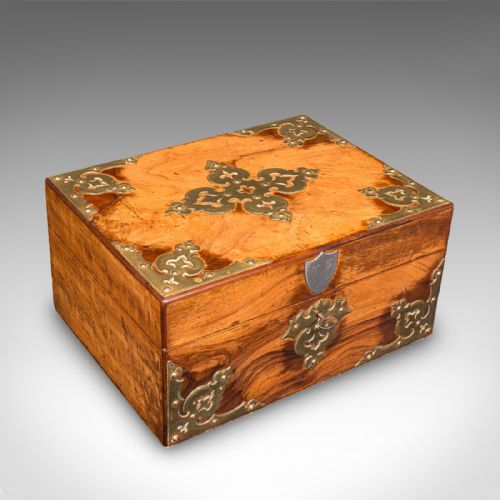


Walnut Jewellery Casket
A walnut jewellery casket holds small treasures safely, bringing rich wood grain and careful craftsmanship to a dressing table.
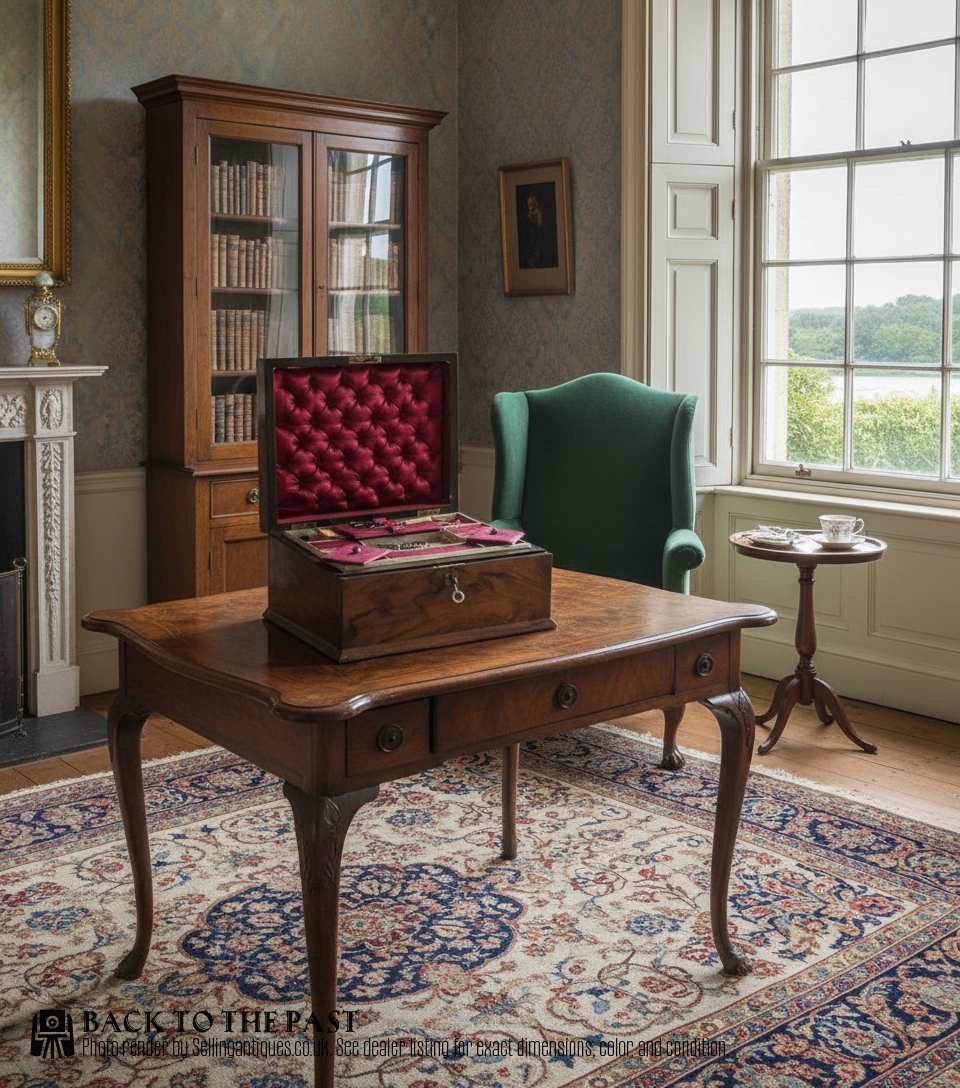
Walnut Jewellery Casket
A walnut jewellery casket is a small container designed to hold precious items, ranging from simple hinged boxes to elaborate multi-tiered cabinets. When searching this phrase, a buyer encounters many Victorian examples alongside pieces stretching back to the seventeenth and eighteenth centuries.
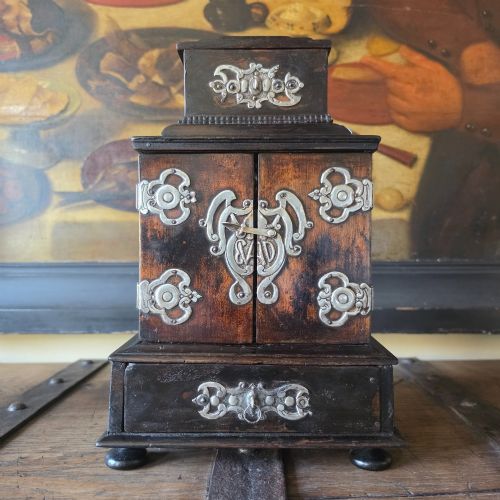
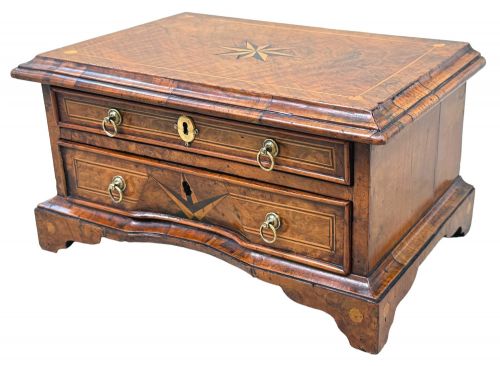
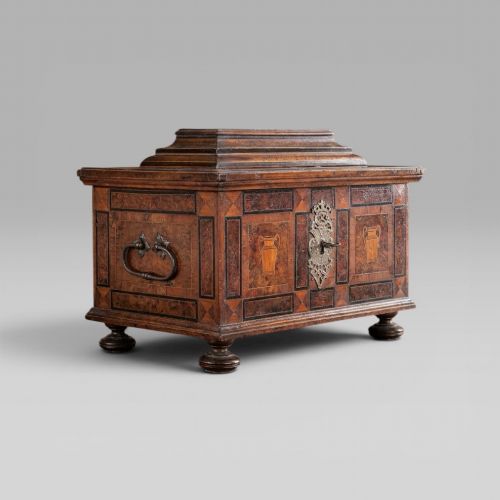
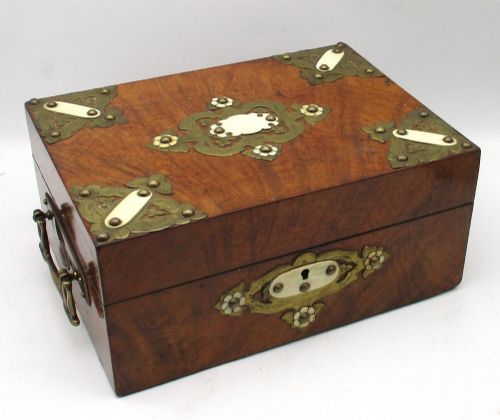
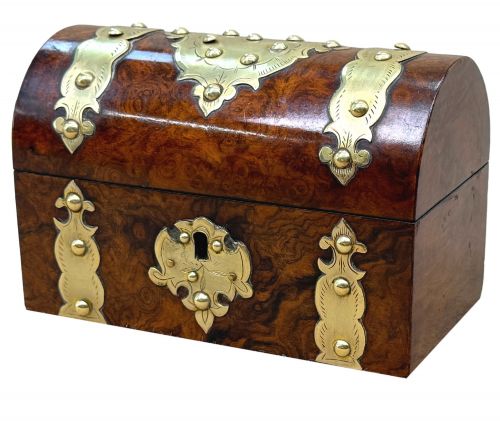
The most common version met on this page is the Victorian burr walnut box, often featuring fitted interiors, mirrors, and compartments for rings and trinkets. These containers also appear in forms such as stationary boxes, miniature chests of drawers, and domed caskets.
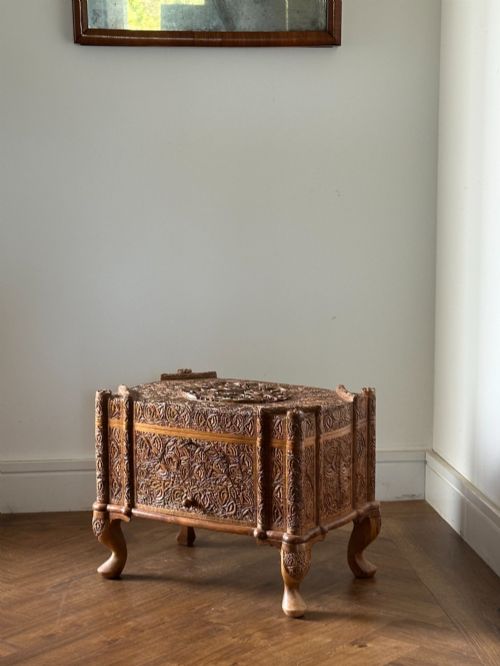
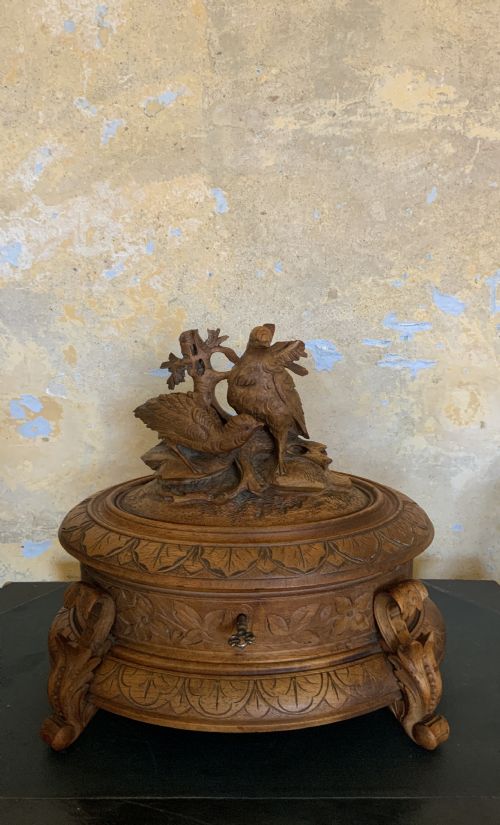
Origins vary widely across the selection, taking in English workshops, Scottish makers, continental European centres, and Anglo-Indian production. Styles span from Gothic Revival and Black Forest carving to Tunbridge Ware inlay and Renaissance revival.
How they were made
Cabinet makers utilised solid walnut and figured burr walnut veneers over secondary woods, laying the grain carefully to create striking visual patterns on the lids and panels. Brass mounting, hinges, and locks provided structural reinforcement and secure closure for valuable contents.
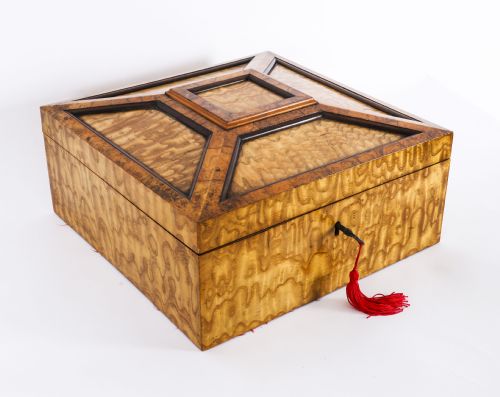
Many examples incorporate decorative techniques such as parquetry, marquetry, and Tunbridge Ware mosaic inlay using fruitwood, boxwood, and bone. Additional materials like mother-of-pearl, glass, and ebony frequently highlight key geometric or floral design elements.
Walnut Jewellery Casket Retail Price Guide 2026
Typical asking prices for walnut jewellery casket among the pieces listed under this phrase on Sellingantiques today, from the lower quarter to the upper quarter. They describe what is for sale here now, not the wider market.
Listings feature walnut, burr walnut, fruitwood, and boxwood combined with brass, bone, and mother-of-pearl across Georgian, Victorian, and earlier continental periods.
What varies in quality
The distinction between tiers rests upon the selection of timber and the precision of the joinery and decorative inlay. Highly figured burr walnut veneers matched symmetrically across a lid indicate superior material selection by the maker.
Internal fitting and hardware set apart finer examples, demonstrated by complete silk or velvet linings, working locks, bevelled glass doors, and substantial brass mounts rather than mass-produced stamped fittings.
Trussell Brighton·Parkins And Grotto·Aspreys
The Walnut Jewellery Casket Glossary
- Burr Walnut
- A distinctively figured wood grain taken from the warted growths on walnut trees. This pattern yields highly decorative swirls prized for cabinet fronts and box lids.
- Tunbridge Ware
- A type of wooden mosaic decoration produced in Kent. Makers glued tiny coloured wood prisms together to form intricate geometric or pictorial motifs.
- Parquetry
- A geometric mosaic of wood pieces used for surface decoration. Artisans arranged contrasting timbers like boxwood and fruitwood in repeating patterns.
- Marquetry
- The art of applying thin pieces of veneer to a structure to form decorative pictures or designs. Craftsmen utilised various woods, bone, and shell.
- Sarcophagus
- A box shape featuring a sloping lid that rises to a flat top, mimicking ancient stone tombs. This silhouette appeared frequently on nineteenth-century workboxes.
Walnut Jewellery Casket: Frequently Asked Questions
What is inside a typical walnut jewellery casket?
Most interiors feature lift-out trays, velvet or silk linings, and dedicated compartments for rings, brooches, and smaller accessories. Some Victorian versions include built-in mirrors and secret drawers.
Larger models occasionally incorporate stationery slots or compartments designated for sewing equipment and correspondence.
How do I tell a Victorian box from an earlier piece?
Victorian examples frequently display machine-sawn veneers, brass escutcheons, and elaborate fitted interiors designed for nineteenth-century dressing habits. Seventeenth and eighteenth-century pieces tend to show heavier solid construction with simpler, hand-cut dovetails.
Continental and English provincial workshops of the earlier periods favoured starker lines and architectural mouldings over the ostentatious burr grain patterns popular later.
Were these boxes only used for jewellery?
While many served to store precious gems and trinkets, makers also designed them as workboxes for sewing, games compendiums for cards, and stationary receptacles.
Interior layouts often dictate the original purpose, where pin cushions and thread spools indicate sewing while velvet slots reveal ring storage.
How do I care for antique walnut wood?
Keep the wood away from direct sunlight and radiators to prevent the burr walnut veneer from drying out and lifting. Dust gently with a dry cloth and avoid modern liquid polishes.
Applying a traditional beeswax sparingly helps nourish the old timber and maintain its natural lustre.