
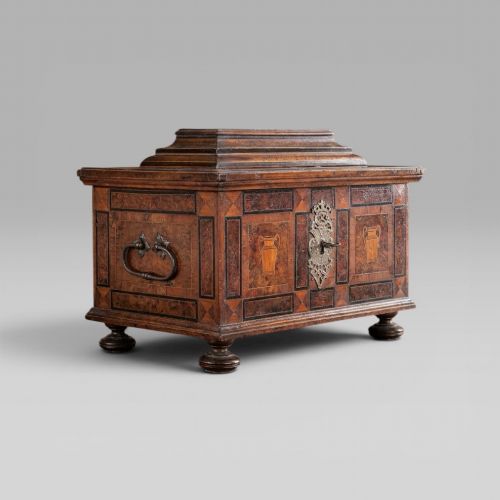
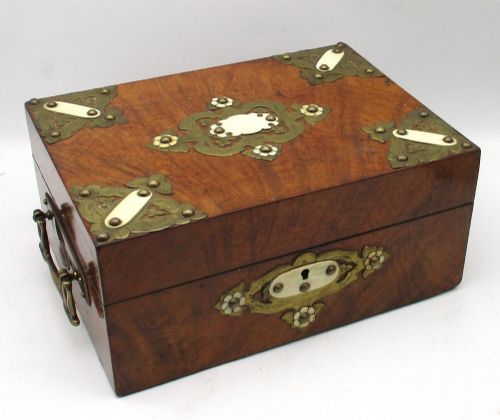
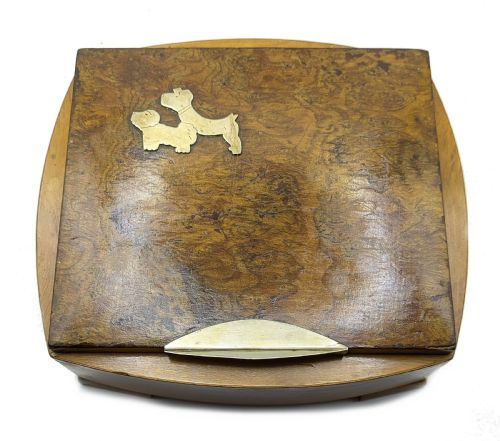
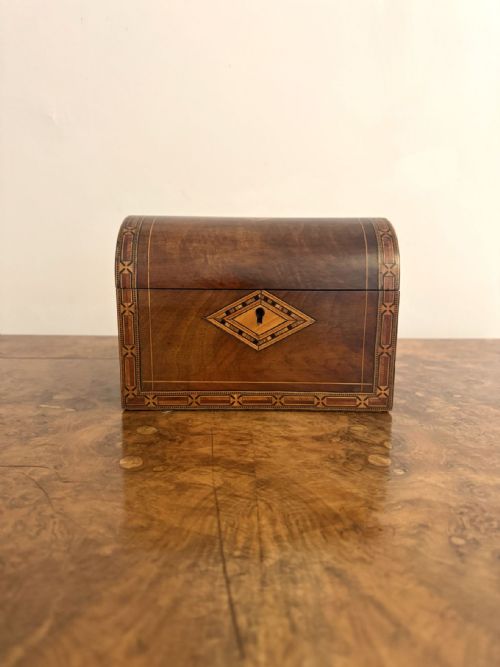


Inlaid Walnut Box
An inlaid walnut box brings rich grain and precise geometric detail to a desk or table, holding everything from letters to jewellery.
Inlaid Walnut Box
An inlaid walnut box encompasses a wide range of containers created to serve specific domestic functions across several centuries. The selections found here span utilitarian stationery boxes and tea caddies to elaborate writing slopes, sewing tables, and musical boxes.
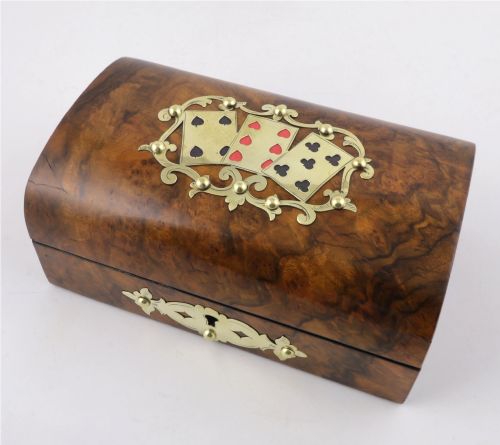
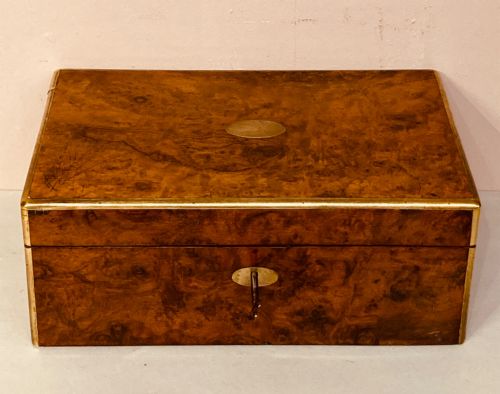
Victorian examples dominate the available pieces, frequently showcasing the characteristic mottled grain of burr walnut paired with contrasting geometric decoration. These items reflect the high value placed on ornamental desk accessories and personal storage during the nineteenth century.
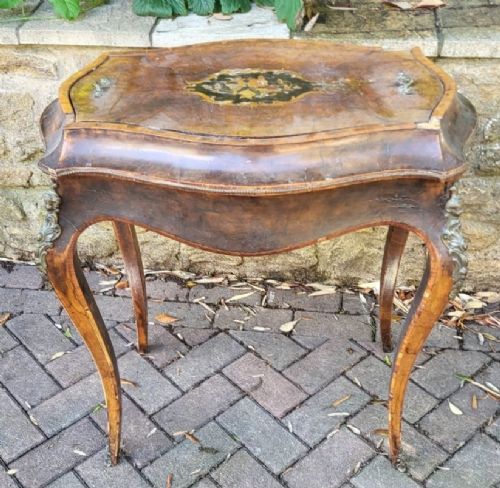
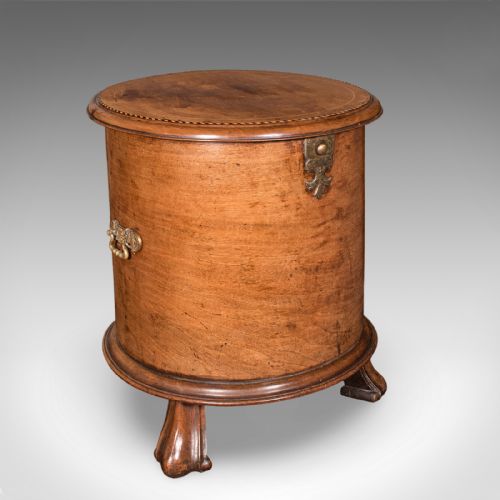
Beyond standard tabletop caskets, buyers encounter larger functional furniture pieces incorporating storage compartments, such as games tables, work tables, and cellarettes. The foundational material remains consistent across these forms, utilising the deep warm tones of walnut combined with various contrasting woods.
How they were made
Cabinet makers utilised solid walnut or applied thin layers of burr walnut veneer over secondary timbers to create highly figured decorative surfaces. This technique maximised the visual impact of complex wood grain patterns across flat lids and vertical panels.
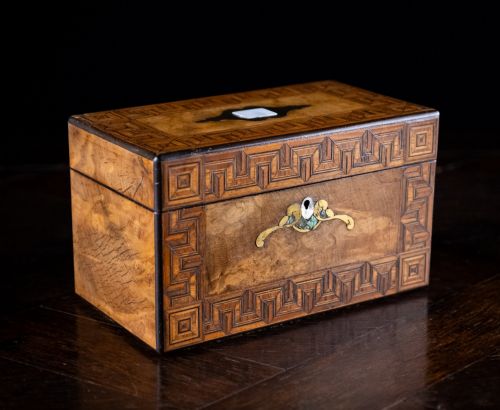
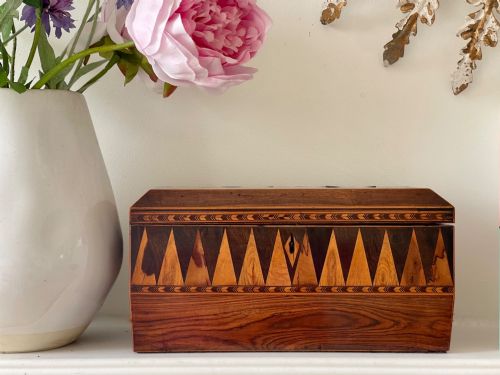
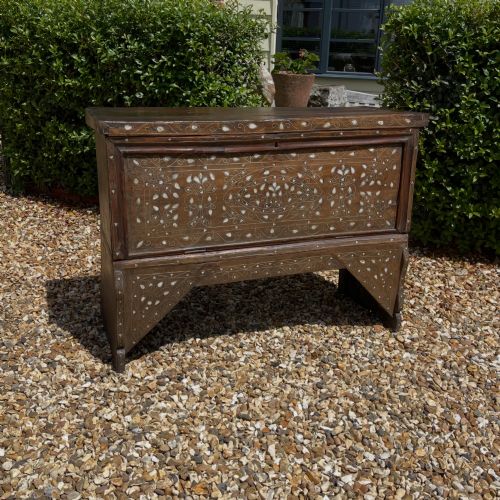
Geometric ornamentation relies on precision cutting of contrasting materials such as boxwood, satinwood, and mother-of-pearl, which are embedded directly into the timber base. Specialised regional techniques like Tunbridge ware integrate thousands of tiny tinted wood blocks to form intricate mosaic pictures.
Hardware elements including brass escutcheons, corner brackets, and lock mechanisms were laboriously fitted by hand into recessed channels. Many sophisticated nineteenth-century pieces integrate complex mechanical linkages that reveal secret drawers simultaneously with the opening of the lid.
Inlaid Walnut Box Retail Price Guide 2026
Typical asking prices for inlaid walnut box among the pieces listed under this phrase on Sellingantiques today, from the lower quarter to the upper quarter. They describe what is for sale here now, not the wider market.
Listings feature walnut boxes spanning the 17th Century to the 1930s, incorporating brass, mother-of-pearl, and boxwood.
What varies in quality
The sophistication of the internal fittings largely distinguishes standard containers from superior cabinet work. High-grade examples feature fully appointed removable trays, velvet or silk-lined compartments, and original working locks with matching keys.
The intricacy and precision of the surface decoration dictate the standing of an individual piece within the range. Meticulously aligned parquetry and sharply defined pictorial inlay demonstrate superior craftsmanship compared to simpler linear banding.
Henry Hollamby·Edmund Nye·Langdorff & Fils
The Inlaid Walnut Box Glossary
- Burr walnut
- A prized veneer taken from the gnarled growth or root of a walnut tree, yielding swirling, highly figured grain patterns. It provides a dramatic and decorative surface for luxury nineteenth-century boxes.
- Tunbridge ware
- A specialised form of woodworking originating from Kent, featuring mosaic decoration made from tiny blocks of naturally coloured woods. These geometric or pictorial motifs adorn the lids of many Victorian stationery boxes and tea caddies.
- Parquetry
- A geometric mosaic of wood pieces used for decorative floors and box lids. Makers arrange contrasting timbers like boxwood and ebony to create repeating diagonal or checkerboard patterns.
- Writing slope
- A portable slant-topped desk hinged to fold flat, revealing a fitted interior with compartments for inkwells and pens. Many Victorian walnut versions include secret drawers accessed by removing internal partitions.
Inlaid Walnut Box: Frequently Asked Questions
How do I date an inlaid walnut box?
Dating relies heavily on construction methods, hardware styles, and the specific type of inlay used across the piece. Earlier Georgian and Regency items often feature simpler cross-banding, whereas Victorian examples commonly display complex burr veneers and elaborate parquetry.
Internal fittings also provide chronological clues. Writing slopes and dressing boxes evolved more complex secret compartments and spring-loaded mechanisms as the nineteenth century progressed.
Were these boxes used for writing?
Many walnut boxes were specifically constructed as writing slopes with angled lids designed for correspondence. These interiors typically include dedicated spaces for inkwells, nibs, and stationery.
Other variants served entirely different domestic purposes, functioning as tea caddies, sewing boxes, or dedicated storage for jewellery and playing cards.
How should I clean the wood surface?
Maintenance requires gentle dusting with a soft, dry cloth to protect the delicate veneer and historical finish. Avoid modern aerosol polishes or moisture, which can damage old polish and lift inlaid elements.
Applying microcrystalline wax periodically helps nourish the walnut and preserve the lustre of the timber without building up heavy residues.
What is Tunbridge inlay?
Tunbridge inlay consists of intricate mosaic decoration assembled from thousands of tiny prisms of naturally coloured woods. Craftsmen glued these wooden rods together before slicing them across to produce identical patterned panels.
These pictorial or geometric panels were then embedded directly into the walnut lids of stationary boxes, tea caddies, and sewing chests.