

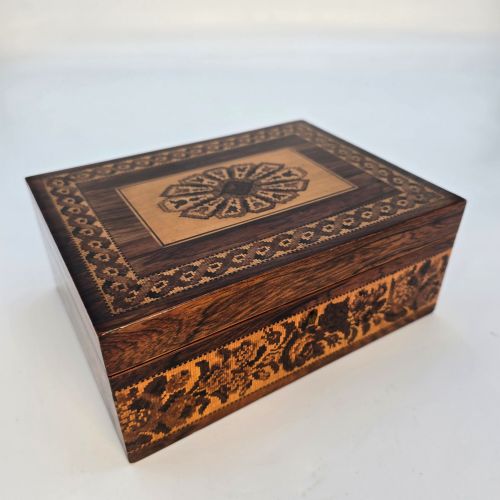

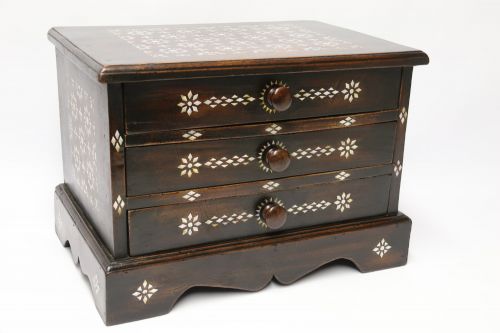

Inlaid Wooden Trinket Box
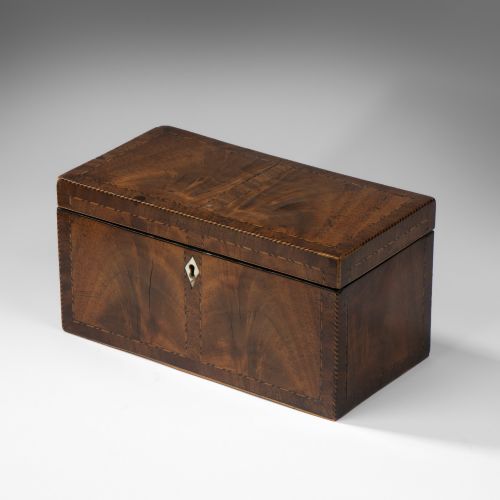
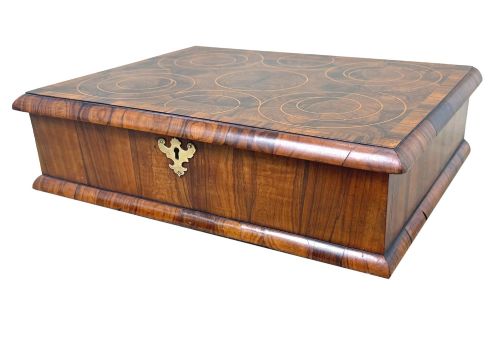
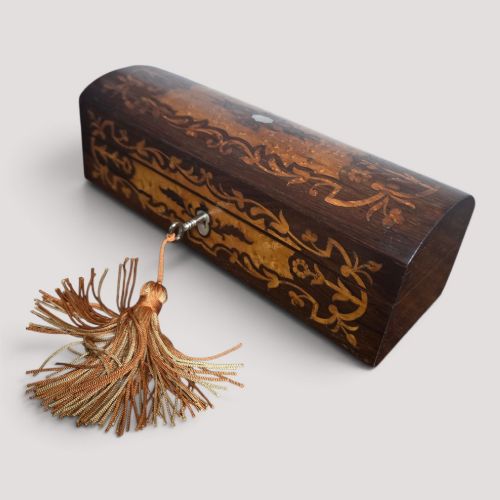
An inlaid wooden trinket box brings small treasures together on a dressing table, combining rich timber grains with delicate contrasting bands.
Inlaid Wooden Trinket Box
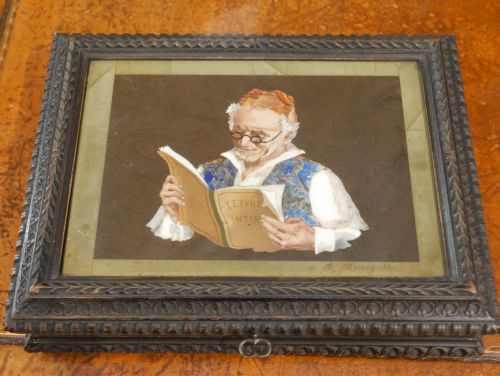
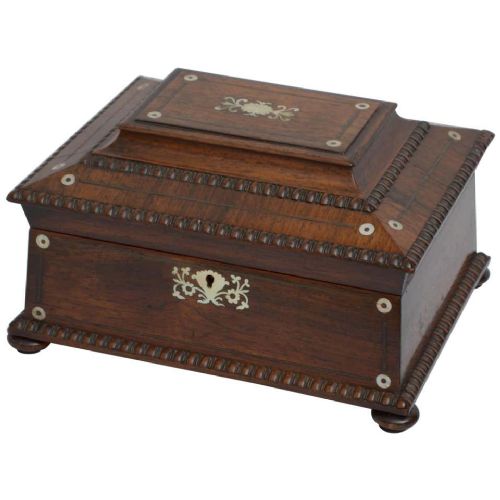
An inlaid wooden trinket box encompasses various small containers designed for personal items, appearing most frequently in Victorian and Regency variants across this selection.
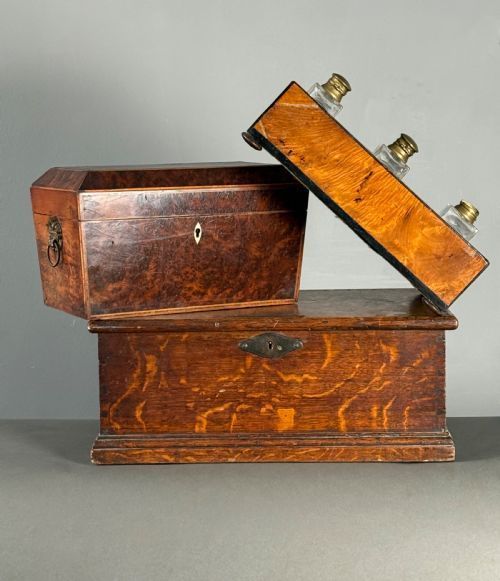
Makers shaped these pieces from native and exotic timbers like mahogany, rosewood, and walnut, often adapting larger forms such as tea caddies or dressing chests into smaller keepsakes.
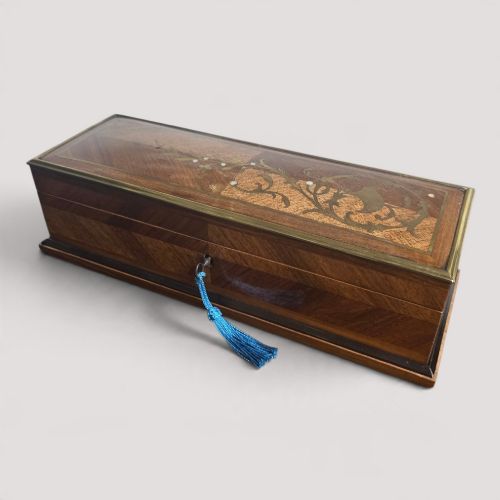
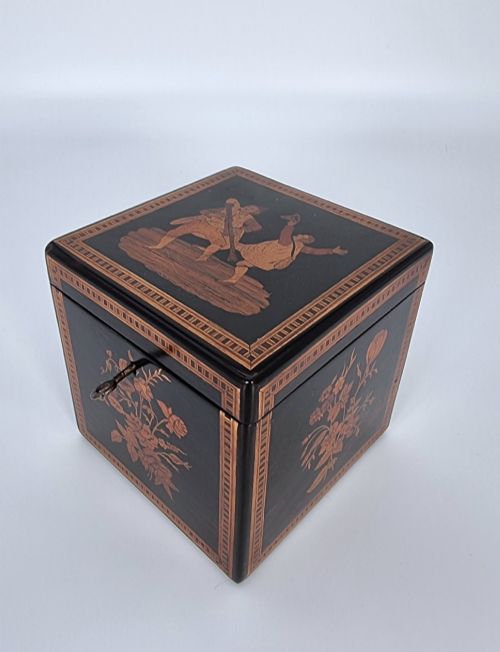
Examples range from simple geometric Tunbridge Ware marquetry to brass-inlaid rosewood sarcophagus shapes and bone-decorated fruitwood treen snuff boxes.
Materials and Techniques
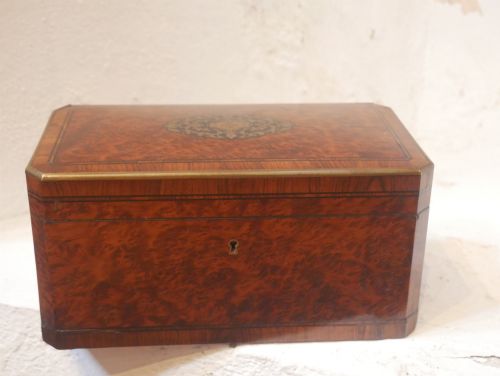
Craftsmen built carcass structures in solid hardwoods or applied dense veneers such as burr walnut, amboyna, and flame mahogany over secondary timbers.
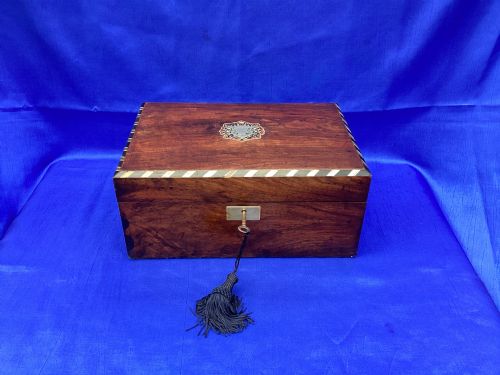
Surface decoration relied on precise woodworking techniques, incorporating contrasting stringing, micro-mosaic Tunbridge Ware, and inlaid panels of mother-of-pearl, boxwood, and bone.
Inlaid Wooden Trinket Box Retail Price Guide 2026
Typical asking prices for inlaid wooden trinket box among the pieces listed under this phrase on Sellingantiques today, from the lower quarter to the upper quarter. They describe what is for sale here now, not the wider market.
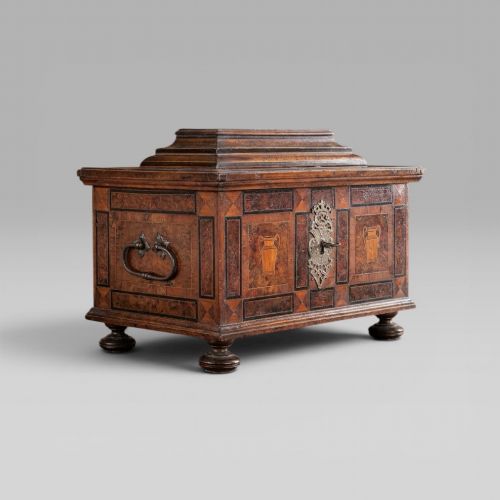
The selection includes pieces spanning from the late seventeenth century through the Art Deco era, utilising rosewood, tortoiseshell alternatives, and exotic specimen woods.
Evaluating the Pieces
Superior execution shows in the precision of the inlay work, where contrasting woods fit flush into the primary timber without visible gaps or excessive filler.
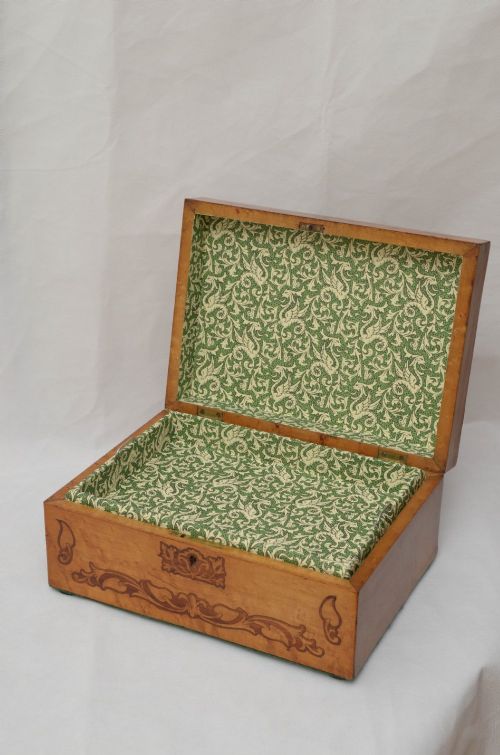
Internal complexity elevates a piece, distinguishing simple lidded compartments from fully fitted interiors featuring velvet linings, lift-out trays, and working brass locks.
Tahan Paris·Edmund Nye·Erhard and Sohne
The Inlaid Wooden Trinket Box Glossary
- Tunbridge Ware
- A form of intricate mosaic woodwork produced in Kent, creating detailed pictorial or geometric designs from thousands of tiny dyed wood blocks.
- Marquetry
- The art of applying veneer pieces to a structure to form decorative patterns, using different timbers, shell, or bone.
- Stringing
- A thin, narrow strip of contrasting wood inlaid into the surface of a box to create linear borders and framing.
- Treen
- Small handmade wooden objects of domestic use, often turned on a lathe or carved by hand from fruitwoods.
- Sarcophagus
- A box style featuring a stepped, sloping lid shape reminiscent of ancient stone coffins, popular during the Regency period.
Inlaid Wooden Trinket Box: Frequently Asked Questions
What were these small boxes originally used for?
These containers held personal valuables, letters, and small daily accessories like rings, seals, and coins.
Many styles served specific functions, such as holding tobacco leaves, snuff, or sewing implements.
How do I date a wooden box?
Dating relies on timber choices, construction methods, and prevailing stylistic influences like Regency brass stringing or Victorian Tunbridge Ware.
Secondary woods inside the carcass and the type of hinges or lock mechanisms also help narrow the decade.
Are the interiors usually original?
Many surviving examples retain their fitted wooden trays, compartments, and paper or velvet linings from the period.
Some pieces have experienced professional restoration to replace deteriorated silk or velvet while keeping the original timber carcass intact.
How do I care for antique wooden boxes?
Keep the wood away from direct sunlight and sudden temperature changes to prevent the veneer from drying and lifting.
Applying a light coat of appropriate wax periodically helps maintain the natural sheen of rosewood, walnut, or mahogany.