
Victorian Wooden Casket
A victorian wooden casket brings nineteenth-century craftsmanship into daily use, offering a secure home for personal treasures and stationery.
Victorian Wooden Casket
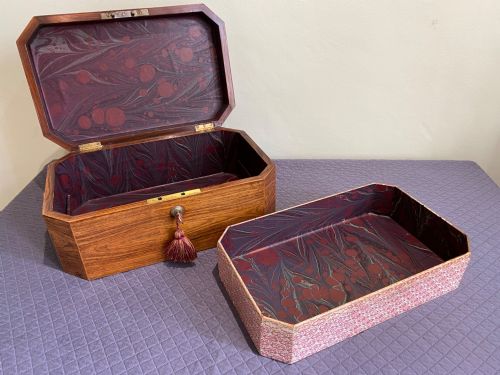
A victorian wooden casket encompasses a broad array of lidded containers designed to store jewellery, correspondence, tea, and sewing equipment. These pieces originate predominantly from the nineteenth century, spanning decades from the eighteen-fifties through to nineteen-hundred.
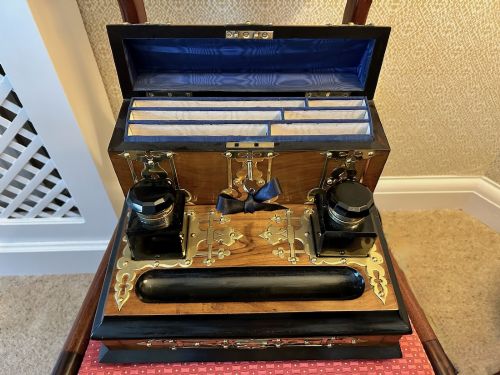
Makers shaped these vessels into distinct forms such as stationery boxes, tea caddies, sewing cases, and desktop accessories. The examples found here range from plain functional containers to decorative cabinets fitted with mirrors and trays.
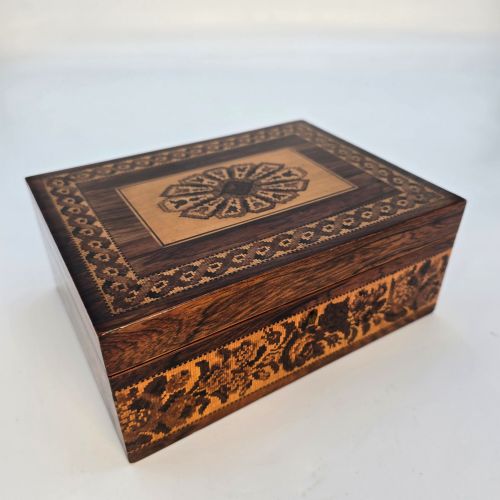
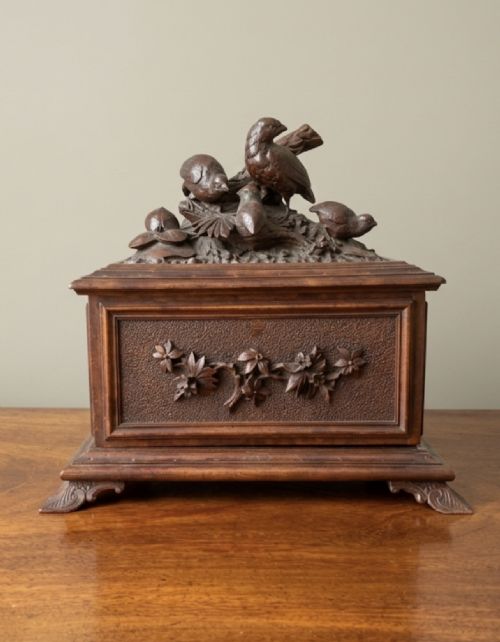
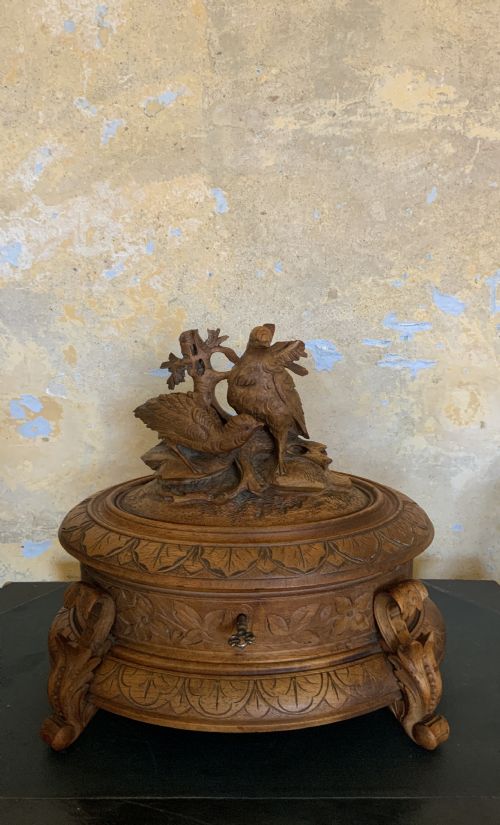
Buyers encounter regional and stylistic variations, including British Tunbridge ware, Swiss Black Forest carvings, and Anglo-Indian bone-inlaid pieces. Walnut, rosewood, and mahogany form the primary structural timbers for the majority of these domestic boxes.
Materials and Construction
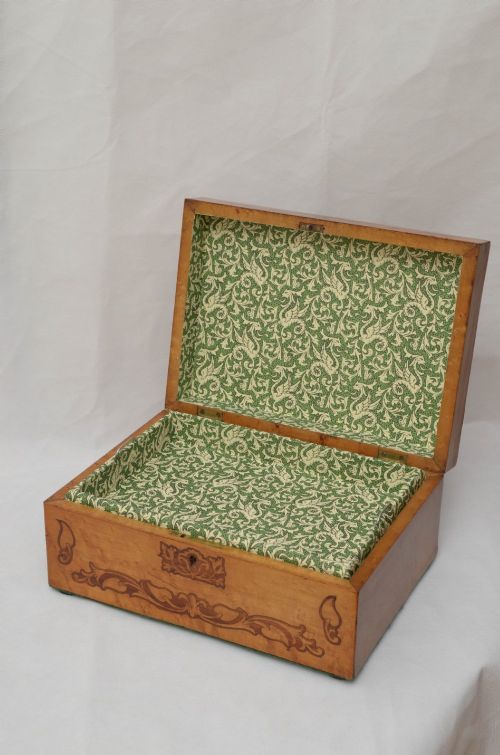
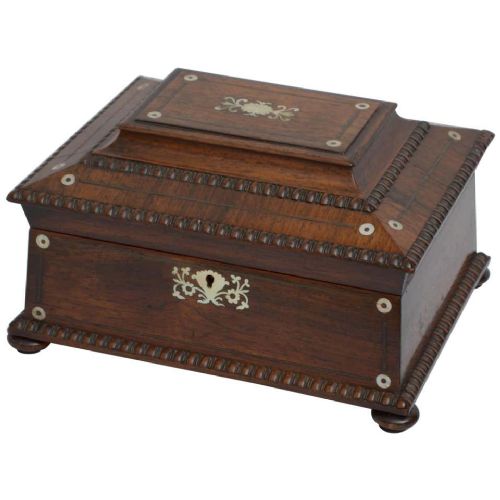
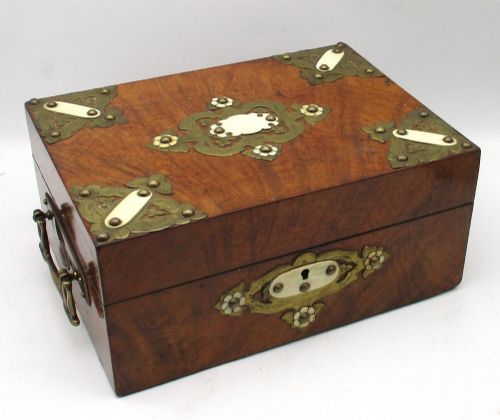
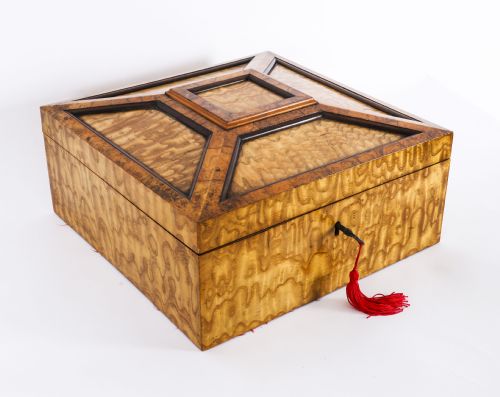
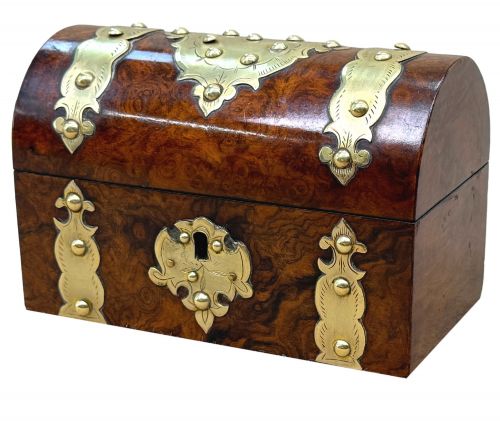
Cabinet makers utilised dense exotic and native hardwoods such as rosewood, walnut, and coromandel, often selecting burr veneers to produce striking figured grain patterns. These timbers provided a stable carcass capable of withstanding intricate surface decoration and heavy brass mounts.
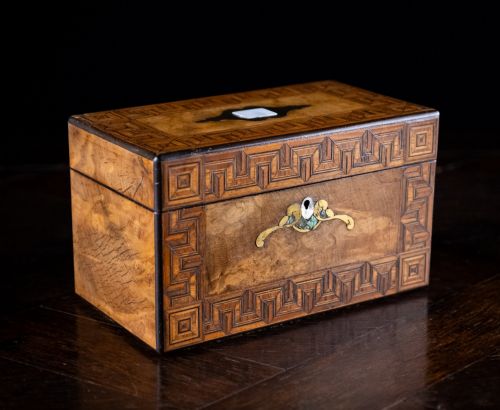
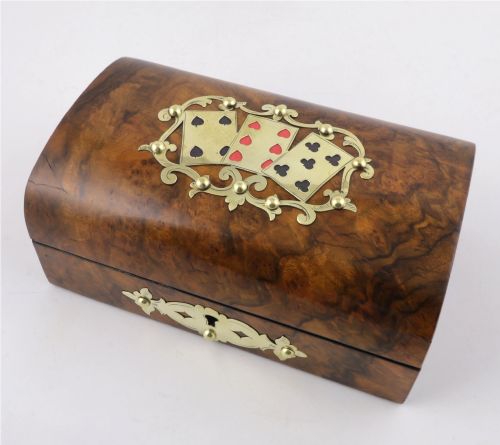
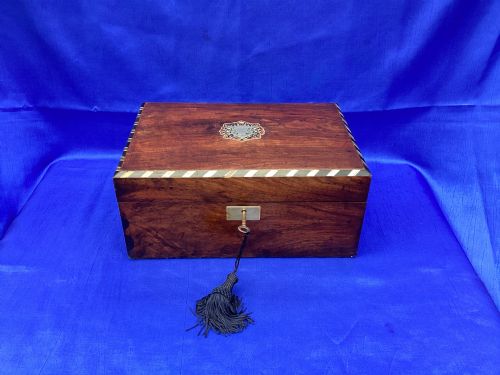
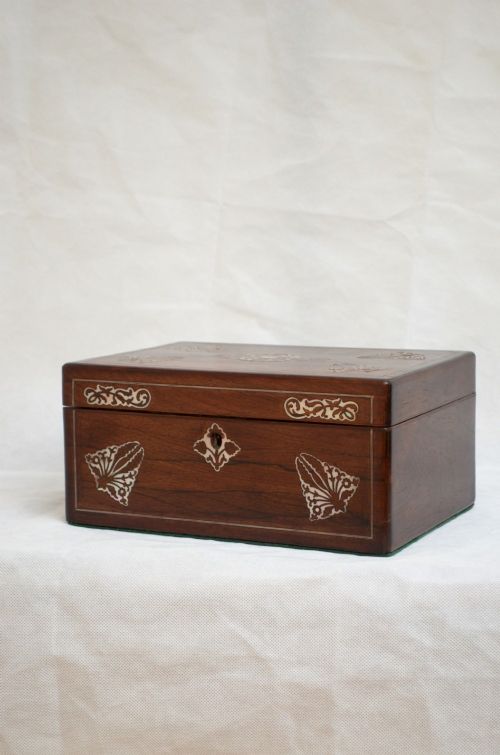
Workshops applied surface embellishments using mother-of-pearl, brass stringing, parquetry, and meticulous Tunbridge ware mosaic marquetry. Carved elements appear frequently on Black Forest and Anglo-Indian boxes, where artisans worked directly into the solid wood or bone.
Victorian Wooden Casket Retail Price Guide 2026
Typical asking prices for victorian wooden casket among the pieces listed under this phrase on Sellingantiques today, from the lower quarter to the upper quarter. They describe what is for sale here now, not the wider market.
Some nineteenth-century boxes double as game stations, housing dice and cards alongside secret compartments for hidden wagers.
Assessing Quality and Execution
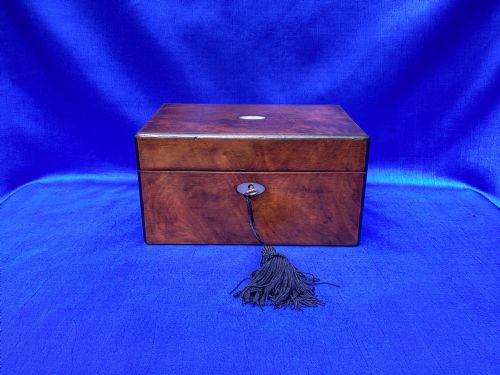
The distinction between standard containers and superior pieces lies in the precision of the joinery and the selection of timber veneers. Master workshops employed symmetrical burr walnut or figured rosewood, aligning grain patterns across the lid and sides with rigorous accuracy.
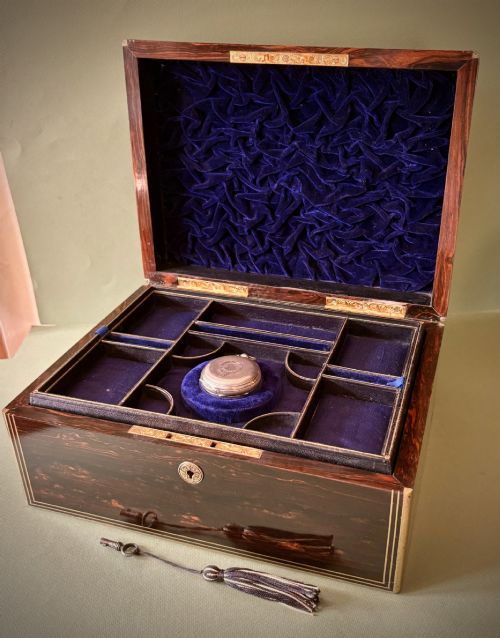
Interior fittings dictate the standard of execution, separating basic boxes from fully appointed dressing cases. Superior examples include integrated trays, secret drawers, bevelled mirrors, and original silk linings alongside heavy brass carrying handles and escutcheons.
Edmund Nye·Tahan of Paris
The Victorian Wooden Casket Glossary
- Tunbridge Ware
- A form of nineteenth-century decorative woodworking originating in Kent, characterised by mosaic marquetry built from tiny wood prisms to depict geometric patterns or pictorial scenes.
- Black Forest
- A nineteenth-century carving style originating from the Swiss-German region, noted for deeply carved naturalistic motifs involving foliage and animals.
- Escutcheon
- A protective metal plate surrounding a keyhole, usually fashioned from brass in these nineteenth-century containers.
- Parquetry
- A geometric mosaic of wood pieces used for decorative surface inlay, seen on the lids of boxes and tea caddies.
- Casket
- A decorative box or chest designed for holding valuables, jewellery, or keepsakes.
Victorian Wooden Casket: Frequently Asked Questions
How were wooden caskets used?
Nineteenth-century households utilised these lidded containers to organise personal correspondence, secure jewellery, and store sewing implements. Specific forms also accommodated playing cards, tobacco, or bottled spirits.
Interior compartments, velvet linings, and removable trays kept delicate items separated and protected during daily domestic use.
What woods appear most frequently?
Walnut, rosewood, and mahogany form the primary structural foundations for the majority of these pieces. Cabinet makers frequently selected burr walnut and bird's-eye maple for their decorative grain patterns on exterior surfaces.
Exotic timbers such as coromandel and amboyna also surface among the higher-tier boxes produced during the period.
How do I identify Tunbridge ware?
Tunbridge ware displays intricate mosaic patterns assembled from thousands of tiny, differently coloured wood prisms. These miniature wooden tiles create geometric borders or pictorial views without the use of paint.
Craftsmen in Kent produced these distinctive boxes throughout the nineteenth century, often incorporating native British woods to achieve natural colour variations.
Can I use them for modern storage?
These nineteenth-century containers adapt readily to modern interiors for holding modern jewellery, desk accessories, and small keepsakes. Their fitted compartments and velvet trays provide practical organisation for everyday items.
Maintaining stable room humidity preserves the delicate wood veneers, brass mounts, and internal silk linings against drying out.