



Victorian Mosaic Box
A victorian mosaic box holds small treasures with intricate skill, bringing colourful geometric patterns and stone inlays into a room.
Victorian Mosaic Box
When someone searches for a victorian mosaic box, they encounter decorative containers created during the nineteenth century, most often taking the form of tea caddies, jewellery boxes, stationery boxes, and trinket boxes. These pieces originate primarily from English workshops practising Tunbridge Ware alongside Italian micro mosaic and pietra dura work, plus Anglo-Indian traditions.
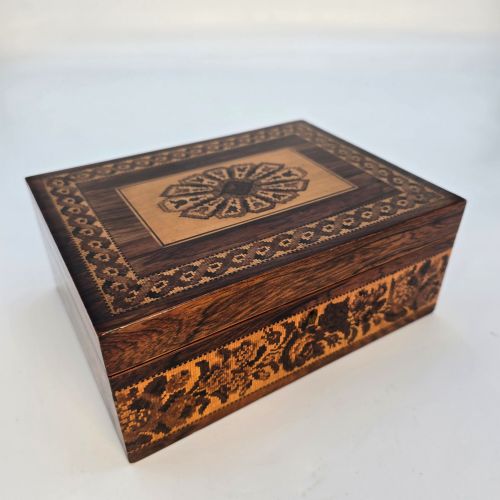
The version most commonly met on this page is the English Tunbridge Ware box, constructed from rosewood or walnut and inlaid with tiny wood tesserae to form detailed pictorial or geometric scenes. Alongside these, Italian pietra dura caskets and Anglo-Indian Sadeli mosaic boxes appear frequently in the listings.
Makers utilised various native and foreign timbers such as boxwood, holly, and rosewood, incorporating brass mounts or bone details to finish the containers. The resulting objects served practical domestic functions on dressing tables and writing desks while displaying considerable ornamental skill.
How they were made
Craftspersons constructed these boxes using solid woods and veneers like rosewood and walnut as a foundation for intricate surface work. Tunbridge Ware pieces required assembling thousands of microscopic wood sections cut from various coloured timbers to build up geometric or pictorial motifs.
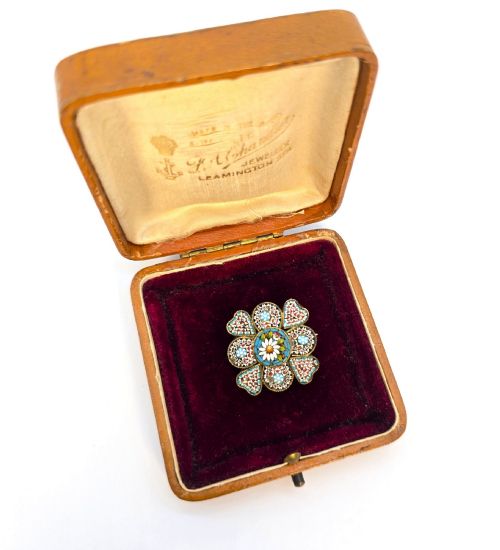
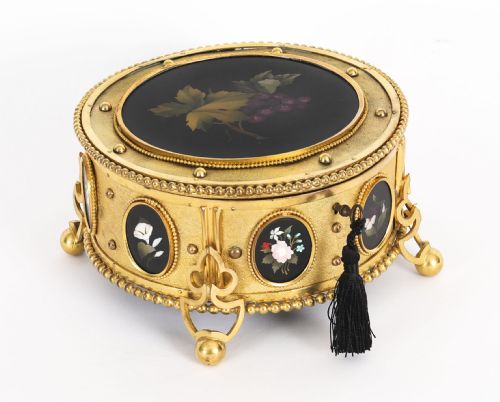
Italian examples relied on hardstones assembled using pietra dura techniques, or glass tesserae fused for micro mosaic brooches and panels. Anglo-Indian variants incorporated carved wood combined with bone and geometric micro mosaic work known as Sadeli.
Workers finished the interiors with silk linings, compartments, and fitted sections designed for sewing tools, stationery, or tea storage. Brass hinges, locks, and escutcheons secured the lids and provided structural accents to the timber bodies.
Listings feature nineteenth century items in rosewood, walnut, boxwood, brass, bone, holly, pietra dura, and mixed wood inlay.
What varies in quality
The precision of the mosaic work dictates the distinction between standard items and superior examples, particularly in the microscopic scale of the wood blocks or stone tesserae. Pieces bearing named makers show greater refinement in their geometric borders and pictorial fidelity.
The choice of primary timber also influences the standing of a box, with burr walnut and figured rosewood framing the intricate mosaics more effectively than plain woods. Furthermore, the complexity of the interior fittings, such as tiered compartments or matched tea canisters, separates basic containers from elaborate presentation pieces.
Edmund Nye·Henry Hollamby
The Victorian Mosaic Box Glossary
- Tunbridge Ware
- A form of nineteenth-century wooden mosaic originating from Kent, featuring tiny multicoloured wood prisms arranged to depict local castles, flowers, or geometric patterns. These designs cover the exterior surfaces of boxes, tea caddies, and desk accessories.
- Pietra Dura
- An Italian technique involving the inlay of cut and fitted polished coloured stones to create pictorial images. This method appears on marble and ebonised wood boxes from the nineteenth century.
- Sadeli
- An Anglo-Indian mosaic technique utilising intricate geometric patterns built from bands of horn, bone, and diverse woods. It decorates boxes and caskets produced during the nineteenth century.
- Micro Mosaic
- An art form using microscopic glass tesserae assembled into detailed figural or floral designs. These panels decorate jewellery and small caskets from the period.
- Tessera
- An individual small block of stone, glass, or wood used in the formation of a mosaic. Thousands of these small units combine to form the imagery on the boxes.
Victorian Mosaic Box: Frequently Asked Questions
What were victorian mosaic boxes used for?
These boxes held valuable personal items including tea, stationery, sewing equipment, and jewellery. Owners placed them on parlour tables and writing desks as both storage and decorative objects.
Their fitted interiors accommodated specific domestic duties of the nineteenth century, keeping small accessories organised and secure under lock and key.
How do I care for a wooden mosaic box?
Keep the box away from direct sunlight and dramatic changes in temperature to prevent the timber and tiny mosaic tesserae from shifting or drying out. Dust the surface gently with a dry, soft cloth.
Avoid using liquid polishes or moisture, which can seep into the microscopic joints between the wood blocks and damage the historical adhesive.
How do I distinguish Tunbridge Ware from Italian mosaic?
Tunbridge Ware relies entirely on microscopic wooden tesserae cut from various naturally coloured timbers to create geometric patterns and views of castles. Italian mosaic utilises hardstones in pietra dura or tiny glass pieces in micro mosaic work.
English boxes usually employ rosewood or walnut as a carcase, whereas Italian pieces frequently feature ebonised wood or marble mounts.
Are all these boxes from the Victorian period?
The listings span the nineteenth century, encompassing pieces made during the Victorian era alongside items from adjacent decades. Certain examples date specifically from the mid to late nineteenth century.
Stylistic cues and material choices help connect individual boxes to this broader nineteenth-century manufacturing tradition.