
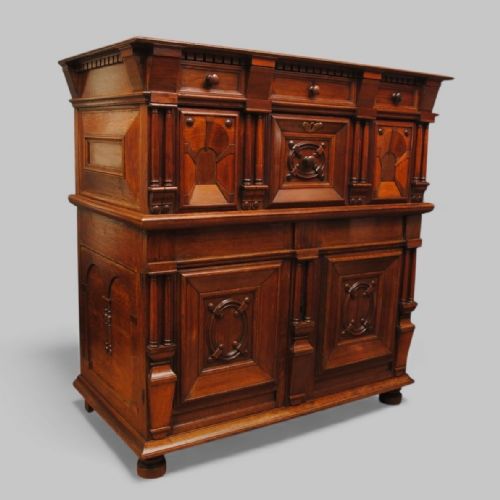


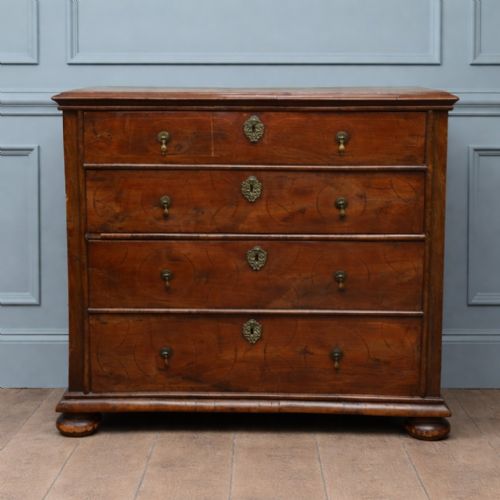


Geometric Inlay Chest
These geometric inlay chest examples combine architectural precision with rich timber surfaces, offering storage that brings centuries of detailed woodwork into a modern room.
Geometric Inlay Chest
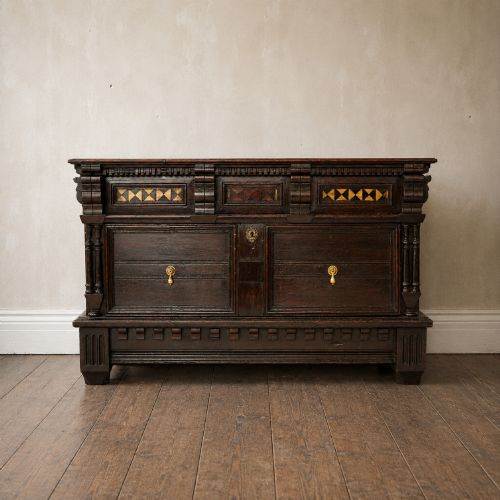
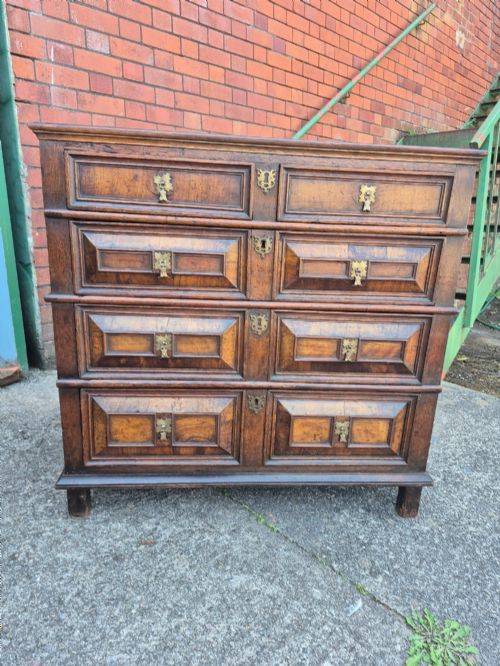
A geometric inlay chest brings together structured cabinetry and intricate patterned surfaces, spanning forms from large chests of drawers to smaller tea caddies and coffers. When you explore a geometric inlay chest on this page, you encounter pieces originating from the seventeenth century through to the Victorian era and the mid-twentieth century.
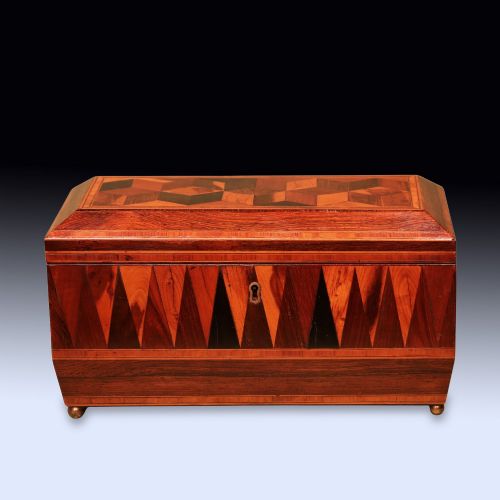
The selections here range from substantial two-part oak and walnut carcases to compact rosewood boxes decorated with mosaic work. Regional influences vary widely, taking in English Jacobean, William and Mary, and Regency styles alongside continental Italian commodes and Anglo-Indian designs.
Materials and construction methods
Cabinetmakers built the foundational carcases using sturdy native timbers like oak and walnut, often applying delicate fruitwood, snakewood, or rosewood veneers across the visible surfaces. Oyster veneering sliced circular sections of branch wood to create repetitive patterned roundels across the front drawers and lids.
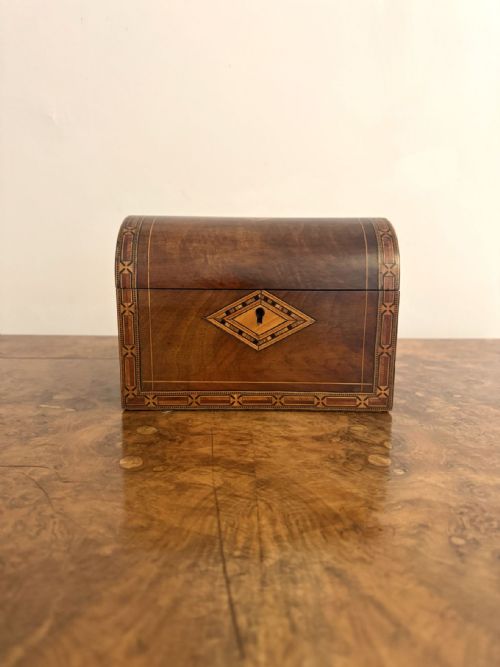
Makers achieved the complex decorative effects by cutting precise pieces of contrasting wood or specimen bone to form geometric and parquetry arrangements. Tunbridge ware examples utilised thousands of tiny mosaic wood blocks assembled to picture architectural scenes and repeating patterns.
Listings feature oak, walnut, fruitwood, and rosewood alongside specialised oyster and specimen bone veneers across multiple centuries.
Distinctions in execution and age
Quality rests upon the precision of the timber matching and the integrity of the surface veneers, where tight joints reveal skilled hand cutting. Period examples from the seventeenth century demonstrate deep patination on structural oak and walnut, showing how properly maintained timber matures over generations.
The complexity of the patterning distinguishes standard production from exceptional work, particularly where multiple contrasting fruitwoods and specialised borders intersect. Preservation of the original veneering and mosaic tesserae without extensive modern reconstruction maintains the integrity of the piece.
The Geometric Inlay Chest Glossary
- Oyster veneer
- A method of cutting thin slices from small tree branches to produce circular or oval motifs with swirling grain patterns. This technique appeared frequently on seventeenth-century cabinetry.
- Parquetry
- A geometric mosaic of wood pieces used for surface decoration on furniture panels and tea caddies. It relies on contrasting tones to create three-dimensional visual effects.
- Tunbridge ware
- A specific type of British woodwork featuring microscopic mosaic tiles arranged into complex pictorial or geometric designs. Rosewood and diverse fruitwoods provided the rich colour palette.
- Mule chest
- A traditional storage form combining a blanket chest base with one or more bottom drawers. These pieces often feature framed panels and linear decoration.
- Commode
- A decorative low chest of drawers originating in continental Europe during the eighteenth century. They frequently stand on elegant legs and display sophisticated parquetry.
Geometric Inlay Chest: Frequently Asked Questions
What defines a geometric inlay chest?
These pieces combine standard storage forms with precise surface patterns created from contrasting wood veneers and botanical mosaics.
Craftsmen arranged timber slices into repeating squares, stars, and interlocking shapes across drawers, lids, and cupboard doors.
How do I care for oyster veneer?
Oyster veneer requires stable indoor humidity and protection from direct sunlight to prevent the thin branch sections from lifting.
Regular dusting with a dry cloth keeps the polished timber surface clean without introducing moisture that harms old adhesives.
Where were Tunbridge ware boxes made?
Tunbridge ware originated in and around the spa town of Royal Tunbridge Wells in Kent during the nineteenth century.
Local workshops specialised in assembling thousands of minuscule timber blocks to form intricate mosaic decoration on small boxes and tea caddies.
Are seventeenth century chests sturdy?
Seventeenth-century examples typically employ heavy oak and walnut framing designed to withstand centuries of domestic use.
While the timber becomes dry and stable over time, the internal drawer construction remains robust enough for daily storage.
What is the difference between a caddy and a chest?
Tea caddies are compact tabletop boxes originally designed for storing valuable loose tea leaves under lock and key.
Chests and commodes are larger floor-standing pieces intended for garments, linens, and general household storage.