
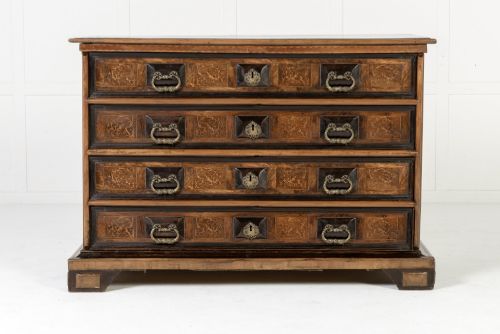


Italian Inlaid Commode
An italian inlaid commode brings continental craft into a room, offering rich timbers and detailed marquetry that catch the eye immediately.
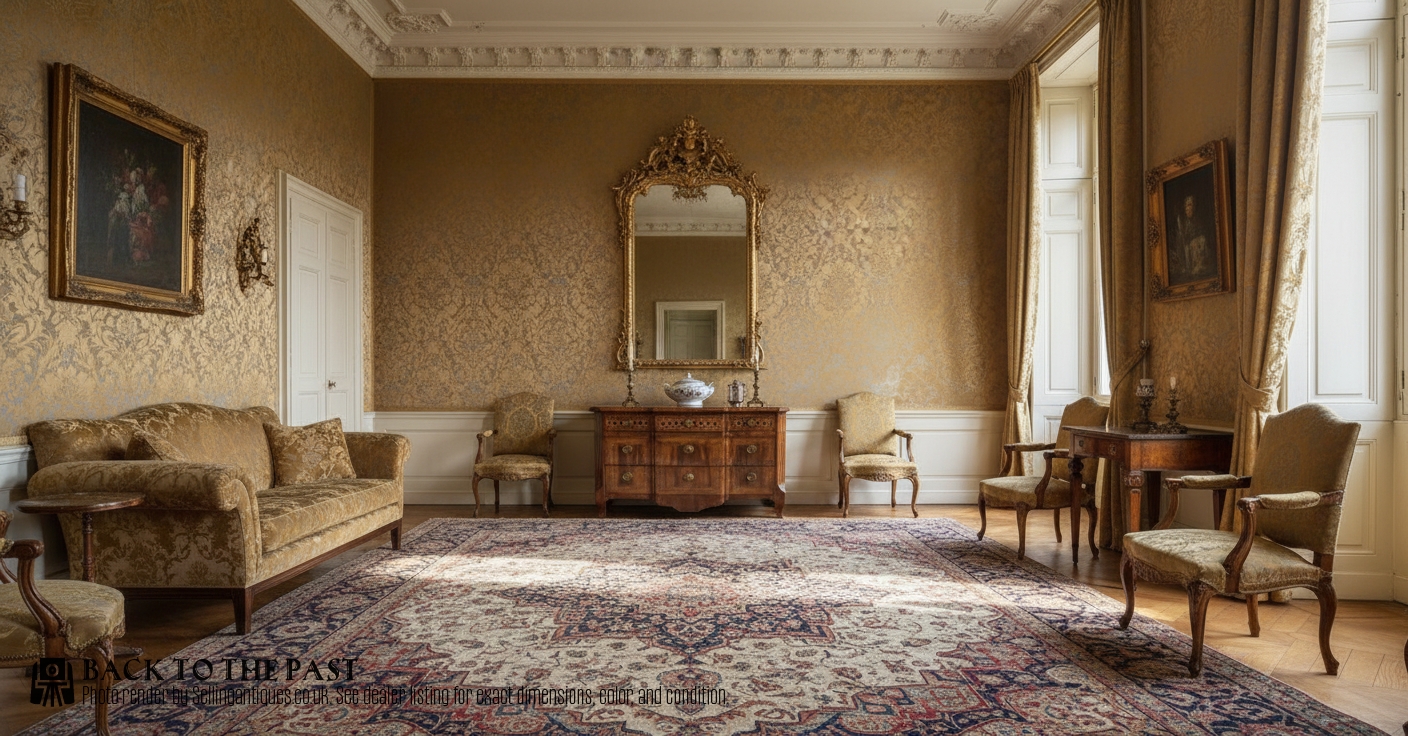
Italian Inlaid Commode
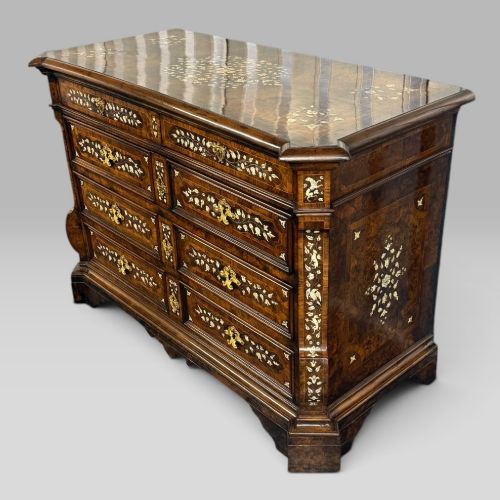
An italian inlaid commode serves as a grand storage piece, taking the form of chests of drawers, bombe commodes, bedside tables, and side cabinets. These pieces emerge from periods spanning the late seventeenth century through the nineteenth century, alongside twentieth-century examples.
The regional styles vary greatly, taking shape through Italian Baroque, Rococo, and Neoclassical designs originating from workshops in Lombardy and wider Italy. Buyers frequently encounter nineteenth-century interpretations alongside eighteenth-century originals on this page.
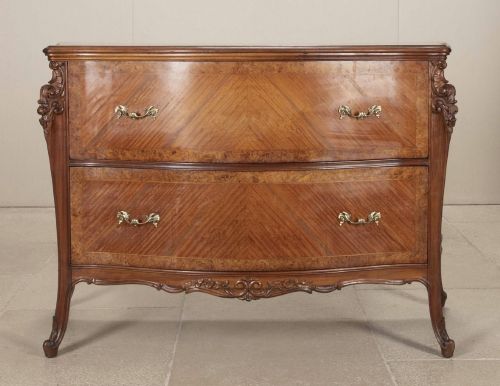
Makers and regional schools utilise distinct silhouettes, ranging from serpentine bow fronts to demilune side cabinets and paired bedside cupboards. Each variant displays characteristic surface decoration suited to formal drawing rooms or elegant chambers.
How they were made
Cabinet makers construct these carcasses using solid foundational timbers such as walnut, mahogany, and fruitwood, applying delicate decorative veneers over the primary structure. Workshops then employ intricate marquetry techniques to piece together contrasting botanical elements.
Satinwood, burr walnut, kingwood, rosewood, and fruitwood provide the tonal palette for geometric and pictorial inlay patterns. Craftsmen finish many surfaces with parcel gilding or mount them with cast brass hardware.
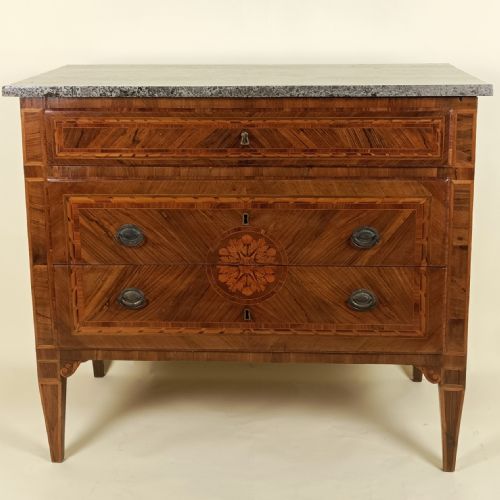
Selected examples feature heavy marble tops fitted precisely to the wooden carcass, adding structural weight and a polished utilitarian surface. Joinery traditions rely on pegged and dovetailed construction appropriate to each distinct period.
Some chests hide their contents behind curves so pronounced that drawers require custom-angled internal carpentry to slide open smoothly.
What varies in quality
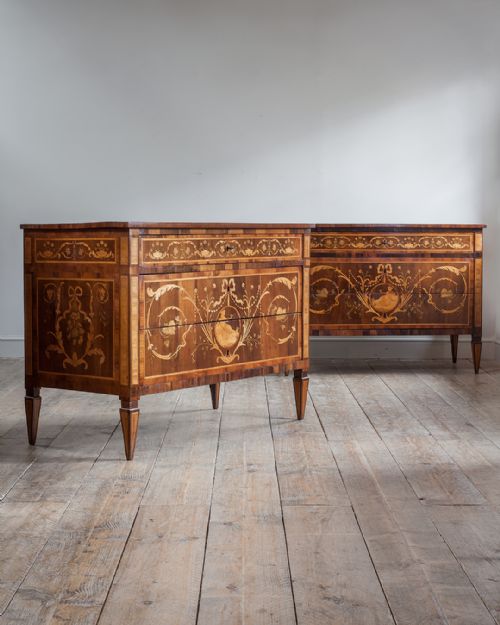
The precision and complexity of the marquetry define the tier of the piece, separating simple geometric bandings from pictorial compositions that cover the entire facade. Selected high-status commissions incorporate multi-toned timber selections to create deep shadow and perspective.
Cabinet proportions and the handling of complex curved forms, such as bombé sides and serpentine fronts, dictate the maker's skill level. Superior examples maintain crisp lines and harmonious balance across every elevation, including the sides.
The integration of original materials, from native walnut to exotic kingwood veneers and matching brass mounts, influences the standing of the commode. Surviving marble slabs and untouched surface patination elevate the status of historical specimens.
Grand Ducal Workshops·Pietro Ferrario
The Italian Inlaid Commode Glossary
- Marquetry
- Decorative veneer work cut and fitted together to form geometric patterns or pictorial designs on a furniture surface. This technique allows artisans to utilise the contrasting natural colours of various timbers.
- Bombé
- A swelling, outward-curving furniture shape that bulges on the front and sides. This exuberant profile appears frequently in Rococo and Baroque continental pieces.
- Demilune
- A half-moon shape used for the plan of cabinets and side tables. Such pieces fit flush against a wall while offering a curved front edge.
- Parcel Gilt
- Partially gilded with gold leaf or gold paint to highlight specific carved details or mouldings. This treatment draws attention to architectural elements on the cabinet facade.
- Kingwood
- A dense, richly figured timber with dark violet-brown and golden stripes used extensively in fine cabinet making. Artisans prize this wood for decorative banding and contrast.
Italian Inlaid Commode: Frequently Asked Questions
Where did people place these commodes?
These pieces traditionally occupied principal reception rooms, grand bedchambers, and formal hallways of continental residences. They served both as decorative focal points and functional storage for linen or valuables.
Today, collectors place them in living rooms, entryways, or large bedrooms where their detailed marquetry and marble tops can be appreciated without crowding the space.
How do I distinguish Neoclassical from Baroque pieces?
Baroque and Rococo commodes feature exuberant, swelling bombé curves, heavy carvings, and dramatic, asymmetrical ornamentation. They prioritise dynamic movement and theatrical presence.
Neoclassical designs shift towards straight lines, symmetrical marquetry panels, classical architectural motifs, and restrained proportions influenced by archaeological discoveries.
Are marble tops original to these commodes?
Many continental commodes, particularly those from Italian workshops, were designed to receive heavy marble slabs fitted directly to the wooden upper frame. These stone tops provided a durable, cool surface for display.
Buyers should examine the seating of the marble within the wood moulding to ensure proper alignment and period-appropriate thickness.
How do I care for inlaid wood surfaces?
Inlaid surfaces require stable indoor humidity levels and protection from direct sunlight to prevent the fine fruitwood and walnut veneers from drying or lifting. Gentle dusting with a dry, soft cloth preserves the historic polish.
Avoid placing damp items or unsealed containers directly onto the timber or marble without protective pads.