

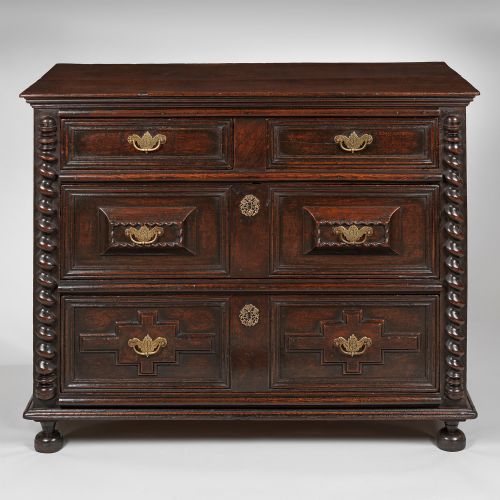


Seventeenth Century Commode
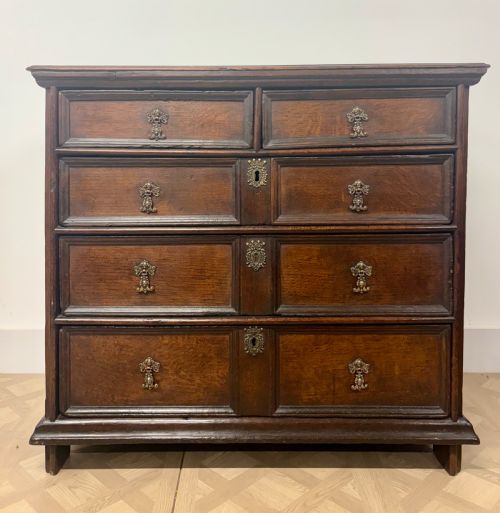
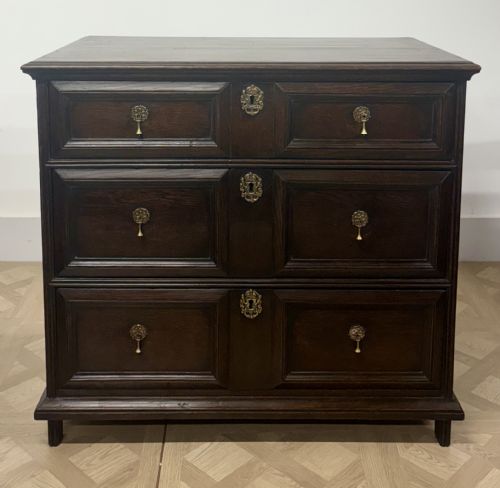
These seventeenth century commode pieces span early chests of drawers and stools in solid oak and walnut.
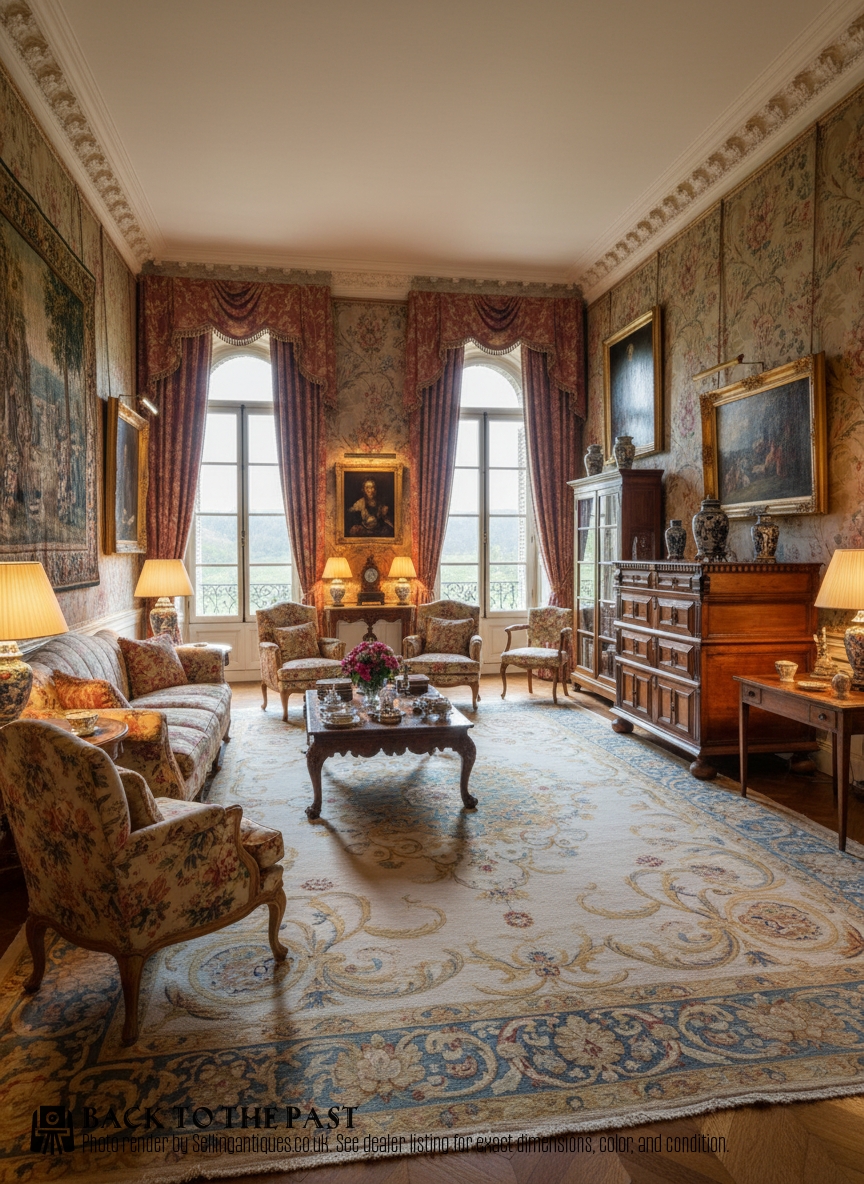
Seventeenth Century Commode
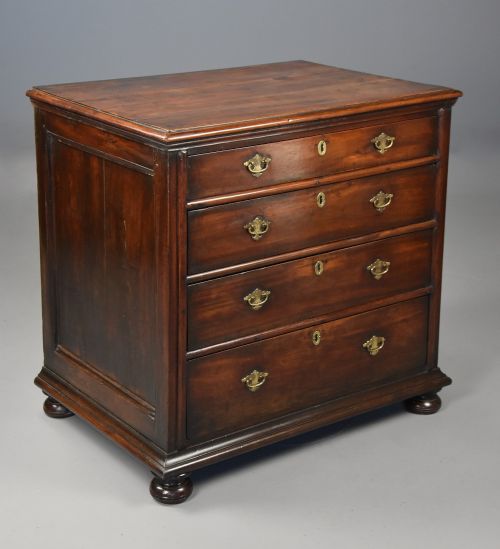
A seventeenth century commode search returns early oak chests of drawers, two-part chests, and occasional commode stools. These domestic forms provide deep storage through stacked drawers set within sturdy timber frames.
The material record is dominated by sturdy oak, alongside walnut, fruitwood, and decorative olive or burl veneer surfaces. Pieces appear in stylistic groups such as Charles II, Jacobean, and William and Mary.
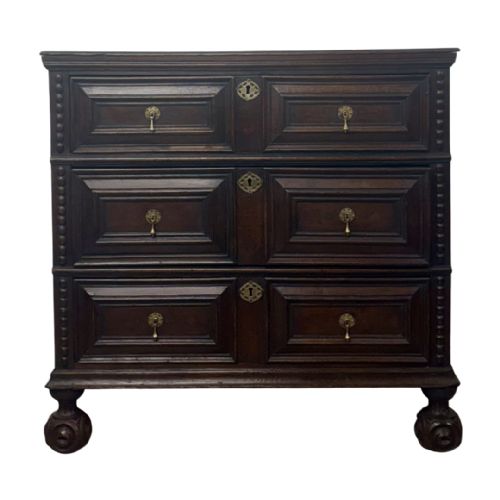
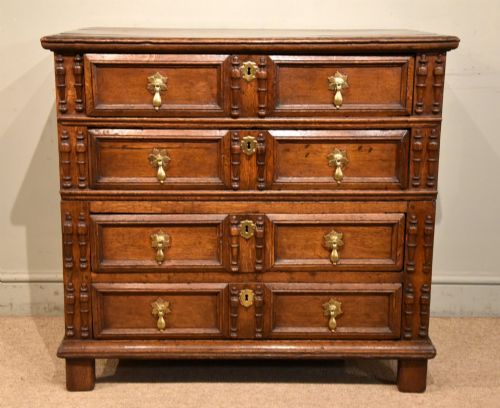
Moulded fronts and geometric drawer panels define many examples, reflecting the joinery methods of the period. Alongside chests, collectors encounter functional stool forms like the octagonal commode stool.
Construction and materials
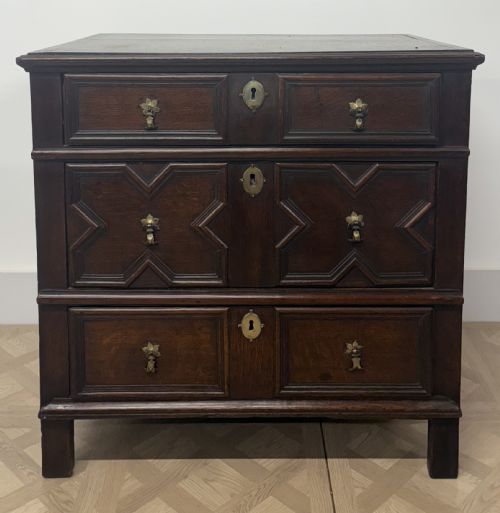
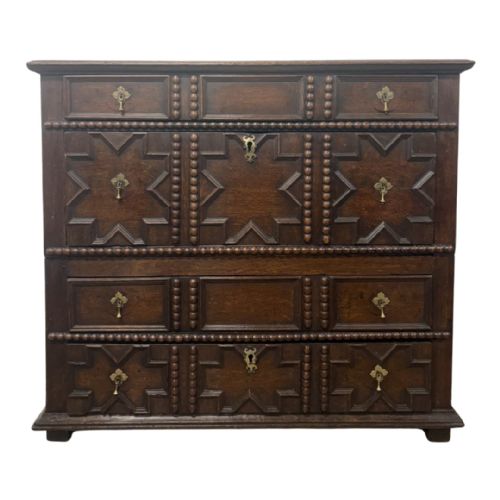
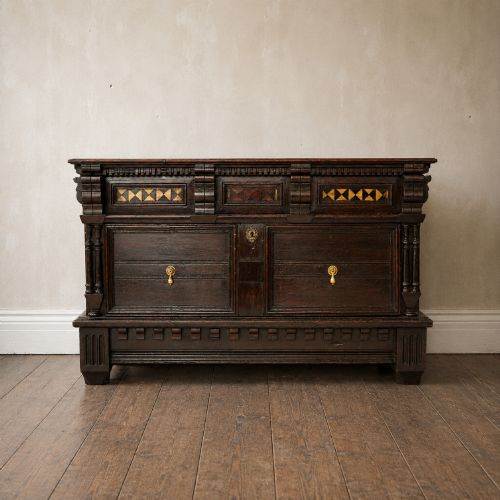
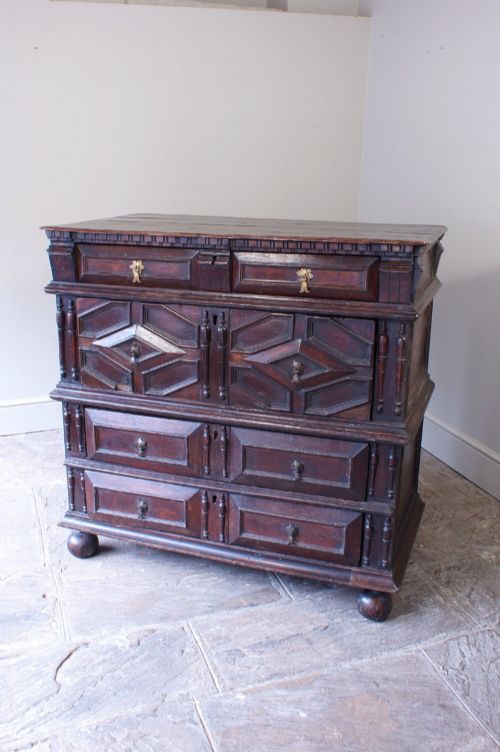
Carpenters built these pieces primarily from solid oak, utilising framed construction methods with panelled sides and drawer dividers. Surfaces frequently display geometric mouldings applied to drawer fronts to create texture and depth.
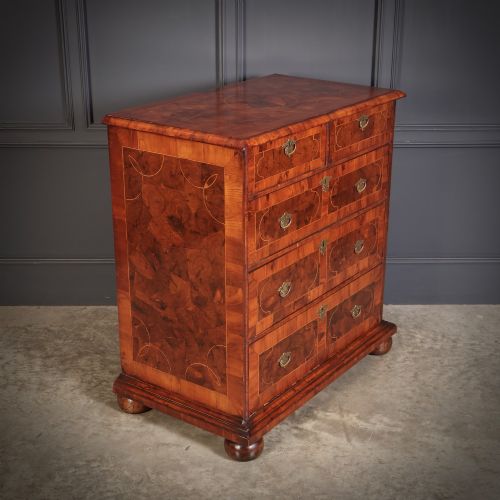
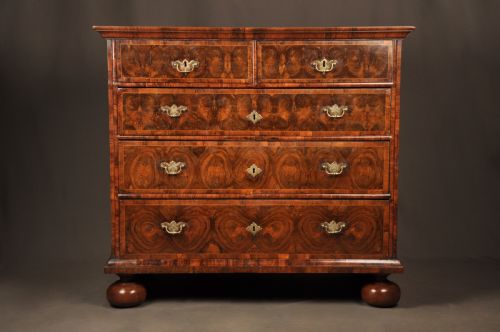
Fine veneers emerge through oyster cutting, laying small circular cross-sections of olive, walnut, and fruitwood across the carcase. Cabinetmakers secured these intricate wooden patterns with organic glues and finished them with beeswax.
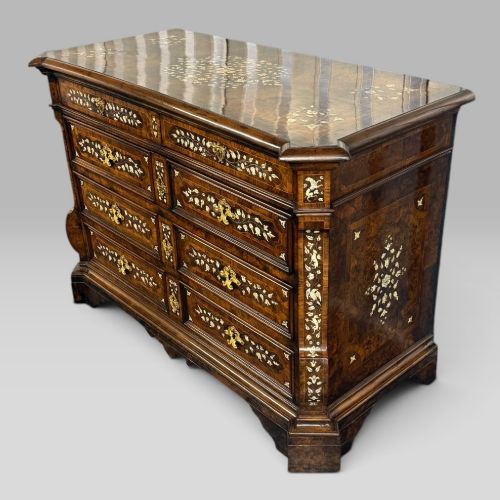
Hardware consists of brass drop handles and escutcheons fixed with iron or brass pins. Bone inlay occasionally appears as a contrasting detail within the geometric designs.
Seventeenth Century Commode Retail Price Guide 2026
Typical asking prices for seventeenth century commode among the pieces listed under this phrase on Sellingantiques today, from the lower quarter to the upper quarter. They describe what is for sale here now, not the wider market.
Current listings feature oak, walnut, fruitwood, and olive woods alongside brass and bone inlay materials.
Factors of quality and survival
The integrity of the timber surfaces and the originality of the structural joinery dictate quality in these early pieces. Untouched drawer linings and retained original brasses distinguish fine examples from heavily restored counterparts.
The precision of the geometric mouldings and the complexity of the oyster veneering show the skill of the original workshop. Clean preservation of the timber grain without excessive surface darkening elevates the standing of a piece.
Grand Ducal Workshops
The Seventeenth Century Commode Glossary
- Oyster veneer
- A method of cutting branches transversely to produce small circular or oval roundels with concentric growth rings. These patterns decorate high-status surfaces.
- Geometric moulding
- Raised wooden strips applied to drawer fronts in repeating angular patterns. This technique defines much of the joinery from the later part of the period.
- Close stool
- An early form of indoor sanitary furniture disguised as a box or stool with a seat. Examples from this era utilise robust oak construction.
- Two-part chest
- A chest of drawers constructed in two separate stacked sections to ease transport. This format appears frequently in English and continental examples.
- Ormolu
- Gilded bronze mountings applied for decoration. This material appears on select continental baroque items.
Seventeenth Century Commode: Frequently Asked Questions
What defines a seventeenth century commode?
These items encompass early oak chests of drawers and commode stools produced during the seventeenth century. They typically feature panelled construction and geometric drawer mouldings.
Craftsmen relied primarily on native timbers like oak, occasionally applying decorative walnut veneers to the exterior surfaces.
How are two-part chests structured?
Two-part chests are built as two separate stacked boxes placed one on top of the other. This modular construction helped transport heavy timber furniture safely.
Joiners united the sections with overlapping mouldings to create a stable unified front.
What is oyster veneering?
Oyster veneering involves slicing thin roundels straight across small branches of walnut, olive, or fruitwood. These roundels are arranged closely together to form intricate circular wood grain patterns across the drawer fronts.
Cabinetmakers used this technique during the later decades of the century to display decorative timber figure.
How should I care for oak furniture?
Keep these timber pieces away from direct heat sources and sudden humidity shifts to prevent wood movement. Apply traditional beeswax periodically to nourish the surface.
Avoid modern liquid polishes, which can penetrate unsealed grain and damage old patination.