





Fruitwood Chest of Drawers
A fruitwood chest of drawers brings rich warmth and distinct grain to an interior, drawing on centuries of regional cabinet-making.
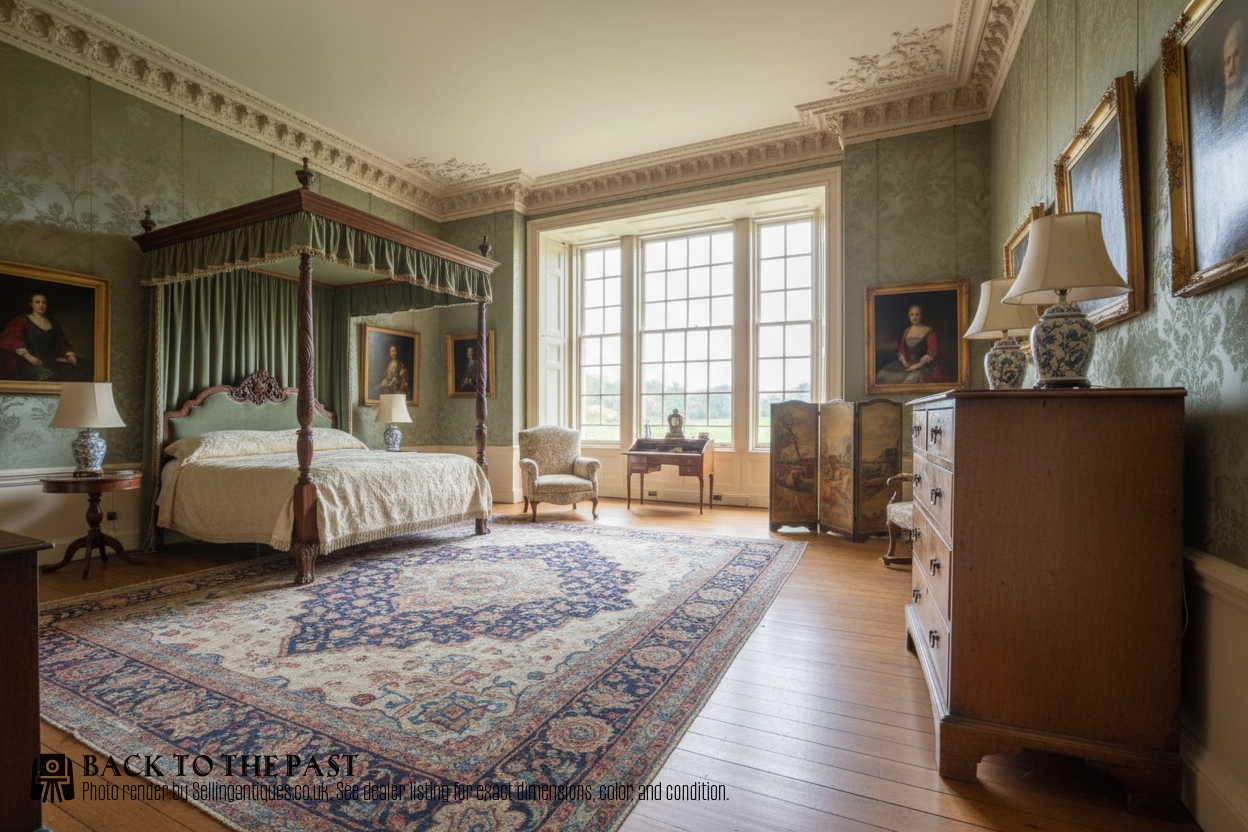
Understanding the fruitwood chest of drawers
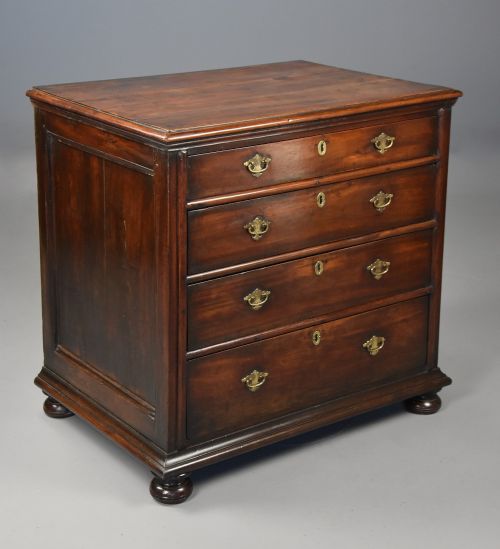
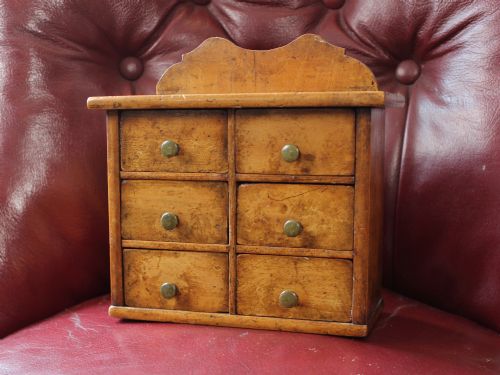
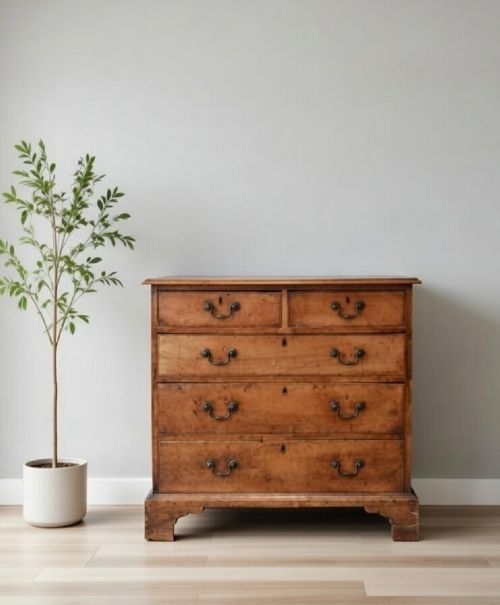
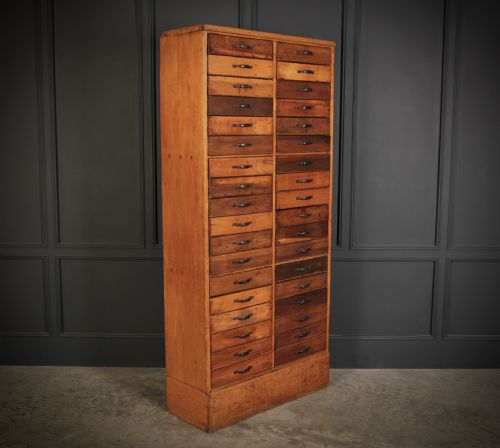
A fruitwood chest of drawers combines practical storage with the varied, honeyed tones of woods like pear, apple or cherry. These pieces range from small bedside chests and miniature cabinets to tall commodes and imposing seventeenth-century geometric designs.
British and continental examples appear across this selection, spanning the seventeenth century through to the nineteenth century. Buyers frequently encounter French provincial commodes and Georgian drawer chests alongside earlier seventeenth-century English and Welsh two-part forms.
Regional makers utilised local timbers rather than imported mahogany or satinwood, resulting in charming irregularities and individual character. Formats vary from serpentine French bombes to straightforward Georgian drawer configurations.
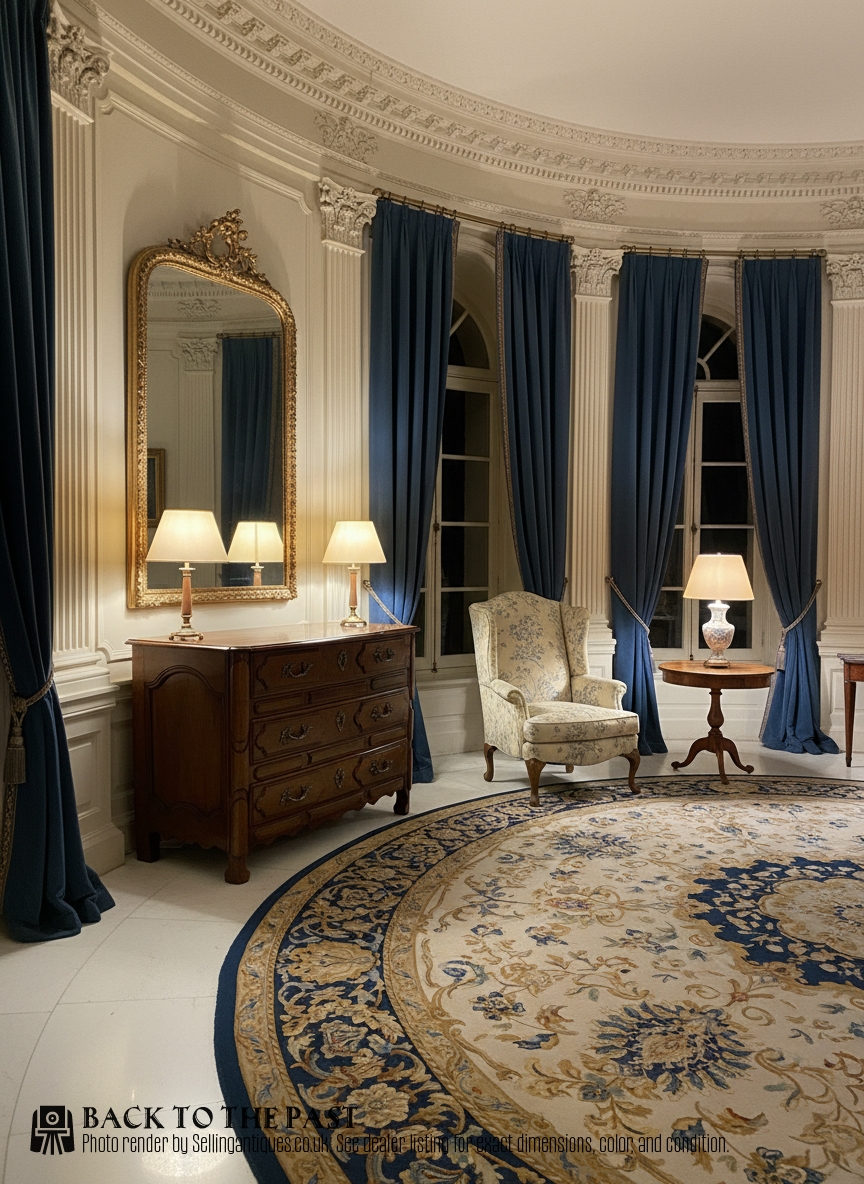
Materials and construction methods
Cabinet-makers constructed these pieces using solid fruitwoods, often pairing them with oak, walnut, or pine for secondary framing and drawer linings. Surface decoration frequently incorporates contrasting timbers, geometric mouldings, and applied panels.
Hardware details such as brass handles and backplates complement the natural figure of the wood. Some continental examples feature contrasting marble tops placed above the main fruitwood carcase.
Retail Price Guide 2026
Typical UK retail prices for fruitwood chest of drawers, calculated from the Sellingantiques database of over a million retail prices indexed since 2003. This retail price guide relies exclusively on Sellingantiques data; no external sources or auction records are used, so the figures do not describe the wider market.
Listings span multiple eras from the 17th century through to the 19th century, incorporating walnut, brass, and marble elements alongside fruitwood.
Distinguishing quality in fruitwood pieces
Quality rests upon the selection and figuration of the timber, alongside the crispness of early drawer mouldings and dovetail joinery. Superior examples retain rich, unpainted surface patination and original brass hardware.
Proportion dictates desirability, with small-scale commodes, miniature chests, and bedside pairs commanding particular attention from collectors. Structural integrity in the drawer runs and side panel construction also separates fine workshop output from standard domestic furniture.
The Fruitwood Chest of Drawers Glossary
- Commode
- A low French chest of drawers or cabinet, often featuring serpentine fronts or marble tops.
- Fruitwood
- Dense timber harvested from fruit-bearing trees such as pear, apple, and cherry, prized for warm colour and fine grain.
- Two-part chest
- A modular cabinet built in upper and lower sections, common in seventeenth-century English and Welsh joinery.
- Bombe
- A swelling, convex furniture shape characteristic of continental, particularly French, cabinet-making.
- Geometric moulding
- Raised decorative wooden strips applied in repeating patterns to drawer fronts and door panels.
Frequently Asked Questions
How do I care for fruitwood furniture?
Keep fruitwood chests away from direct heat sources and strong sunlight to prevent the timber from drying out or fading. Apply traditional beeswax occasionally to nourish the grain and maintain the surface sheen.
Avoid using modern silicone sprays or harsh chemical polishes. Gentle dusting with a dry, soft cloth preserves the historic patination.
Are these chests English or continental?
The selection includes both British examples from English and Welsh workshops alongside continental pieces, particularly from France and the Netherlands. Regional traits help distinguish their origin.
French provincial commodes often display softer curves and marble tops, while seventeenth-century English pieces favour geometric panels and oak framing.
What is a two-part chest?
A two-part chest is constructed as two separate modules stacked vertically, making transportation easier for large pieces. This technique appears frequently on seventeenth-century English and William and Mary designs.
The separation line usually sits midway down the carcase, concealed by mouldings or the junction between drawer tiers.
How do I date a fruitwood chest?
Dating relies on construction methods, timber combinations, handle styles, and overall form. Seventeenth-century pieces often feature geometric drawer mouldings and oak carcases, while Georgian examples follow standard rectangular drawer proportions.
French pieces from the eighteenth and nineteenth centuries introduce regional styling such as Louis XV curves or provincial commode shapes.