


Charles II Chest Drawers
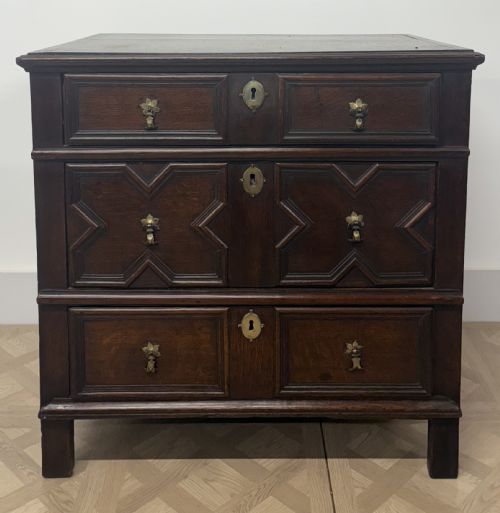
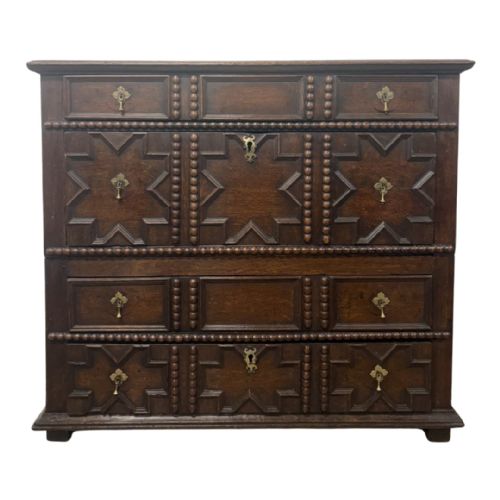
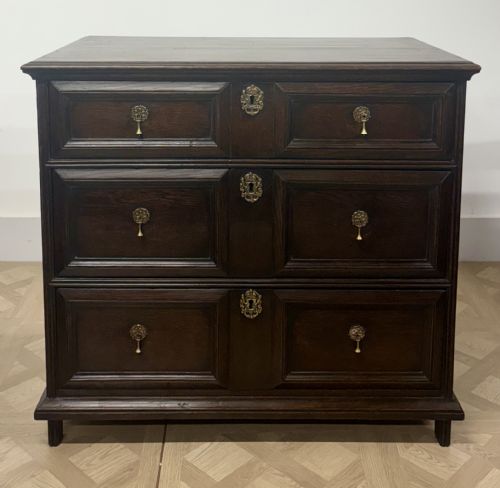
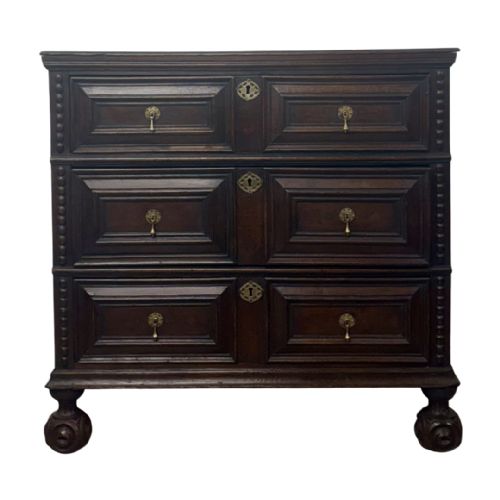
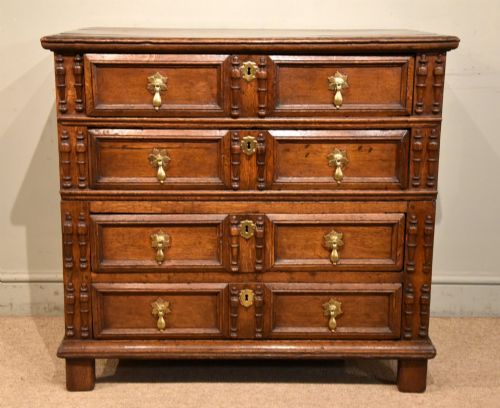
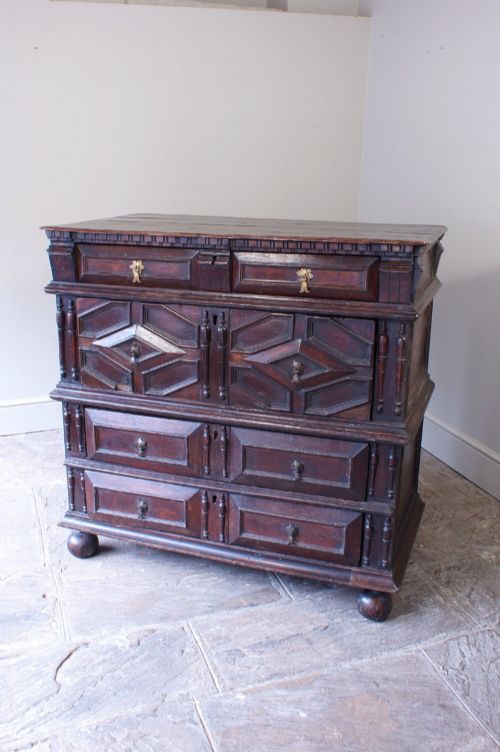
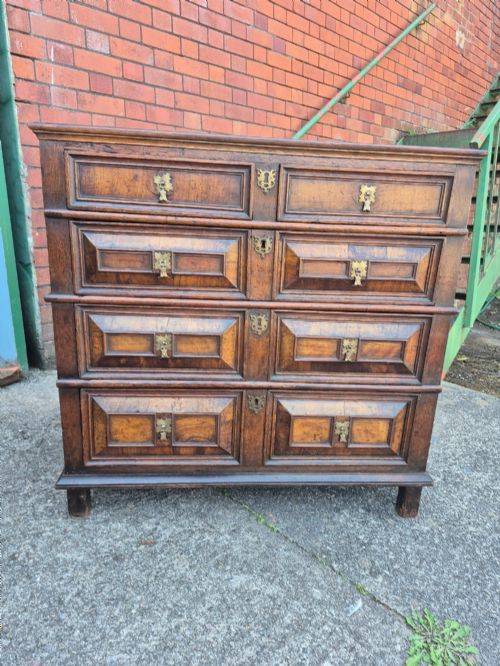
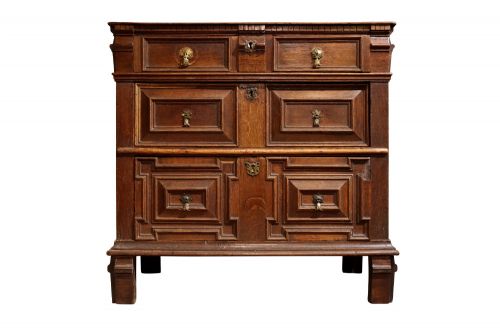
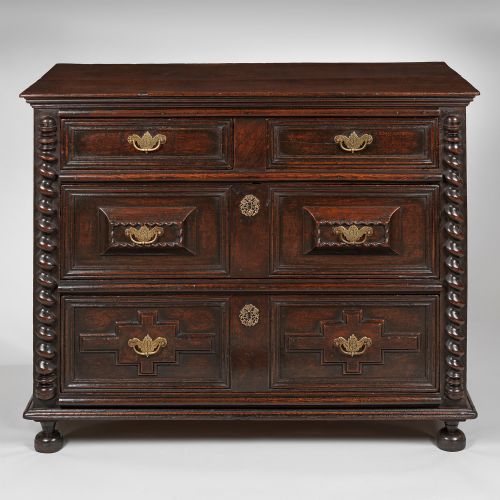
A charles ii chest drawers brings substantial seventeenth-century timber and deep geometric moulding directly into a room.
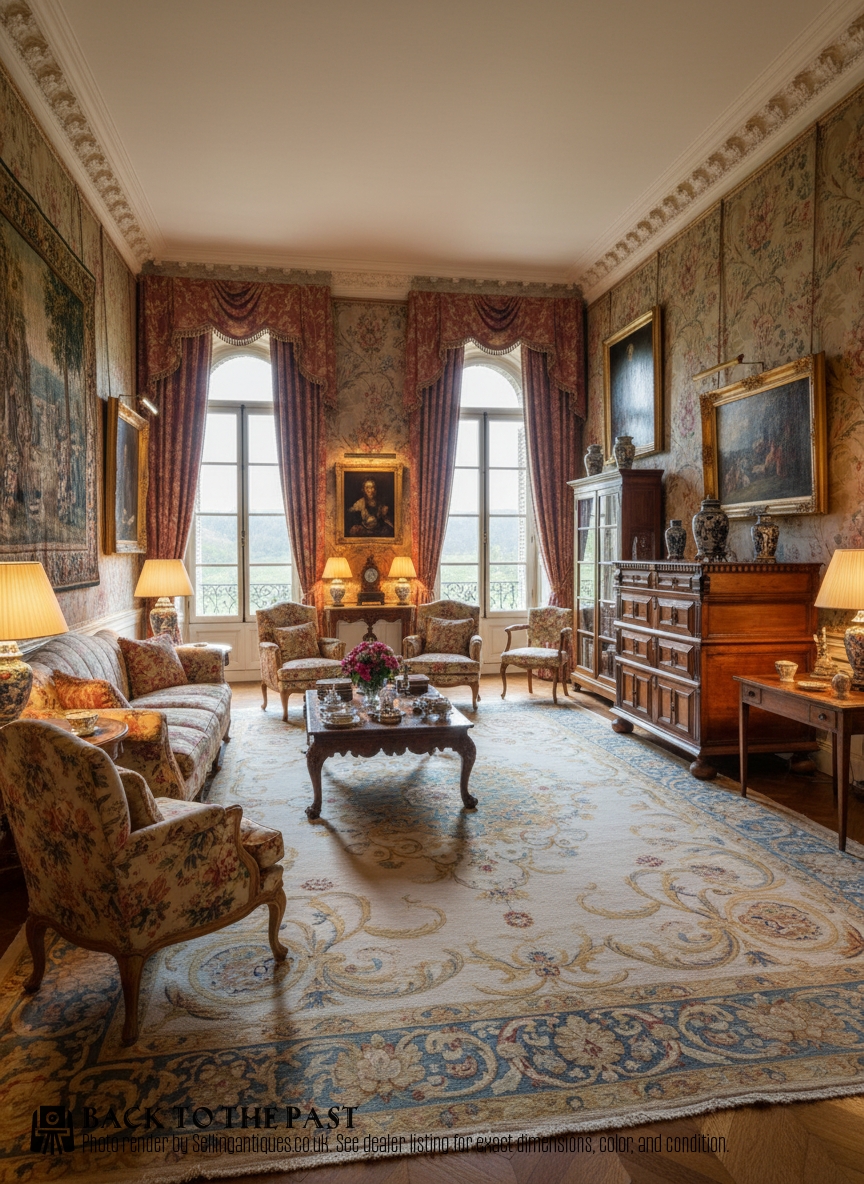
The Charles II Chest of Drawers
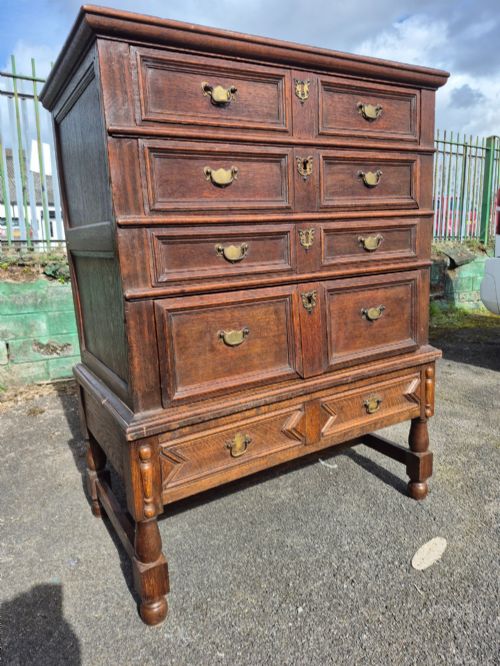
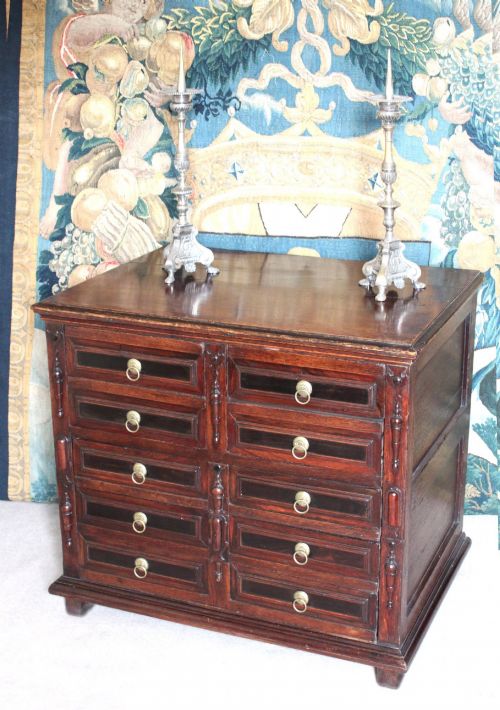
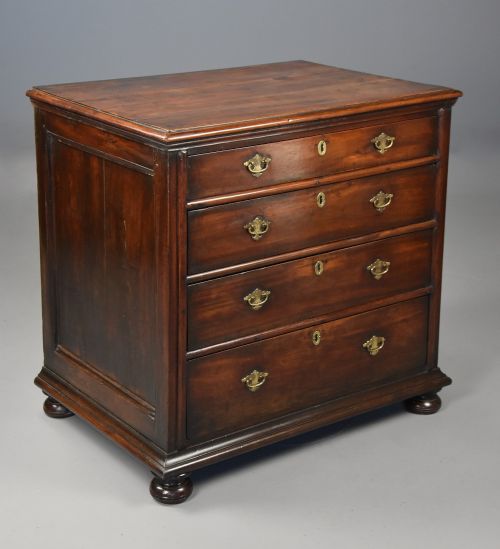
A charles ii chest drawers stands as a robust piece of seventeenth-century furniture, frequently appearing in two-part forms or upon a stand. The examples seen on this page span the seventeenth century up to around seventeen hundred, capturing the distinct aesthetic of the Carolean period.
Buyers will most commonly encounter sturdy oak constructions, alongside select pieces fashioned from walnut, fruitwood, and cedar. These items function primarily as chests of drawers and chests of drawers variants, reflecting the storage needs of the period.
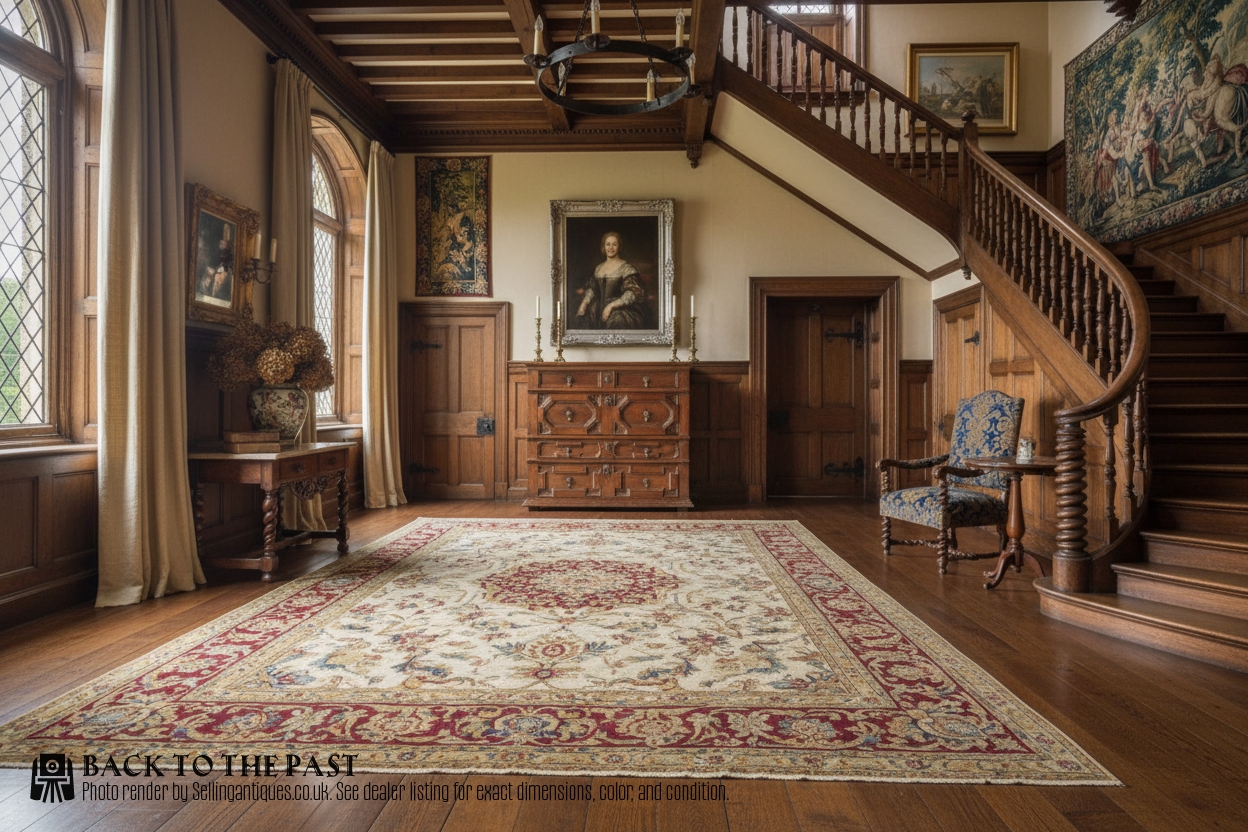
Materials and Construction
Cabinet makers of the period relied heavily on solid oak, walnut, fruitwood, and cedar, often combining timbers within a single piece. Brass hardware and fittings frequently complemented the wooden structures.
Joinery techniques included geometric mouldings applied to drawer fronts, alongside two-part chest configurations that facilitated moving heavy timber items. Inlays and specialised surface treatments added visual depth to the dense woods.
Retail Price Guide 2026
Typical UK retail prices for charles ii chest drawers, calculated from the Sellingantiques database of over a million retail prices indexed since 2003. This retail price guide relies exclusively on Sellingantiques data; no external sources or auction records are used, so the figures do not describe the wider market.
Listings for this phrase exclusively feature pieces from the seventeenth century and around seventeen hundred, utilising oak, walnut, fruitwood, cedar, and brass.
Evaluating Quality and Proportion
The distinction between standard examples and the finest pieces often rests upon scale, with smaller proportions commanding particular attention among collectors. The presence of original handles and untouched surface patination elevates the standing of a piece.
Execution of geometric mouldings and the careful selection of figured walnut or richly grained oak separate workshop output. The integrity of the two-part structure and the preservation of original timber surfaces define the upper echelon of these items.
The Charles II Chest Drawers Glossary
- Geometric moulding
- Raised wooden profiling arranged in rectilinear or octagonal patterns upon drawer fronts. This technique defined much of the decorative output during the period.
- Two-part chest
- A form constructed in upper and lower sections to ease transport. This configuration is frequently seen in seventeenth-century storage furniture.
- Carolean
- The period spanning the reign of Charles II, characterised by ornate woodwork and Flemish influences. Furniture from this era often utilises rich oak and walnut.
- Fruitwood
- Dense timber harvested from fruit-bearing trees such as pear or apple. Makers utilised this material for contrasting details and smaller decorative elements.
Frequently Asked Questions
How do I identify a genuine period piece?
Look for construction methods typical of the seventeenth century, such as hand-cut joints and timber shrinkage consistent with age. Contemporary handles and backboards also provide strong indications of authenticity.
Examine the grain patterns and the type of wood used, noting the presence of oak, walnut, fruitwood, or cedar. Regional variations in geometric moulding further help place the object in its historical context.
Where should I place this furniture in a home?
These chests suit hallways, living spaces, or bedrooms where their robust timber presence can anchor a room. Their dark tones contrast effectively against neutral plaster walls.
Keep them away from direct heat sources and strong sunlight to protect the aged wood surfaces. Maintaining stable humidity levels prevents the oak and walnut panels from warping.
What is a two-part chest?
A two-part chest consists of a separate upper and lower carcase stacked together. This construction method helped movers transport heavy seventeenth-century timber through narrow doorways.
Many examples feature drawers in both sections, offering substantial storage capacity. The split usually occurs midway down the height of the unit.
Why are some pieces described as geometric?
Makers applied small mouldings in repeating geometric patterns across the drawer fronts to create texture and visual rhythm. This style emerged during the seventeenth century as a departure from plain panels.
Walnut and oak pieces frequently display these raised patterns, requiring precise woodworking skill. The resulting play of light and shadow highlights the grain of the wood.