
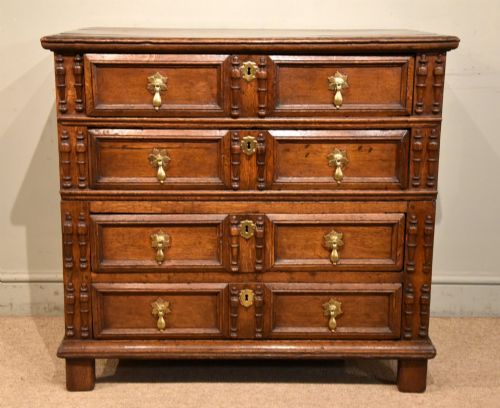
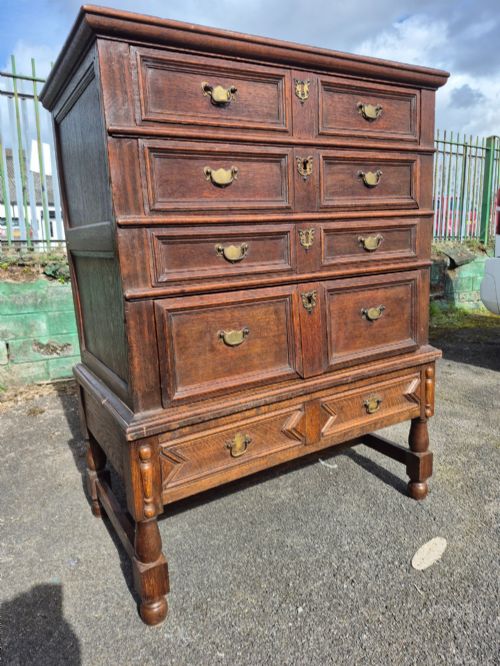
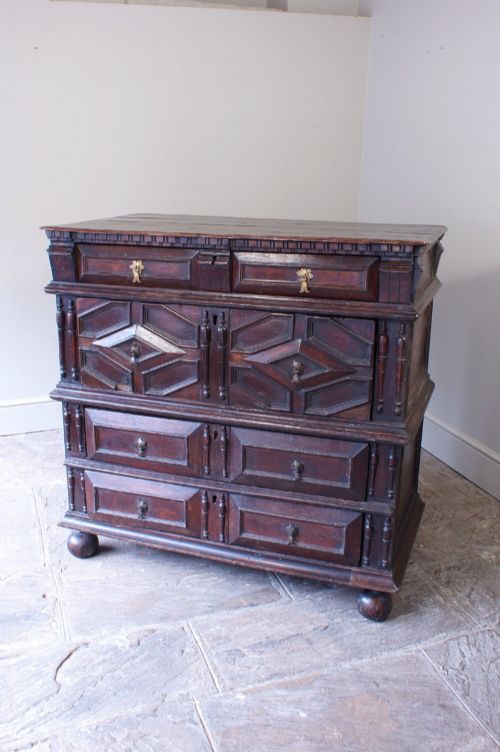
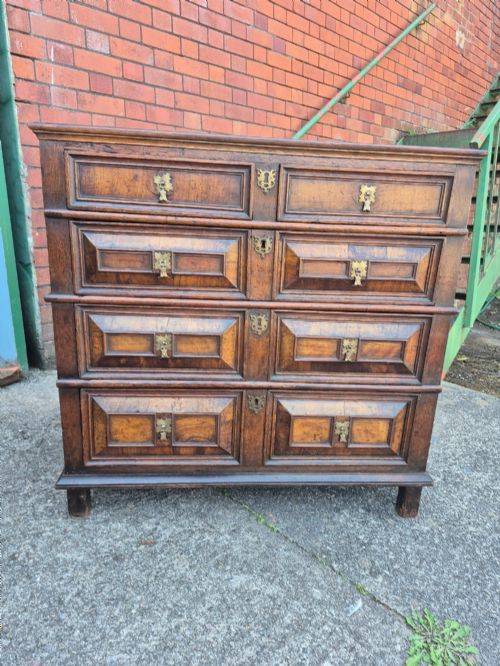
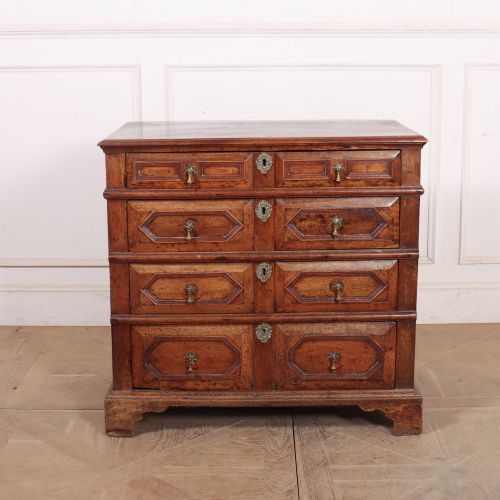
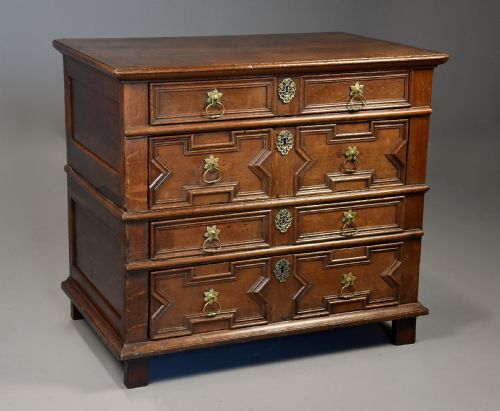


Geometric Panel Chest Drawers
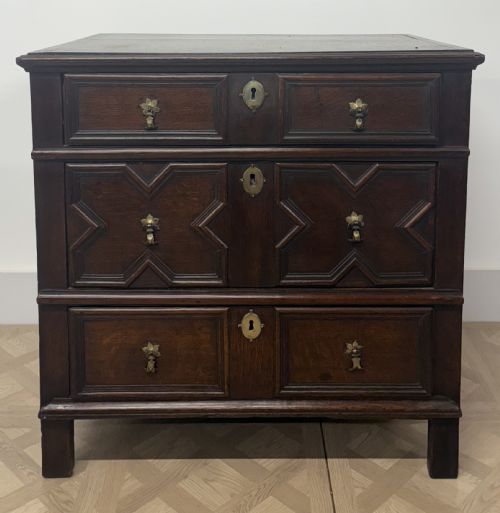
These geometric panel chest drawers bring tangible seventeenth-century structure and architectural depth into a modern room.
Geometric Panel Chest Drawers
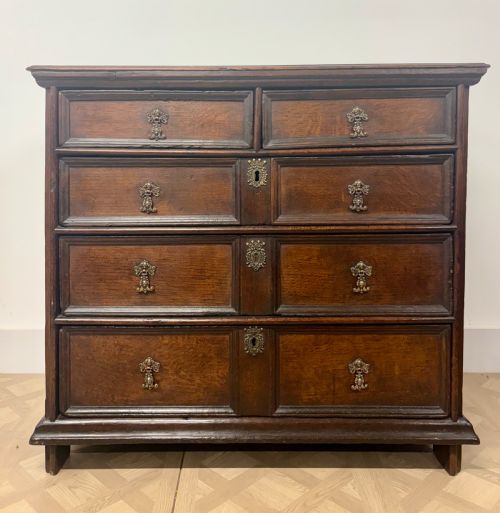
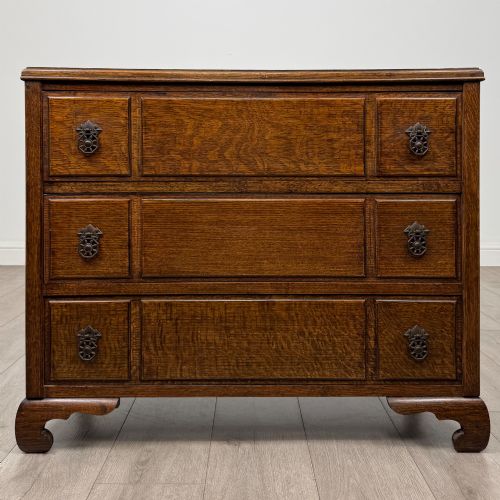
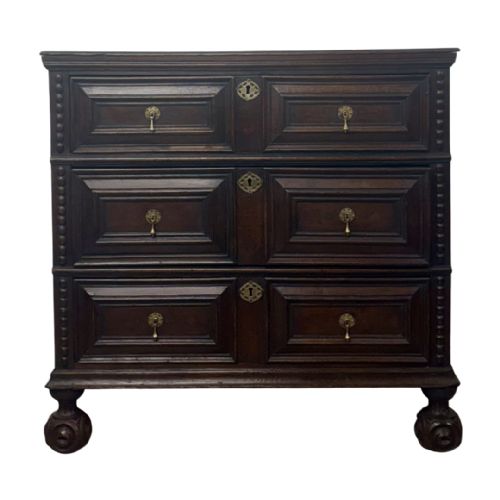
A geometric panel chest drawers is a sturdy timber storage piece defined by applied mouldings on the drawer fronts. Most examples encountered here hail from the seventeenth century, spanning the Jacobean, Charles II, and William and Mary periods.
The standard form is a chest of drawers, sometimes built in two parts or raised on a stand. Variations include mule chests and cedar or fruitwood constructions that showcase patterned drawer faces.
How they were made
Cabinet makers built these pieces primarily using solid oak, often combining walnut, fruitwood, cedar, snakewood, and brass hardware. Timber was selected for grain and resilience, then shaped into panels and frames.
Applied geometric mouldings were meticulously cut and pinned to the drawer fronts to create raised patterns. Metal handles, brass escutcheons, and iron fixings completed the structural assembly.
Geometric Panel Chest Drawers Retail Price Guide 2026
Typical asking prices for geometric panel chest drawers among the pieces listed under this phrase on Sellingantiques today, from the lower quarter to the upper quarter. They describe what is for sale here now, not the wider market.
Some seventeenth-century drawers are so deeply moulded they double as finger exercises.
What varies in quality
The sophistication of the applied moulding dictates visual success, with crisp geometric layouts outperforming simpler arrangements. Timber selection also matters, as does the survival of original patination and secondary woods like snakewood or fruitwood.
Structural integrity, such as whether a piece retains its two-part form or original stand, separates standard examples from exceptional ones. Surface wear tells a story of age, but the clarity of the carved and moulded decoration remains paramount.
The Geometric Panel Chest Drawers Glossary
- Moulding
- A shaped strip of wood applied to a surface to create relief and shadow. On these chests, mouldings form intricate geometric patterns across the drawer fronts.
- Mule chest
- A storage chest featuring one or more drawers at the base beneath a hinged lid compartment. They combine the functions of a traditional coffer and a chest of drawers.
- Chest on stand
- A case of drawers elevated on a separate framework of legs connected by stretchers. This two-part construction lightens the visual weight of heavy timber.
- Applied decoration
- Ornamental elements shaped separately and fixed onto the main structure. Geometric panel chests rely heavily on this technique for their characteristic facade.
Geometric Panel Chest Drawers: Frequently Asked Questions
What periods do these chests come from?
The pieces span the seventeenth century into the eighteenth century, encompassing Charles II, Jacobean, and William and Mary eras. Edwardian and later revivals also appear among the selections.
Most examples date specifically to the late seventeenth century, reflecting the prevailing joinery techniques of that era.
How were geometric chests used?
These chests served primarily for storing textiles, linens, and personal valuables within domestic chambers. Their robust construction kept contents secure from dust and damp.
Over time, their decorative fronts allowed them to function as status items in reception rooms as well as private bedchambers.
How do I care for an oak geometric chest?
Keep the timber away from direct heat sources and sudden humidity shifts to prevent the wood from splitting. Regular dusting with a dry, soft cloth preserves the natural finish.
Avoid modern liquid polishes that can build up on the antique surface and obscure the fine grain of the oak.
How do I identify a William and Mary chest?
William and Mary examples often display refined geometric panelling combined with contrasting timbers like fruitwood or walnut. They frequently utilise two-part forms or stands.
Look for architectural symmetry in the drawer fronts and the characteristic use of applied mouldings developed during the late seventeenth century.